

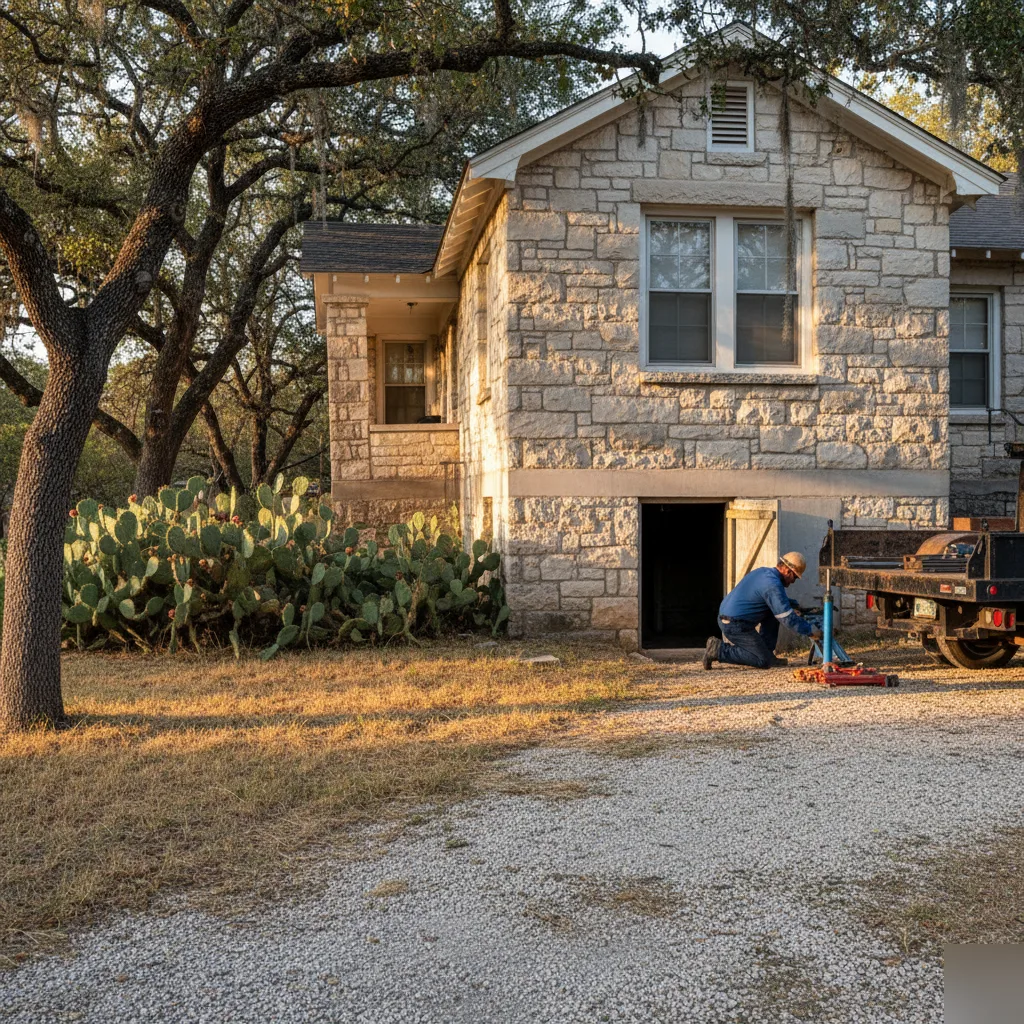
Masonry Contractor Services in San Antonio, TX
From pier and beam repair to foundation block wall installation, Bats Foundation Repair provides complete structural masonry services built for Bexar County soil conditions. Free estimates.
Concrete slabs are the most common foundation type in San Antonio — but they are far from the only one. Thousands of homes across Bexar County's older neighborhoods sit on pier and beam systems, block and base construction, and masonry stem walls that face the same Houston Black Clay conditions as every other foundation in the city. They just fail differently. And they require a masonry contractor in San Antonio who understands masonry and structural systems at a level that goes beyond slab repair.
Bats Foundation Repair brings that depth of expertise to the San Antonio market. From pier and beam assessment in Alamo Heights and Monte Vista to foundation block wall installation in Converse and Universal City, from crawl space support post installation to steel push pier work beneath structures where the clay has given up entirely, our team handles the full range of structural masonry and below-grade foundation services that Bexar County homeowners and property managers need.
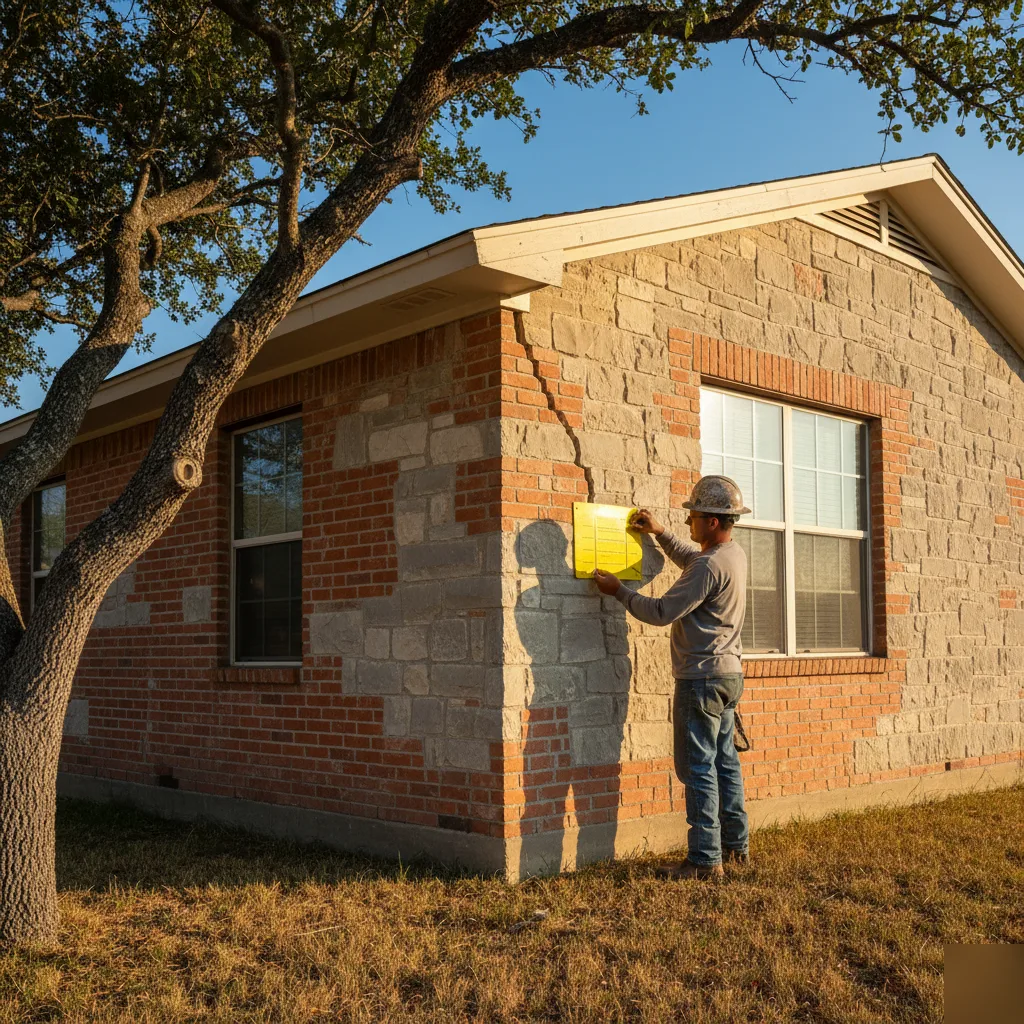
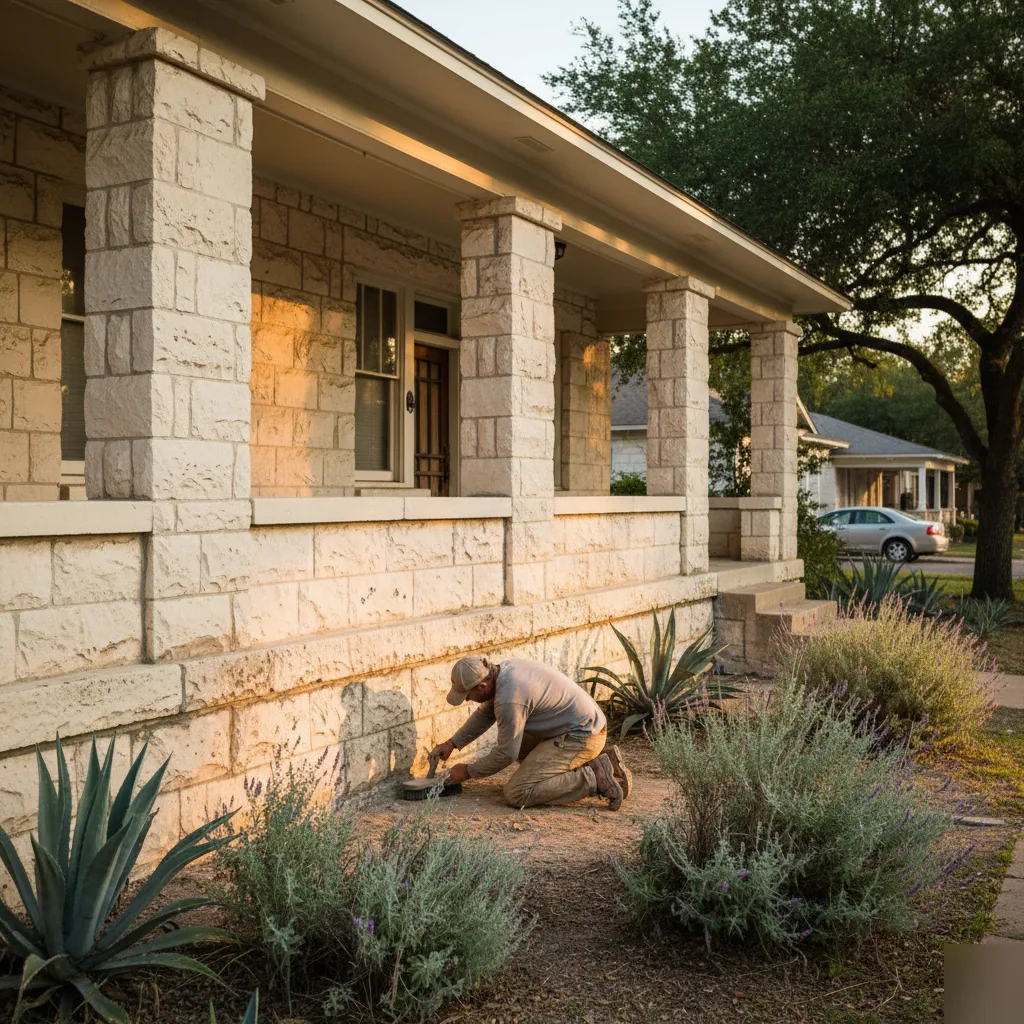
Houston Black Clay does not treat masonry structures gently. It pushes laterally against below-grade block walls as it expands during wet seasons, then contracts and withdraws support during dry periods — leaving those walls unsupported on one face and forcing them to carry the retained soil load without lateral resistance from the soil behind them. Pier and beam systems in Bexar County face moisture cycling that deteriorates wood framing, shifts masonry columns, and compounds with every passing season. In San Antonio's oldest neighborhoods, some of these systems have been under that stress for 80 to 100 years.
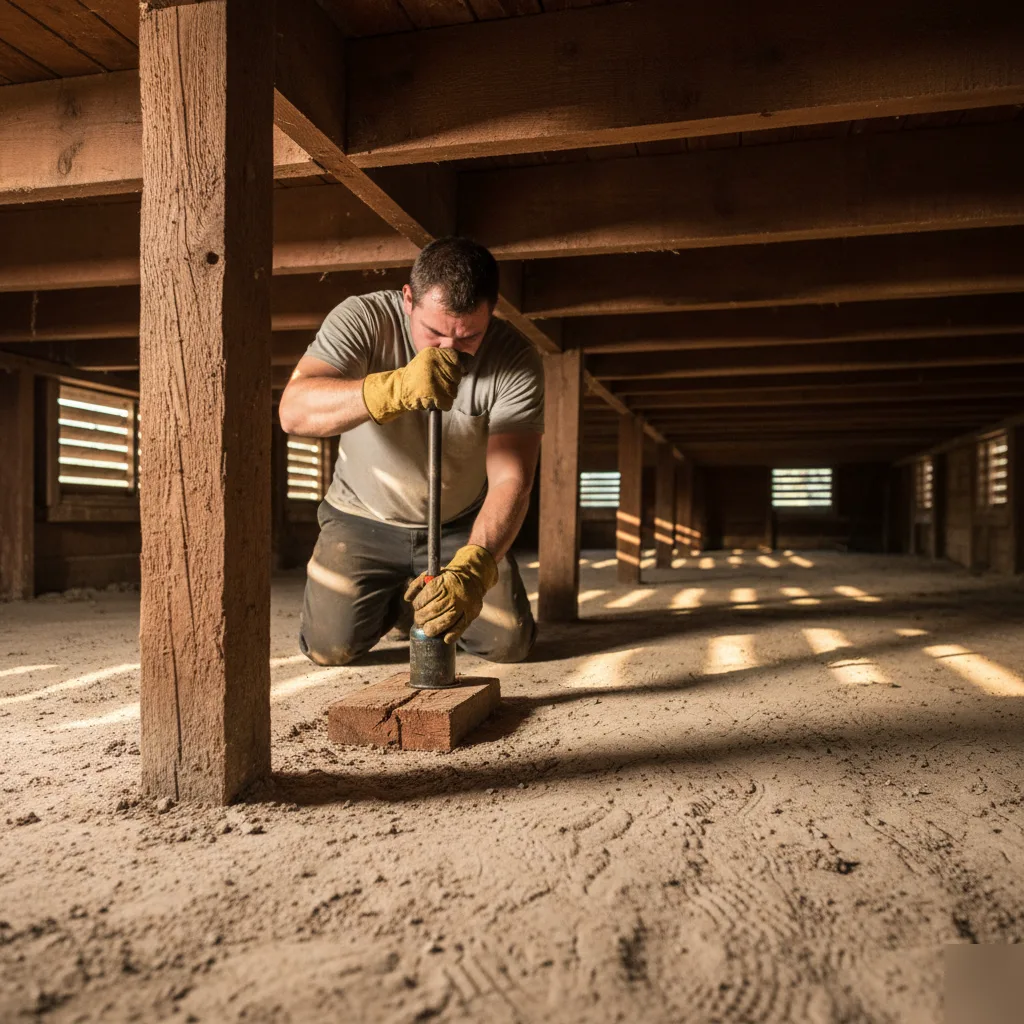
Pier and Beam Foundation Repair in San Antonio, TX
Pier and Beam Foundation Repair systems are the defining construction type of San Antonio's most architecturally significant neighborhoods. Monte Vista, Alamo Heights, King William, Beacon Hill, Tobin Hill, Mahncke Park, and Government Hill are all built predominantly on pier and beam systems constructed between the 1910s and 1950s. These homes sit on networks of concrete or masonry piers, wood beams, and floor joists elevated above the native Bexar County clay — a crawl space separating the living area from the soil below.
That separation was engineered into the design for good reason. Houston Black Clay is unpredictable under a continuous slab. Elevating the structure on discrete support points, with a crawl space that allows inspection and targeted repair, was the practical solution of its era. The problem is that the wood framing in those crawl spaces has now been cycling through Bexar County humidity and moisture conditions for 70 to 100 years — and the masonry piers and block columns that support the beams have been doing the same.
What Bexar County Clay Does to Pier and Beam Systems
Moisture cycling deteriorates wood framing: The crawl space beneath a San Antonio pier and beam home cycles through wet and dry conditions that track the clay soil below. Wood beams and floor joists absorb and release moisture seasonally, causing dimensional changes, checking, splitting, and over time, decay — particularly where beams bear on masonry piers that wick moisture from the clay.
Masonry pier settlement: The concrete or CMU block piers that support the beam system can settle individually as the clay beneath their footings contracts and consolidates. When one pier settles more than its neighbors, the beam above it drops and the floor follows — often creating the characteristic soft spots and slopes that San Antonio pier and beam homeowners know well.
Lateral soil pressure on perimeter walls: The masonry stem walls that form the perimeter of a pier and beam crawl space face the same lateral clay pressure as any below-grade wall. As Houston Black Clay expands against those walls, they bow, crack, and eventually fail if left unaddressed.
Signs Your San Antonio Pier and Beam Home Needs Repair
Floors that sag, bounce, or feel springy underfoot — particularly toward the center of rooms where beam spans are longest
Visible sloping across the floor plane, noticeable when a ball rolls toward one corner without being pushed
Doors and windows that bind, drag, or no longer latch correctly across Alamo Heights, Monte Vista, or King William historic homes
Gaps opening between baseboards and the floor, or between the floor and interior door frames
Musty, earthy odor from below — indicating elevated moisture levels in the crawl space
Visible rot, darkening, or fungal growth on wood beams when inspected from beneath the structure
Historic Home Consideration
Many pier and beam homes in San Antonio's historic districts are contributing structures under local preservation guidelines. Foundation repair on these properties requires approaches that preserve the structural character of the original construction. Bats Foundation Repair works with the access and constraints of historic properties — repairing what's failing without altering what makes the structure architecturally significant.
Block and Base Foundation Repair in San Antonio, TX
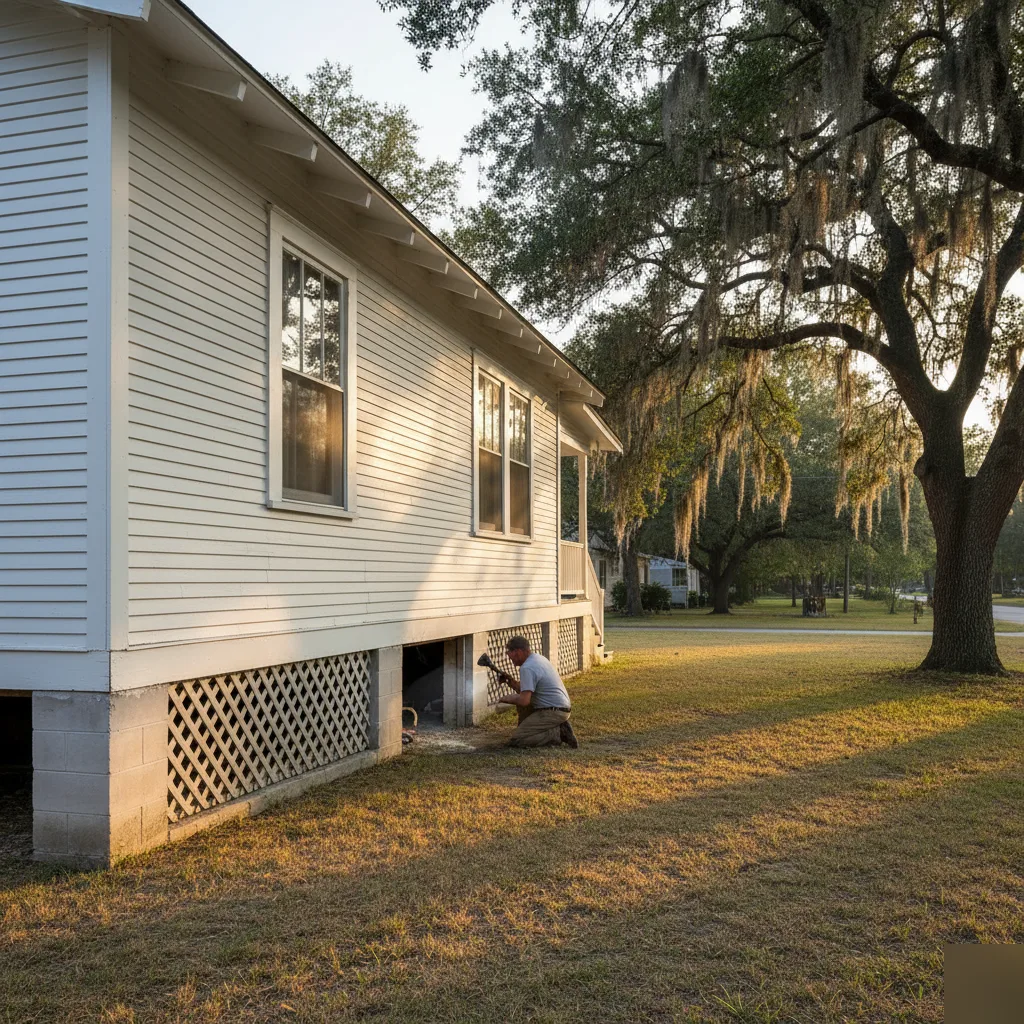
Block and Base Foundation Repair is a critical need for many local homes; this construction uses stacked concrete masonry unit (CMU) columns as the discrete support piers beneath the beam and floor system — rather than poured concrete piers. This method was the dominant pier construction approach across San Antonio's mid-century residential development, and it remains common in the neighborhoods built between the 1930s and 1970s across Bexar County.
The physics of Houston Black Clay work against block and base columns in a specific and predictable way. As the clay swells laterally during wet seasons, it pushes against the sides of the stacked block columns with significant force. As it contracts during dry seasons, it pulls away — withdrawing lateral support and leaving the column bearing its load on a reduced bearing surface. Over decades, this alternating push-and-release works mortar joints loose, cracks individual blocks, and gradually tips columns out of plumb until they fail under the load they were designed to carry.
The Four Block and Base Failure Stages
Stage 1 — Mortar joint deterioration: The earliest sign. Mortar between block courses begins to crack, erode, or show voids. The column is still bearing load but has lost cohesion. Visible with a close inspection from the crawl space.
Stage 2 — Column lean: The column has tilted measurably out of plumb due to cumulative lateral clay pressure. It's still carrying load, but the eccentric load path is accelerating deterioration. Intervention at this stage is significantly less costly than at Stage 3 or 4.
Stage 3 — Block separation and crack-through: Mortar joints have opened enough that individual blocks have shifted within the stack. Through-block cracking may be visible. The column's bearing capacity is meaningfully reduced and failure risk is elevated.
Stage 4 — Column collapse: Complete structural failure of the column. The beam above drops to the limit allowed by adjacent columns, causing an abrupt and unmistakable floor drop in the affected area. Rare but serious — and always the outcome of deferred Stage 1 through 3 intervention.
Repair Approach for San Antonio Block and Base Systems
Bats Foundation Repair inspects every column in the crawl space during assessment — not just the ones adjacent to the most visible symptoms. Block and base failure is rarely isolated to a single column. Repair options range from individual column rebuilding with new CMU construction, to supplemental steel push pier installation where the clay profile at that location is too unstable to trust a masonry column long-term, to a hybrid approach combining column repair with steel pier backup at the most critical load points.
Crawl Space Support Posts in San Antonio, TX
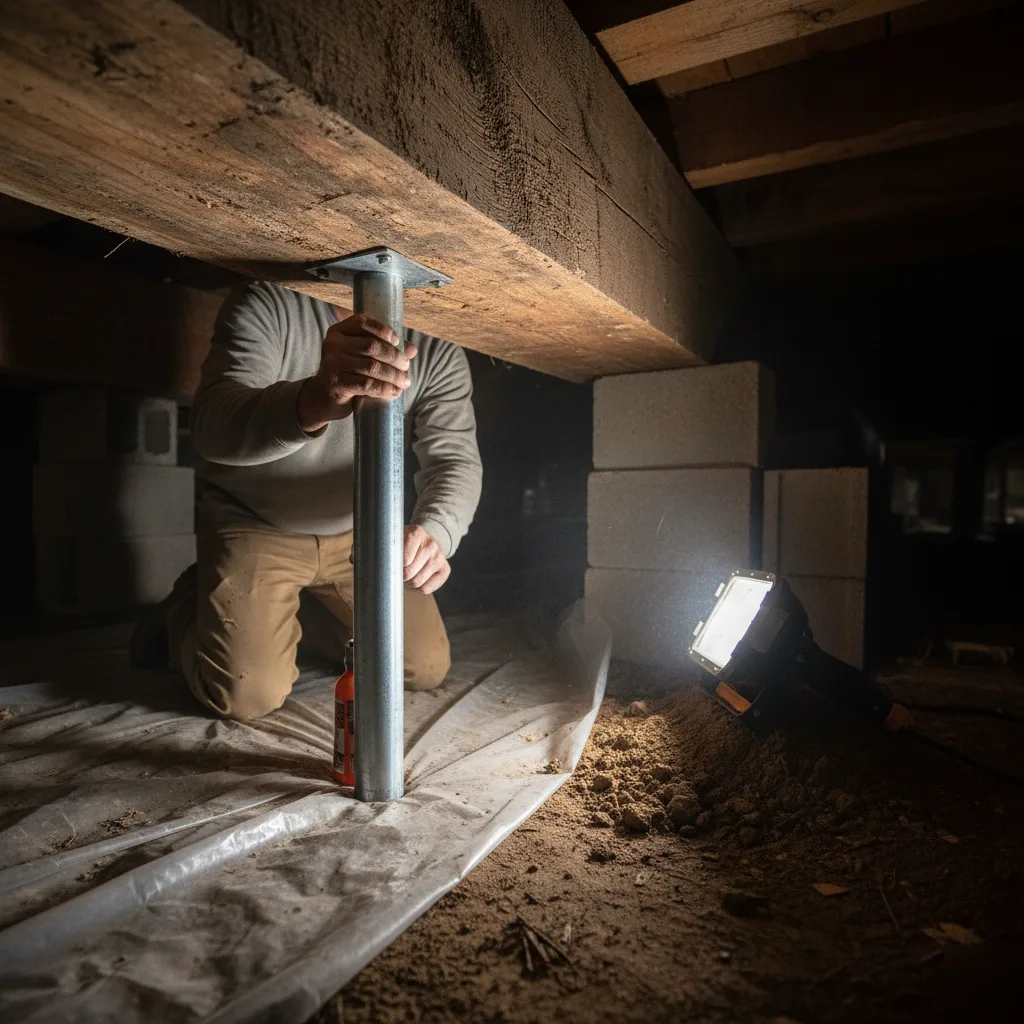
Between the perimeter stem wall and the first interior support column, the beams in a San Antonio pier and beam home span an unsupported distance. In well-built original construction, that span was sized for the beam depth and load. In the realities of San Antonio's mid-century residential stock, original spans were sometimes too long, beams were sometimes undersized, and decades of moisture cycling have reduced the effective capacity of wood that was already marginal. The floor above reflects all of it — sagging at mid-span, bouncy underfoot, and increasingly resistant to furniture that doesn't wobble. Our Crawl Space Support Posts provide the necessary reinforcement.
Crawl space support posts are the direct solution: new structural posts installed at mid-span or at any point where the beam needs intermediate bearing support. Each post bears on a properly sized concrete footing poured to stable soil depth — not simply set on the native clay, which would make the post subject to the same seasonal movement as everything else in the crawl space.
Why Steel Posts, Not Wood, in Bexar County Crawl Spaces
Wood posts installed in a San Antonio crawl space are exposed to the same moisture environment that has been deteriorating the original wood framing for decades. Even treated lumber absorbs moisture, supports fungal growth in persistently humid crawl space conditions, and loses structural integrity over time in the Bexar County environment. Steel support posts eliminate that vulnerability — they do not rot, they do not absorb moisture, and each post is set on a properly sized footing and leveled to the beam at installation.
When Crawl Space Support Posts Are the Right Scope
Mid-span floor sag where the beam is intact and the perimeter piers are sound but the unsupported span is simply too long
Beams that have been sistered or reinforced but still need an intermediate bearing point to perform at spec
Areas of the crawl space where original pier spacing was established before room additions changed the load distribution above
Homes in Alamo Heights, Monte Vista, and Beacon Hill where original 1920s through 1940s construction used lumber sizing standards that are undersized by current practice
As a supplement to block column repair where the rebuilt column carries primary load but a steel post provides backup support at the same location
Steel Push Pier Installation in San Antonio, TX
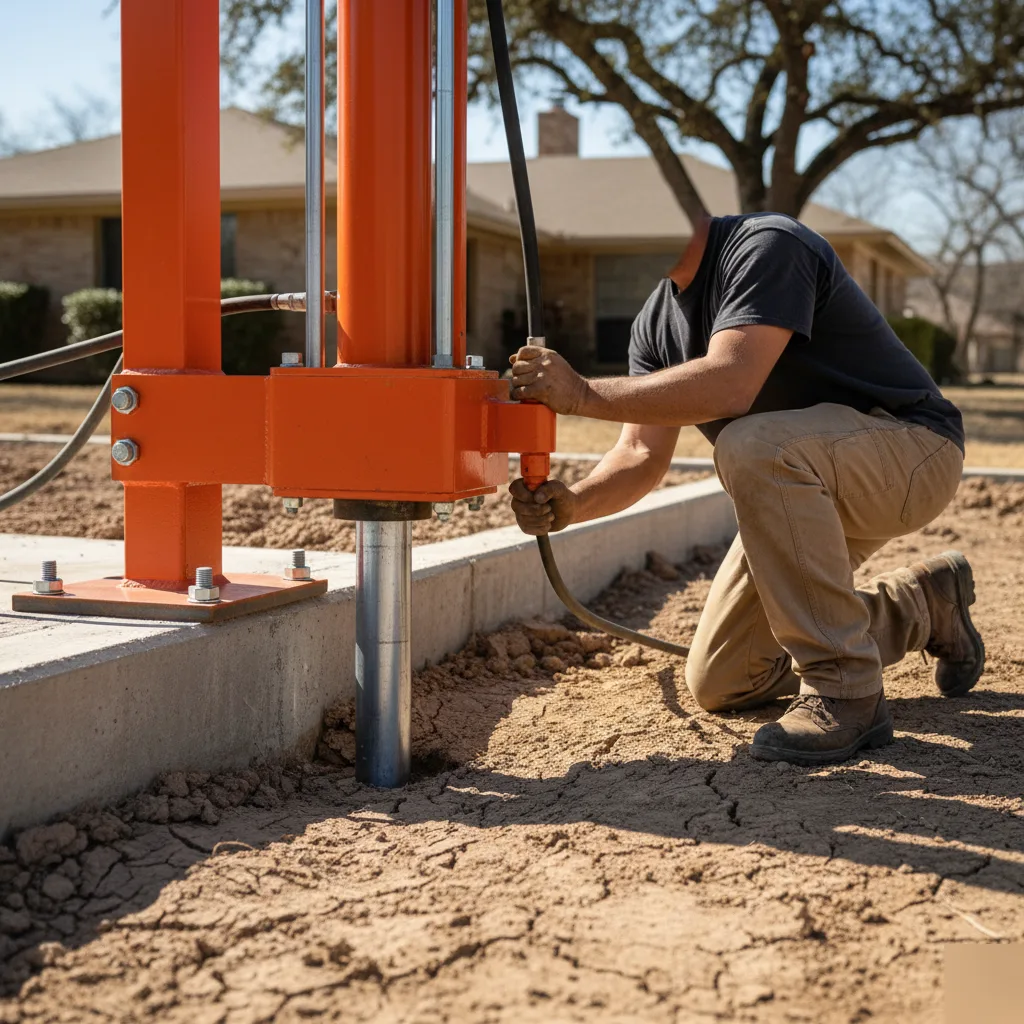
When the clay beneath a San Antonio foundation has moved too far, settled too deeply, or become too unstable to serve as a bearing layer for surface-level repair methods, Steel Push Pier Installation is the answer. Driven section by section through the Houston Black Clay until they reach competent load-bearing material below — whether that's dense Cretaceous-age clay at depth, the Del Rio Clay formation, or the Edwards Limestone that underlies the western portion of Bexar County — steel push piers bypass the problem soil entirely and transfer the structural load to material that doesn't move with seasonal moisture.
For San Antonio pier and beam homes where individual block columns have failed, where the beam system has dropped beyond what masonry repair can address, or where the depth of unstable clay exceeds what pressed concrete pilings can reliably engage, steel push piers are the definitive structural solution — and Bats Foundation Repair backs every installation with our lifetime transferable warranty.
Steel Push Piers in San Antonio's Variable Geology
Bexar County's geology is not uniform. The eastern half of the county sits on deep Blackland Prairie Vertisol — Houston Black Clay extending 20 feet or more before transitioning to stable material. The western half sits on Edwards Plateau geology — relatively shallow clay over fractured limestone that the steel piers can reach in significantly fewer sections. The Balcones Fault Zone that runs diagonally through the county creates additional variability, with some sites showing rapid soil profile transitions across very short distances.
Bats Foundation Repair accounts for that variability during pier design. The number of pier sections driven, the installation pressure at refusal, and the load transfer calculation are all specific to the site — not estimated from a county-average assumption. In San Antonio's geology, average assumptions produce below-average results.
The Lifetime Warranty in San Antonio's Real Estate Context
Texas law requires sellers to disclose known foundation issues — a repaired foundation with a lifetime transferable warranty is a disclosed repair with documented resolution
FHA and VA loans — major financing instruments in San Antonio's large military homebuyer market — require that active foundation issues be resolved before loan approval
The warranty transfers to the new owner at closing — for military families who may PCS out within a few years, this is a concrete asset they can pass to the next buyer
Future settling adjustments on installed steel piers are performed at no cost — the homeowner is not on the hook for follow-up work if the pier system requires adjustment
Foundation Block Wall Installation in San Antonio, TX
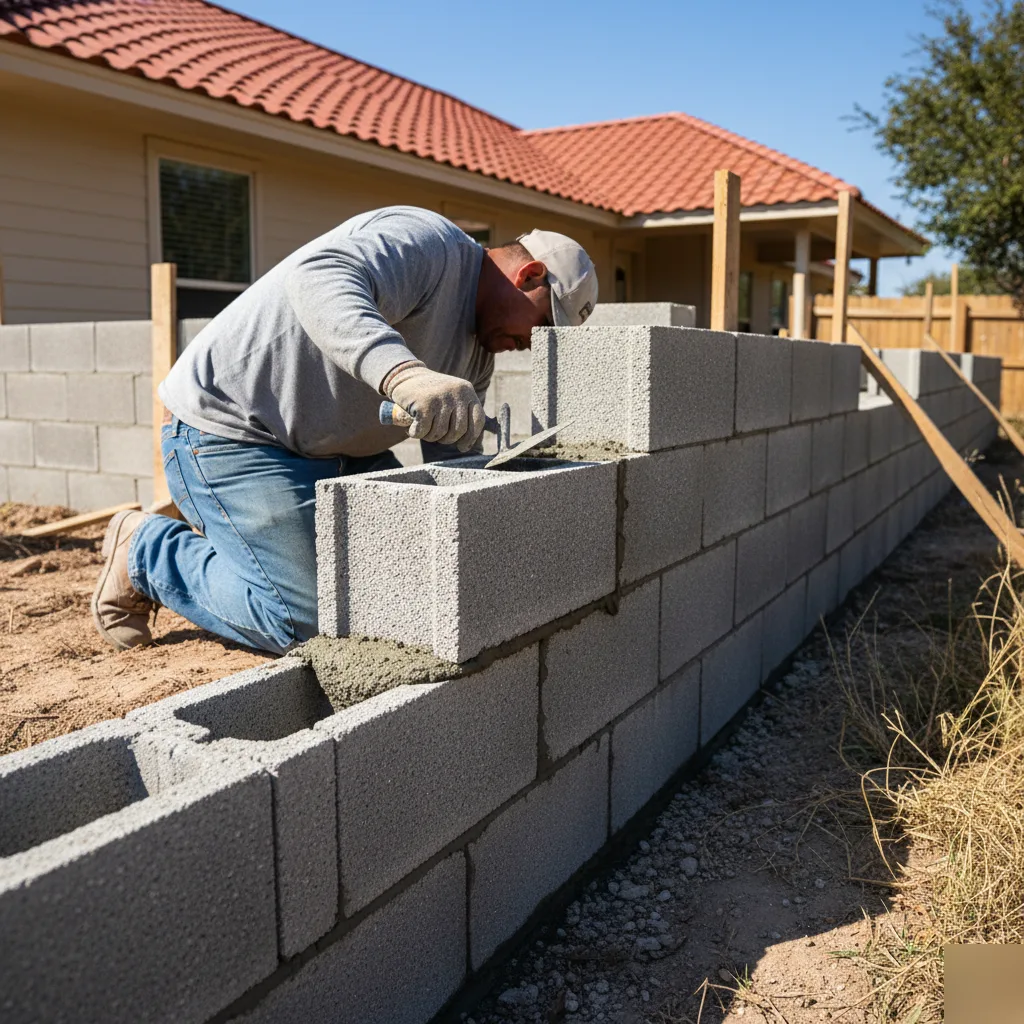
The masonry block walls that form the perimeter of pier and beam crawl spaces and the stem walls of partial basement structures around San Antonio foundations are not permanent without maintenance. In Bexar County's clay environment, those walls absorb decades of lateral pressure, moisture cycling, and material degradation — and eventually, some of them need to be replaced entirely rather than repaired piecemeal. Bats Foundation Repair provides expert Foundation Block Wall Installation built to perform in Houston Black Clay conditions, not just to look correct at installation.
Where Foundation Block Wall Installation Applies in San Antonio
Crawl space perimeter stem wall replacement: When the original CMU stem walls on a pier and beam home have deteriorated beyond repair — through cracking, horizontal deflection, mortar failure, or material degradation from prolonged clay moisture exposure — new walls are the correct long-term solution. Partial repairs on walls that have failed structurally create an uneven system where the repaired sections perform differently than the original sections adjacent to them.
Crawl space enclosure construction: Some San Antonio pier and beam homes have open or partially open crawl space perimeters that allow unrestricted moisture, pest, and air exchange beneath the structure. Enclosing the crawl space with a properly detailed CMU wall reduces moisture levels in the crawl space, improves pest resistance, and provides a stable perimeter that supports the beam system more consistently than open-air conditions.
Addition and accessory structure foundations: Home additions, detached garages, workshops, and accessory dwelling units in San Antonio require foundation walls appropriate to Bexar County soil conditions. CMU stem wall construction with properly designed footings and reinforcement is the most durable choice for below-grade perimeter walls in this environment.
Foundation walls on sloped lots: On sloped lots — particularly in the northern and western neighborhoods where Bexar County topography creates significant grade changes — below-grade foundation walls carry the structural load in ground that shifts. These walls require design that accounts for both vertical and lateral loading from the surrounding Houston Black Clay.
What Makes a Block Wall Last in Bexar County
The difference between a CMU foundation wall that lasts 50 years and one that fails in 15 is primarily in the details that aren't visible after backfill: footing depth relative to the active clay zone, vertical and horizontal steel reinforcement sizing and spacing, grout fill in critical cells, and drainage provisions that prevent hydrostatic pressure from building behind the wall. Bats Foundation Repair builds these details into every new block wall installation — because the wall's performance over time depends entirely on decisions made during construction that no one can revisit afterward.
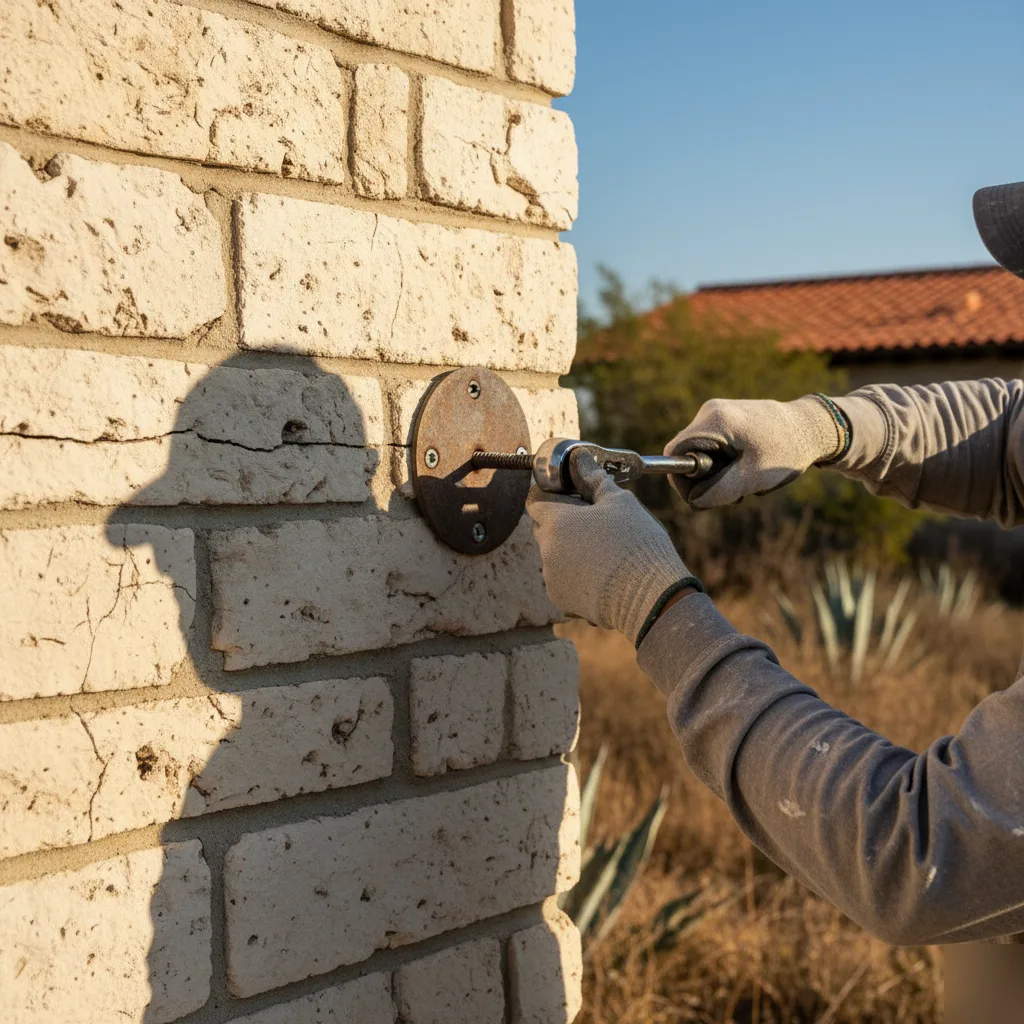
Get a Free Structural Masonry Estimate in San Antonio
From pier and beam repair in San Antonio's historic neighborhoods to foundation block wall installation in Converse and Universal City, Bats Foundation Repair brings years of combined experience in Bexar County soil conditions to every structural masonry project. We know what Houston Black Clay does to masonry systems over time — and we know how to stop it before it becomes a replacement job.
Call today for a free, no-pressure estimate. We serve San Antonio, Alamo Heights, Stone Oak, Converse, Universal City, Leon Valley, Helotes, Schertz, and the surrounding Bexar County area.