

Concrete Slab Services in San Antonio, TX
From slab pier installation to polyurethane foam injection, Bats Foundation Repair delivers complete concrete slab services for San Antonio homeowners dealing with Bexar County clay soil damage. Free estimates.
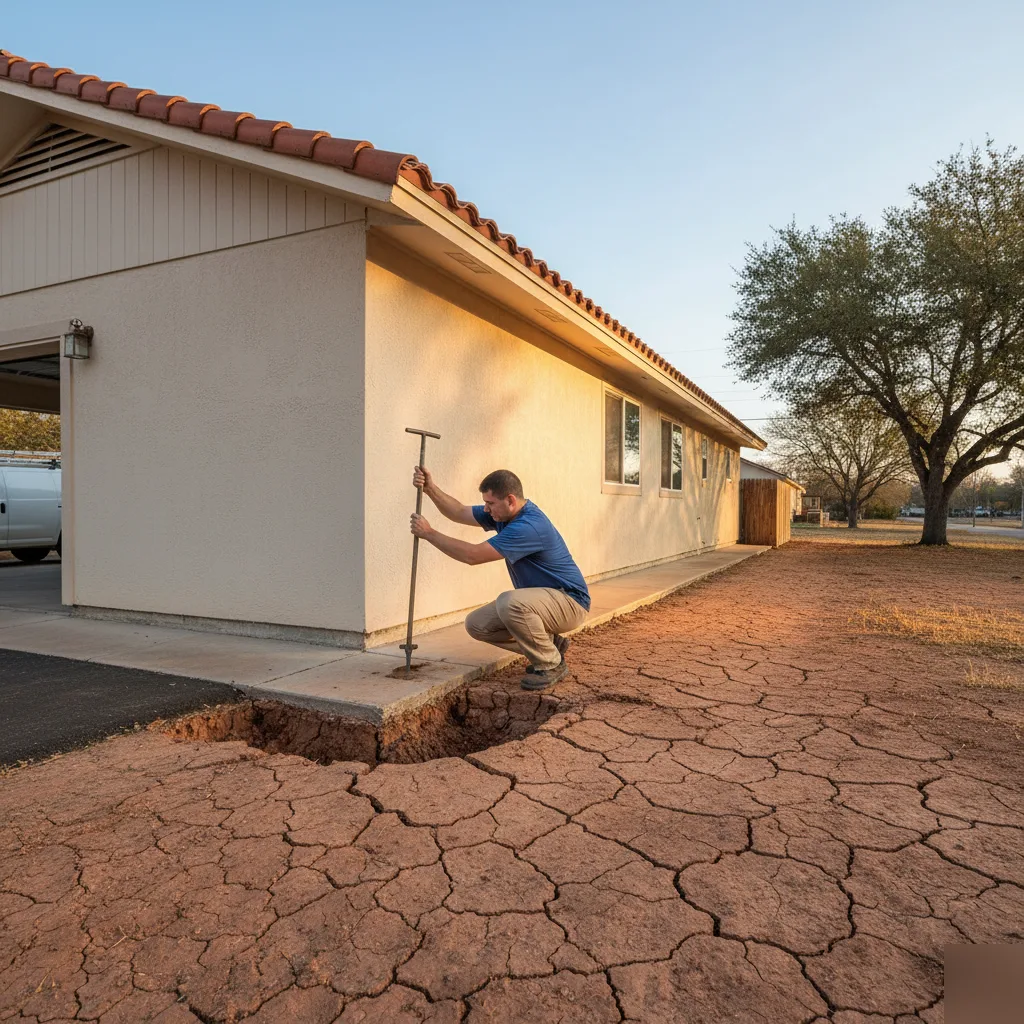
San Antonio sits on some of the most problematic soil in the country. The Houston Black Clay and Vertisol formations that dominate Bexar County's central and eastern zones are engineered by nature to destroy concrete slabs — swelling with enormous force when wet, contracting and cracking when dry, and repeating that cycle every single year. The U.S. Department of Agriculture's own soil survey states plainly that Bexar County's clay soils are poor materials for building foundations. Yet nearly every home and commercial structure in this city is built on them.
Bats Foundation Repair provides complete concrete slab services for San Antonio homeowners and property owners — from deep structural repairs like slab pier installation and pressed concrete pilings, all the way to surface repairs like driveway repair and concrete slab repair. Every job starts with a free estimate and is backed by our industry-leading lifetime transferable warranty on installed piers.
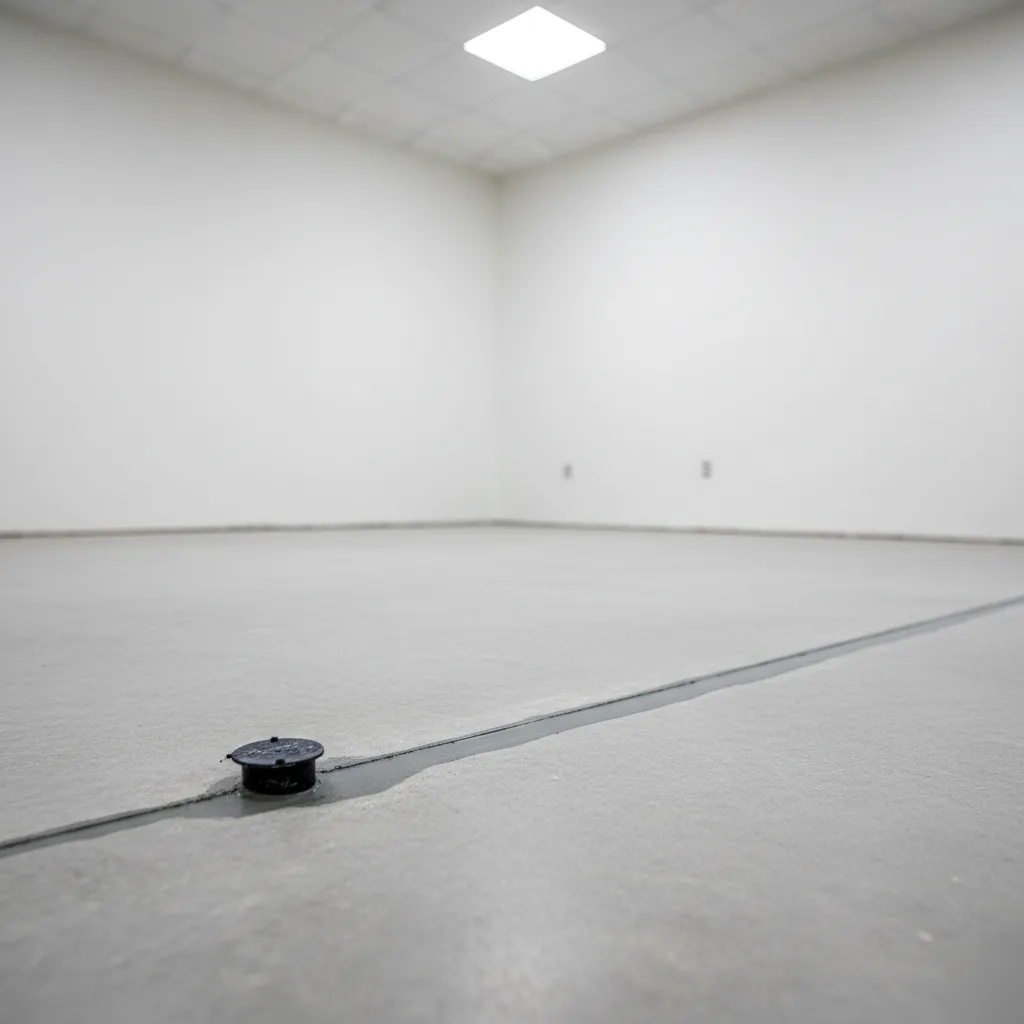
Bexar County's Blackland Prairie clay absorbs water and swells during San Antonio's concentrated spring rain events, then bakes and contracts during the long, hot dry season. That shrink-swell cycle exerts force against concrete slabs from every direction — below, laterally, and unevenly across the slab footprint. The clay directly under a watered flower bed behaves completely differently than the clay three feet away under a dry section of driveway. That difference in expansion creates differential stress that cracks the slab between them.
Slab Pier Installation in San Antonio, TX
When a San Antonio slab foundation has settled, dropped, or cracked due to Bexar County clay movement, no surface-level repair will solve the problem. The slab is moving because what's beneath it is moving. Slab pier installation is the structural solution — reaching below the unstable clay to transfer the foundation load onto stable ground, then restoring the slab to its original elevation.
How Slab Pier Installation Works in Bexar County
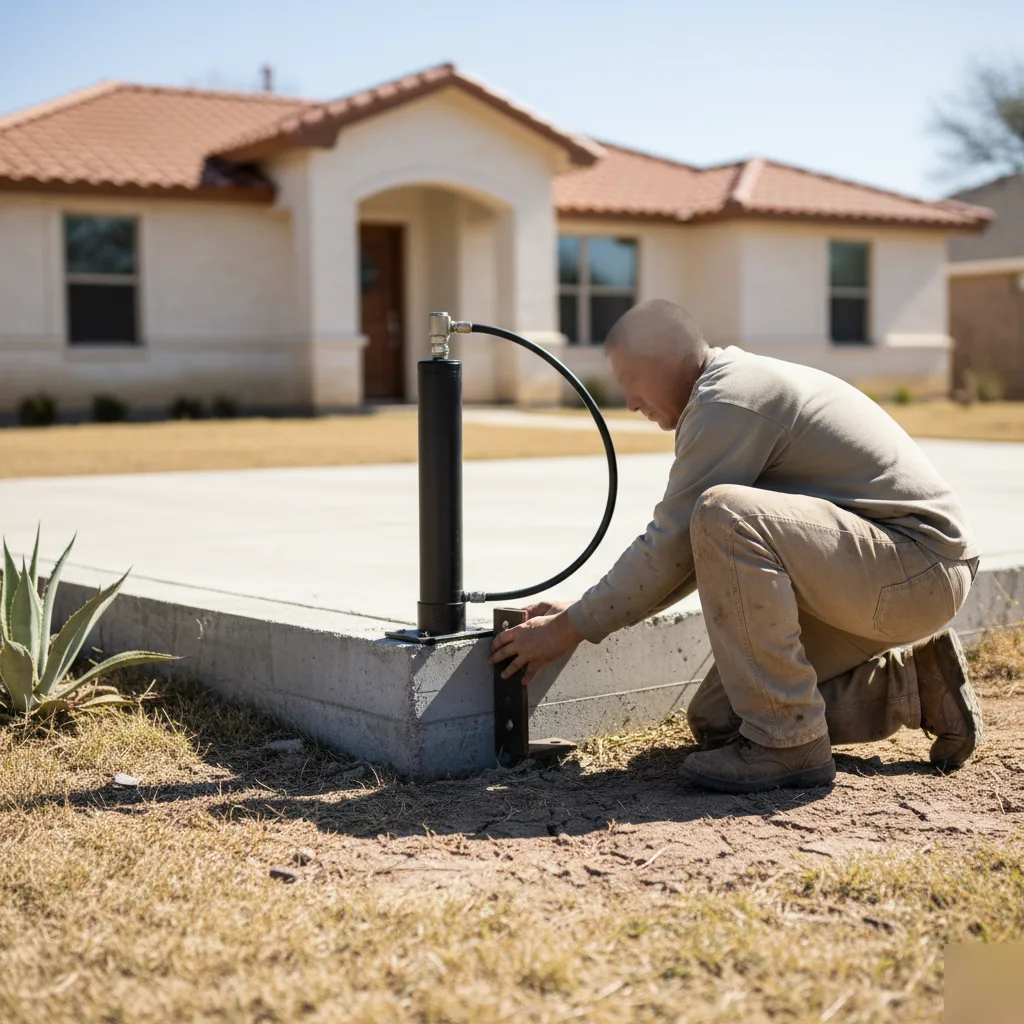
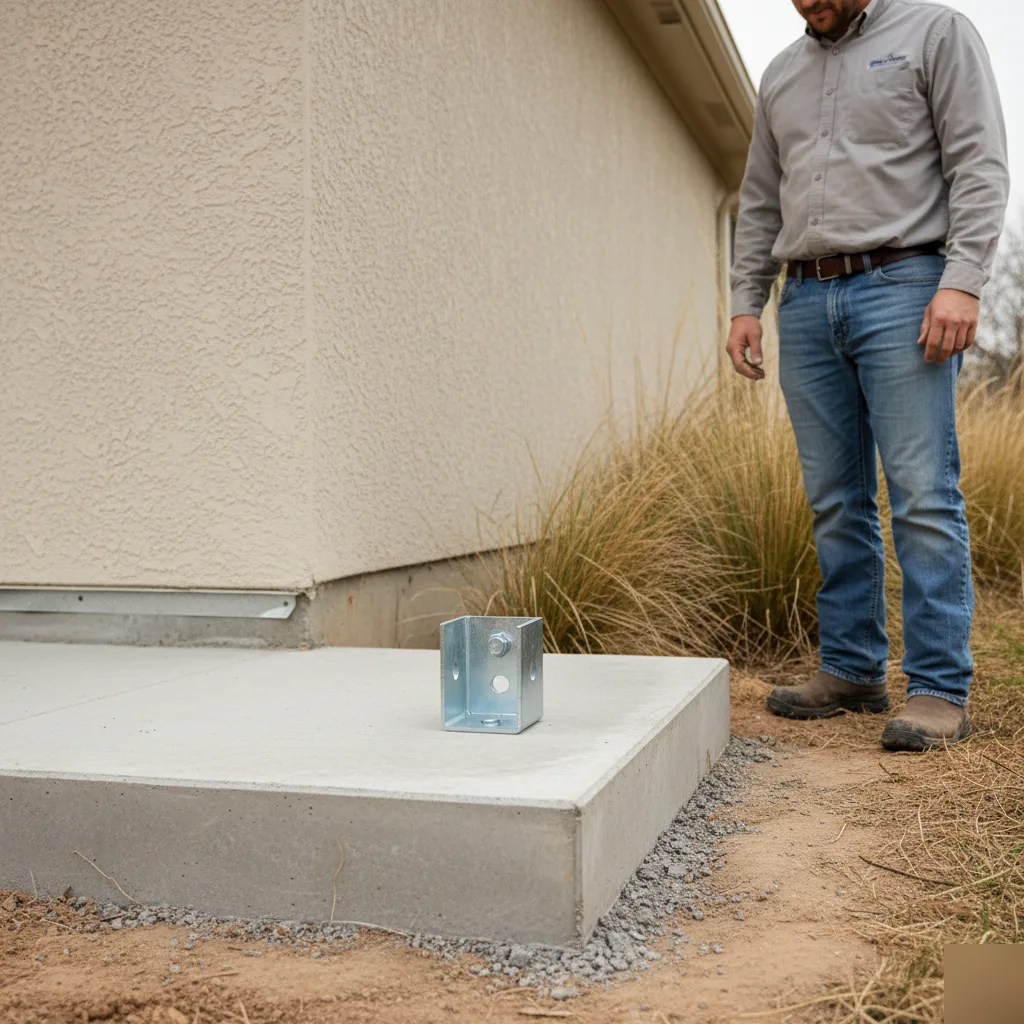
Bats Foundation Repair installs piers through or beneath the existing slab, driving them down through the Houston Black Clay and Vertisol formations until they reach competent load-bearing material below. Once at depth, the piers are locked in place and the foundation is carefully lifted back toward its original position using hydraulic equipment. The process is controlled, methodical, and calibrated to avoid over-lifting — a common problem when pier installation is rushed.
For slab areas that can't be accessed from the exterior — interior rooms, additions, areas far from the foundation perimeter — we use tunneling. Our crews excavate access tunnels beneath the slab to reach interior pier installation points without demolishing your floors. The home stays livable throughout the process.
Signs Your San Antonio Slab Needs Pier Installation
Doors and windows that stick or no longer close properly — especially in homes in Alamo Heights, Stone Oak, or the Converse/Universal City corridor where clay movement is active
Diagonal cracks running from the corners of door and window frames
Visible gaps between walls and ceilings, or walls and floors
Floors that slope or feel uneven when walking through the home
Cracking in exterior brick or stucco that follows a stair-step pattern along mortar joints
A foundation evaluation showing measurable differential elevation across the slab
Lifetime Transferable Warranty
Every slab pier installation by Bats Foundation Repair is backed by our lifetime transferable warranty. Future settling adjustments on installed steel piers are performed at no additional cost — and the warranty transfers to the new owner when you sell. In a city where Texas disclosure law requires sellers to report known foundation issues, a documented repair with a transferable lifetime warranty is a genuine asset at closing.
Pressed Concrete Pilings in San Antonio, TX
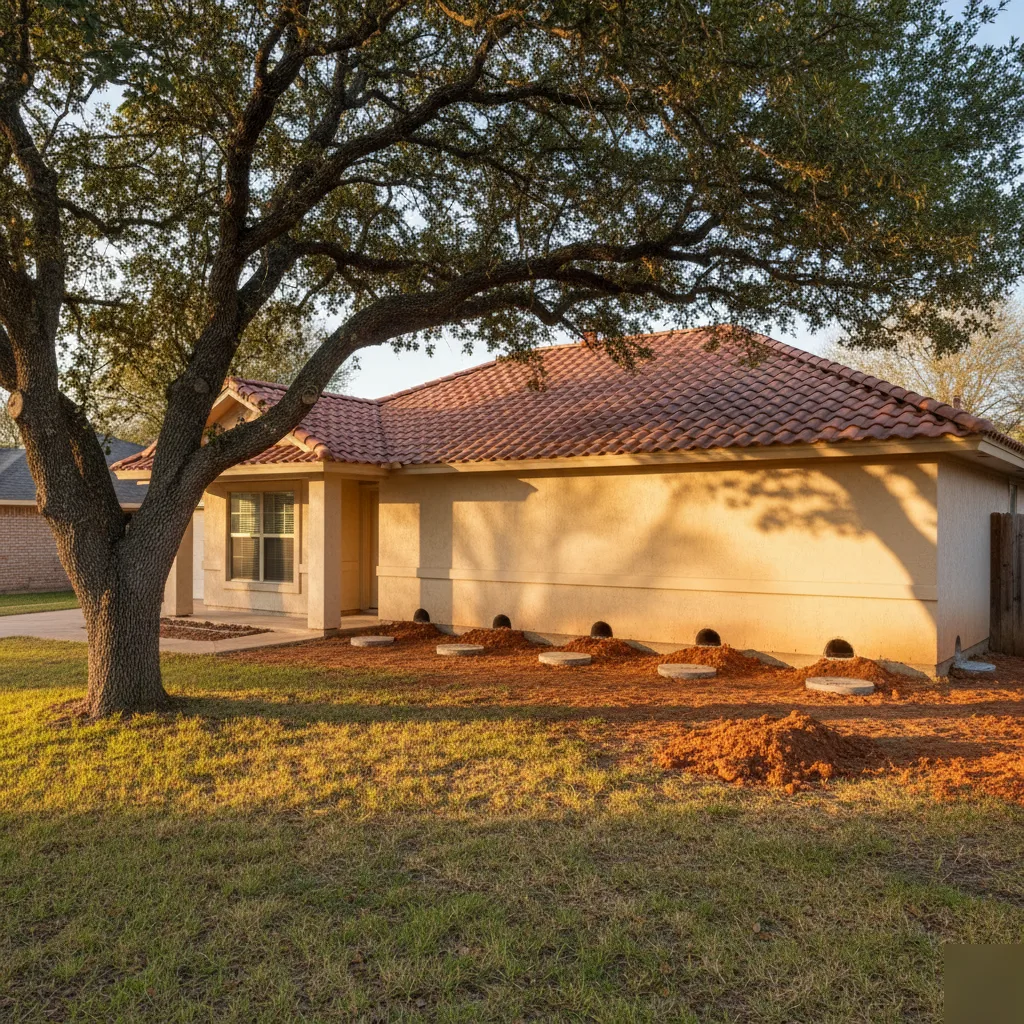
Pressed concrete pilings are one of the most proven and widely used foundation repair methods across South and Central Texas — and they were specifically developed for the clay soil conditions that define markets like San Antonio and Bexar County. Decades of use in this region have demonstrated that when applied to the right foundation in the right soil conditions, pressed concrete pilings deliver stable, long-lasting results at a cost point that works for most homeowners.
How Pressed Concrete Pilings Work
Cylindrical concrete sections are hydraulically pressed into the soil beneath the foundation, using the weight of the structure itself as counter-resistance. Each section is pressed until refusal — the point at which the hydraulic system can no longer advance the piling — indicating that the clay column below has sufficient density and load capacity to carry the foundation load at that point. The piers are then capped and the foundation is stabilized.
In San Antonio's Blackland Prairie zone, the Houston Black Clay that forms the dominant soil type provides a dense, compacted column at depth that pressed concrete pilings engage effectively. The method is proven in this specific soil — not adapted from a different region and applied here.
Pressed Concrete Pilings vs. Steel Push Piers in San Antonio
Both methods work in Bexar County. The difference is depth and soil profile. Pressed concrete pilings work within the clay column — appropriate for moderate settlement in areas where the clay is deep, dense, and consistent. Steel push piers are driven past the clay to bedrock or firm strata — better suited for severe settlement, shallow or inconsistent clay profiles, or situations where the clay at depth isn't stable enough to serve as a bearing layer. Bats Foundation Repair assesses your specific soil conditions and tells you honestly which system fits your situation.
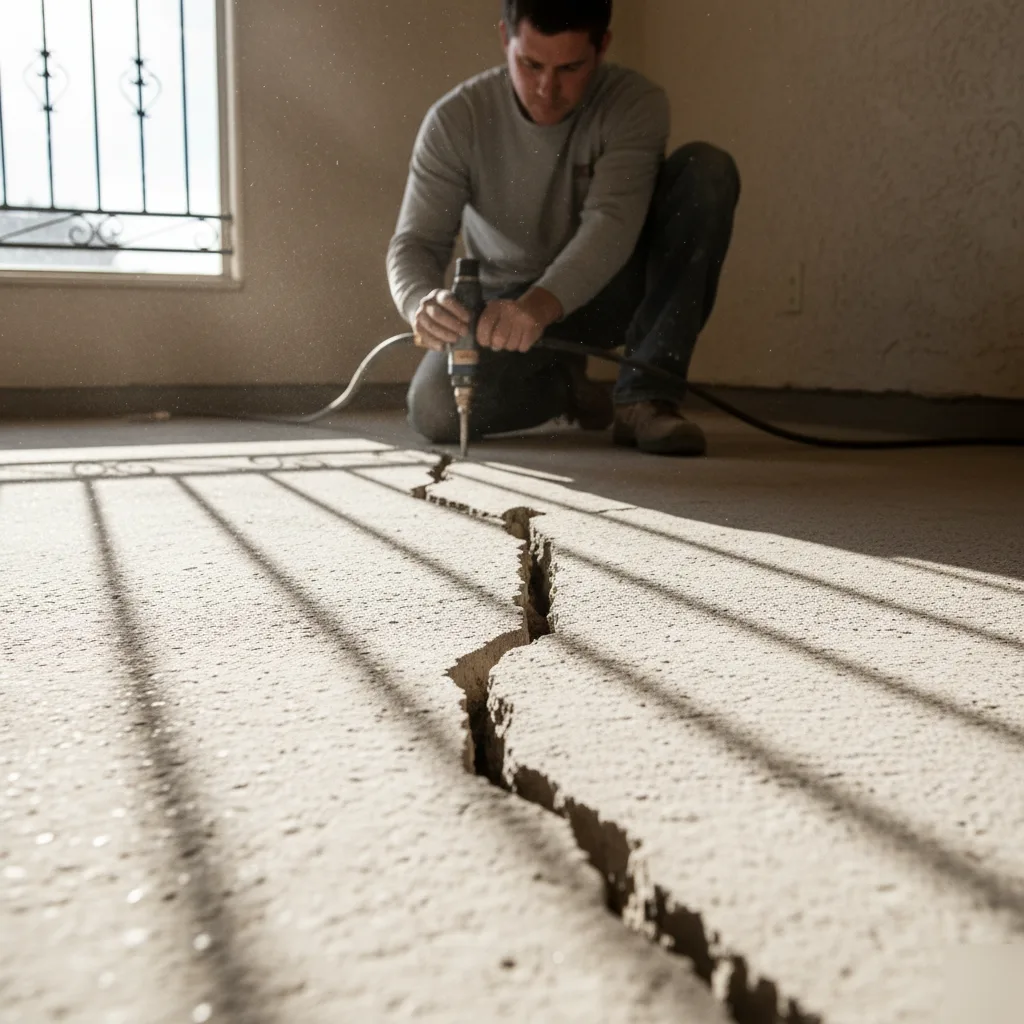
Concrete Slab Foundation Repair in San Antonio, TX
The post-tension and conventionally reinforced concrete slabs that most San Antonio homes sit on are built to handle normal loads — but they weren't designed to manage 50 or 60 years of Bexar County clay cycles without maintenance or intervention. Differential movement accumulates. One corner drops while another stays level. A section near a tree root zone behaves differently than the section at the center of the slab. Over time, the entire slab goes out of plane and everything built on it reflects that movement.
Concrete slab foundation repair is the process of bringing that movement under control — assessing what has happened, identifying the areas of active or historic movement, and implementing the repair method that addresses the specific failure mode rather than just patching the visible damage.
The San Antonio Diagnosis-First Approach
Bats Foundation Repair does not prescribe a repair before completing a thorough evaluation. That means assessing the slab's current elevation at multiple points, identifying the pattern of differential movement, examining soil conditions around the perimeter, reviewing drainage patterns, and documenting the symptoms visible inside and outside the home. The repair plan follows the evaluation — not the other way around.
San Antonio Neighborhoods With High Foundation Repair Demand
Alamo Heights and Olmos Park — homes from the 1930s through 1960s on deep Blackland Prairie clay that have been through decades of active shrink-swell
Stone Oak and North Central corridors — newer construction on Edwards Plateau edge soils where thin clay over limestone creates fast void formation
Converse, Universal City, and Live Oak — large residential concentrations on Blackland Prairie clay in the northeast quadrant of Bexar County
Leon Valley and Helotes — west side geology that combines shallow clay with fractured limestone drainage, creating unpredictable foundation behavior
Southtown and King William — historic structures where original construction used shallow footings that are especially vulnerable to clay movement
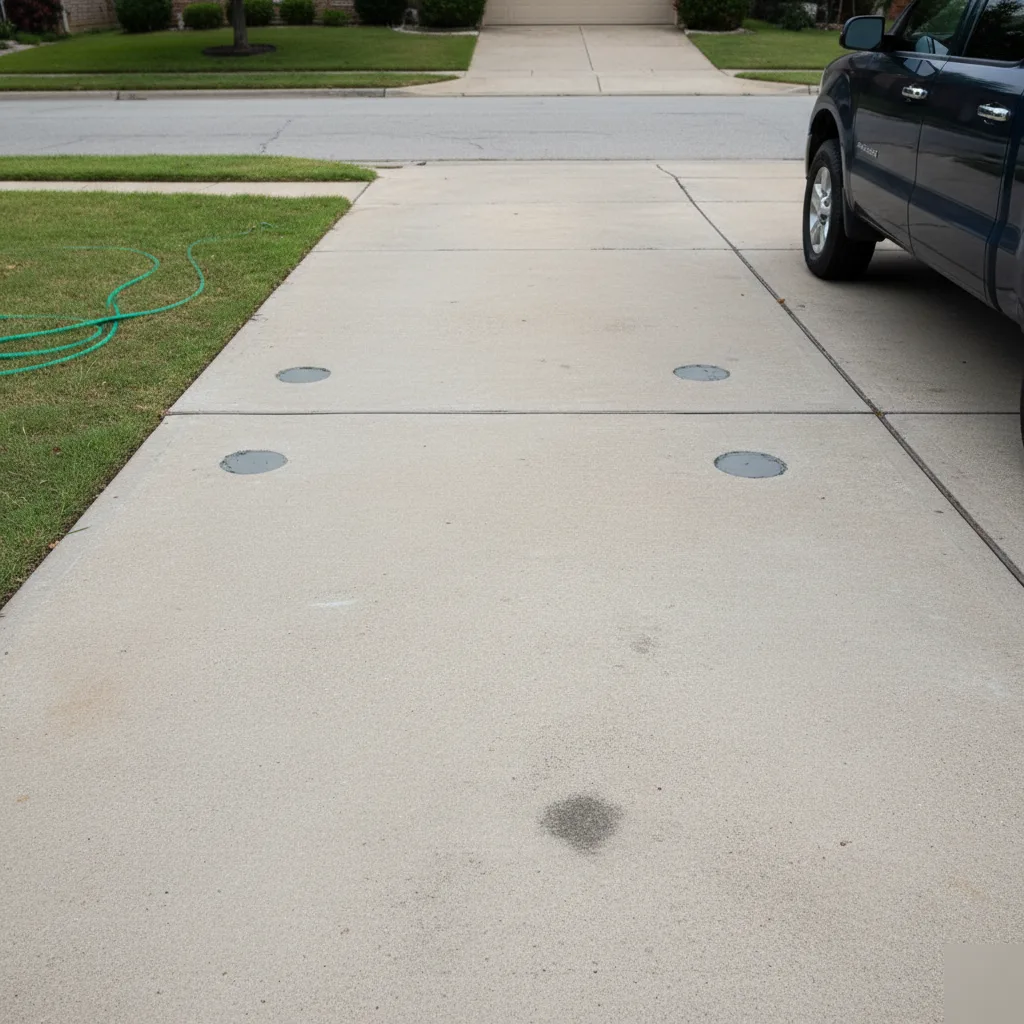
Concrete Slab Repair in San Antonio, TX
Not every slab problem in San Antonio requires a full foundation repair. Garage floors, interior floor slabs, patios, pool decks, walkways, and commercial floor slabs can crack, settle unevenly, or deteriorate in ways that are significant and need professional attention — without indicating structural failure of the foundation itself. Concrete slab repair addresses those problems: targeted work that restores the integrity and function of a damaged slab without the scope or cost of full foundation intervention.
Common Concrete Slab Repair Situations in San Antonio
Garage floors that have cracked or dropped due to clay void formation beneath them — especially common where irrigation and landscaping concentrate moisture near the structure
Interior floor slabs showing cracks along construction joints or shrinkage lines that have widened under repeated clay cycling
Patio slabs adjacent to the home that have separated from the foundation perimeter or settled unevenly
Pool deck concrete that has cracked around the pool coping or shifted at panel joints
Commercial floor slabs in retail, warehouse, or medical facilities showing settlement or cracking under operational loads
Walkways and entry slabs that have created trip hazards due to differential panel movement
The San Antonio Drainage Factor
One of the most common drivers of localized slab damage in San Antonio — separate from foundation movement — is drainage. When water pools against a slab perimeter, runs beneath a patio from an adjacent planting bed, or saturates one section of a garage floor from a downspout that discharges too close to the structure, the clay beneath that section expands disproportionately. Bats Foundation Repair looks at drainage conditions as part of every concrete slab repair assessment — because fixing the slab without addressing what caused the damage is a temporary fix at best.
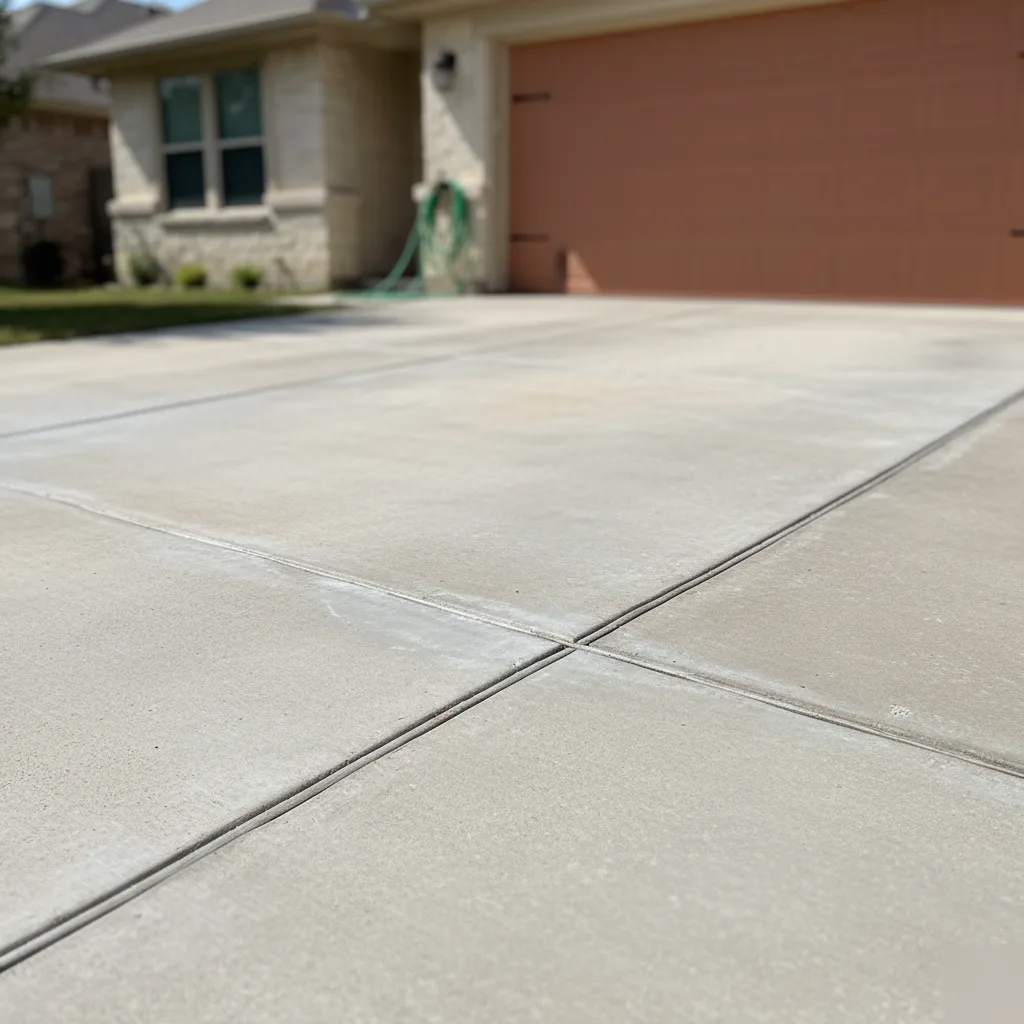
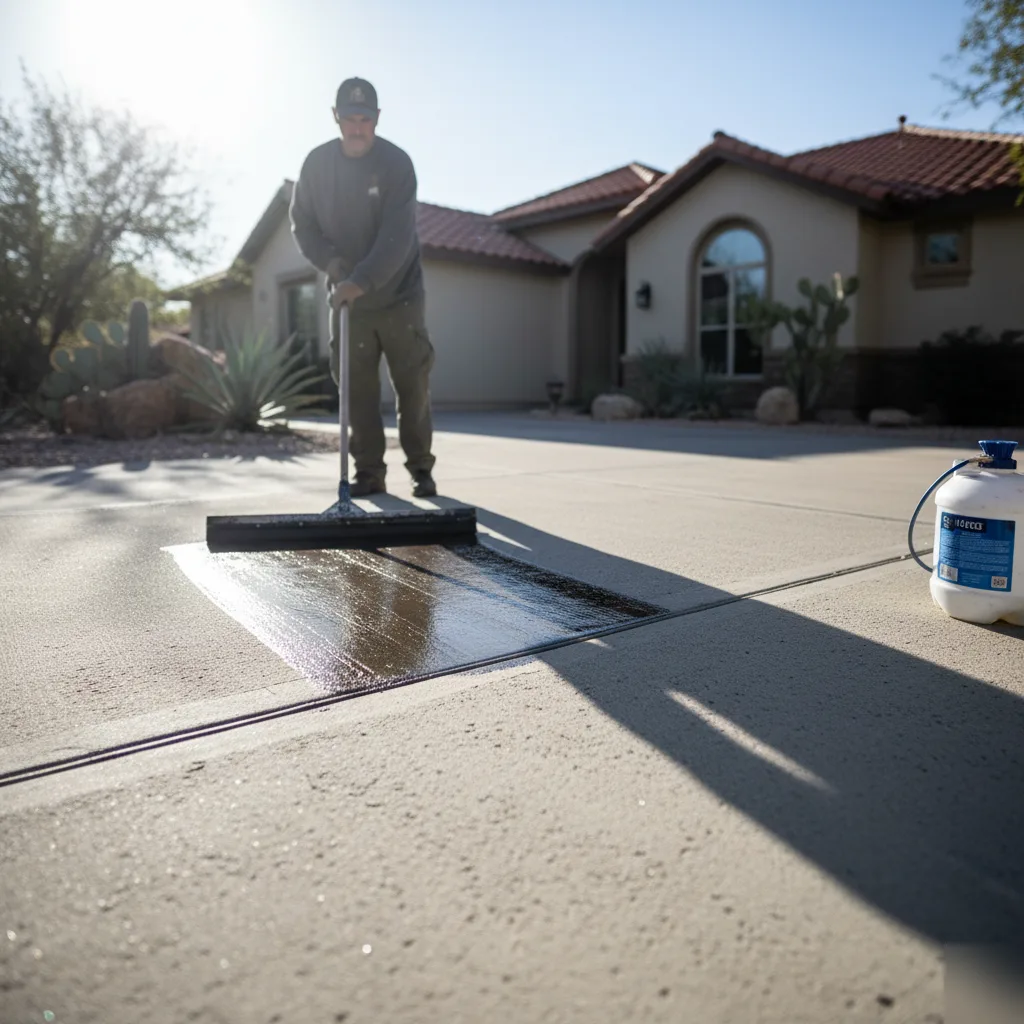
Driveway Repair in San Antonio, TX
San Antonio driveways take the full force of Bexar County clay cycles without the structural depth or reinforcement of a foundation slab. Most residential driveways are four to six inches of concrete over native clay — enough to handle vehicle loads on stable soil, but insufficient to resist the seasonal swelling and shrinking that Houston Black Clay delivers year after year. The result is one of the most common calls Bats Foundation Repair receives: cracked, settled, and uneven driveways that have gone from cosmetically rough to functionally dangerous.
Why San Antonio Driveways Crack and Sink
During San Antonio's extended dry periods — which can last several months during summer — the clay beneath the driveway contracts and pulls away from the concrete, leaving sections of the slab unsupported. Vehicle loads on those unsupported sections cause the concrete to crack and drop. When rains return, the clay rehydrates and sections may push back up unevenly, creating lips and height differentials at panel joints that catch wheels and create tripping hazards for pedestrians.
Tree roots in nearby planting areas accelerate the process. As roots draw moisture from the clay, they create localized dry zones beneath the driveway that contract faster and more severely than surrounding areas. The driveway cracks along the boundary between the root-influenced zone and the rest of the slab.
San Antonio Driveway Repair Methods
Polyurethane foam injection to fill voids beneath sunken driveway panels and lift them back to grade — completed in hours, driveable the same day
Crack repair for panel cracks before they progress to full separation or panel failure
Panel replacement for sections that are beyond repair due to severe cracking or structural failure
Expansion joint sealing to prevent water intrusion at panel seams and expansion gaps
In many cases, driveway lifting with polyurethane foam injection is completed in a single day and the driveway can be driven on within hours — far faster and more affordable than full concrete replacement.
Get a Free Concrete Slab Estimate in San Antonio
From deep slab pier installation to driveway repair and polyurethane foam injection, Bats Foundation Repair provides complete concrete slab services for San Antonio and Bexar County homeowners. We know what Houston Black Clay does to concrete over time — and we have the methods, the experience, and the warranty to fix it right.
Call today for a free, no-pressure estimate. We serve San Antonio, Alamo Heights, Stone Oak, Converse, Universal City, Leon Valley, Helotes, and the surrounding Bexar County area.