

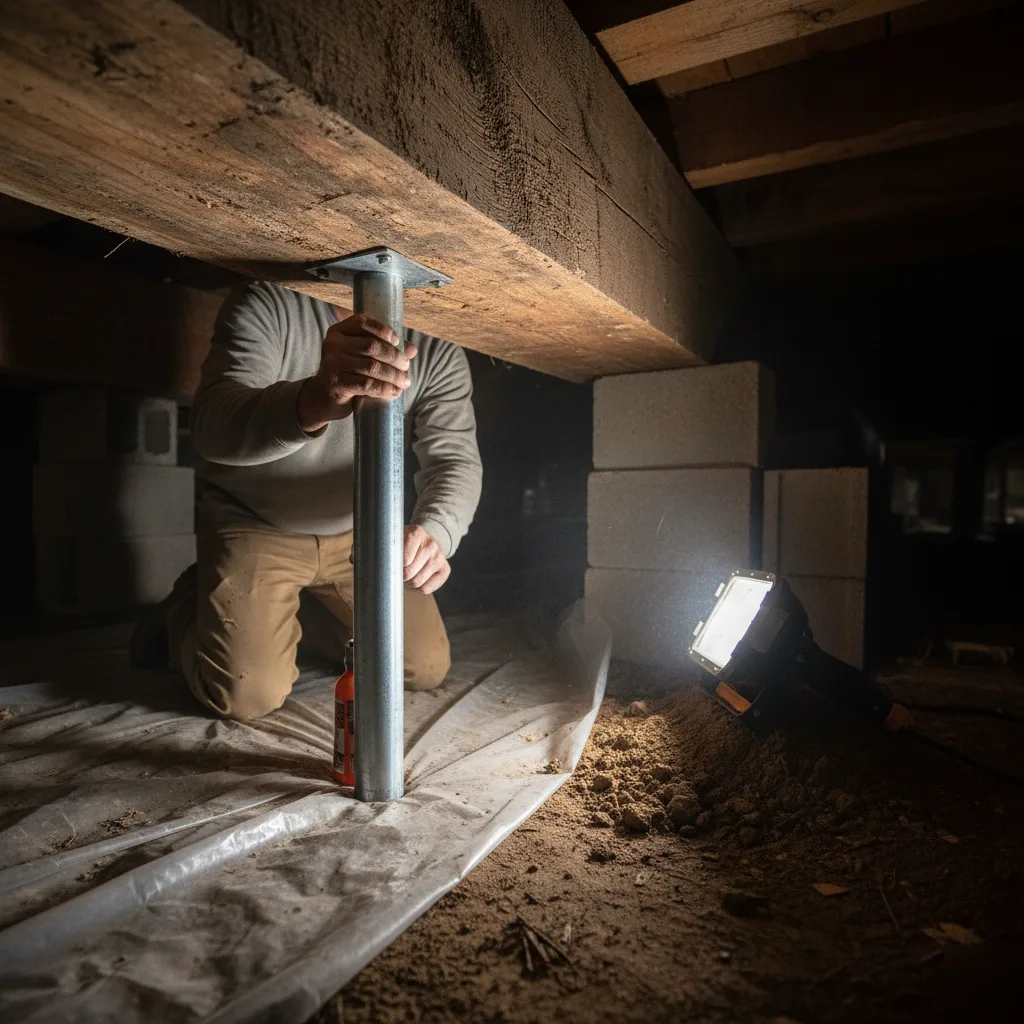
Crawl Space Support Posts · San Antonio, TX

Crawl Space Support Posts in San Antonio

Crawl Space Support Posts in San Antonio done right. We diagnose sagging floors and install lasting solutions. Get a free assessment today.

Warning signs

Warning Signs Your Crawl Space Support Posts Are Failing

Bouncy floors are the number one thing people call us about. You're walking through your hallway and the floor gives a little. Maybe dishes rattle in the cabinet when someone walks by. That's not normal. It's a sign something's wrong down below, calling for a masonry contractor San Antonio TX.

We see this every week in older San Antonio homes, especially in neighborhoods like Dignowity Hill and Government Hill where pier and beam construction goes back decades. The signs start small. Then they don't stay small. Here's what to watch for:
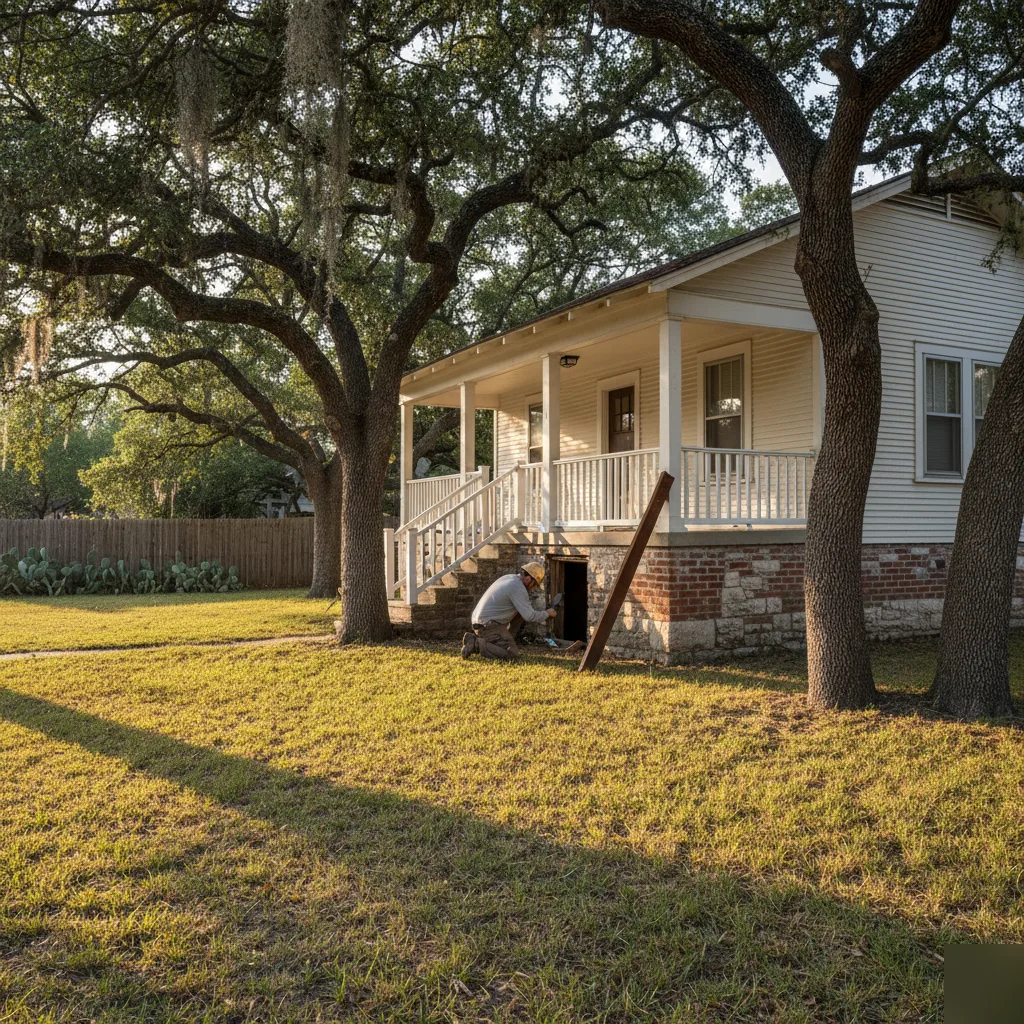
Crawl space access beneath a San Antonio pier and beam bungalow
  • Floors that feel soft, saggy, or uneven when you walk across them
  • Visible gaps between your baseboards and the floor
  • Interior doors that stick or won't latch properly
  • Cracking sounds from under the house when weight shifts
  • Posts that are visibly leaning, cracked, or sitting on crumbling pads

Some of these overlap with other foundation issues. But when a pier and beam home in San Antonio has sagging floors, the support posts are usually the culprit. Bexar County's expansive clay soil shifts constantly with our wet-dry cycles. That movement pushes against footings and can tilt posts that were perfectly plumb five years ago.

Wood rot is another big one. If your crawl space holds moisture, and most do during our humid summers, wooden posts absorb that water over time. They get soft at the base. Eventually they compress under the load of your home. You might not see it from inside the house until the damage is already serious.

A lot of homeowners live with bouncy floors for years thinking it's just how the house is. It's not. The longer failing posts go without attention, the more stress transfers to your beams and joists. What starts as a simple post replacement can turn into a bigger structural repair. If any of this sounds familiar, don't wait on it.
Why posts fail

Why Older Pier-and-Beam Homes Lose Support Post Integrity

A lot of the calls we get in San Antonio start the same way. Someone notices a soft spot in their hallway floor. Or a door that used to close just fine now sticks at the top. They peek under the house and see a wooden post that's leaning, cracked, or barely touching the beam above it. That's when it clicks. Something down there isn't doing its job anymore.

Pier-and-beam homes were built all over neighborhoods like Tobin Hill and Dignowity Hill decades ago. Many of those original posts were cedar or untreated pine. They were fine for a while. But "a while" ran out a long time ago. Here's what actually breaks down these posts over the years:

  • Moisture damage. Bexar County's clay soil holds water like a sponge after heavy rain, then dries out fast in summer. That cycle pushes moisture into crawl spaces constantly. Wood rots from the bottom up, and you won't see it until the post is already soft.
  • Termite activity. Subterranean termites love dark, damp crawl spaces. They can hollow out a wooden post from the inside, leaving the outside looking normal while the core is gone.
  • Soil movement. Our expansive clay swells and shrinks with the seasons. The concrete footings under posts can shift, tilt, or sink. Once a footing moves even half an inch, the post above it loses full contact with the beam.
  • Improper original installation. We see this every week. Posts shimmed with scrap wood or stacked bricks instead of proper footings. Temporary fixes from 1960 that somehow became permanent.

And here's the thing most people don't realize. One failing post puts extra load on every post around it. So the problem spreads. What starts as a single weak point under your kitchen can turn into sagging floors across half the house within a couple of years.

Our team at Bats Foundation Repair has over 40 years of combined experience working under San Antonio homes. We've crawled under hundreds of pier-and-beam structures, and the pattern is always the same. Posts don't fail overnight. They fail slowly, quietly, until your floors tell you something's wrong. By then you're usually past the point of a simple fix.

Temporary vs. permanent

Temporary Jack Posts vs. Permanent Engineered Support Posts

Here's something we run into almost every week in San Antonio. A homeowner crawls under their pier and beam home and finds a screw jack propped on a cinder block. Maybe a previous owner put it there. Maybe a handyman did it years ago. Either way, it's not a real fix. Temporary jack posts and permanent engineered support posts look similar at first glance. But they do very different jobs, and mixing them up can cost you down the road.

What Makes Them Different

A temporary jack post is meant for short-term use. Think of it as a tool, not a solution. Contractors use them during remodeling to hold weight while permanent work gets done. They're adjustable, lightweight, and not designed to sit under your home for ten years. But that's exactly where we find them in crawl spaces across neighborhoods like Dignowity Hill and Government Hill.

Permanent engineered support posts are built to stay. They're sized for the load they carry, set on proper footings, and anchored to your beams with hardware that won't slip. The difference matters because Bexar County's expansive clay soil moves constantly. A temporary post sitting on a loose block will shift right along with it.

How to Tell What You Have

Not sure which type is under your home? Here's what to look for:

  • A red or orange adjustable screw jack with no footing beneath it is almost always temporary
  • Wood posts sitting directly on dirt with no concrete pad are failing or will fail
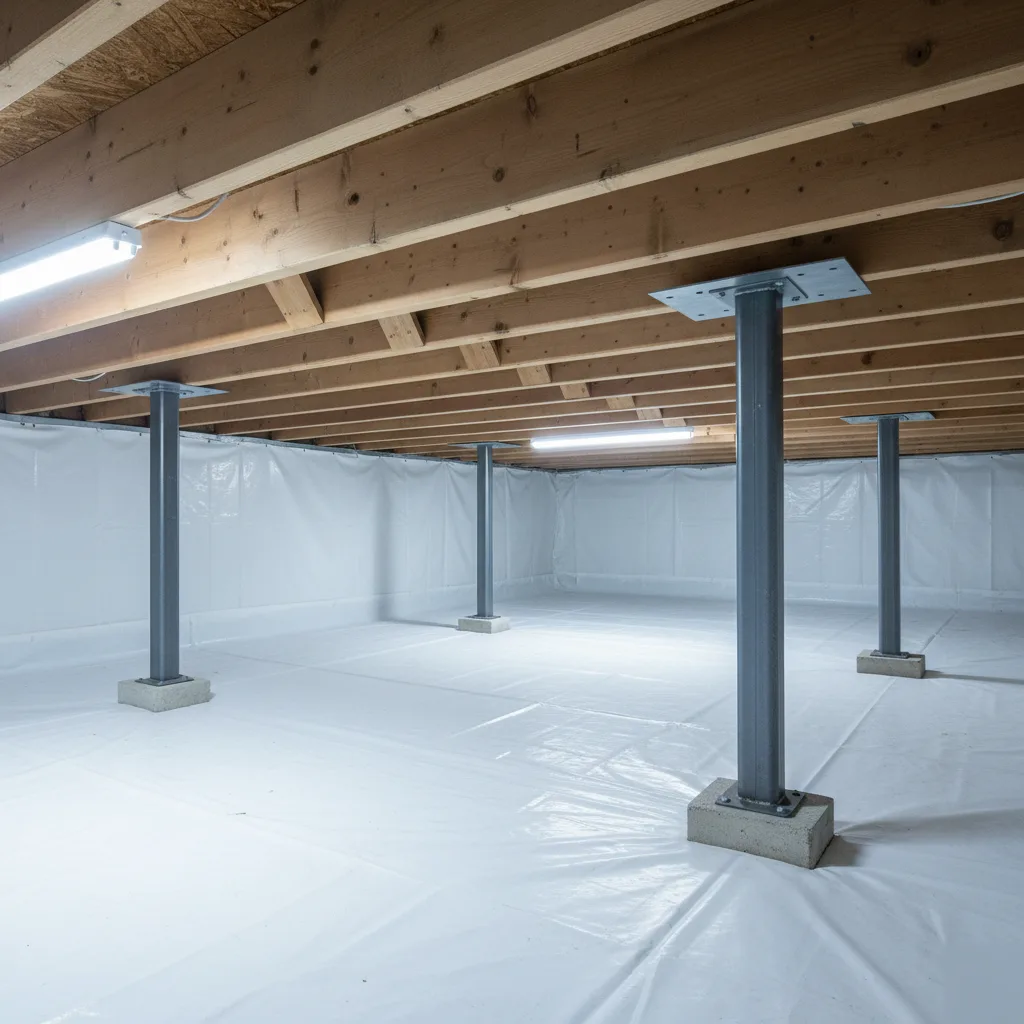
  • Steel posts bolted to a poured concrete footing and fastened to the beam above are permanent installations
  • Any post that wobbles when you push it isn't doing its job

We've seen homes in San Antonio where three or four temporary jacks were holding up an entire kitchen floor. That's a problem waiting to happen. And it usually does happen right after a heavy rain when the soil swells. Our team at Bats Foundation Repair installs permanent engineered support posts with proper footings every time. With 40+ years of combined experience, we don't take shortcuts on something that holds up your home. Temporary posts have their place on a job site. They just don't belong as a long-term answer under your floor.

Installation process

What the Support Post Installation Process Looks Like

Most folks want to know what's actually going to happen under their house. Fair enough. We'd want to know too. Here's how our crew handles the installation from start to finish in San Antonio.

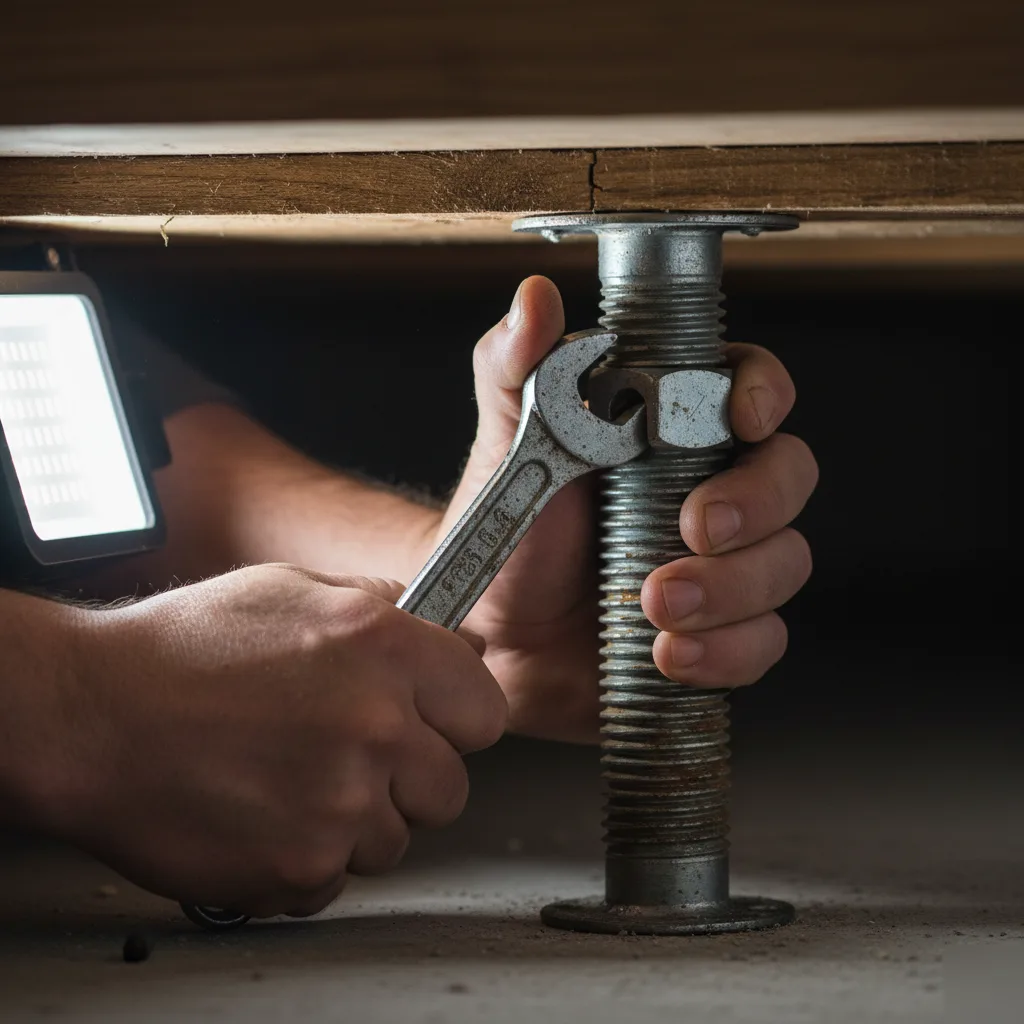
Adjustable steel crawl space support post with threaded adjustment in San Antonio
  1. 1
    Access and site prep

    We clear a path into your crawl space and set up proper lighting. Some homes near Alamo Heights have tight entries, others give us plenty of room. Every job is different.

  2. 2
    Measure and mark post locations

    Our team uses the structural assessment to mark exactly where each post needs to go. Spacing depends on your beam layout and where the load is heaviest.

  3. 3
    Excavate footing holes

    Each post sits on a concrete footing pad. We dig down to stable soil below the surface layer of Bexar County clay. That footing is what keeps your post from shifting later.

  4. 4
    Pour concrete footings

    We pour and level each pad, then let it set. Skipping this step is the number one reason other contractors' posts fail. We see it constantly on repair calls.

  5. 5
    Set and secure steel posts

    Once footings cure, we position adjustable steel posts on each pad. Every post gets shimmed and locked to the beam above it. Tight contact matters. Even a small gap defeats the purpose.

  6. 6
    Level and verify

    We check beam height at every post with a laser level. If your floors were sagging, this is where you'll see correction. We adjust until the beams sit where they should.

  7. 7
    Final walkthrough

    Before we pack up, our crew does a full crawl space inspection. We confirm every post is solid, every footing is right, and nothing got missed.

The whole process typically takes one day for most San Antonio homes. Larger pier and beam structures might need two days, but that's less common. Here's something people don't always expect. The work is quiet. No jackhammering, no heavy equipment tearing up your yard. Most of it happens underneath your house with hand tools and a small crew. Your neighbors in Castle Hills probably won't even notice we're there. With 40+ years of combined experience, our team at Bats Foundation Repair has done this hundreds of times. We know what good looks like, and what shortcuts look like. You'll get the first one.

San Antonio soil

San Antonio's Clay Soil Requires More Than a Standard Installation

Most people don't think about dirt. But dirt is the reason you're reading this page right now. Bexar County sits on expansive clay soil. The ground under your home swells when it gets wet and shrinks when it dries out. San Antonio's weather makes this worse. We'll go weeks without rain, then get hit with a heavy downpour that dumps inches in a single afternoon. The soil expands fast, contracts fast, and your pier and beam foundation feels every bit of it.

Over near Alamo Heights, we see homes built in the 1940s and 1950s where the original wood posts have been fighting this cycle for decades. They're losing. So what does this mean for posts in your crawl space? A standard installation won't hold up here. You can't just set a post on bare ground and expect it to stay put. The clay will push it, pull it, tilt it. We've crawled under homes where posts shifted two inches in a single season. That kind of movement transfers straight up into your floor joists and beams.

Here's what makes our approach different in San Antonio:

  • We account for seasonal soil movement before we ever place a post
  • Proper footing depth matters more here than in stable-soil regions
  • Post material and load ratings get matched to your home's specific conditions
  • Drainage around the crawl space gets evaluated because standing water changes everything

According to the American Society of Civil Engineers, expansive soils cause more financial damage to structures each year than floods, hurricanes, and earthquakes combined. That stat hits different when you're living on top of it. Our team at Bats Foundation Repair has over 40 years of combined experience working in this exact soil. We're locally owned, we live here too, and we've seen what shortcuts look like five years down the road. It's never pretty. The clay doesn't care what someone promised you. It does what it does. Every post we install needs to be ready for that reality from day one.

Frequently asked questions

Crawl space support posts in San Antonio, answered

How do I know if my crawl space support posts are actually failing or if it's something else?

Sagging or bouncy floors are the clearest sign your support posts are failing. Walk slowly across your hallway or kitchen. If the floor gives under your feet, dishes rattle in cabinets, or interior doors suddenly stick, the posts below are likely the problem. In San Antonio's pier-and-beam homes, these signs often show up gradually. By the time floors feel noticeably soft, one or more posts have usually been struggling for months or even years.

Why do support posts fail faster in San Antonio than in other parts of the country?

Bexar County's expansive clay soil is the main reason. It swells when it rains and shrinks fast when it dries out. That constant movement shifts footings, tilts posts, and pushes moisture into crawl spaces during our humid summers. Wood posts absorb that moisture from the bottom up. You won't see the rot until the post is already soft and compressing under the weight of your home. Most other regions don't see this wet-dry cycle as aggressively as we do here.

What happens when I schedule a crawl space support post inspection with your team?

A technician will physically crawl under your home and inspect every post, footing, and beam connection. You'll get a clear picture of which posts are failing, which are borderline, and which are solid. We look for leaning posts, crumbling pads, rot at the base, and any temporary jack posts left behind by previous owners. Most inspections in San Antonio take one to two hours depending on crawl space access and the size of your home.

Can one failing post really cause damage across the whole floor?

Yes, and it happens faster than most homeowners expect. When one post stops carrying its share of the load, the weight shifts to every post around it. That extra stress spreads across your beams and joists. We see this regularly in older neighborhoods like Tobin Hill and Dignowity Hill, where a single weak post under a kitchen eventually leads to sagging floors across two or three rooms. Catching it early keeps the repair focused and straightforward.

Is a screw jack I found under my house a real fix or just temporary?

A screw jack is a temporary tool, not a permanent solution. It's designed to hold weight for days or weeks during remodeling work, not to sit under your home for years. If you found one propped on a cinder block or sitting on bare dirt, it's already a problem. San Antonio's shifting clay soil will move that block, and the jack goes with it. Permanent support posts are anchored to poured concrete footings and fastened to the beam above so they stay put through every season.

How long does it take to replace crawl space support posts in a typical San Antonio home?

Most support post replacements in San Antonio are completed in one day. The timeline depends on how many posts need replacing and how accessible your crawl space is. Homes in older neighborhoods with low clearance or heavily compacted soil may take a bit longer. Once new posts are set and the floors are leveled, you can walk normally through your home right away. There's no curing time or extended waiting period after the work is done.

Replace failing posts before the floor sags further

Sagging floors don't stabilize on their own. Call to schedule your free crawl space assessment today.