
Steel Push Pier Installation · San Antonio, TX

Steel Push Pier Installation in San Antonio

Steel push pier installation in San Antonio for permanently stabilizing sinking foundations. Bats Foundation Repair drives piers past reactive clay to bedrock. Call to schedule.

Why foundations settle here

Why San Antonio Foundations Settle and Keep Moving

Bexar County sits on some of the most reactive clay soil in the country. We see it on nearly every job we do across San Antonio. The ground swells when it rains, then shrinks and cracks during dry spells. Your foundation rides that cycle like a raft on rough water. We offer specialized Steel Push Pier Installation Services to manage this problem.

And it never really stops.

That's the part most people don't realize. Settlement here isn't a one-time event. The expansive clay beneath homes in neighborhoods like Alamo Ranch and Stone Oak can shift inches between seasons. According to the American Society of Civil Engineers, expansive soils cause more financial damage to structures each year than floods, hurricanes, and earthquakes combined. San Antonio sits right in the middle of that problem zone.

Here's what drives the movement under your home:

  • Seasonal drought-to-rain cycles that cause Bexar County clay to swell and contract repeatedly
  • Poor drainage around the foundation that lets water pool on one side
  • Large trees with root systems that pull moisture unevenly from the soil
  • Original construction on fill dirt that wasn't compacted well enough

Our team has been doing this work for over 40 years combined, and the homeowner tells us the same story. A door started sticking. Then a crack appeared above a window frame. Then the floors felt uneven. By the time they call, the soil has already been working against the foundation for months or even years.

If you just moved to San Antonio from out of state, this might be brand new to you. That's actually pretty common. Folks coming from areas with sandy or loamy soil don't expect the ground itself to be the problem. But here in San Antonio, the soil is the problem, it's always been the problem. Steel push pier installation exists specifically because surface-level fixes can't reach past that unstable clay. The piers go deep enough to hit load-bearing strata that don't move with the weather. That's the only way to get a permanent answer for a foundation that won't sit still.
Warning signs

Warning Signs That Point to Steel Push Pier Installation

You notice a crack running along your brick exterior. Or maybe a door that used to close just fine now sticks every time. These aren't random problems. In San Antonio, they're usually your foundation talking to you.

Bexar County sits on expansive clay soil that swells when it rains and shrinks during dry spells. That constant push and pull moves your foundation, sometimes unevenly. We see this every week in neighborhoods like Alamo Ranch and Stone Oak. The signs start small, then they don't stay small for long.

Here's what to watch for:

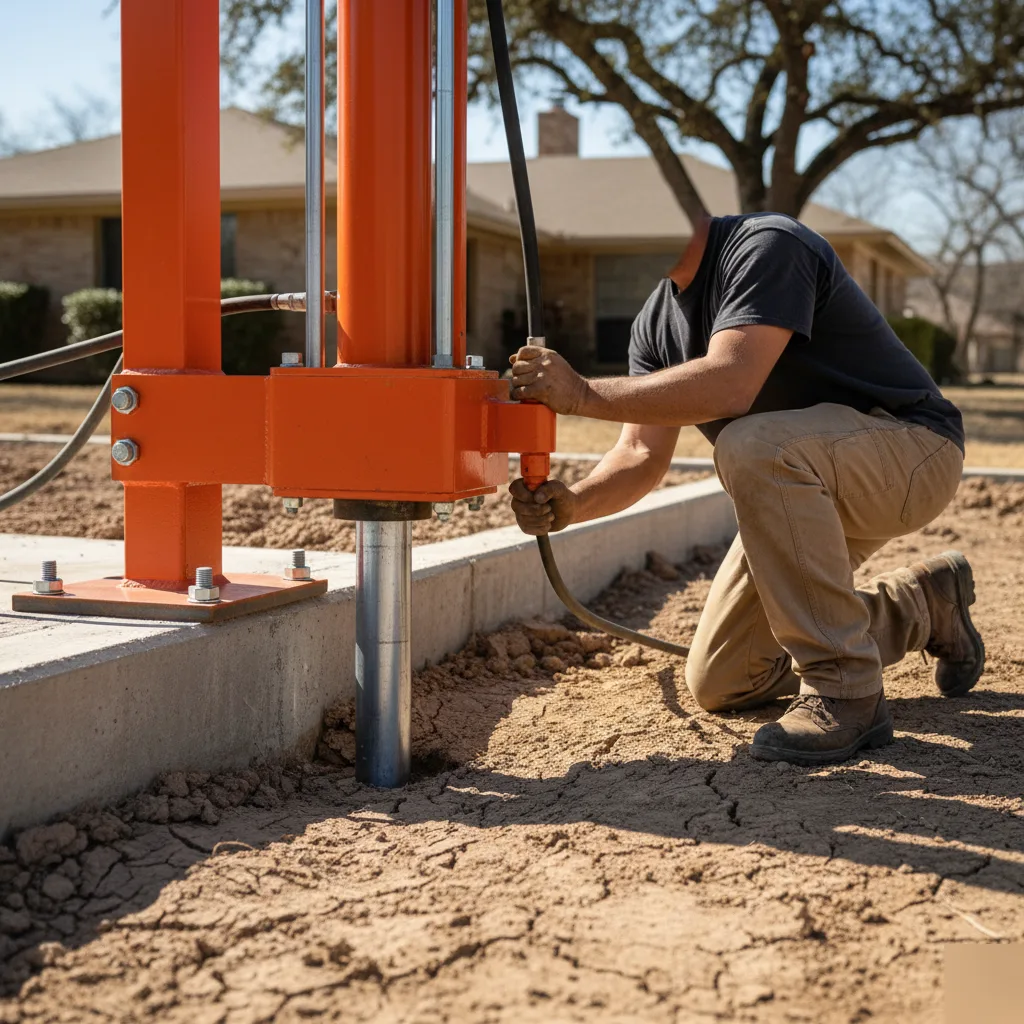
Steel push pier installation underway on a San Antonio foundation repair job
  • Diagonal cracks at the corners of windows or door frames
  • Gaps forming between your walls and ceiling or walls and floor
  • Floors that slope or feel uneven when you walk across a room
  • Exterior brick cracks in a stair-step pattern along mortar joints
  • Doors or windows that suddenly won't latch or lock properly

It's the same thing every time. The soil underneath one section of the foundation has dropped, and the slab or beam above it has followed. That's settlement. And once it starts, it doesn't reverse on its own.

Not sure if what you're seeing is serious? That's actually pretty common. A hairline crack in drywall might just be normal settling in a newer home. But a crack that's wider at the top than the bottom, or one that keeps growing over a few months, that's different. That pattern tells us the movement is active.

Some folks call us after noticing their garage door sits crooked in the frame. Others spot water pooling against one side of the house after a rain. Both point to the same root cause. The foundation has shifted, and the structure above it is reacting.

Our team at Bats Foundation Repair has decades of combined experience and can usually tell during a visual inspection whether steel push pier installation is the right fix for what's happening under your San Antonio home. The sooner you catch these signs, the fewer piers you'll likely need.

How it works

How Steel Push Pier Installation Works, Step by Step

People ask us all the time what actually happens on install day. Fair question. The process is straightforward, but every step matters. Here's how our crew handles steel push pier installation from start to finish.

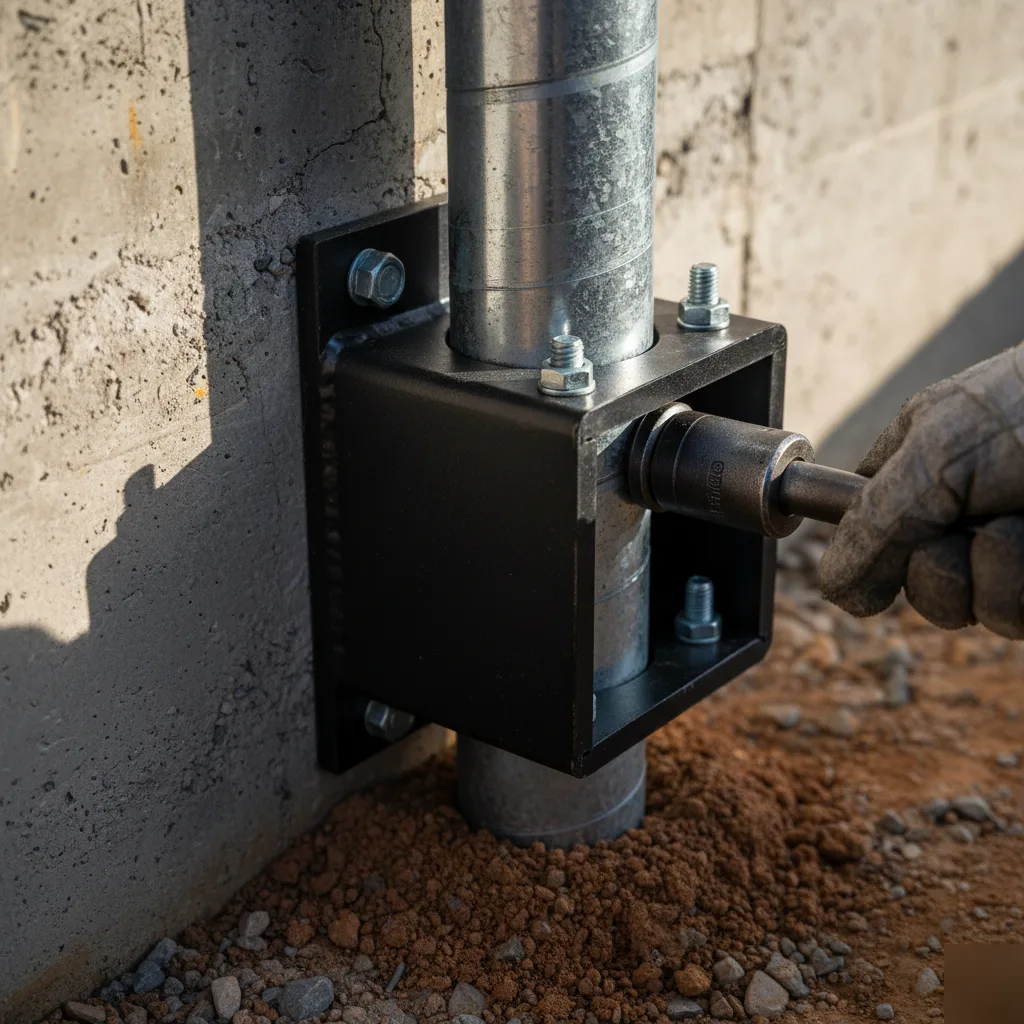
Close-up of steel push pier drive bracket bolted to a foundation footing in San Antonio
  1. 1
    Excavation around the footing

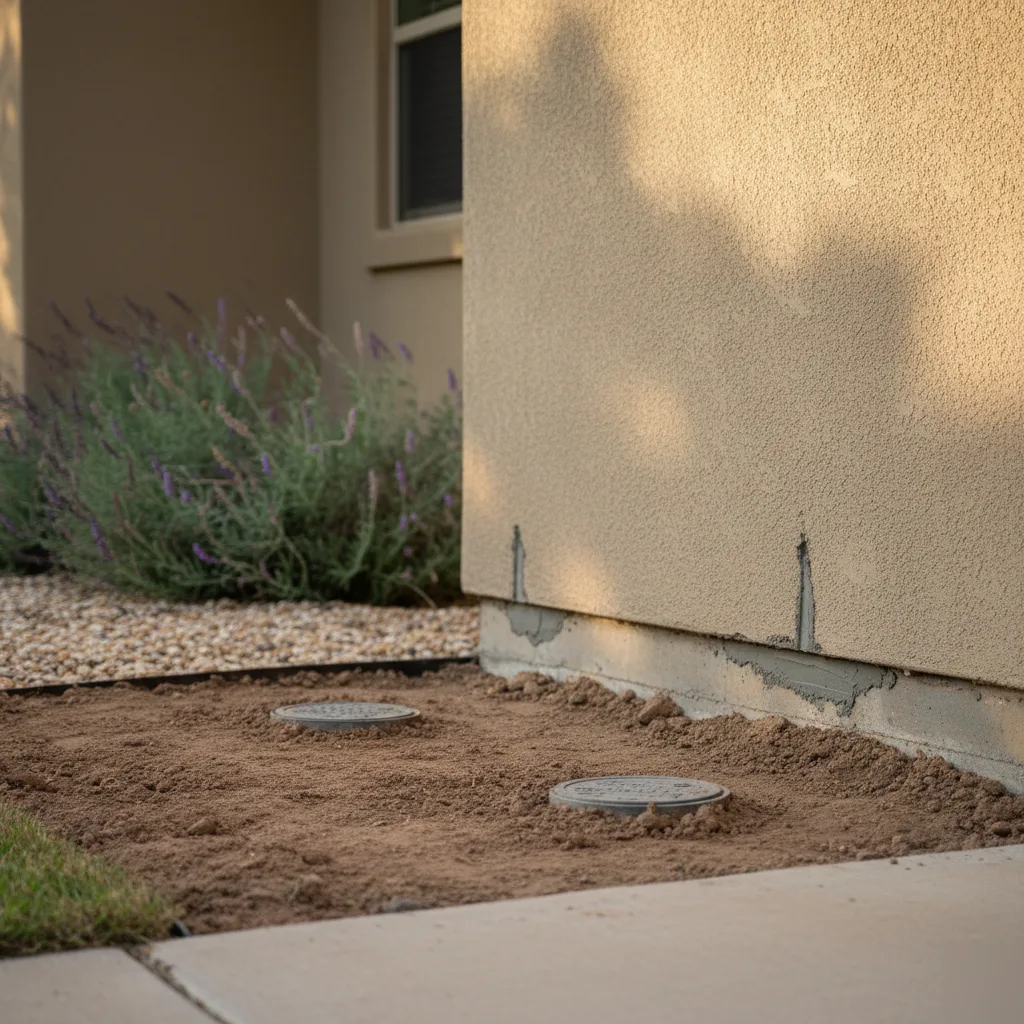
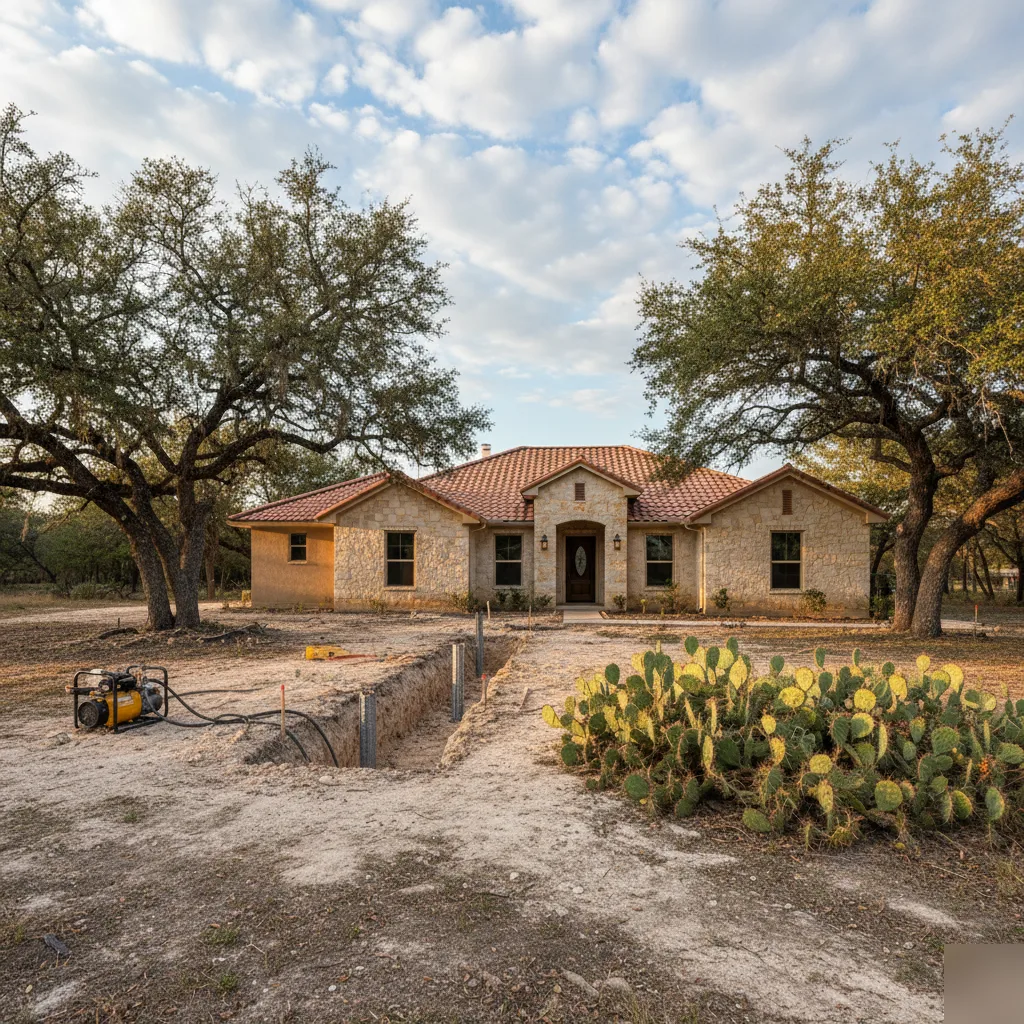
    We dig small holes next to your foundation at each pier location. These are tight, controlled openings, not trenches across your whole yard. Most spots are about two feet wide.

  2. 2
    Bracket placement

    A heavy steel bracket gets bolted directly to the underside of your foundation footing. This bracket is the connection point between your home and the pier. It has to sit flush and tight against the concrete.

  3. 3
    Driving the steel sections

    Using hydraulic equipment, we push galvanized steel tubes down through the soil one section at a time. Each section threads into the next. They keep going until they hit load-bearing strata, sometimes 20 to 30 feet below the surface in parts of San Antonio.

  4. 4
    Load testing

    Once the pier reaches refusal, we test it against the actual weight of your home. This confirms the pier can support the structure before we lift anything. The HUD Foundation and Pier Guidelines outline the structural performance standards that inform how this load verification process is conducted.

  5. 5
    Lifting and stabilizing

    The hydraulic system transfers the weight of your foundation onto the piers. We monitor elevation readings carefully. In most cases, we can bring the slab back to a level position or very close to it.

  6. 6
    Backfill and cleanup

    We fill the excavation points, compact the soil, and clean up the work area.

The whole process usually takes one to two days for a typical home in San Antonio. We've done this on older homes near Alamo Heights and newer builds out toward Helotes. Every house is different, but the steps stay the same.

One thing we tell every customer: you can stay in your home during the work. No need to relocate. There's noise from the hydraulic press, but it's nothing extreme. Because we're working from the exterior in most situations, your daily routine barely changes.

Our crew at Bats Foundation Repair doesn't rush through these steps. We've seen what happens when someone cuts corners on bracket placement or stops driving piers too early. It's not worth it. Every pier gets the same attention whether it's the first one or the fifteenth.

Want to know how many piers your home might need? Give us a call and we'll walk through it with you.

How many piers

What Determines How Many Piers Your Home Needs

This is one of the most common questions we hear. And there's no single answer that fits every home in San Antonio.

The number of steel push piers depends on several factors our crew evaluates during a full inspection. We look at the weight of your structure, the extent of settlement, soil conditions at your specific lot, and how deep we need to reach stable ground. A single-story home on a quiet street in Alamo Heights might need six piers. A two-story home near Helotes with heavy limestone transitions could need twelve or more.

Key Factors We Evaluate

  • Structural load: Heavier homes push more weight into the soil, so they typically need more support points spread along the affected area
  • Severity of settlement: A foundation that's dropped two inches on one corner is a different job than one that's sinking across the entire back wall
  • Soil profile: Bexar County clay expands and contracts hard, but depth to bedrock or load-bearing strata varies block by block
  • Foundation type and span: Longer unsupported spans between load-bearing walls need closer pier spacing to prevent future deflection

We can tell within the first hour of inspection roughly what the pier layout will look like. We use elevation measurements across the entire slab to map exactly where the low spots are. That data drives the plan.

Here's what matters to you. More piers doesn't always mean a bigger problem, it means a more thorough fix. We'd rather place the right number now than have you call us back in three years because we cut corners. Our team has read San Antonio soil for decades, and we've learned that skipping even one pier in a critical zone creates problems down the road.

Every pier placement gets engineered for your home. Not a template. Not a guess. Want to know what your home actually needs? Give us a call and we'll walk your property with you.

After installation

Protecting Your Investment After Installation

The piers are in. Your foundation is level. Now what?

We tell every homeowner in San Antonio the same thing after we finish steel push pier installation. The work under your home is done right, but what you do above ground matters just as much going forward. Bexar County clay soil doesn't stop moving just because we stabilized your foundation. It keeps swelling when it rains and shrinking during those brutal dry stretches we get every summer. Your job is to manage moisture around the house so the soil stays as consistent as possible.

Moisture Management Around Your Foundation

This is the single biggest thing you can control. We see homeowners over near Alamo Heights who spend good money on foundation work, then let their flower beds flood the perimeter every time they water. That puts stress right back on the soil. Here's what we recommend:

  • Keep soaker hoses running during dry months to prevent the soil from pulling away from your foundation
  • Make sure gutters and downspouts direct water at least three feet from the slab
  • Grade your landscaping so water flows away from the house, not toward it
  • Fix plumbing leaks under the slab quickly, even small ones create big soil changes over time

When someone calls us back years later, it's almost always a drainage issue they let go too long.

Watch for Changes and Act Early

After steel push pier installation, keep an eye on your doors and windows. They should open and close smoothly. If a door starts sticking again or you notice a new crack forming in the drywall, don't wait months to call. Early detection keeps small problems small.

We also recommend a follow-up inspection about a year after the work. Our team at Bats Foundation Repair does these for homeowners across San Antonio because we want to make sure everything is holding the way it should. Years of working San Antonio soil have taught us that the best foundation repairs are the ones you never have to think about again. And that starts with a little attention to what's happening around your home after we leave.

Your foundation supports everything you own. Protect it the same way you'd protect anything else that matters.

Frequently asked questions

Steel push pier installation in San Antonio, answered

How long does steel push pier installation take for a typical San Antonio home?

Most steel push pier jobs in San Antonio take one to two days to complete. The timeline depends on how many piers your foundation needs and how deep we have to drive them. In parts of San Antonio, the piers may need to go 20 to 30 feet down before they hit stable, load-bearing strata. You can stay in your home the entire time. We excavate small, controlled openings — not large trenches — so the disruption to your yard is minimal.

Can steel push piers actually lift my foundation back to level?

Yes, in most cases we can bring your foundation back to a level position or very close to it. Once the piers reach refusal and pass load testing, the hydraulic system transfers your home's weight onto the piers and lifts the slab. We monitor elevation readings throughout the lift. The result isn't just stabilization — it's recovery of lost elevation. How much lift is possible depends on how long the settlement has been active and the condition of the slab.

Why do so many San Antonio homes need pier work compared to other cities?

San Antonio sits on some of the most reactive clay soil in the country. That clay swells when it rains and shrinks during dry spells, and it never really stops moving. Neighborhoods like Alamo Ranch and Stone Oak deal with this every season. The American Society of Civil Engineers reports that expansive soils cause more structural damage each year than floods, hurricanes, and earthquakes combined. San Antonio is right in the middle of that problem zone, which is why foundation settlement is so common here.

What does a stair-step crack in my brick mean — do I actually need piers?

A stair-step crack running along the mortar joints of your brick exterior is one of the clearest signs of foundation settlement. It means one section of your foundation has dropped and the brick above it is reacting. That pattern, especially when it's wider at the top than the bottom or keeps growing over a few months, tells us the movement is still active. A hairline crack in drywall might not be serious, but a growing stair-step crack in brick almost always points to a pier repair situation.

Will my yard be torn up after the installation is finished?

No, the yard impact is much smaller than most people expect. We dig tight, controlled openings at each pier location — about two feet wide — not open trenches across your property. Once the piers are in place and the foundation is stabilized, we backfill those excavation points, compact the soil, and clean up the work area before we leave. Most San Antonio homeowners are surprised at how little disruption there is by the end of the job.

What happens if I wait and don't fix the settlement right away?

The longer you wait, the worse it gets. Foundation settlement in San Antonio doesn't reverse on its own — the expansive clay keeps moving through every wet and dry season. Doors that stick turn into doors that won't close at all. Small cracks grow wider and spread to new areas. The structural load shifts unevenly, which can stress plumbing and framing over time. The other thing worth knowing: the sooner you catch it, the fewer piers you'll likely need, which means a smaller repair overall.

Permanently stop foundation settlement

Steel push piers bypass Bexar County's reactive clay entirely. Call to schedule your free foundation assessment today.