

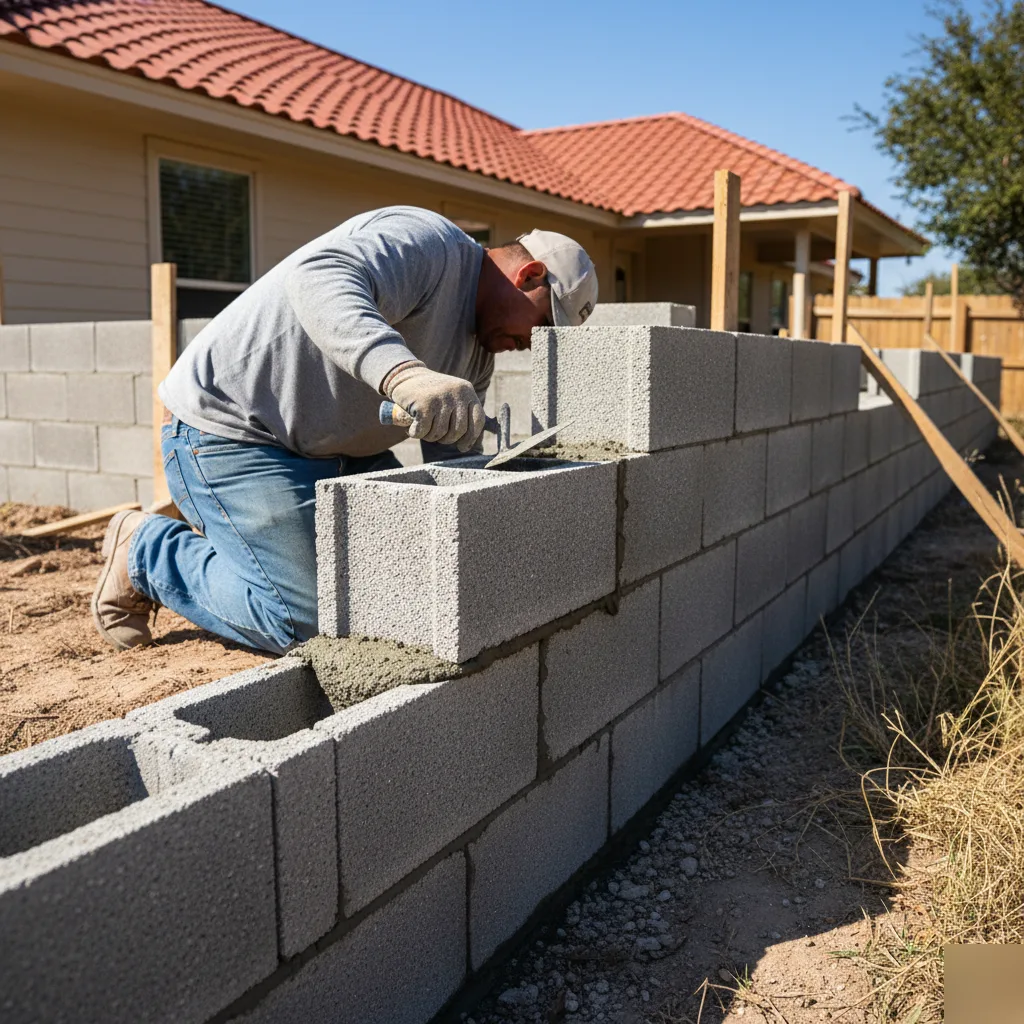
Foundation Block Wall Installation · San Antonio, TX

Foundation Block Wall Installation in San Antonio

Foundation block wall installation in San Antonio by insured and bonded masonry contractors. Bats Foundation Repair builds and repairs CMU block walls for residential and commercial foundations. Call today.

When something is wrong

When Your Block Foundation Wall Is Telling You Something Is Wrong

Here's what we hear all the time. A homeowner in San Antonio notices a crack running through their block wall and thinks it's just cosmetic. Maybe they patch it with some caulk. Six months later, that crack is wider and a door won't close right.

For issues requiring brick wall repair San Antonio, Block walls don't hide problems well. They actually show you exactly what's happening underground, you just have to know what to look for.

The most common warning signs we see on foundation block walls include:

  • Stair-step cracks following the mortar joints between blocks
  • Horizontal cracking along one course of block, usually about a third of the way up from the footer
  • Walls bowing or leaning inward, even slightly
  • Gaps forming where the block wall meets the slab or the beam above it
  • Mortar that crumbles when you press your thumb into it
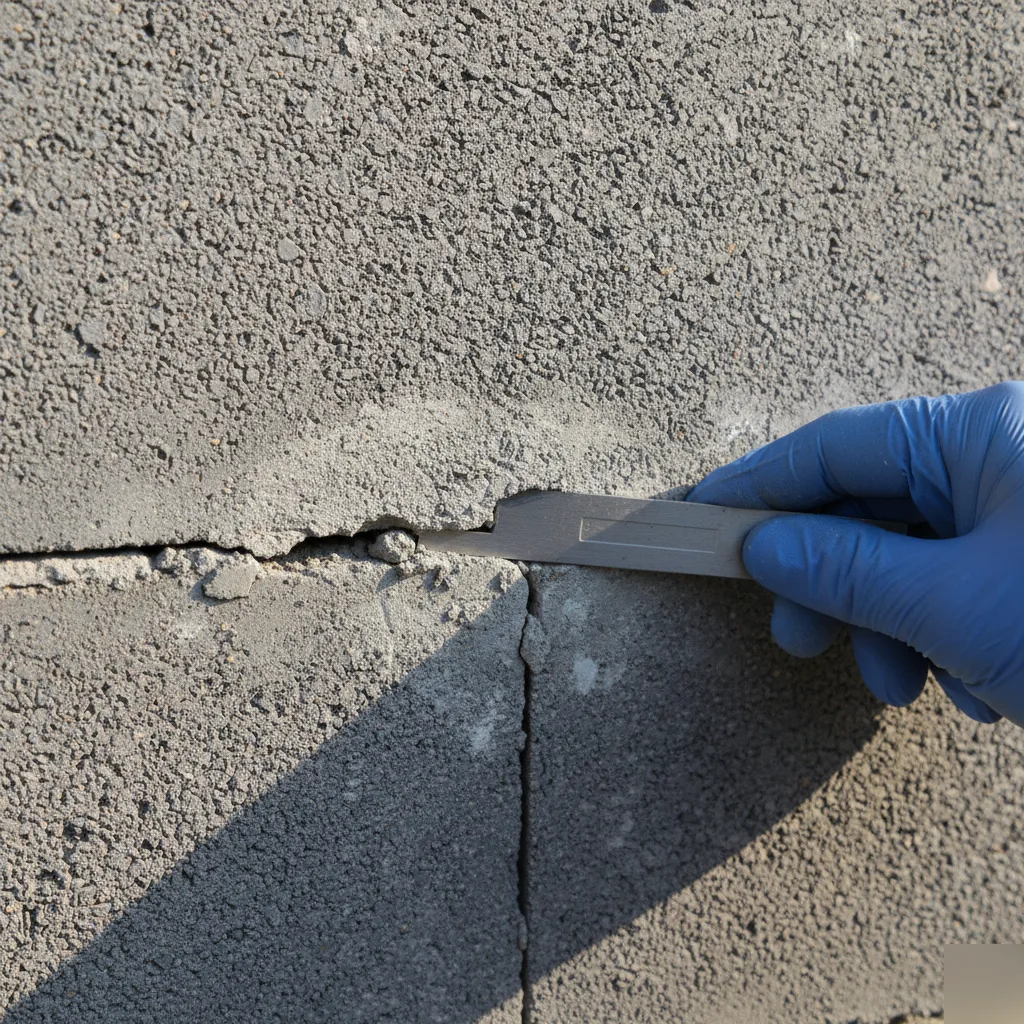
Crack gauge on a block foundation wall during inspection in San Antonio

Stair-step cracks are the big one. We see them every week on properties across Bexar County. That pattern means the soil under one section of your foundation has shifted more than another. In our heavy clay soil, that shift can happen fast after a long dry spell followed by rain.

Horizontal cracks tell a different story. They usually mean lateral pressure is pushing against the wall from outside. Soil expands when it gets wet, and the clay around neighborhoods like Alamo Ranch and the far west side can swell hard enough to push a block wall inward. That's not a crack you ignore.

Bowing is the one to take seriously. A wall that's moved even half an inch inward is under real stress and worth a professional look.

Not sure if what you're seeing is a real problem? That's actually pretty common. Some cracks are surface-level settlement that stabilizes on its own. Others are the early stage of structural failure. The difference matters. Bats Foundation Repair has years of combined experience reading these signs in San Antonio homes. We can usually tell you what's going on within the first few minutes of looking at it.
Block vs. poured concrete

Block Wall vs. Poured Concrete: The Honest Answer for San Antonio Soil

We get this question constantly. "Should I go with a block wall or poured concrete?" The real answer depends on your property, your soil, and what the wall needs to do.

Poured concrete walls work great in some parts of the country. But San Antonio sits on expansive clay soil that swells when it's wet and shrinks when it dries. That constant movement puts serious lateral pressure on foundation walls. A poured wall handles that pressure differently than a block wall does, and not always better.

Why Block Walls Work Here

Block walls give us something poured concrete can't: flexibility during construction. We can reinforce individual cells with rebar and grout exactly where the load demands it. That matters when you're building on Bexar County clay that shifts season to season. We see this play out on properties across the Alamo Ranch area and down through the South Side, the soil behaves differently block by block sometimes.

Here's what block walls offer for San Antonio foundations:

  • Steel reinforcement placed precisely where soil pressure is highest
  • Easier to inspect during construction since each course is visible
  • Simpler to repair if a section ever cracks or shifts
  • Easier access along the exterior during construction

Poured concrete can crack in one long line under lateral soil pressure. A block wall distributes stress across mortar joints. That's not a weakness. It's actually an advantage in reactive soil conditions.

When Poured Concrete Makes Sense

We won't pretend block walls are the right call every time. Some commercial projects or deep basement applications in San Antonio do call for poured walls. But for most residential foundation work, block walls give our crew more control over reinforcement placement and let us adapt to what the soil report tells us.

And here's something most contractors won't mention. If something does go wrong ten years from now, a block wall is far easier to assess and fix than a poured wall. With years of combined experience, the crew at Bats Foundation Repair has seen both types fail. Block walls almost always give you more repair options down the road.

Permits and inspections

Permits, Inspections, and What San Antonio Requires Before Work Begins

This is the part most folks don't think about until it's too late. San Antonio has specific building codes that apply to foundation block wall installation, and skipping the permit process can cause real headaches down the road.

The City of San Antonio Development Services Department handles building permits for structural work. A block wall that's part of your foundation system typically requires a permit before anyone breaks ground. We handle the paperwork for our customers because the process can feel confusing if you've never done it. Here's what you should know about why it matters.

What the Permit Process Looks Like

It's not as scary as it sounds. The basic steps go like this:

  1. 1

    Submit a permit application with your project scope and site details to the city.

  2. 2

    Provide engineered plans or drawings that show the block wall layout, reinforcement, and tie-in to the existing foundation.

  3. 3

    Wait for plan review and approval, which in San Antonio usually takes a few business days for residential work.

  4. 4

    Schedule inspections at key stages during construction, including footing inspection and final inspection.

  5. 5

    Receive your final sign-off once the inspector confirms everything meets code.

We see homeowners over near Alamo Heights who've had unpermitted work done by a previous contractor. That creates problems when they try to sell the home or refinance, the title company flags it every time.

Inspections aren't something to dread. They're actually there to protect you. An inspector verifies that the footing depth is right for Bexar County's expansive clay soil, checks rebar placement and grout fills, and confirms the wall ties into your structure correctly. All stuff that keeps your investment solid for decades.

And here's something people moving to San Antonio from out of state don't always realize. Our local soil conditions mean the city takes foundation work seriously. The codes reflect that. Bats Foundation Repair stays current on every San Antonio code requirement, backed by years of combined experience. You won't get a surprise stop-work order on our watch.

No permit means no proof the work was done right. It's that simple.

Step-by-step installation

How Foundation Block Wall Installation Actually Works, Step by Step

People ask us about this process all the time. Fair enough. You're trusting someone to build a structural wall on your property, you deserve to know what's happening. Here's how our crew handles foundation block wall installation from start to finish.

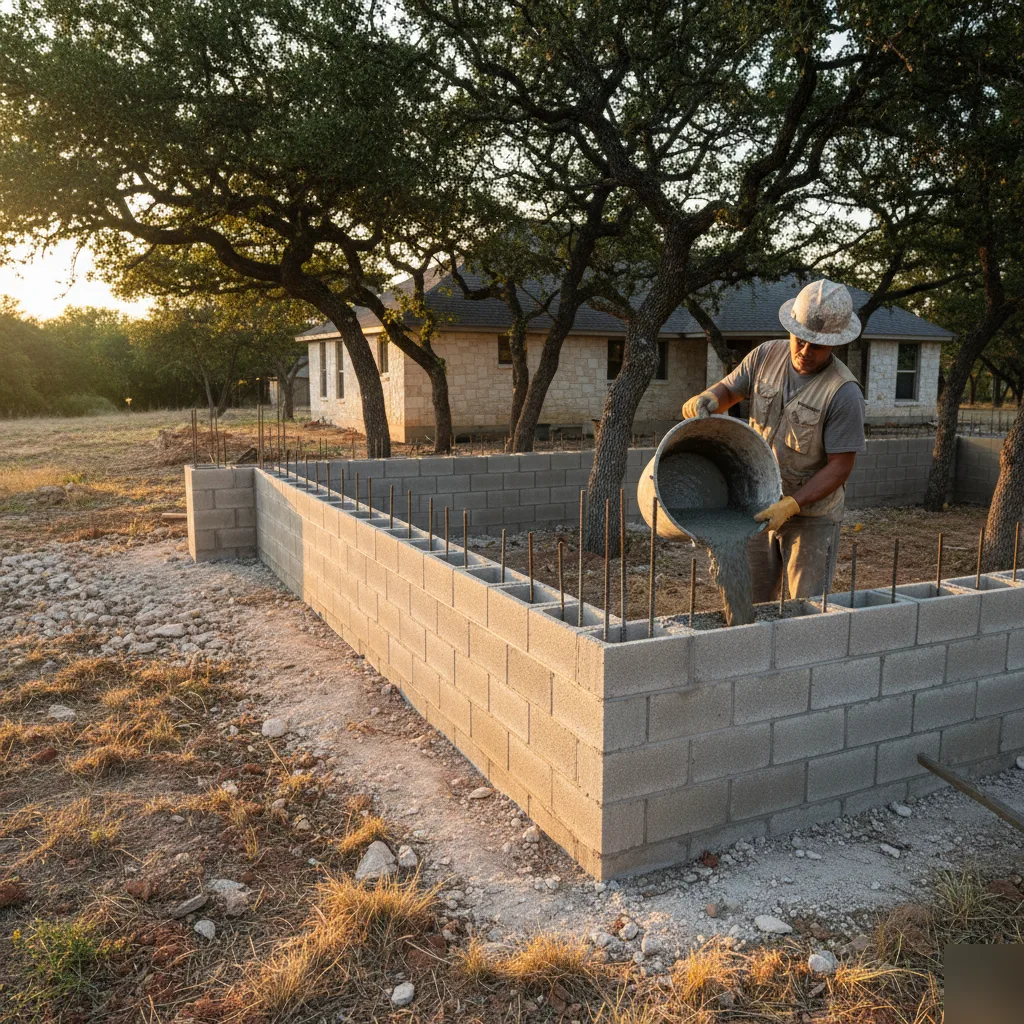
Rebar and grout installation inside CMU block foundation wall in San Antonio
  1. 1
    Site prep and layout

    We mark the exact wall line using string lines and stakes. The footing location gets marked out based on your engineer's specs or our own measurements. In San Antonio's expansive clay soil, we pay close attention to grade and drainage slope before anything else.

  2. 2
    Footing excavation and pour

    We dig a trench for the concrete footing. This is the base your block wall sits on, and it has to be right. The footing width and depth depend on wall height and load. We set rebar in the footing before the pour.

  3. 3
    First course placement

    This is the most important row of block. We check level constantly. If the first course is off by even a quarter inch, every row above it compounds that error. Our crew uses a laser level on every job.

  4. 4
    Stacking and mortaring

    Each course of concrete masonry units gets laid with mortar joints. We stagger the blocks so vertical joints never line up. Rebar gets placed vertically through the block cores at regular intervals for reinforcement.

  5. 5
    Grouting the cores

    Once rebar is set, we fill the hollow cores with grout. This locks the rebar in place and turns individual blocks into one solid structure. We've seen walls in the Alamo Ranch area that were never grouted properly, they crack within a few years.

  6. 6
    Curing and backfill

    The wall needs time to cure before any soil goes against it. Rushing this step is a mistake we never make.

The whole process typically takes a few days for a standard residential wall. Bigger projects on commercial properties take longer. But every step matters equally.

Bats Foundation Repair doesn't skip steps to save time. We've repaired too many block walls built by crews who did. Want to talk through your project? Give us a call.

Rebar and drainage

Rebar, Drainage, and the Details That Determine How Long a Block Wall Lasts

A block wall is only as good as what's inside it and what's behind it. We see plenty of walls around San Antonio that looked fine for a year or two, then started cracking and leaning. Almost every time, the problem traces back to skipped rebar or missing drainage. Those aren't extras. They're the whole point.

Every hollow core in a concrete masonry block is an opportunity to add vertical steel reinforcement. We fill those cores with rebar and grout to turn a stack of blocks into one solid structure. Without it, you've basically got a tall fence that can't handle lateral soil pressure. Bexar County's expansive clay pushes hard against walls, especially after a heavy rain when that soil swells. Rebar is what keeps your wall standing when the ground decides to move.

Why Drainage Matters More Than Most People Think

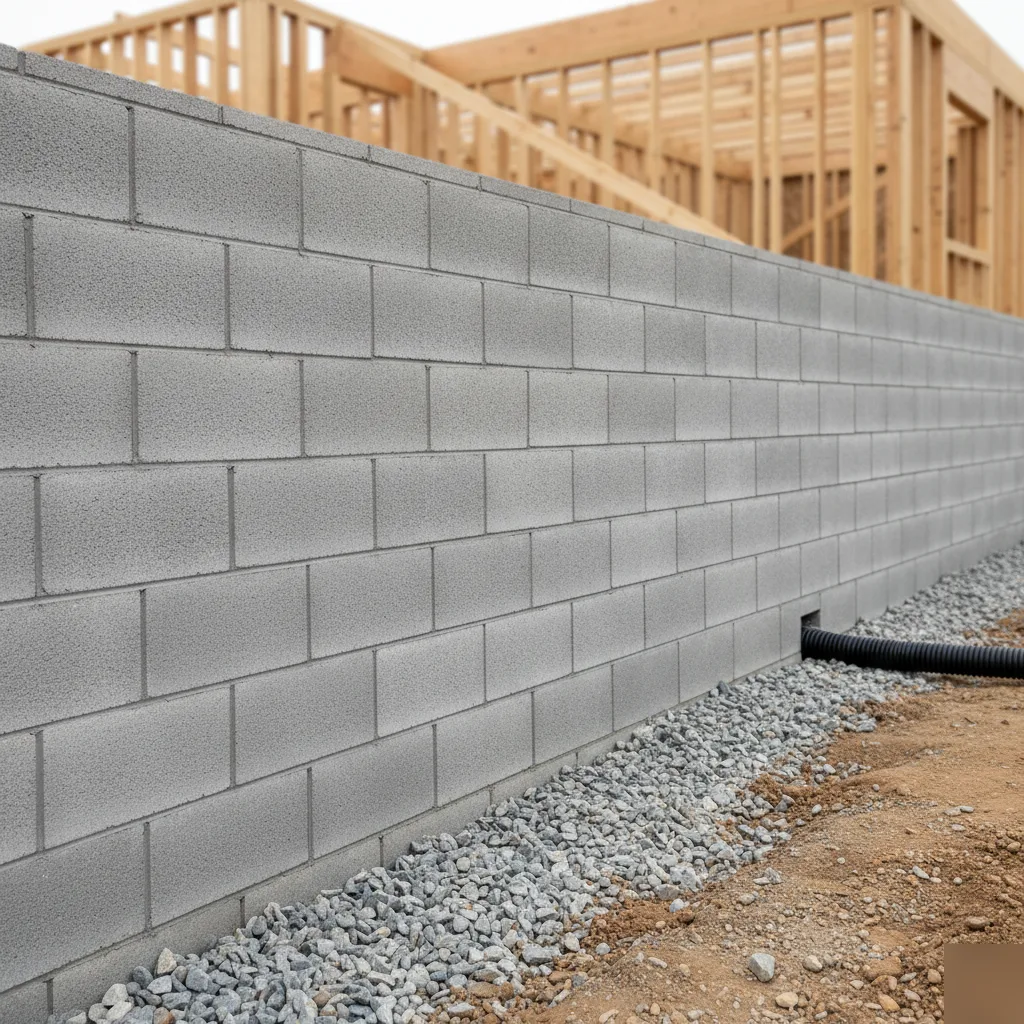
Here's what happens behind a block wall with no drainage plan. Water saturates the soil. The clay expands. Hydrostatic pressure builds against the back of the wall. Over months and years, that pressure wins. We've pulled apart failed walls near the Alamo Ranch area and found zero drainage material behind them, just wet clay pressed right against the block.

A proper installation includes a few things most homeowners never see once the job is done:

  • Gravel backfill behind the wall to give water a path downward
  • A perforated drain pipe at the base to move water away from the footing
  • Horizontal joint reinforcement every few courses for added lateral strength
  • Proper grout fill in all reinforced cells, not just the corners

With years of combined experience, the Bats Foundation Repair crew doesn't skip these steps. They're what separate a block wall that lasts decades from one that fails in five years. The difference in effort between doing it right and cutting corners is small. The difference in results is massive.

Not sure if your current wall has proper reinforcement? That's actually pretty common, most homeowners have no idea what's inside their walls. Give us a call and we'll take a look.

Frequently asked questions

Foundation block wall installation in San Antonio, answered

How do I know if my block wall crack is a structural problem or just surface settling?

Stair-step cracks following the mortar joints usually mean soil has shifted under one section of your foundation. That's a structural signal, not just cosmetic. A crack you can patch with caulk today can widen into a door-alignment problem in six months. Horizontal cracks are even more serious — they mean soil is pushing laterally against your wall. If you're pressing your thumb into the mortar and it crumbles, that wall needs a professional look, not a patch job.

Does San Antonio's clay soil really make block walls a better choice than poured concrete?

Yes, for most residential work in San Antonio, block walls handle the expansive clay soil better. Bexar County clay swells when wet and shrinks when dry, creating constant lateral pressure on foundation walls. Block walls let us place rebar and grout exactly where soil pressure is highest. Poured concrete can crack in one long line under that pressure. Block walls distribute stress across mortar joints instead, which gives you more repair options if something shifts years down the road.

Do I need a permit for foundation block wall installation in San Antonio?

Yes, the City of San Antonio Development Services Department requires a permit for any structural foundation work before anyone breaks ground. You'll need engineered plans showing the block layout, reinforcement details, and tie-in to the existing foundation. Inspections happen at key stages, including the footing and the final sign-off. Skipping this step causes real problems — unpermitted foundation work gets flagged by title companies when you sell or refinance your home.

What happens during a foundation block wall inspection before work starts?

A professional will walk your property and read the wall's condition directly. Bowing even half an inch inward is a serious warning sign. Gaps where the block meets the slab, crumbling mortar, and horizontal cracking all tell different stories about what's happening underground. An experienced crew can usually identify the problem within the first few minutes on site. You'll know whether you're looking at surface settlement that has stabilized or the early stage of structural failure.

How does San Antonio's weather affect the timeline for foundation block wall work?

San Antonio's dry spells followed by heavy rain are hard on clay soil, and that cycle can speed up how fast a problem develops. We see stair-step cracks appear quickly after a long drought breaks with rain. Scheduling your installation or repair before the wet season hits gives the footing and grout time to cure in stable conditions. Soil that's actively swelling or shrinking during construction can affect how the wall sets, so timing matters here more than in other climates.

What should I expect when a foundation block wall crew arrives at my San Antonio home?

The crew will review the site, confirm the permit is in place, and walk you through the work scope before anything starts. Expect a footing inspection to happen early — the inspector checks depth requirements specific to Bexar County's clay soil. Each course of block goes up in a visible sequence, so you can actually see the reinforcement being placed. That transparency is one reason block walls are easier to verify during construction than a poured wall.

Build it right from the foundation up

A properly built block wall is the base everything else depends on. Call to schedule your project assessment today.