
Concrete Underpinning · San Antonio, TX

Concrete Underpinning in San Antonio

Concrete underpinning in San Antonio that stabilizes failing foundations at the source. Expert diagnosis, proven methods, lasting results. Call to schedule.

The root cause

Why San Antonio Soil Keeps Pushing Foundations Out of Position

Most folks who move to San Antonio don't think about dirt. But the soil under your home is doing more work than you'd ever guess. Talk to a concrete contractor in San Antonio TX today.

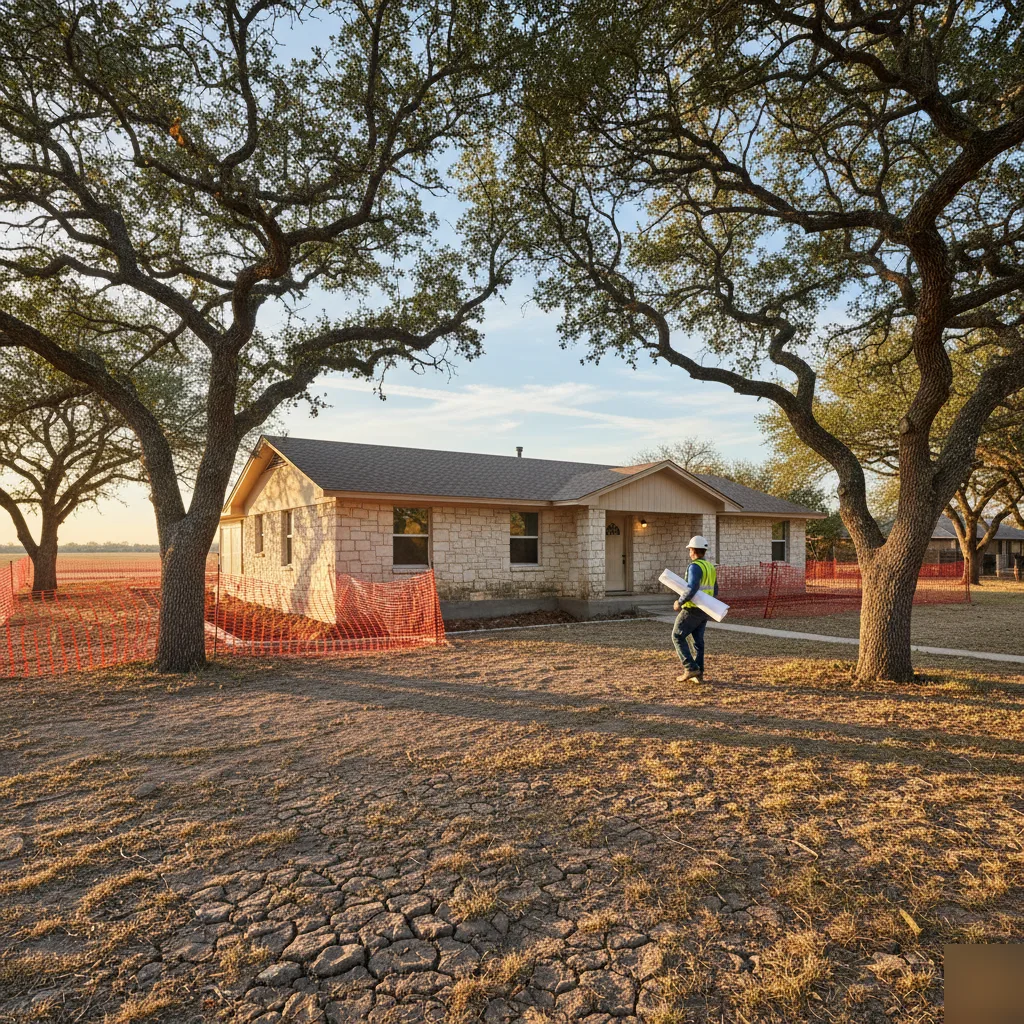
Bexar County sits on expansive clay soil. That's a fancy way of saying the ground swells when it gets wet and shrinks when it dries out. We see this cycle repeat every year. Summer droughts pull moisture out of the clay, it contracts, and gaps form under your slab. Then the rain comes back, the clay expands, and it pushes upward with real force. Your foundation gets caught in the middle of that tug-of-war.

Over in neighborhoods like Alamo Ranch and the older parts of Southtown, we see slightly different soil profiles. But the pattern is the same. The ground moves, your foundation doesn't want to move with it, and something has to give. Cracks show up in drywall. Doors start sticking. Floors feel uneven when you walk across a room.

Here's what makes San Antonio's situation a little different from other cities. According to the U.S. Geological Survey, expansive soils cause more property damage annually than floods, hurricanes, and earthquakes combined. San Antonio is right in the heart of that problem zone. The clay here can shift several inches in a single season depending on rainfall.

A Few Things That Speed Up the Damage

  • Poor drainage that lets water pool near your foundation walls
  • Large trees with root systems that pull moisture unevenly from the soil
  • Plumbing leaks under the slab that saturate one section while the rest stays dry
  • Long dry spells followed by heavy rain — something San Antonio knows well

The homeowner didn't do anything wrong. The soil just did what it does. And once the movement starts, it won't correct itself. That's where concrete underpinning comes in. It reaches past the unstable surface clay and locks your foundation into stable ground below. The team at Bats Foundation Repair has watched this soil cycle play out across every corner of San Antonio for over 40 years.
Warning signs

Warning Signs That Point to Underpinning, Not Just Patching

Not every crack in your wall means you need concrete underpinning. But some cracks tell a very specific story. And if you've been living in San Antonio long enough, you've probably noticed how the Bexar County clay shifts hard between drought and heavy rain. That cycle does real damage over time.

So how do you know when it's more than a cosmetic fix? Here's what we look for when a homeowner calls us out.

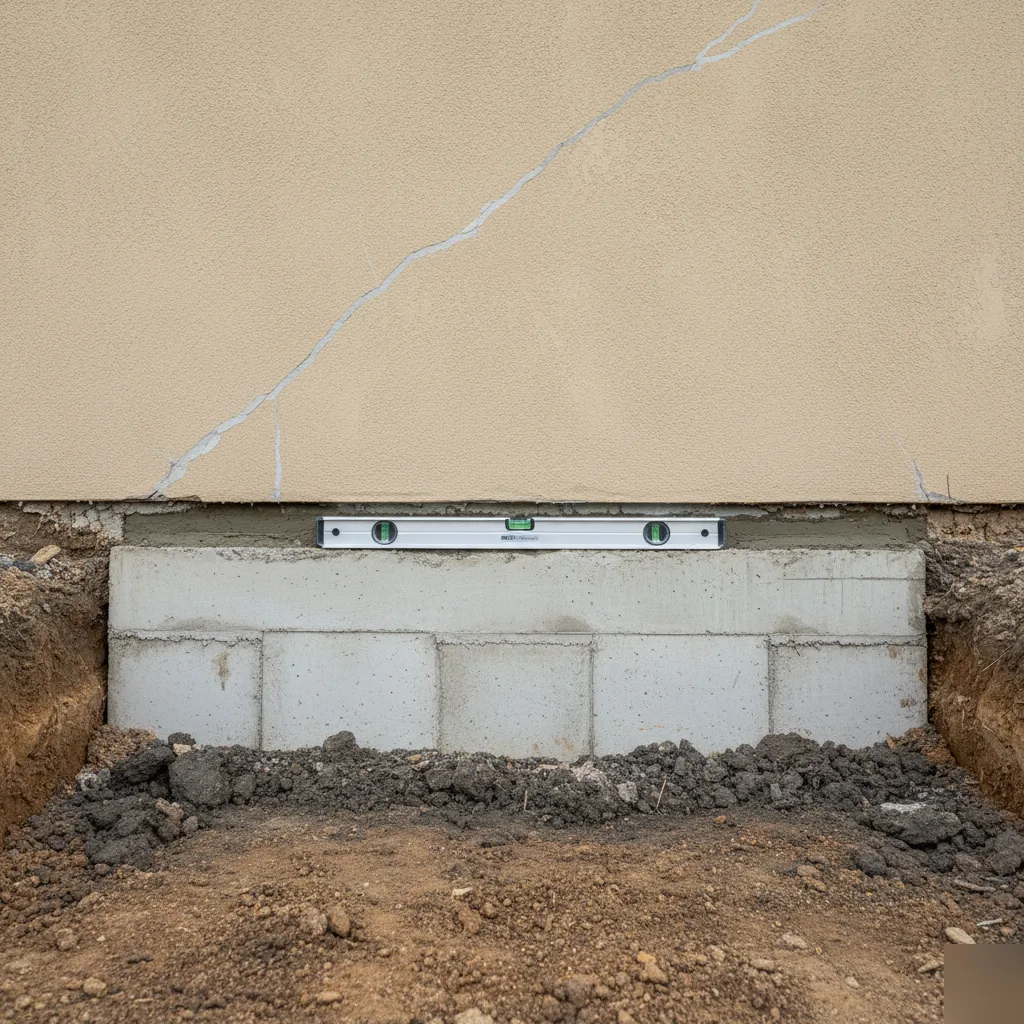
  • Diagonal cracks running from door or window corners toward the ceiling
  • Doors that used to close fine but now stick or won't latch
  • Visible gaps between the wall and the floor, especially along exterior walls
  • Floors that slope or feel uneven when you walk across a room
  • Cracks in the exterior brick that follow a stair-step pattern along the mortar joints

We see this every week. A homeowner fills a crack with caulk, paints over it, and six months later it's back — wider this time. That's because the crack isn't the problem, it's the symptom. The real issue is underneath your slab where the soil has shifted or compressed unevenly.

One thing that catches people off guard is how subtle it starts. Maybe a cabinet door in the kitchen hangs a little crooked. Or you notice a hairline crack above the garage door in your Alamo Ranch home. Easy to ignore. But when two or three of these signs show up together, that's your foundation talking.

A simple patch job fixes the surface. Concrete underpinning fixes the cause. It reaches down to stable soil or bedrock and transfers the load of your home to something that won't move with the seasons.

Our team at Bats Foundation Repair can usually tell within the first inspection whether you're dealing with a minor settling issue or something that needs real structural support. We've been doing this for over 40 years. Most homeowners who call us wish they'd called sooner. The signs were there for months.

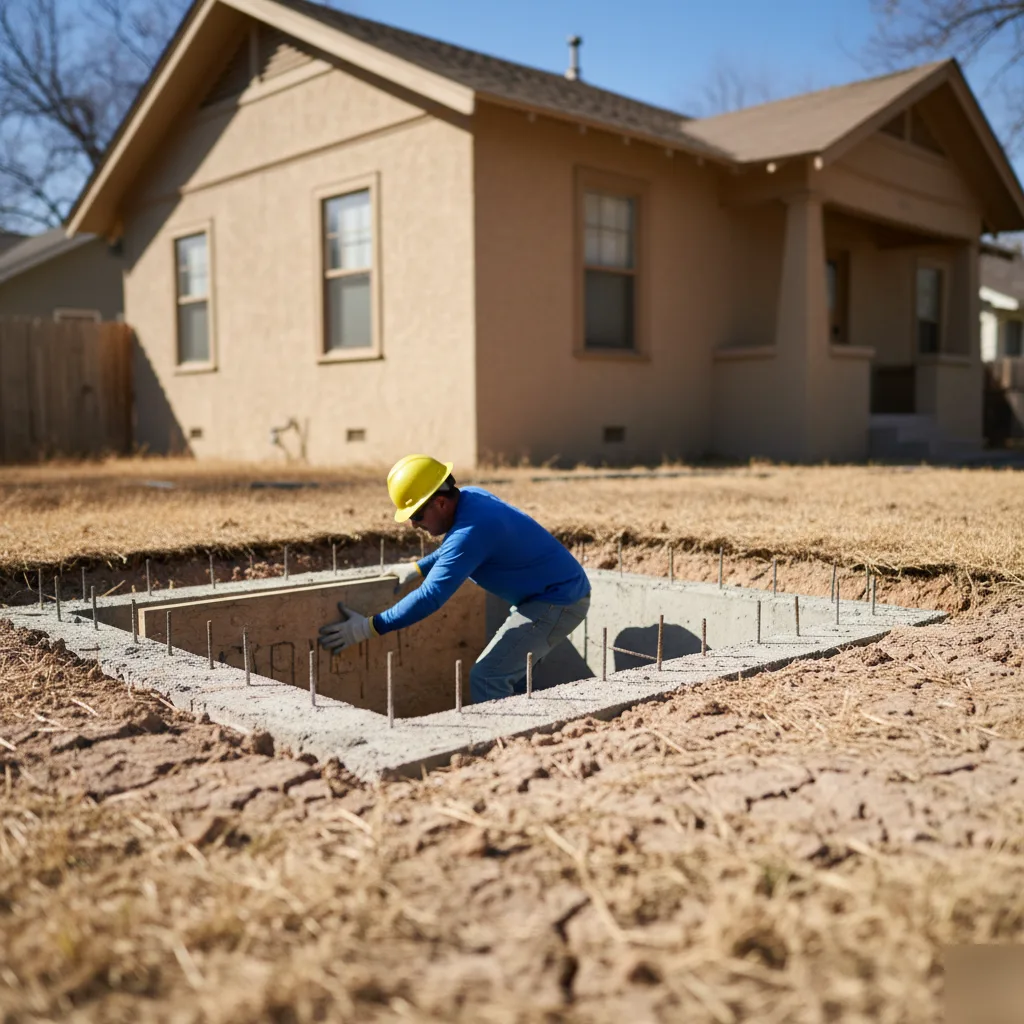
Foundation excavation pit prepared for concrete underpinning in San Antonio
Comparing methods

Concrete Underpinning vs. Mudjacking and Pier Installation

People ask us this all the time. "Can't you just pump something under there and call it a day?" Sometimes, yes. But most of the time, the answer depends on what's actually happening beneath your home.

Mudjacking lifts a settled slab by pumping a cement slurry underneath it. It works well for driveways, sidewalks, and patios. But it doesn't fix a foundation that's lost its structural support. The slurry fills voids — it doesn't extend your foundation deeper into stable soil. So if your home in San Antonio is sitting on Bexar County's expansive clay and that clay has shifted or dried out several feet down, mudjacking won't solve the root problem.

Pier installation is a different story. Steel push piers and pressed concrete pilings reach down to load-bearing strata and stabilize your foundation from below. We install these regularly. They're a good solution when specific points along a foundation need support. But piers work at individual locations along the perimeter or interior of a slab. They don't widen or deepen the foundation itself.

When Concrete Underpinning Is the Right Call

Concrete underpinning does something neither of those methods can do. It extends the actual depth of your existing foundation. The American Society of Civil Engineers outlines how underpinning and strengthening of foundations addresses load transfer and soil conditions that surface-level repairs simply cannot reach. Here's when we typically recommend it over the alternatives:

  • The foundation wasn't built deep enough for the soil conditions beneath it
  • You're adding a second story or heavy load that exceeds the original design
  • Soil movement has undermined the footing itself, not just the slab above it
  • Adjacent construction or excavation has exposed or destabilized the foundation's base

We see this a lot in older neighborhoods like Tobin Hill, where homes were built decades ago on footings that don't meet today's standards. The original builders didn't always account for how San Antonio's clay behaves through long drought cycles.

And here's the thing most contractors won't tell you. Sometimes you need more than one method on the same job. We've done projects where concrete underpinning handled the footing depth issue while pressed concrete pilings addressed settlement at specific corners. With over 40 years in the field, the crew at Bats Foundation Repair knows how to match the method to the problem — not the other way around.

Our process

The Concrete Underpinning Process from Inspection to Final Sign-Off

People ask us all the time what actually happens during a concrete underpinning job. Fair question. Most folks have never seen one done, and the unknown makes it stressful. So here's how we handle it from start to finish at every San Antonio property we work on.

Everything starts with a hands-on inspection. Not a quick glance. We measure floor elevations, check crack patterns, look at door frames, and study how your foundation has moved over time. Bexar County clay soil doesn't shift the same way everywhere. A home near Alamo Heights sitting on shallow limestone behaves differently than one built on deep expansive clay out toward the south side. That inspection tells us exactly where underpinning needs to go and how deep.

Once we've mapped out the problem, the actual work follows a clear sequence:

  1. 1
    Excavation

    We excavate sections beneath your existing foundation to reach stable soil or rock below the active clay zone.

  2. 2
    Steel reinforcement and forming

    Steel reinforcement and formwork get placed inside each excavation pit.

  3. 3
    Concrete pour

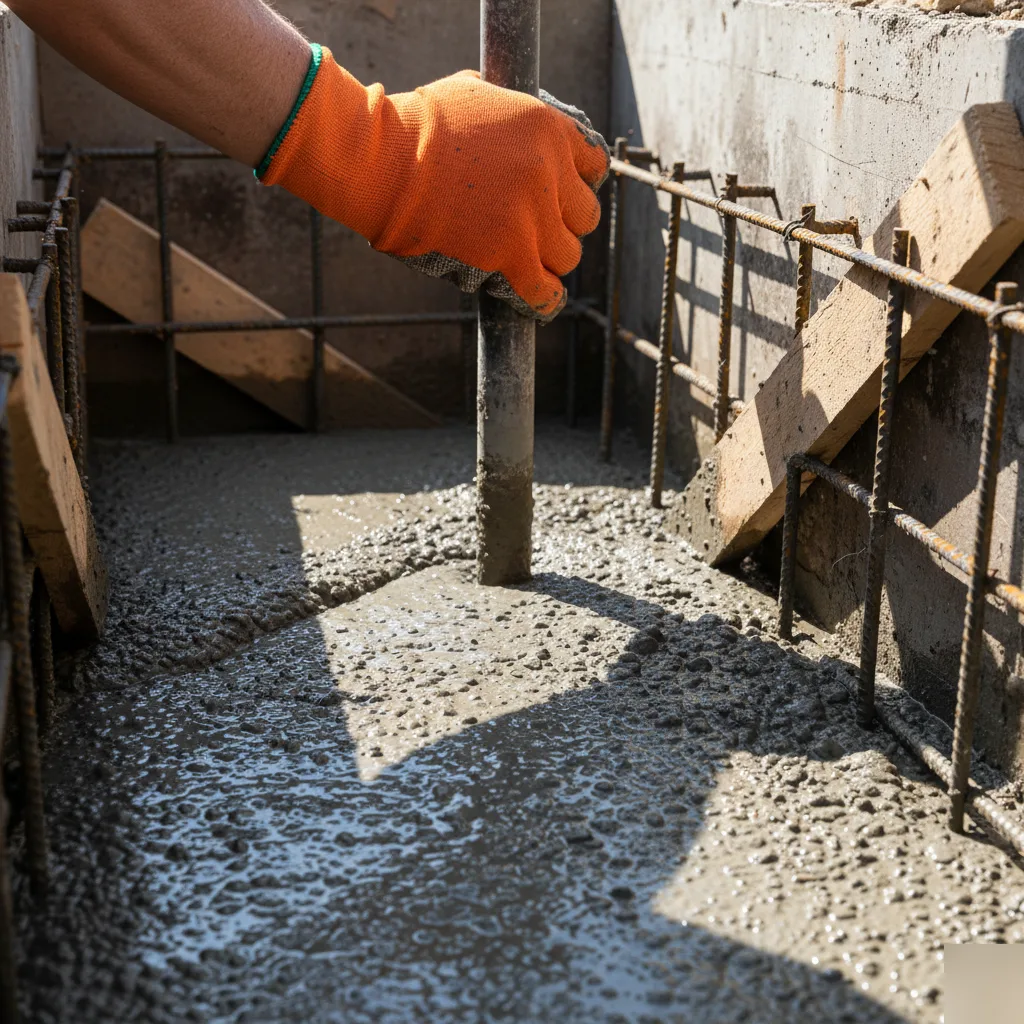
    Fresh concrete is poured in controlled lifts, each one curing before the next goes in.

  4. 4
    Load transfer

    After curing, we use hydraulic jacks to transfer the structure's load onto the new underpinning.

  5. 5
    Backfill and grading

    Final backfill and grading restore the excavation areas around your home.

  6. 6
    Final elevation check

    Our crew takes final elevation readings to verify the foundation is where it should be.

Concrete being poured and vibrated into a foundation underpinning pocket in San Antonio

We've done this hundreds of times across more than 40 years of work in San Antonio. The process takes less time than homeowners expect. Most residential jobs wrap up in a matter of days, not weeks.

The final sign-off matters just as much as the dig. We don't consider a job done until post-work measurements confirm the foundation is stable and properly supported. You get documentation of everything — before and after readings included. That paperwork protects you if you ever sell the home or need to file an insurance claim.

Permits & engineering

Permits, Engineers, and What San Antonio Requires Before Work Starts

This is where a lot of folks get tripped up. They find a contractor, get a quote, and want to start tomorrow. But concrete underpinning in San Antonio involves more than just showing up with equipment. The city has rules. And those rules exist to protect you.

Most concrete underpinning projects in Bexar County require a building permit from the City of San Antonio Development Services Department. That permit tells the city what's being done to your foundation, how deep we're going, and whether the work meets local building codes. Skipping it isn't just risky — it can create real problems when you try to sell your home or refinance down the road. We handle the permit process for our customers because we've done it hundreds of times. No guesswork on your end.

Do You Need a Structural Engineer?

In most cases, yes. A licensed structural engineer evaluates your foundation and creates a repair plan specific to your home. That plan tells us exactly where to place underpinning supports, how deep to go, and what load requirements we need to meet. It's not optional — it's the blueprint that keeps everything safe and code-compliant.

We work with local structural engineers regularly. Some homeowners already have an engineer's report when they call us, especially over in the Alamo Heights area where older homes tend to need more detailed assessments. Either way works fine.

  • A structural engineering report with repair recommendations
  • An active building permit from the City of San Antonio
  • A clear scope of work from your contractor that matches the engineer's plan
  • Confirmation that your contractor carries proper licensing and insurance

Bats Foundation Repair is locally owned, fully licensed, and we carry the insurance San Antonio requires. After more than 40 years on the job, what inspectors look for. We've seen jobs done by other crews that failed inspection because the underpinning depth didn't match the engineer's specs. That's a costly mistake — it delays everything and sometimes means ripping out work to start over.

So don't skip the paperwork. It's there for a reason, and we make it easy.

Frequently asked questions

Concrete underpinning in San Antonio, answered

How long does concrete underpinning take to complete on a San Antonio home?

Most concrete underpinning projects in San Antonio take between three and five days from start to finish. The timeline depends on how many foundation points need support and how deep we need to reach past the Bexar County clay. Larger homes or those with significant settling may run a day or two longer. We'll give you a clear schedule after the initial inspection so you know exactly what to expect before work begins.

Will my family need to leave the house during the underpinning process?

In most cases, you can stay in your home while we work. The crew operates along the exterior perimeter or in targeted interior areas. There's noise and some vibration, but it's manageable. We'll let you know ahead of time if any section of the work requires you to stay out of a specific room for a few hours. Most San Antonio homeowners go about their normal routine while the job is underway.

Why do so many San Antonio homes need underpinning rather than a simple patch repair?

San Antonio sits on expansive Bexar County clay that swells and shrinks with every wet and dry season. That movement happens several feet below the surface, not just at the top. Patching a crack fixes the wall, not the soil shift underneath it. Concrete underpinning reaches past that unstable clay and transfers your home's load to stable ground below. That's why the same cracks keep coming back after a surface repair — the real cause is still there.

What happens during the first inspection visit?

We walk the interior and exterior of your home and look at the specific signs your foundation is showing. That includes checking door frames, floor slopes, wall cracks, and exterior brick patterns. We also look at your drainage setup and any large trees near the foundation. By the end of the visit, we can usually tell you whether you're dealing with minor settling or something that needs structural support like underpinning. You won't be left guessing.

Can concrete underpinning handle the extra load if I want to add a second story?

Yes, and this is actually one of the most common reasons homeowners in San Antonio choose underpinning over other methods. If your original foundation wasn't built deep enough to carry a heavier load, underpinning extends the foundation's depth so it can handle the added weight. We see this regularly in older neighborhoods where homes were built with lighter single-story loads in mind. It's a planned structural upgrade, not just a repair.

How do I know if my foundation problem is urgent or something I can monitor for a few months?

If you're seeing one minor crack, it may be worth monitoring. But when two or three signs show up together — sticking doors, diagonal cracks near windows, and sloping floors — that's a pattern that won't fix itself. San Antonio's soil doesn't pause between dry and wet seasons. The longer the movement continues, the more the foundation shifts. Most homeowners who call us say they wish they had reached out a few months earlier when the signs first appeared.

These problems get worse with time, not better

The sooner you get a licensed structural evaluation, the fewer underpinning points you'll likely need. Schedule your assessment today.