

Hybrid Steel Pier System · San Antonio, TX

Hybrid Steel Piers in San Antonio

Ten feet of steel to clear the active Bexar County clay, then high-pressure-tested concrete cylinders driven until the pier refuses or finds rock. Free assessments across San Antonio.

Clay above, rock below

Built for the Ground San Antonio Homes Sit On

San Antonio foundations deal with two very different materials. Up top, expansive Bexar County clay swells with every wet season and contracts through every dry one, pulling foundations along with it. Below, limestone often waits closer to the surface than in much of Central Texas. The repair that works here has to get through the first material and stop on the second.

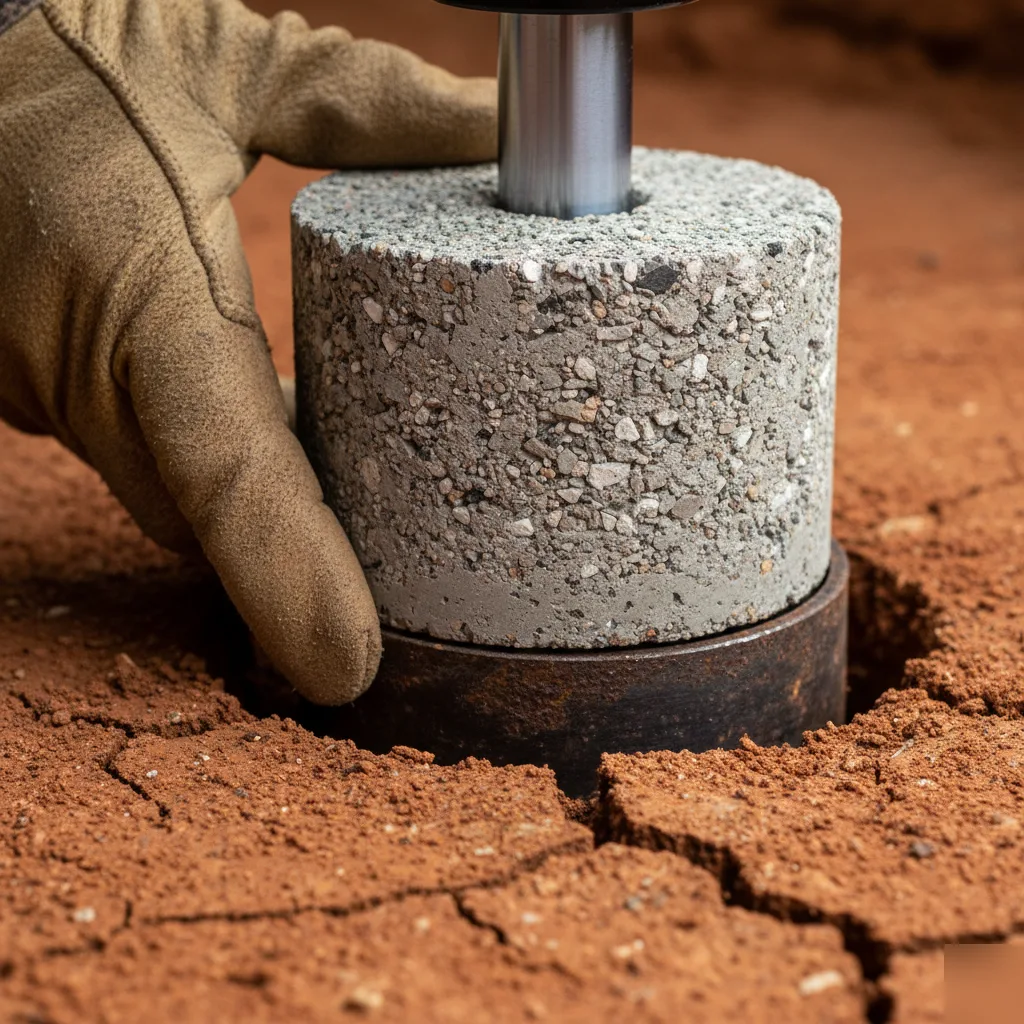
That's the job our Hybrid Steel Pier System was designed for. It leads with roughly 10 feet of 2⅞-inch steel, a profile slim enough to penetrate the active clay, then continues with 6-inch high-pressure-tested concrete cylinders until the pier reaches refusal or bedrock, whichever comes first.

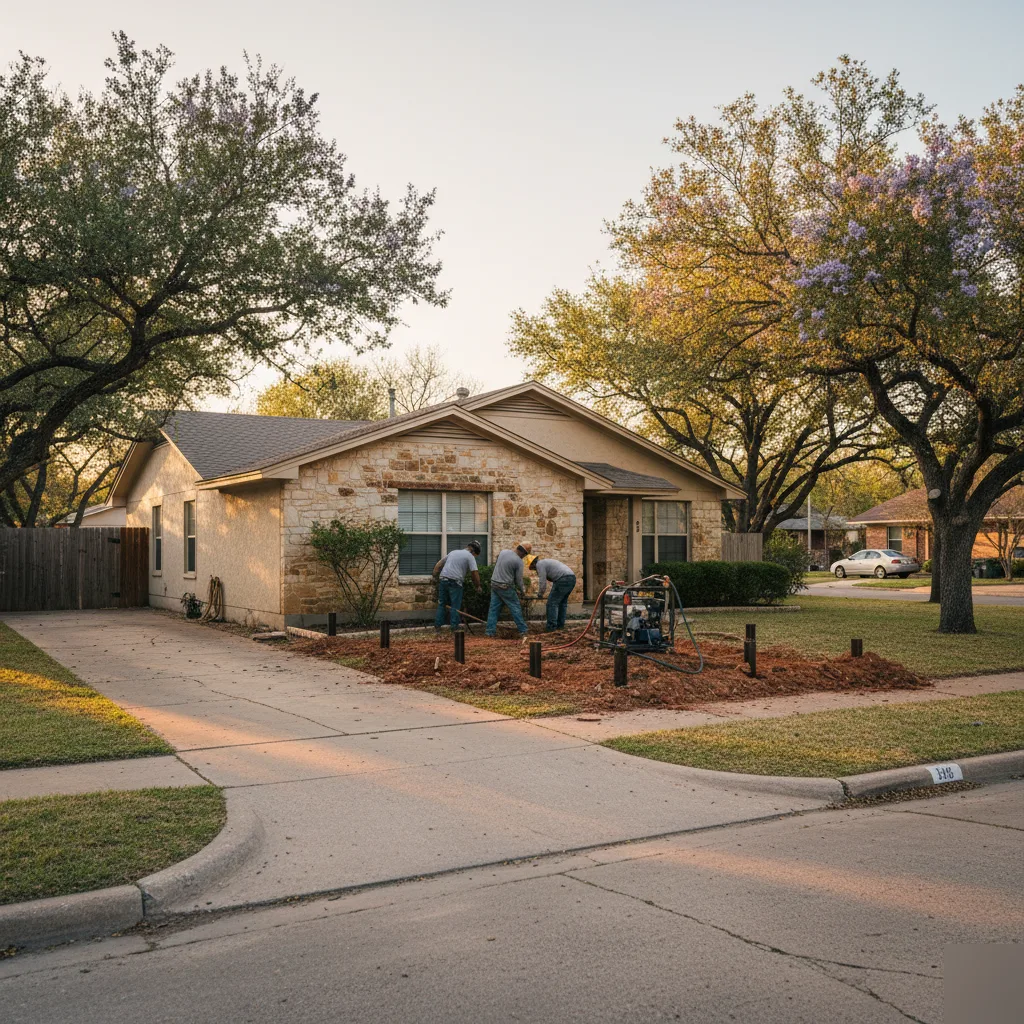
Homeowners from Alamo Heights to Stone Oak call us for foundation repair in San Antonio with the same symptoms: stair-step brick cracks, doors that stopped latching, floors that lean. The clay causes them. The pier ends them by carrying your home's weight past the clay entirely.
The steel lead

Why the Pier Starts Slim and Finishes Strong

The upper stretch of soil moves the most with moisture, and it's also where a fat pier fights hardest. A 6-inch cylinder pressed from the surface can build substantial resistance before it ever clears the active zone. The hybrid's 2⅞-inch steel lead presents a fraction of that surface area, so it slips through the upper clay and gets the pier genuinely deep before the first concrete cylinder enters the ground.

In many of the areas where we work, 10 feet of initial steel generally takes the pier through or beyond much of the active soil zone. But the steel stopping at 10 feet doesn't mean the pier stops. Cylinders keep pressing the column down, each one pushing the steel lead deeper, until the pier refuses or lands on rock.

The finished column reads like this from your foundation down: pier head and support assembly, the stack of high-pressure-tested concrete cylinders, and the 10 feet of steel at the very bottom, because it went in first.

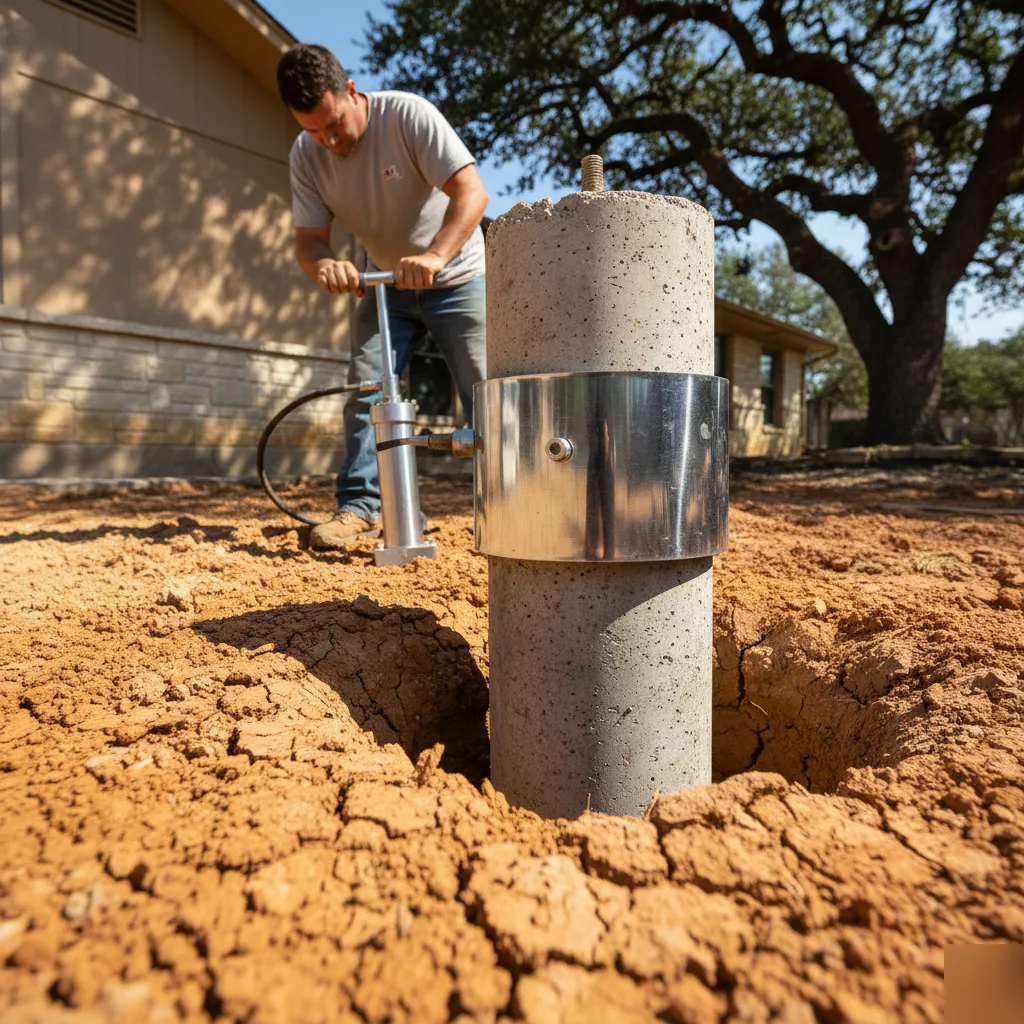
Concrete pier cylinder installation in Bexar County clay at a San Antonio home
A fair question

So Is It Just a Concrete Piling?

No, and the difference matters in this soil. Traditional pressed concrete pilings begin with concrete at the top of the soil profile, right where San Antonio clay is most active. The hybrid was designed specifically to avoid starting wide in the worst zone. Steel handles the beginning, concrete handles the depth, and each material works where it provides the most value.

It's not a shortened steel pier either. The first 10 feet is the same type of steel support column used in an all-steel installation, seated directly beneath the grade beam.

And every hybrid pier installs concentrically, straight under the structural load. We never hang a foundation off side-mounted brackets. The load path runs from your grade beam down through the column into whatever stopped it, refusal-dense soil or San Antonio limestone.

How it goes in

From First Dig to Final Shim

  1. 1
    Open access at each pier point

    The crew excavates beneath the grade beam at every planned location so each pier sits concentrically under the load it will carry.

  2. 2
    Drive the 10-foot steel lead

    A hydraulic ram braces against the structure's own weight and presses the 2⅞-inch steel sections down until about 10 feet is in the ground.

  3. 3
    Press cylinders to refusal or rock

    6-inch high-pressure-tested concrete cylinders go in one at a time, each driving the column deeper, until the pier refuses at roughly 10,000 psi of hydraulic system pressure or terminates at bedrock.

  4. 4
    Lift with coordinated jacks

    Multiple jacks across the repair area adjust together while the crew watches elevations and the structure's response. We lift to the limits of the structure, recovering what the home reasonably allows rather than forcing a number.

  5. 5
    Secure the elevation

    Steel shims lock the pier head at the new elevation, the jack comes out, a concrete cylinder caps the assembly, and additional shims make it permanent.

Because we've driven piers across the San Antonio area, we can often check depth records from nearby projects before we start, useful context for what your street is likely hiding, though never a guarantee. Conditions change even between pier locations on one property.

Interior support

Interior Piers Without Guesswork

When movement shows up in the middle of the house, hybrid piers can go beneath interior grade beams too, as long as access is practical. We never cut a finished slab blind. Ground Penetrating Radar comes first, mapping interior grade beams, post-tension cables, reinforcing steel, and other embedded components, and identifying the right access locations.

For significant interior movement we generally prefer a structural pier when one can reasonably go in. When it can't, whether due to access, occupancy, or disruption, polyurethane foam injection is sometimes the gentler alternative.

Your options, your call

Two Driven Systems, One Standard of Accountability

If your foundation suits both of our driven systems, the decision comes down to budget and preference. Our All-Steel Pier System keeps steel through the pier's entire driven depth, the premium route, with cost climbing as depth grows. The hybrid delivers the same concentric installation and the same depth standard at a lower price, because concrete carries the deep footage. We'll explain construction, pricing, and warranty differences and let you decide.

Either way, the accountability is identical. Most residential slab foundation repairs take approximately one to three days. An independent licensed professional engineer reviews every project, with documentation delivered after completion. A hydrostatic plumbing test follows every repair, performed by an independent licensed plumber, because Bats employs no plumbers and profits nothing from the result. Final elevations get documented once the foundation is adjusted and secured.

The Hybrid Steel Pier System carries a transferable lifetime warranty, with covered adjustments free of adjustment charges for the first 10 years and full written terms before work begins. Talk it over with our San Antonio office at (726) 233-3230.

Frequently asked questions

Hybrid steel piers in San Antonio, answered

What happens if the pier hits rock before it hits refusal?

Then the pier terminates at the rock, and that's a good outcome. Around San Antonio, limestone sits closer to the surface than in much of Central Texas, so some piers seat on rock while others reach refusal in dense soil first, generally at about 10,000 psi of hydraulic system pressure on our equipment. Either way, the pier stops on material that carries the load, and the depth is recorded for your project documentation.

How is a hybrid steel pier different from the pressed concrete pilings I've seen advertised?

Traditional pressed concrete piling starts with a larger concrete cylinder at the top of the soil profile, which means it fights the most active clay with its widest component. The hybrid pier leads with 10 feet of 2⅞-inch steel, a much slimmer profile that penetrates the upper Bexar County clay before the 6-inch high-pressure-tested concrete cylinders take over below. Same concrete strength at depth, very different start.

Is the hybrid system strong enough for two-story homes?

The system is engineered around the structural load, and pier placement is planned from the home's actual weight and elevation readings, not a standard template. Piers install concentrically beneath the grade beam, so the load travels straight down the column into refusal-depth material or rock. Every San Antonio project also gets an independent licensed engineer's review with documentation after completion.

How much does a hybrid steel pier repair cost in San Antonio?

It depends on how many piers your foundation needs and how deep each one has to go, so we price after a free on-site assessment rather than guessing over the phone. What we can say up front: the hybrid costs less than our All-Steel Pier because concrete, not steel, makes up most of the driven depth. You'll get exact numbers, in writing, before any work is scheduled.

Can you put hybrid piers under interior grade beams without wrecking my floors?

When interior support is needed and access is practical, yes. We scan the slab with Ground Penetrating Radar first to find grade beams, post-tension cables, and reinforcing steel, then open only deliberate access points. If occupancy or disruption makes interior piers impractical, polyurethane foam injection is sometimes an alternative worth considering.

How long will my San Antonio foundation repair take, and what backs it up?

Most residential slab repairs take approximately one to three days depending on pier count, depths, and interior access. The Hybrid Steel Pier System includes a transferable lifetime warranty, with covered adjustments performed at no adjustment charge for the first 10 years. A required hydrostatic plumbing test by an independent plumber and documented final elevations close out every project.

Find out what your foundation is sitting on

We'll measure elevations, map the areas that need support, and tell you plainly whether the hybrid or all-steel system is the better fit. If both work, the choice is yours, with the trade-offs explained first.