

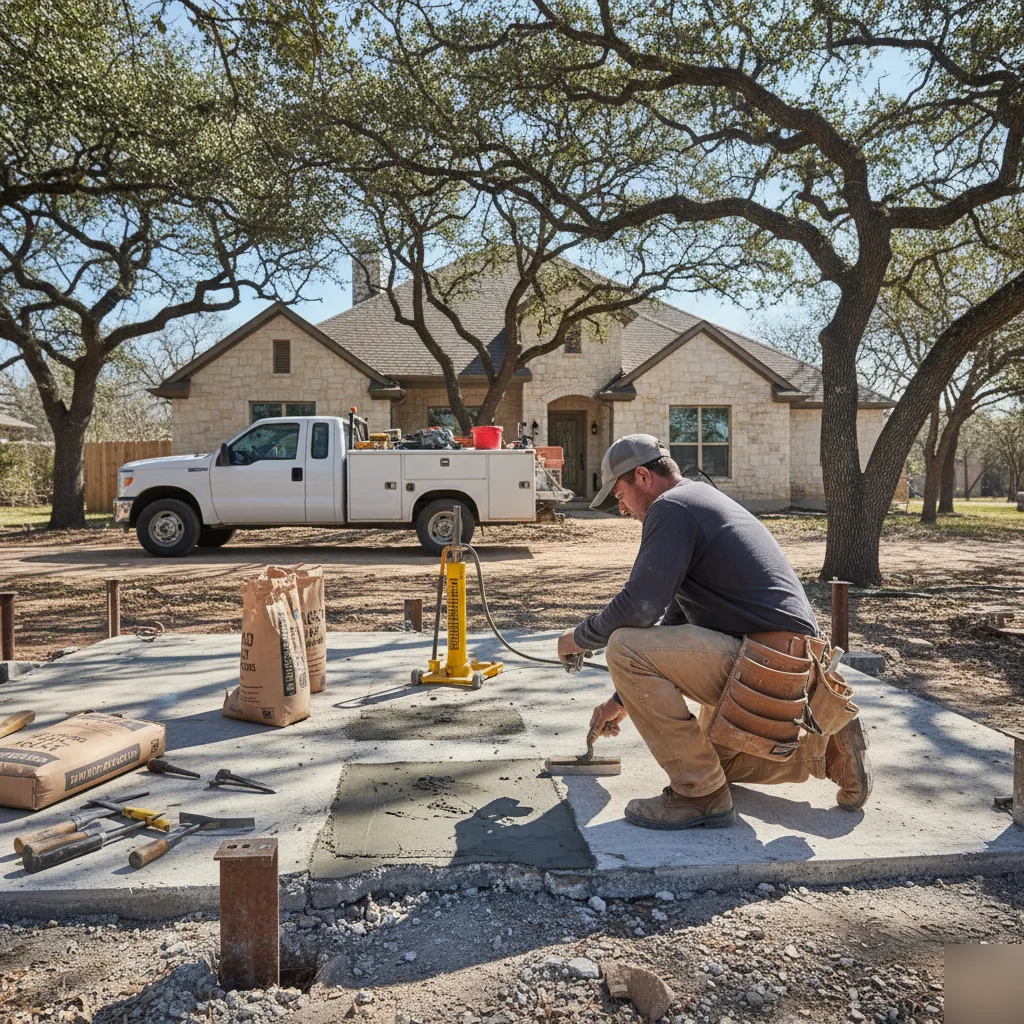
Masonry & Structural Foundation Services in Austin, TX
From pier and beam repair to foundation block wall installation, Bats Foundation Repair provides complete structural masonry services for Austin homes on Blackland Prairie clay. Free estimates.
Not every Austin foundation is a concrete slab. Pier and beam construction, block and base systems, masonry block walls, and crawl space structures all face the same relentless pressure from Central Texas clay — but they fail differently and require different expertise to repair.
As a leading masonry contractor in Austin, Bats Foundation Repair provides the full spectrum of structural masonry and pier and beam services that Austin homeowners need, backed by years of combined experience in the Blackland Prairie soil conditions that make this market unlike anywhere else. Whether you're dealing with a settling pier and beam home in Hyde Park, a block foundation wall that's cracking in East Austin, or a crawl space that needs structural reinforcement, our team assesses what you actually need and builds a repair plan around the cause — not just the surface symptoms.
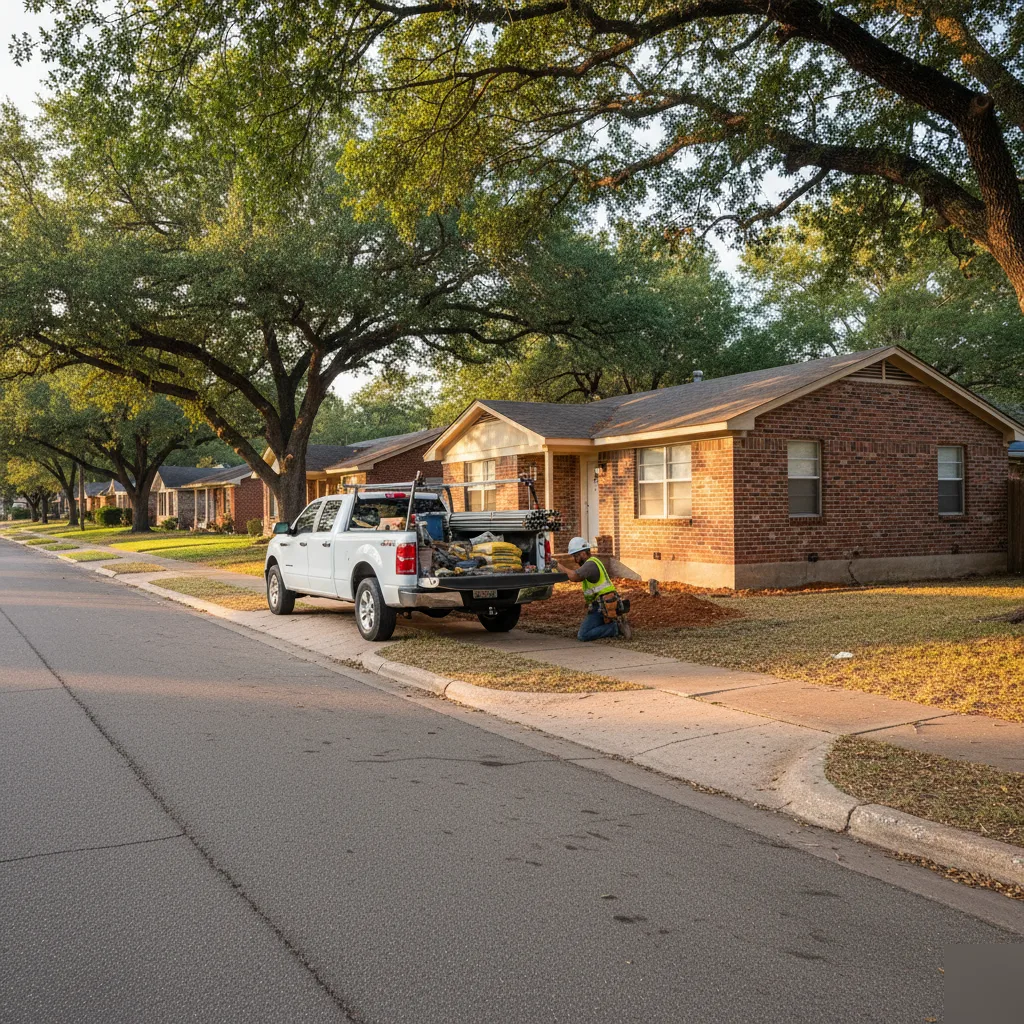
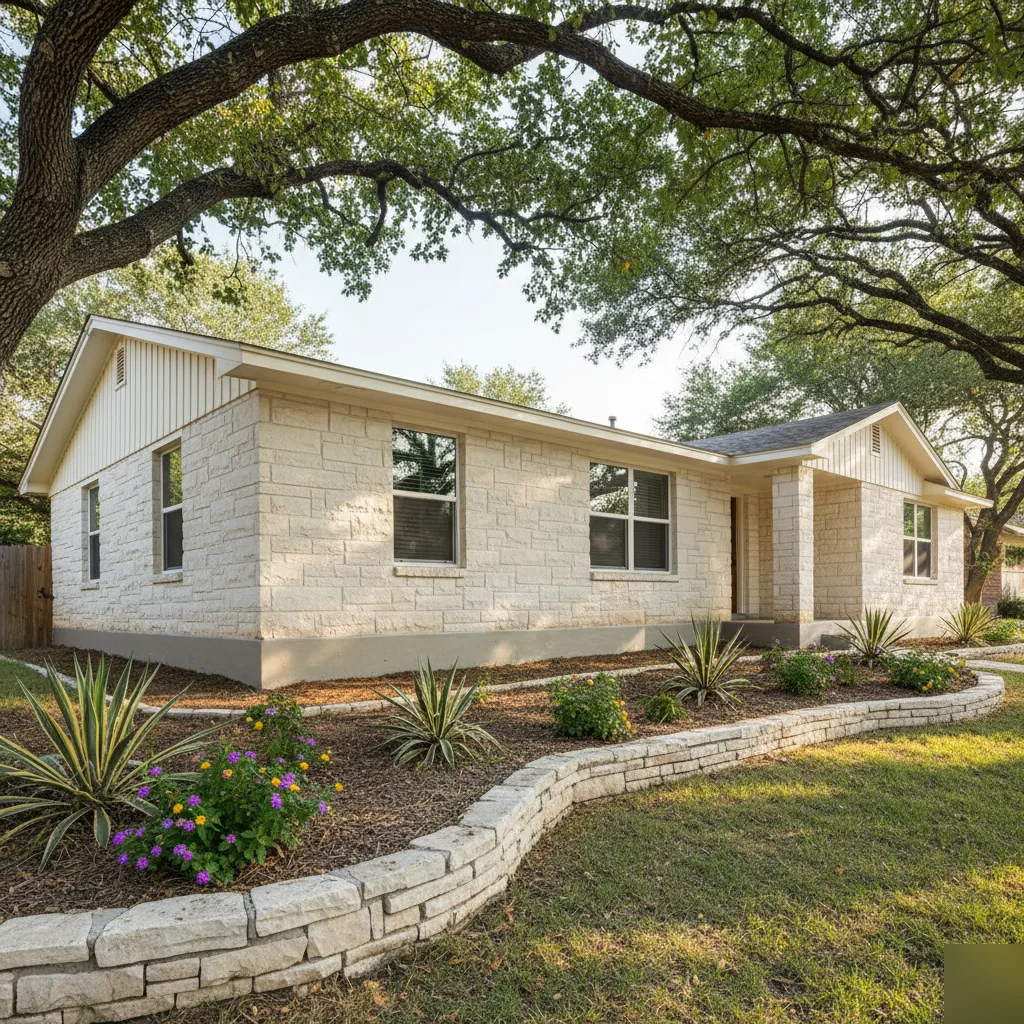
Central Texas clay exerts lateral pressure on masonry block walls as it expands, and pulls away from foundation footings as it contracts. Pier and beam systems are especially vulnerable — the wood beams and posts that sit above the crawl space are exposed to moisture cycles that the clay drives season after season. In Austin's older neighborhoods, these systems have been under stress for 50 to 80 years and often need both structural repair and long-term reinforcement to keep the home level and stable.
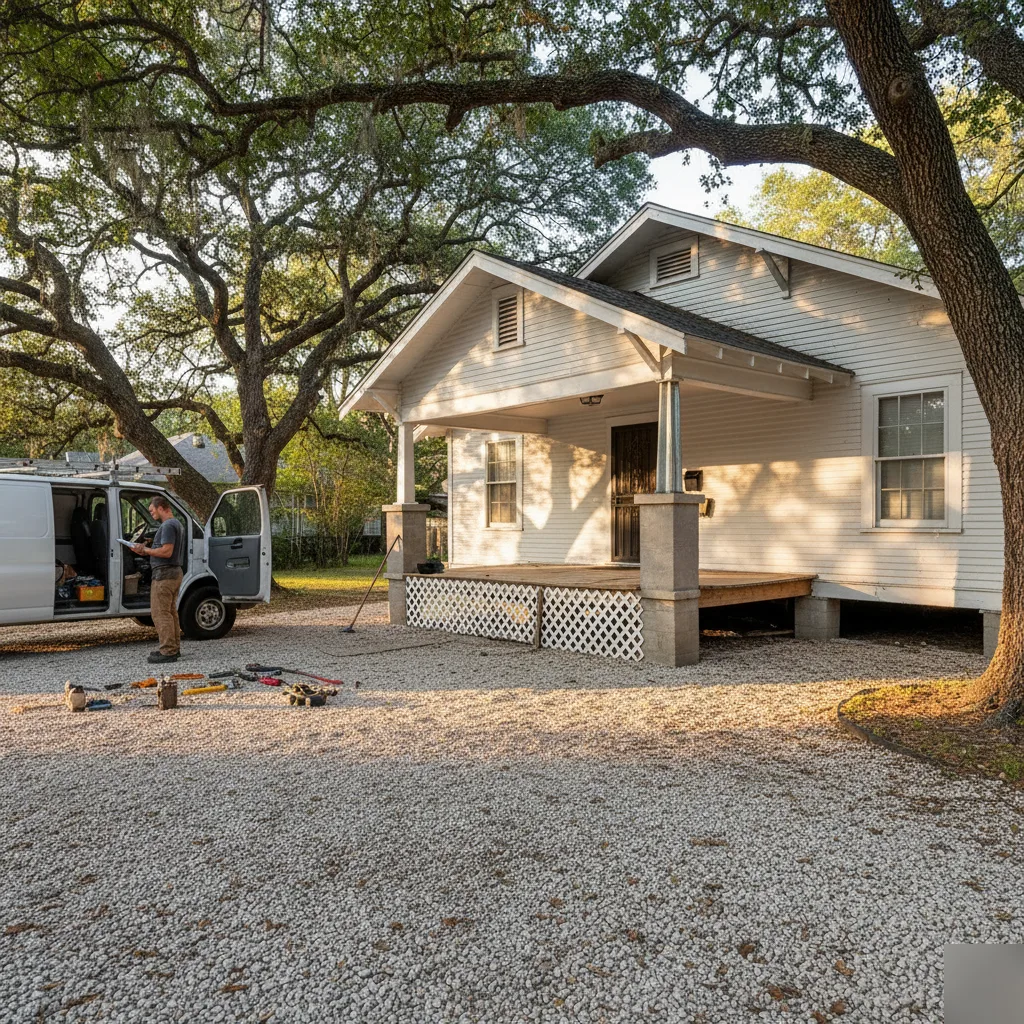
Pier and Beam Foundation Repair in Austin, TX
Pier and beam foundations are the most common foundation type in Austin's historic and established neighborhoods — Hyde Park, Crestview, Brentwood, Allandale, Cherrywood, Travis Heights, and many others built between the 1920s and 1960s.
Instead of a concrete slab poured directly on the clay, these homes sit on a network of concrete or masonry piers, wood beams, and floor joists that create a crawl space beneath the living area. That crawl space is both the system's greatest advantage and its primary vulnerability — it provides access for inspection and repair, but also exposes the structural wood framing to the moisture cycles driven by Austin's seasonal clay soil. Over decades, pier and beam foundations settle unevenly, beams deteriorate, piers shift, and the floor above starts to show the consequences.
Signs Your Pier and Beam Foundation Needs Repair
Floors that bounce, sag, or feel soft underfoot — especially in the center of rooms
Visible sloping or unevenness across the floor plane
Doors and windows that stick, drag, or no longer latch properly
Gaps opening between baseboards and the floor
Cracked interior walls, particularly at corners and above door frames
Musty odor from the crawl space indicating moisture accumulation
Austin's Oldest Neighborhoods
Hyde Park, Brentwood, Cherrywood, and Travis Heights have significant concentrations of pier and beam homes from the 1920s through 1950s. These structures have been through 70 to 100 years of Blackland Prairie clay cycles. A professional pier and beam inspection should be a priority — not an afterthought.
Block and Base Foundation Repair in Austin, TX
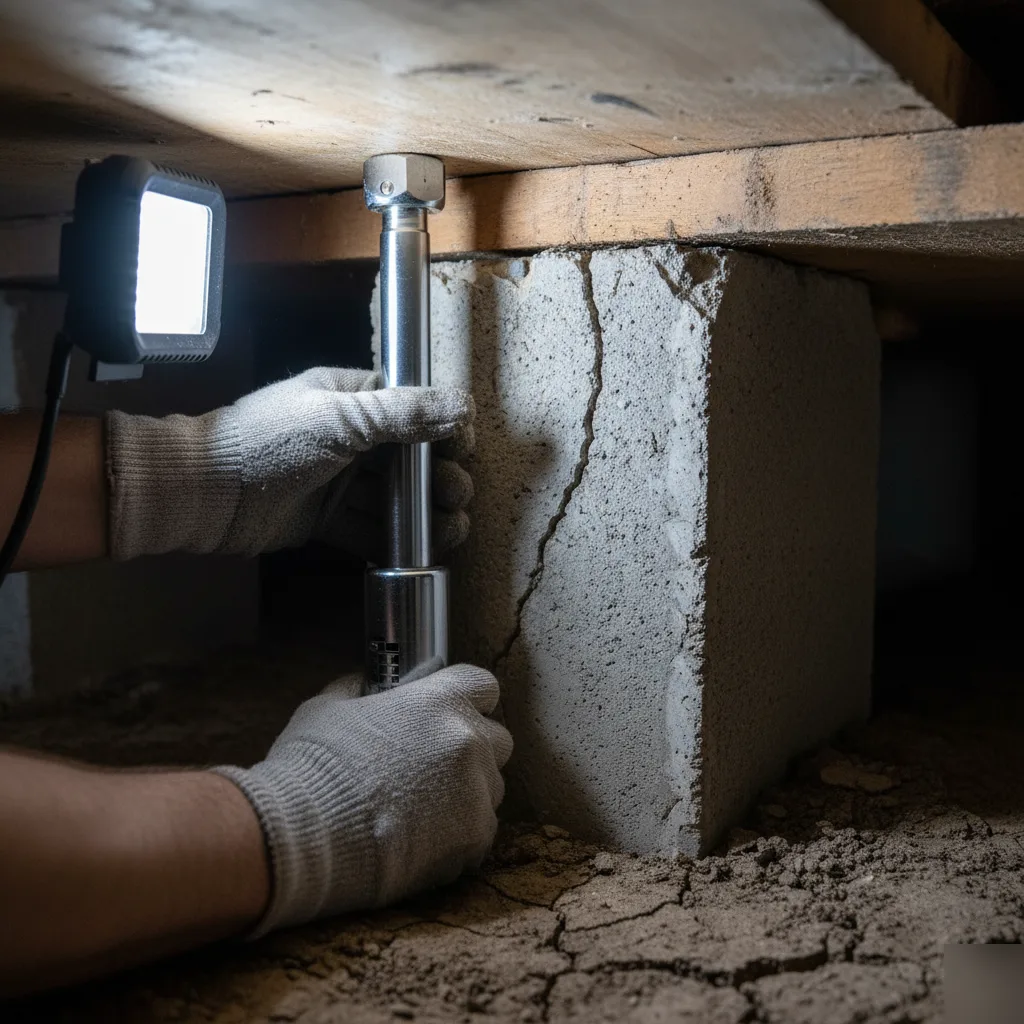
Block and base construction uses concrete masonry unit (CMU) blocks stacked to form the support piers beneath the structure. This system was widely used in Central Texas construction through the mid-20th century and remains common across Austin's established residential neighborhoods.
Block and base foundations are particularly vulnerable to the lateral and vertical pressures that Austin's clay soil generates. As the clay swells, it pushes against and beneath the stacked block columns. As it contracts, it pulls away and leaves the blocks unsupported on one side. Over time, individual block columns can lean, crack, separate, or collapse — causing the beam and floor system above to drop unevenly.
Common Block and Base Failure Patterns
Column lean: A block column that has tilted out of plumb due to lateral soil pressure — still bearing load but at risk of failure.
Block separation: Mortar joint failure that causes individual blocks to shift or separate within the column stack, reducing effective bearing capacity.
Column settlement: The entire column has sunk into the soil, typically because the footing beneath it was inadequate or the soil beneath has consolidated.
Column collapse: A complete structural failure of a block column — rare but serious, causing an immediate and visible floor drop in the affected area.
How We Repair Block and Base Foundations
Bats Foundation Repair assesses every column in the crawl space for plumb, condition, and bearing load. Failed or failing columns are replaced with new masonry construction or — where long-term stability is the priority — with steel push piers driven to load-bearing strata below the unstable clay layer.
Crawl Space Support Posts in Austin, TX
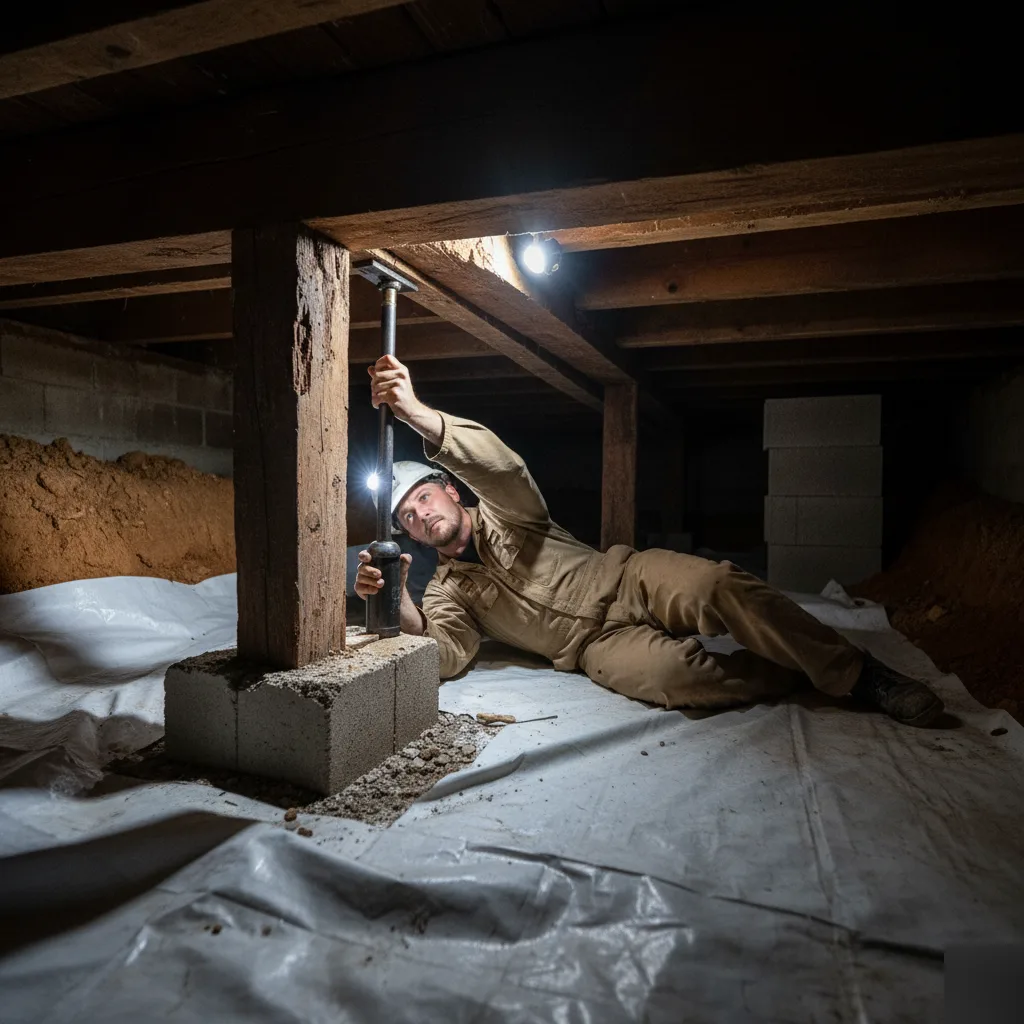
When beams span too far, have deteriorated, or were undersized at construction, the floor above sags. Crawl space support posts are the targeted solution: new structural posts installed at mid-span bearing on properly sized footings — a stiffened, level floor without the cost of full beam replacement.
When Crawl Space Support Posts Are the Right Fix
Floors that sag visibly at mid-span between existing piers but are solid at the perimeter
Wood beams that are structurally sound but undersized for the span they carry
Areas of the crawl space where original pier spacing was too wide for current load conditions
Homes where room additions or interior wall changes shifted the load distribution without corresponding support adjustments
Post Material and Installation
Bats Foundation Repair installs steel support posts for crawl space applications — not wood posts, which are subject to the same moisture and pest vulnerabilities as the original framing. Each post is set on a properly sized footing and leveled to the beam at installation.
Steel Push Pier Installation in Austin, TX
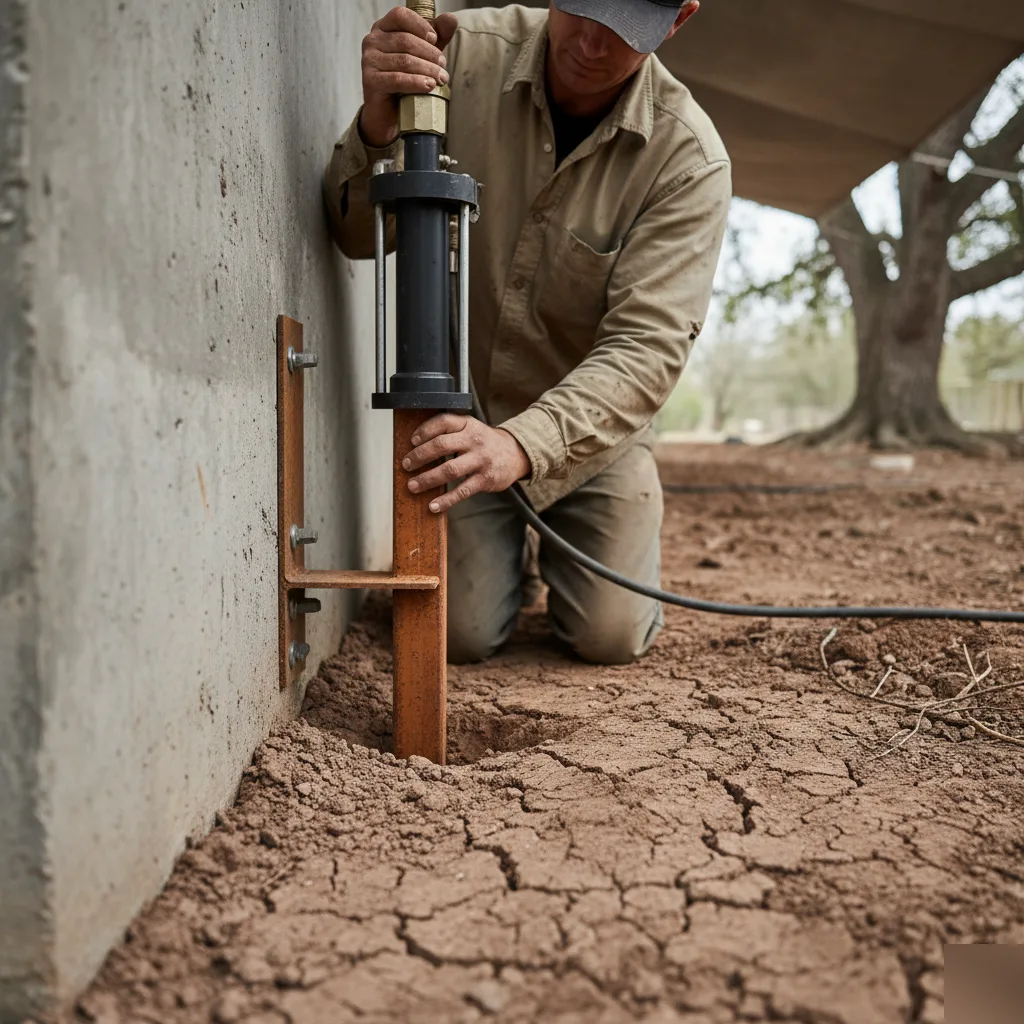
Steel push piers are the deepest and most robust foundation repair method available for Austin homes — driven section by section through the unstable Blackland Prairie clay until they reach competent load-bearing strata at refusal.
The Blackland Prairie clay beneath Austin can extend to significant depths — in some areas of the eastern metro, the unstable clay profile runs 20 feet or more below the surface. Steel push piers bypass the problem entirely by reaching past it. For Austin's most severely settled foundations, for pier and beam homes where block columns have failed completely, or for any situation where the clay below the existing support system is too unstable, steel push piers are the definitive long-term solution.
Steel Push Piers vs. Pressed Concrete Pilings
Steel piers are driven deeper — past unstable clay to stable load-bearing strata below
Concrete pilings work within the clay column — effective for moderate settlement in stable clay profiles
Steel piers are recommended for severe settlement, active movement, or deep clay profiles
The right choice depends on soil conditions and degree of settlement — determined during your free estimate
Lifetime Transferable Warranty
Steel push pier installations by Bats Foundation Repair are covered by our lifetime transferable warranty. If the repaired foundation shows future settling movement and adjustment is needed, that work is performed at no additional cost. The warranty transfers to new owners at the time of sale — a documented, transferable asset that can be disclosed during listing.
Foundation Block Wall Installation in Austin, TX
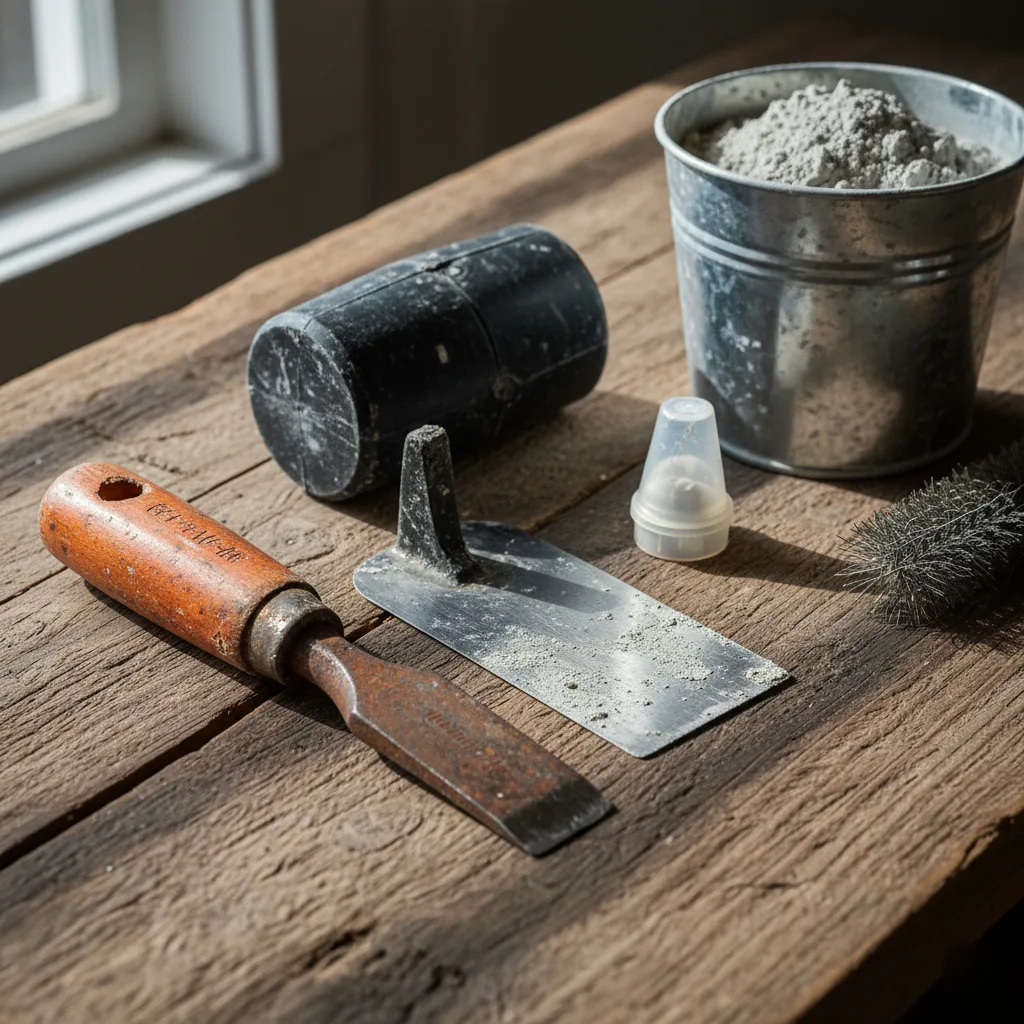
Foundation block walls — constructed from concrete masonry units (CMU) — form the perimeter stem walls of pier and beam structures and the below-grade walls of partial basements around Austin foundations.
Applications for Foundation Block Wall Installation
Perimeter stem wall replacement: Replacing deteriorated or failed CMU stem walls on pier and beam structures, restoring the original load path from the floor system to the footing.
Crawl space enclosure walls: Installing or rebuilding the masonry walls that enclose the crawl space, improving moisture control, pest resistance, and structural integrity.
Grade beam and stem wall construction: New construction or addition work requiring a masonry foundation wall to carry the structural load and transfer it to the footing and soil below.
Block Wall Installation in Austin's Clay Environment
Block walls installed in Blackland Prairie clay need to be designed with the soil's lateral pressure in mind. Bats Foundation Repair uses appropriate footing depths, reinforcement strategies, and drainage provisions to ensure that the new wall performs over the long term — not just at installation.
Get a Free Structural Masonry Estimate in Austin
From pier and beam repair in Austin's historic neighborhoods to masonry wall reinforcement in newer construction, Bats Foundation Repair brings years of combined Central Texas experience to every structural masonry job. We understand what Blackland Prairie clay does to masonry systems — and we know how to stop it.
Call today for a free, no-pressure estimate. We serve Austin, Pflugerville, Round Rock, Cedar Park, and the surrounding Central Texas area.