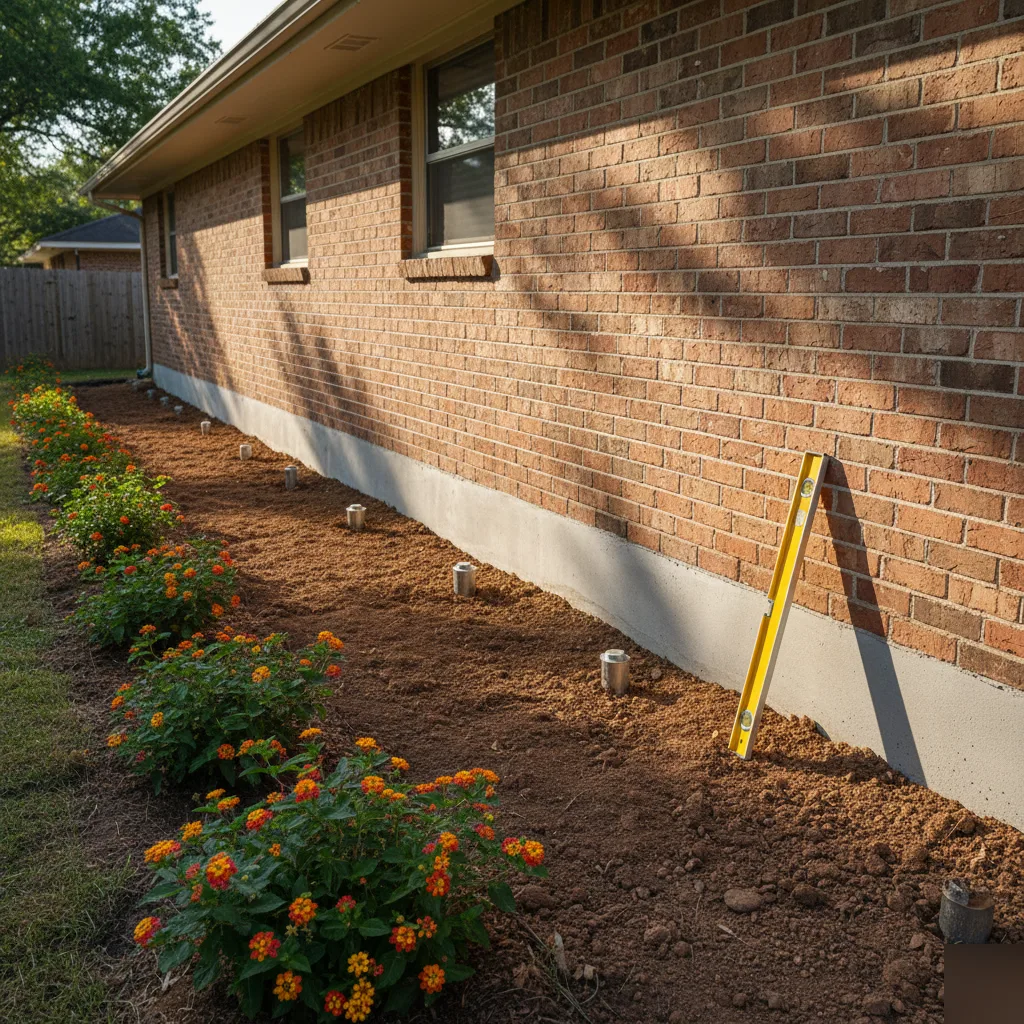

Steel Push Pier Installation · Austin, TX

Steel Push Pier Installation in Austin

Steel push pier installation in Austin stops foundation sinking for good. Bats Foundation Repair stabilizes homes with proven methods. Call to schedule.

Warning signs

Signs Your Foundation Needs Steel Push Piers

You might notice it on a random Tuesday. A door that used to close just fine now sticks at the top. Or maybe you spot a crack running diagonally from the corner of a window frame. That's your home talking to you.

Most folks in Austin don't think about their foundation until something feels off. And by the time you see visible signs, settlement has usually been happening for a while underneath. The expansive clay soils we deal with across Central Texas, especially in neighborhoods like South Manchaca and East Riverside, go through constant shrink-swell cycles. That movement puts serious stress on your slab or pier and beam foundation over time, often necessitating Steel Push Pier Installation Services.

Here are the warning signs we see most often on steel push pier installation jobs:

  • Cracks in exterior brick or interior drywall, especially diagonal ones near doors and windows
  • Floors that slope or feel uneven when you walk across a room
  • Gaps forming between walls and ceilings or walls and floors
  • Doors and windows that stick, won't latch, or swing open on their own
  • Visible separation where the foundation meets the exterior wall

We get calls every week from homeowners who say "I thought it was just the house settling." Sometimes it is. But when you're seeing two or three of these signs together, that's not normal settling. That's differential movement, and it typically means part of your foundation has dropped while the rest stayed put.

Not sure if what you're seeing is serious? That's actually pretty common. A lot of the homes we inspect in Austin have settlement that's been progressing slowly for years. The cracks started small. The sticking door seemed minor. Then one day a pipe under the slab shifts and you've got a plumbing issue on top of everything else.

The sooner you get eyes on it, the fewer piers you'll likely need. Catching it early can mean the difference between a straightforward repair and a much bigger project. Our licensed team can tell you exactly what's going on during a free inspection.
Soil & bedrock

How Austin's Soil and Bedrock Affect Push Pier Depth

Austin sits on some of the most unpredictable ground in Texas. The soil changes dramatically depending on where you are in the city. Over in the Barton Hills area, you might hit limestone bedrock at eight or ten feet. A job near Rundberg or up in North Austin? We've driven steel push piers down twenty feet or more before reaching stable strata.

That's the whole point of steel push piers. They don't stop at a set depth like pressed concrete pilings do. They keep going until they hit load-bearing rock or a soil layer that won't move.

Central Texas clay is the main troublemaker here. This expansive clay swells when it gets wet, then shrinks hard during drought. The cycle repeats year after year, and your foundation pays the price. A steel push pier bypasses all of that unstable clay. It transfers your home's weight straight down to bedrock or a dense stratum that seasonal moisture can't touch.

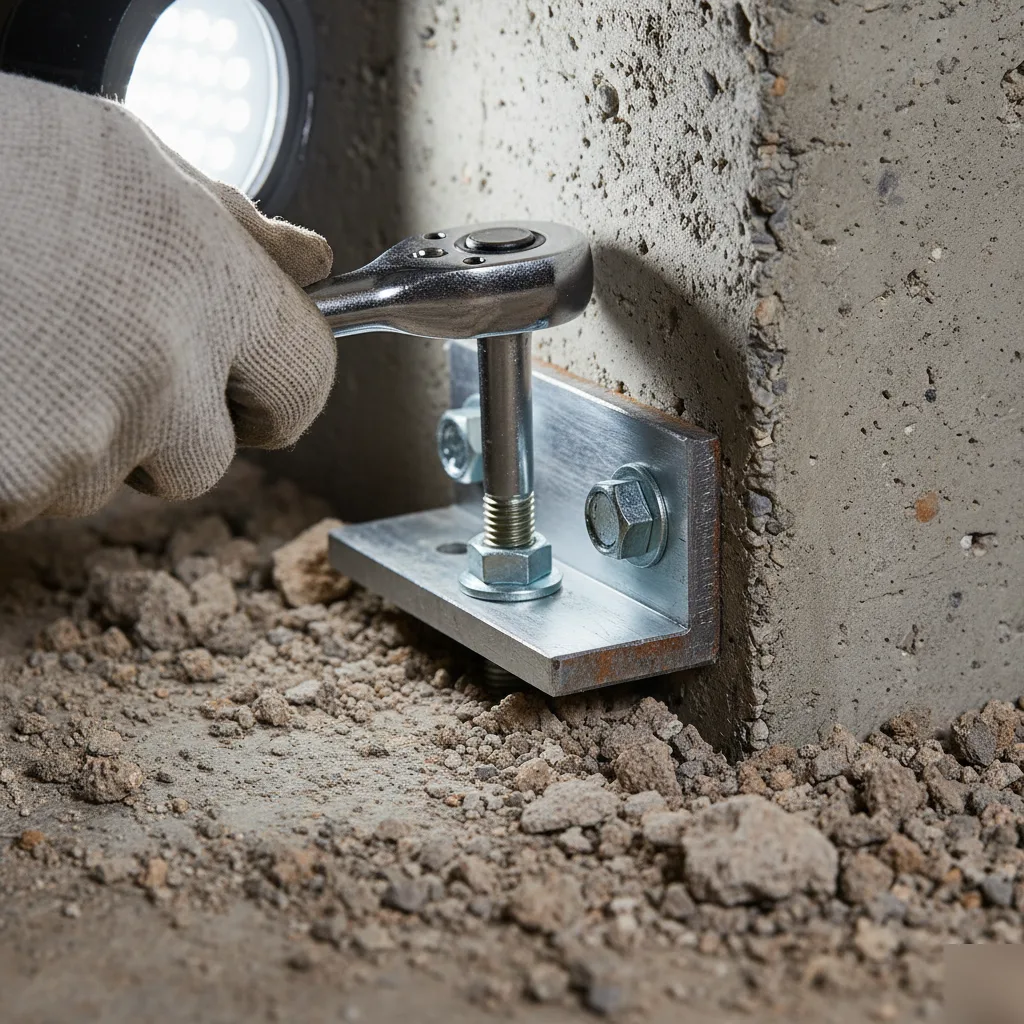
Steel push pier bracket bolted to a concrete footing in Austin

Here's what affects how deep we go on any given job in Austin:

  • Soil composition at the surface, whether it's black clay, sandy loam, or fill dirt from a previous build
  • Depth to limestone bedrock, which varies block by block across the city
  • How much moisture is in the ground at the time of install
  • The weight of the structure itself, since heavier homes need a firmer bearing layer

We see this play out every week. Two homes on the same street can need completely different pier depths. One might sit right above a limestone shelf. The neighbor's house could be over a deep pocket of clay with no rock for fifteen-plus feet. According to the Texas A&M AgriLife Extension, expansive soils cause more structural damage to homes in Texas than any other natural hazard. That tracks with what we deal with daily.

There's no shortcut. Every steel push pier installation in Austin requires site-specific evaluation. We use hydraulic pressure readings during the drive to confirm when each pier reaches refusal on stable ground. That's the only honest way to do it.

Our Process

What the Steel Push Pier Installation Process Looks Like

Most folks want to know what's actually going to happen at their house. Fair enough. We walk every customer through this before we start, and the process is more straightforward than people expect.

Here's how a typical steel push pier installation goes from start to finish:

  1. 1
    Excavate small access points

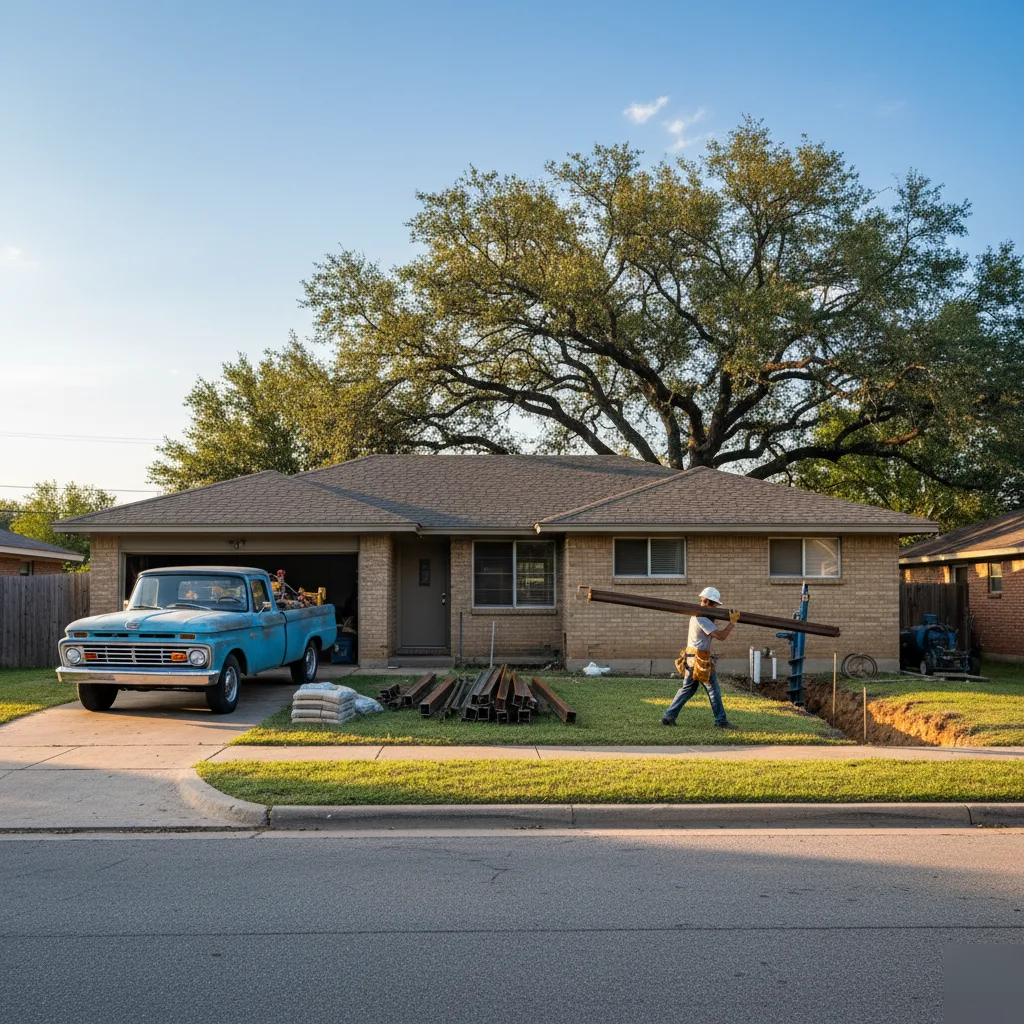
    We dig down along the foundation's footing at each pier location. These holes are roughly two feet by three feet. Not huge, but big enough for our crew to work safely.

  2. 2
    Attach a steel bracket to the footing

    A heavy-duty bracket gets bolted directly to the base of your foundation. This bracket is what connects the pier to your home's structure.

  3. 3
    Drive steel pier sections to load-bearing strata

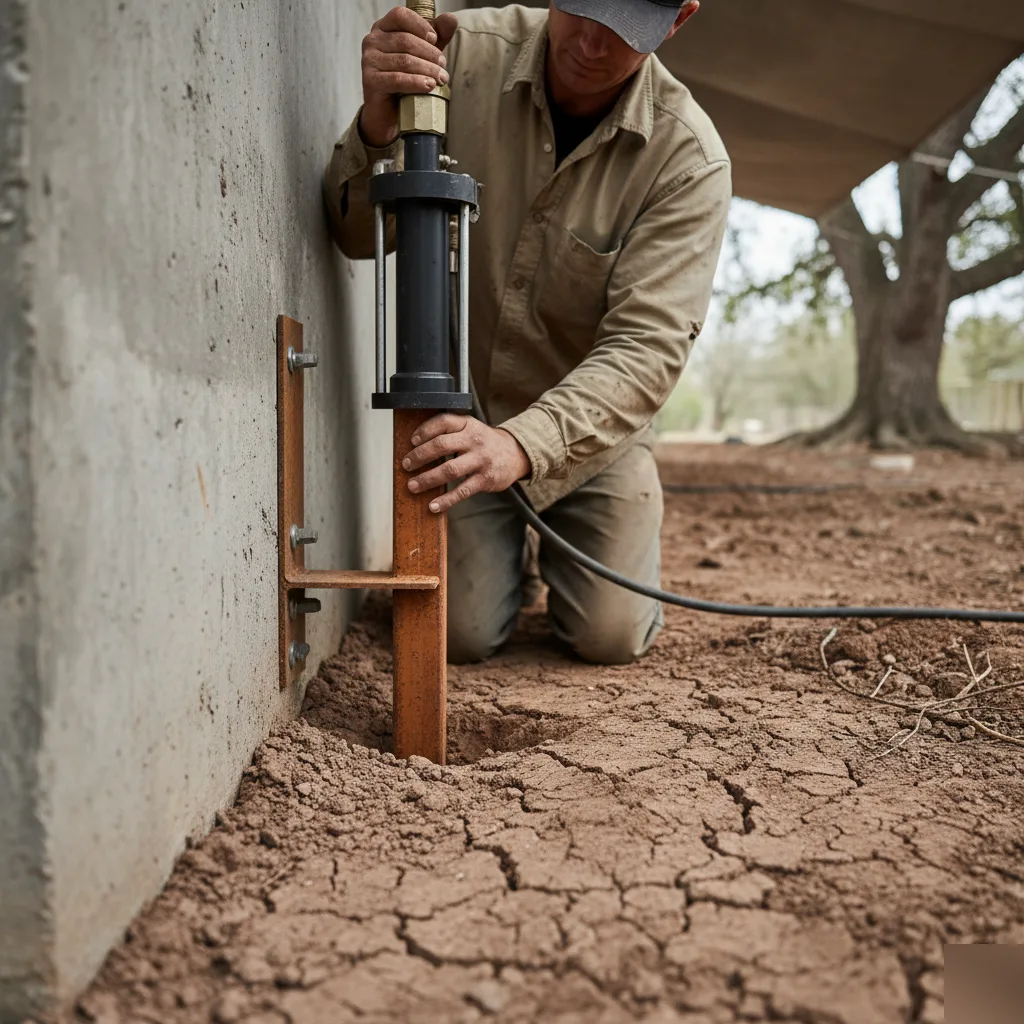
    Using hydraulic equipment, we push galvanized steel tubes straight down through the unstable Central Texas clay. Each section locks into the next. We keep driving until the pier hits bedrock or a stable soil layer that can support the full weight of your home.

  4. 4
    Transfer the structure's load

    Once the piers reach refusal depth, we use hydraulics to carefully lift the foundation back toward its original position. The load transfers from weak surface soil to deep, stable ground.

  5. 5
    Lock everything in place and backfill

    We secure the system so it holds permanently, then fill the excavation areas and clean up the site.

The whole thing typically takes one to three days for most Austin homes. We've done plenty of jobs in neighborhoods like Barton Hills where the limestone sits close to the surface, so piers reach refusal quickly. Other areas need deeper drives. Every property is different.

One thing we tell people all the time: you can usually stay in your home during the work. It's loud for stretches, but it's not the kind of project that turns your life upside down.

And if piers need to go under interior walls on a slab foundation, we can use tunneling to reach those spots without tearing up your floors. That matters a lot when you've got tile or hardwood you don't want touched.

Lift results

Realistic Lift Results and What Happens After Installation

Here's what we tell every homeowner before we start. Steel push pier installation can lift a settled foundation back toward its original position. "Toward" is the key word. Most homes in Austin respond well to the lift, we typically see significant correction of the settlement. Some older structures near the East Riverside area have limits on how far we can go without risking cosmetic damage to brick or stone.

Every house is different.

The goal isn't to chase perfection on a level. It's to stabilize the structure and recover as much elevation as we safely can. In our experience, most slab foundations respond to the hydraulic lift within the first day of pier installation. You'll often see doors that were sticking start to close properly again. Cracks in drywall may partially close. Some won't, those are cosmetic repairs you can address after the foundation work settles in.

What to Expect in the Weeks After

Once the piers are locked off and the load is transferred to bedrock, your foundation isn't going anywhere. But your house still needs a little time to adjust. Here's what we tell folks to watch for:

  • Minor hairline cracks may appear in drywall as the structure redistributes weight
  • Doors and windows should operate more smoothly within a few days
  • Existing floor tile cracks won't heal on their own, those need separate repair
  • Small cosmetic nail pops in walls or ceilings are common and not a concern

We see this every week. Someone calls worried because a new crack showed up near a window two weeks after installation. It's just the framing settling into its corrected position. The foundation itself is stable; the house above it is catching up.

That's why we always recommend waiting 4 to 6 weeks before doing any cosmetic work. Patching drywall or repainting too early means you might end up doing it twice. Give your Austin home time to breathe. The piers are doing their job down at the bedrock level, let everything above grade finish adjusting before you bring in a painter or tile crew.

Got questions about what your specific lift results might look like? Give us a call for a free estimate.

Mid-century homes

Protecting Mid-Century Homes Before Foundation Damage Spreads

A lot of the calls we get in Austin come from owners of homes built between the 1950s and 1970s. These houses have character. They also have decades of soil movement underneath them that nobody addressed until cracks started showing up in the brick or drywall.

Mid-century homes across neighborhoods like Crestview and Allandale sit on Central Texas expansive clay. That clay swells when it rains, shrinks during drought. Over 50 or 60 years, that cycle does real damage. The original foundation wasn't designed to handle what our soil keeps throwing at it, and small settlement issues turn into big structural problems fast.

Here's what we see on almost every one of these older homes. One corner drops first. Then doors start sticking. Then the cracks in the mortar joints get wider every season. People wait because they think it's "just an old house settling." But settlement doesn't stop on its own. It gets worse.

Steel push pier installation works well for these homes because the piers reach past the unstable clay and transfer the load down to bedrock or a stable load-bearing stratum. That's something the original foundation couldn't do. Once piers are in place, we can often lift the settled section back toward level through house leveling. Not every home needs that, but most of these older ones do.

Steel push pier installed at a mid-century home foundation in Austin

Warning signs you shouldn't ignore on a mid-century home:

  • Diagonal cracks at window and door corners
  • Gaps between the wall and ceiling or floor
  • Floors that slope noticeably toward one side
  • Exterior brick cracks that have widened over the past year

The biggest mistake we see is waiting. Every month of delay lets the damage spread further along the foundation, and that means more piers to install later. A home that needs four piers today might need eight next year. We've seen it happen dozens of times across Austin.

If your home was built before 1980 and you're noticing any of these signs, a free estimate can tell you exactly where things stand. No guesswork, just data from a structural evaluation.

Frequently asked questions

Steel push pier installation in Austin, answered

How long does steel push pier installation take for a typical Austin home?

Most steel push pier jobs in Austin take one to three days from start to finish. The timeline depends on how many piers your foundation needs and how deep we have to drive them. Homes near Barton Hills often sit above shallow limestone, so piers reach refusal fast. Properties in North Austin or near Rundberg can require much deeper drives through thick clay layers. You can usually stay in your home the whole time.

Do Austin's clay soils affect how deep the piers have to go?

Yes, Austin's expansive clay is the main reason pier depth varies so much from one property to the next. Two homes on the same street can need completely different depths. One might hit limestone bedrock at eight feet. The neighbor's house could sit over a deep clay pocket with no stable rock for fifteen feet or more. We use hydraulic pressure readings during every drive to confirm when each pier reaches solid, load-bearing ground. There's no guessing involved.

Can I stay in my home during the installation?

Yes, you can stay in your home during steel push pier installation. The work is loud in stretches, but it won't disrupt your daily routine the way a major renovation would. Our crew works in small excavation areas along the foundation's exterior, roughly two feet by three feet each. We clean up the site before we leave each day. Most Austin homeowners find the process much less invasive than they expected.

What warning signs mean I should call about push piers sooner rather than later?

Call sooner if you're seeing two or three warning signs at the same time. One sticking door might not be urgent. But diagonal cracks near windows, sloping floors, and gaps between walls and ceilings together signal differential settlement. That means part of your foundation has dropped while the rest stayed put. Catching it early means fewer piers and a simpler repair. Waiting often means the problem spreads and the fix gets bigger.

Does Austin require permits for foundation pier installation?

Yes, foundation repair work in Austin typically requires a permit through the City of Austin Development Services Department. Pulling the right permits protects you when you sell the home and confirms the work meets local building codes. A licensed foundation contractor handles the permit process for you. If a company offers to skip permits to save time or money, that's a red flag. Always ask before work begins whether permits are included in the scope.

Will steel push piers actually stop my foundation from moving again?

Steel push piers give you a permanent transfer of load from unstable surface clay down to bedrock or dense stable soil that seasonal moisture can't affect. Once installed correctly, the piers don't move with Austin's shrink-swell clay cycles. The foundation is supported from below by something that won't shift. That's what makes push piers different from surface-level patches. You're not masking the problem — you're bypassing the unstable soil entirely and anchoring to ground that holds.

Bypass the unstable clay, anchor to ground that holds

Steel push piers transfer your home's weight straight down to bedrock that seasonal moisture can't touch. The sooner you catch settlement, the fewer piers you'll need. Schedule your inspection today.