

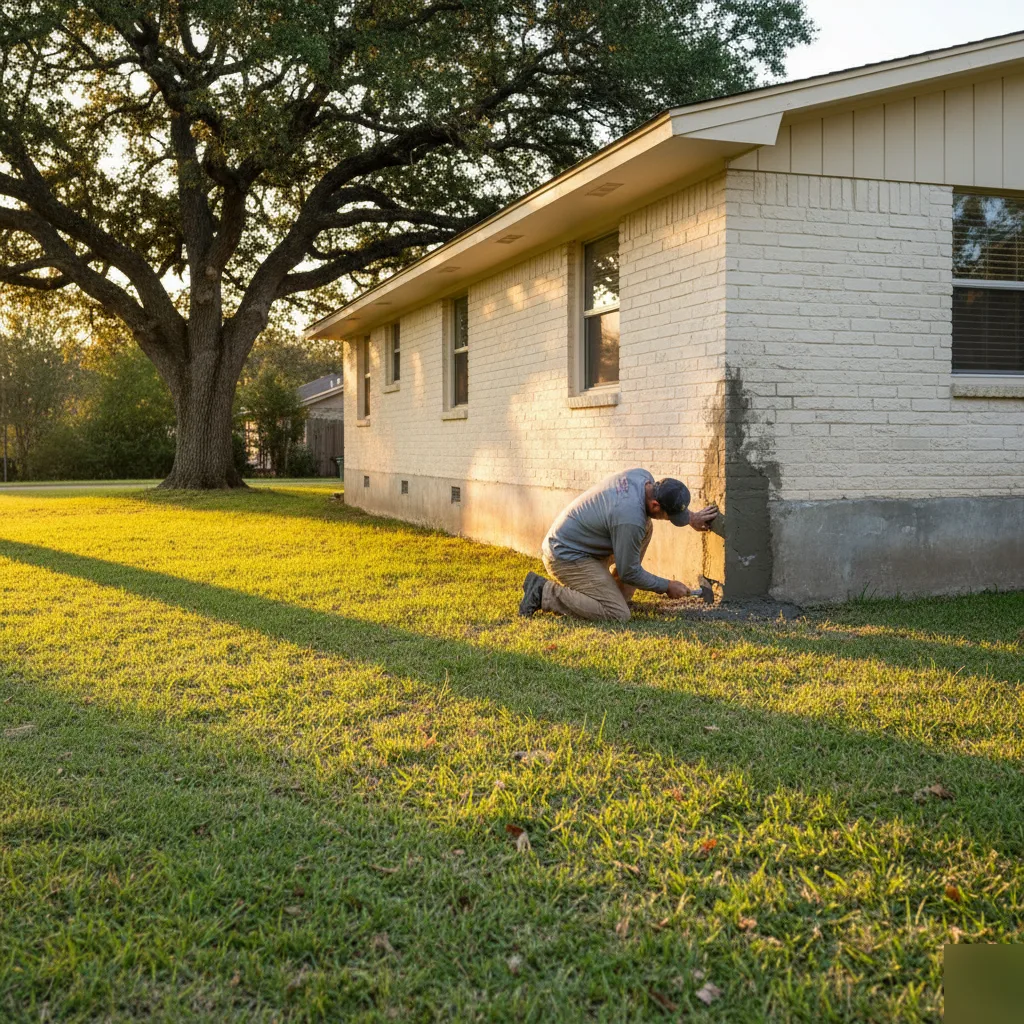
Concrete Slab Services in Austin, TX
From slab pier installation to driveway repair, Bats Foundation Repair provides complete concrete slab services for Austin homeowners dealing with Central Texas clay soil damage. Free estimates.
Austin's Blackland Prairie clay is one of the most aggressive soils in North America. It swells when wet, shrinks when dry, and repeats that cycle every single season — applying enormous force to concrete slabs from below. Whether you're dealing with a sinking foundation, a cracked driveway, or a slab that's settled unevenly after years of shrink-swell movement, Bats Foundation Repair has the right solution.
Our concrete slab services in Austin address what Central Texas clay does to a structure — from deep structural repairs like slab pier installation and pressed concrete pilings to polyurethane foam injection that fills voids beneath settled slabs. Every job starts with a free estimate.
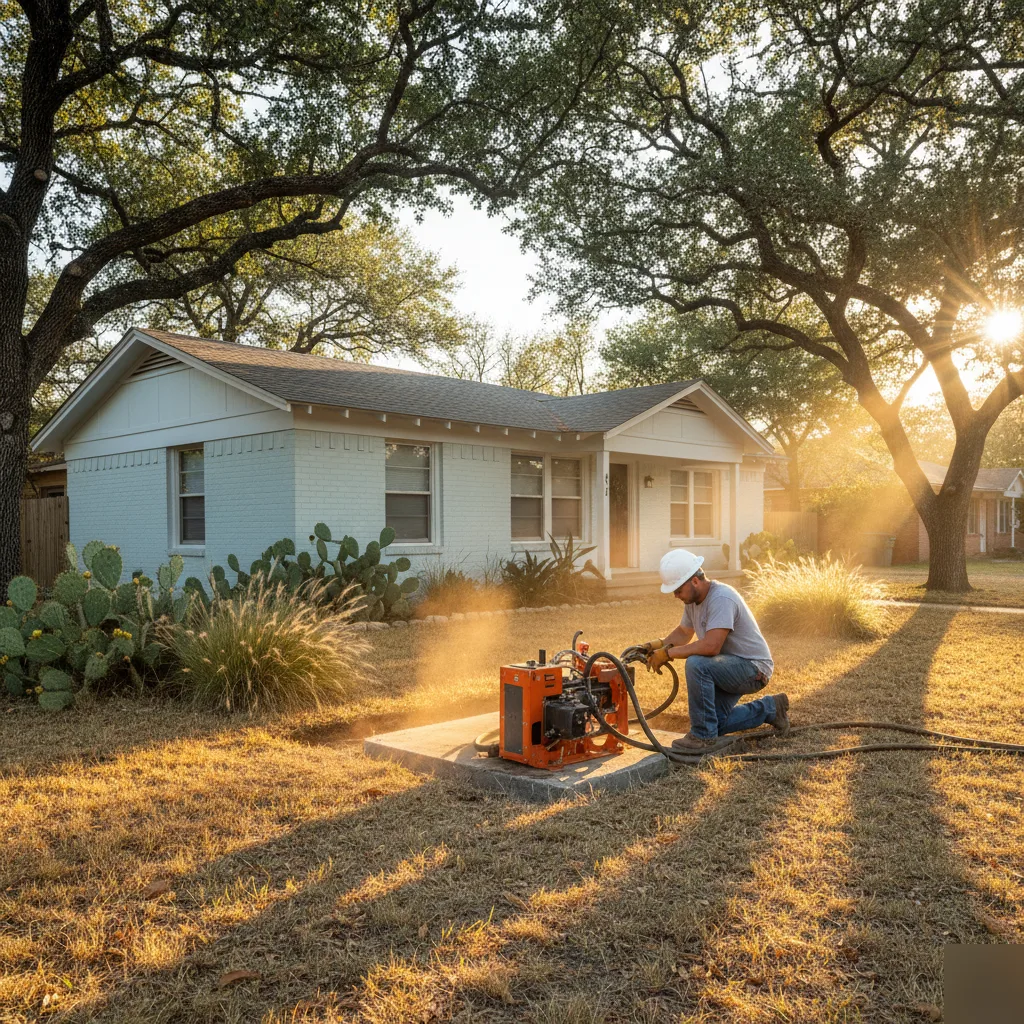
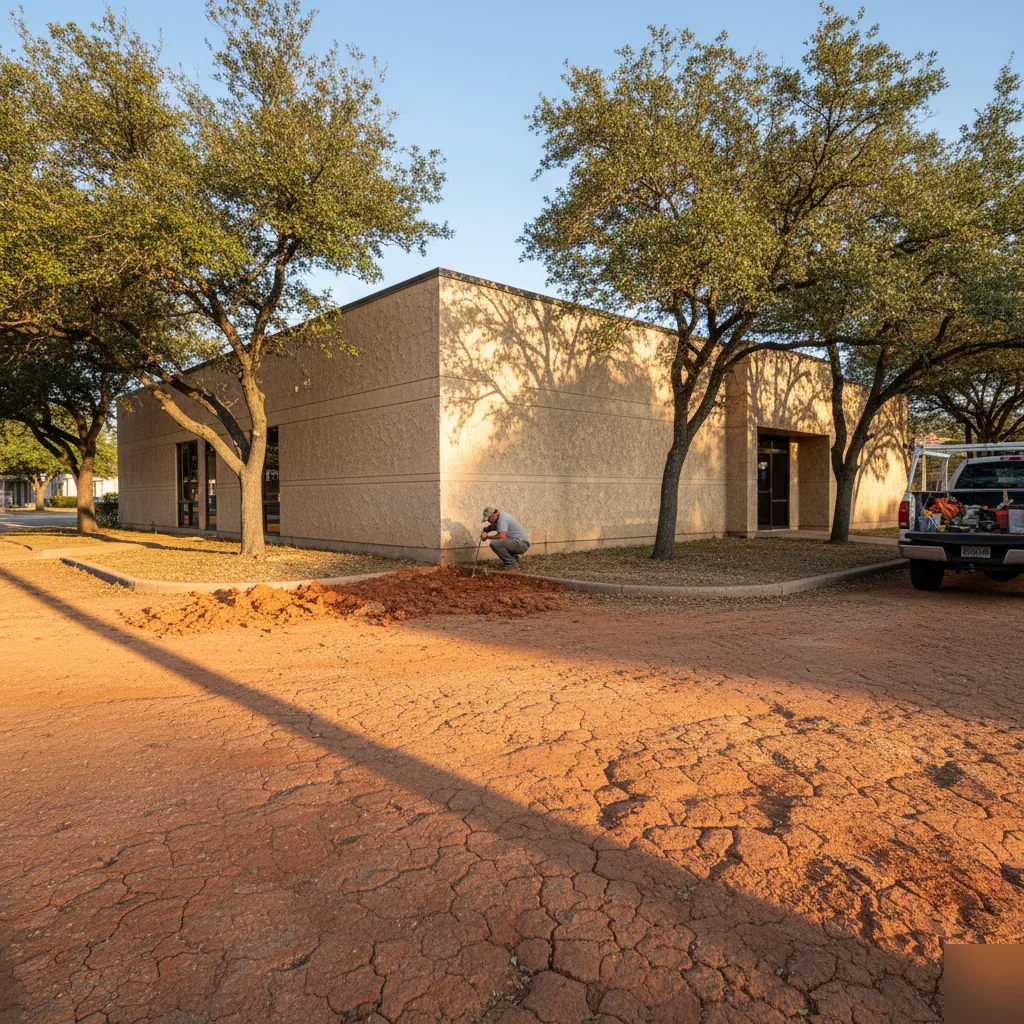
The clay beneath your slab can change volume by up to 15% between wet and dry states. During Austin's long dry summers the soil pulls away from the slab, opening voids underneath. When spring rains arrive, rehydrating clay pushes upward against the slab with forces exceeding 5,500 pounds per square foot. Over time, this cycle cracks slabs, tilts foundations, and damages everything built on top.
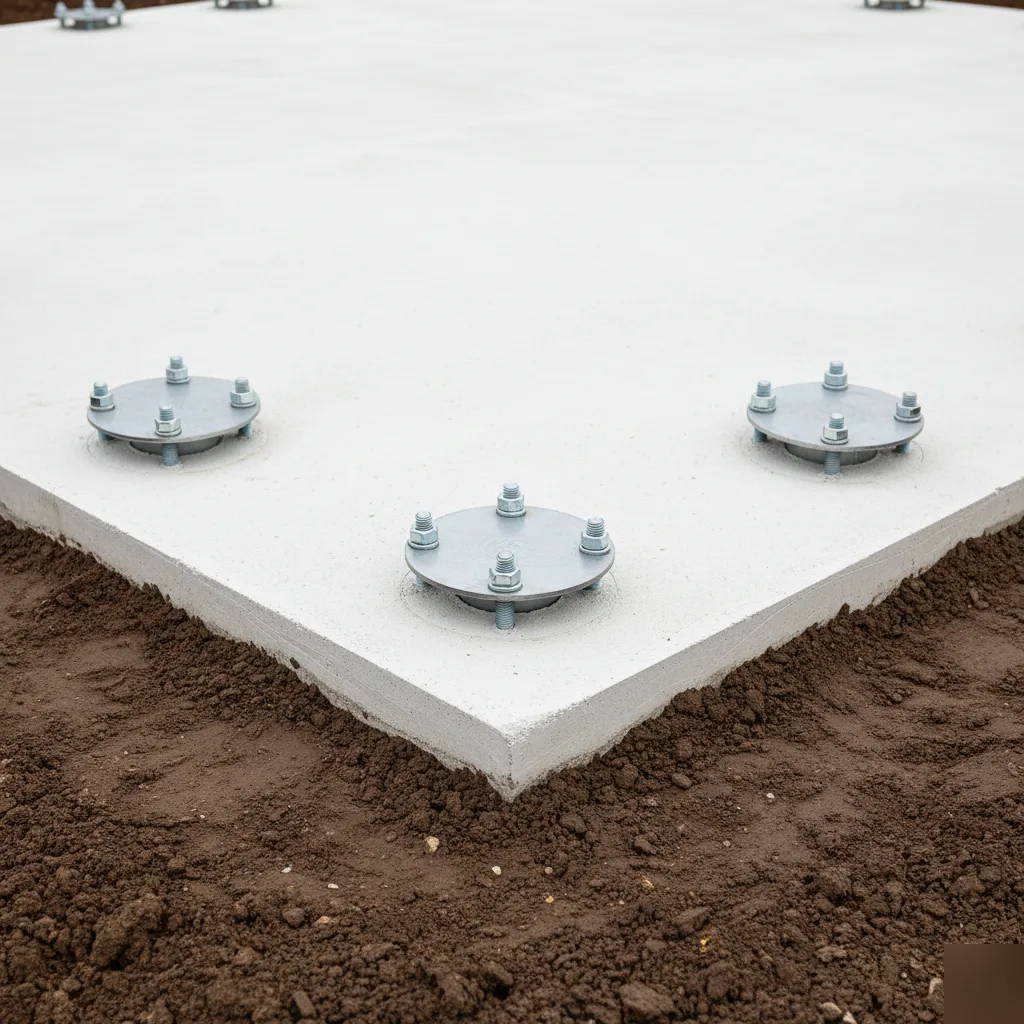
Slab Pier Installation in Austin, TX
When an Austin slab foundation has settled, dropped, or cracked due to expansive clay movement, surface patching is not the answer. The problem is underground — and the fix has to go underground too. Slab pier installation is the gold-standard solution for restoring a settled concrete slab foundation to its original elevation and preventing future movement.
How Slab Pier Installation Works
Bats Foundation Repair installs piers through or beneath the existing slab, driving them down through the unstable Blackland Prairie clay until they reach a stable load-bearing stratum below. Once in place, the piers transfer the weight of the structure away from the problem soil and onto stable ground. The foundation is then carefully lifted back toward its original position and locked in place.
In homes with interior slab areas that can't be accessed from outside, we use tunneling — excavating beneath the slab perimeter to reach interior installation points without demolishing your floors. This keeps your home livable during the repair process.
Signs You Need Slab Pier Installation
Doors and windows that stick, drag, or no longer close flush
Visible cracks running diagonally from door and window corners
Gaps opening between walls and ceilings or walls and floors
Uneven or sloping floors noticeable when walking through the home
Cracks in exterior brick or stucco that weren't there before
A foundation evaluation showing more than 1 inch of differential movement
Warranty Coverage
Warranty coverage depends on the repair type and is set out in your signed agreement. Our driven steel and hybrid pier systems carry a lifetime transferable warranty — future settling adjustments on those piers are performed at no additional cost, and the coverage transfers to new owners when you sell. Other repairs include their own written warranty terms. In Austin's competitive real estate market, transferable coverage is a tangible asset.
Pressed Concrete Pilings in Austin, TX
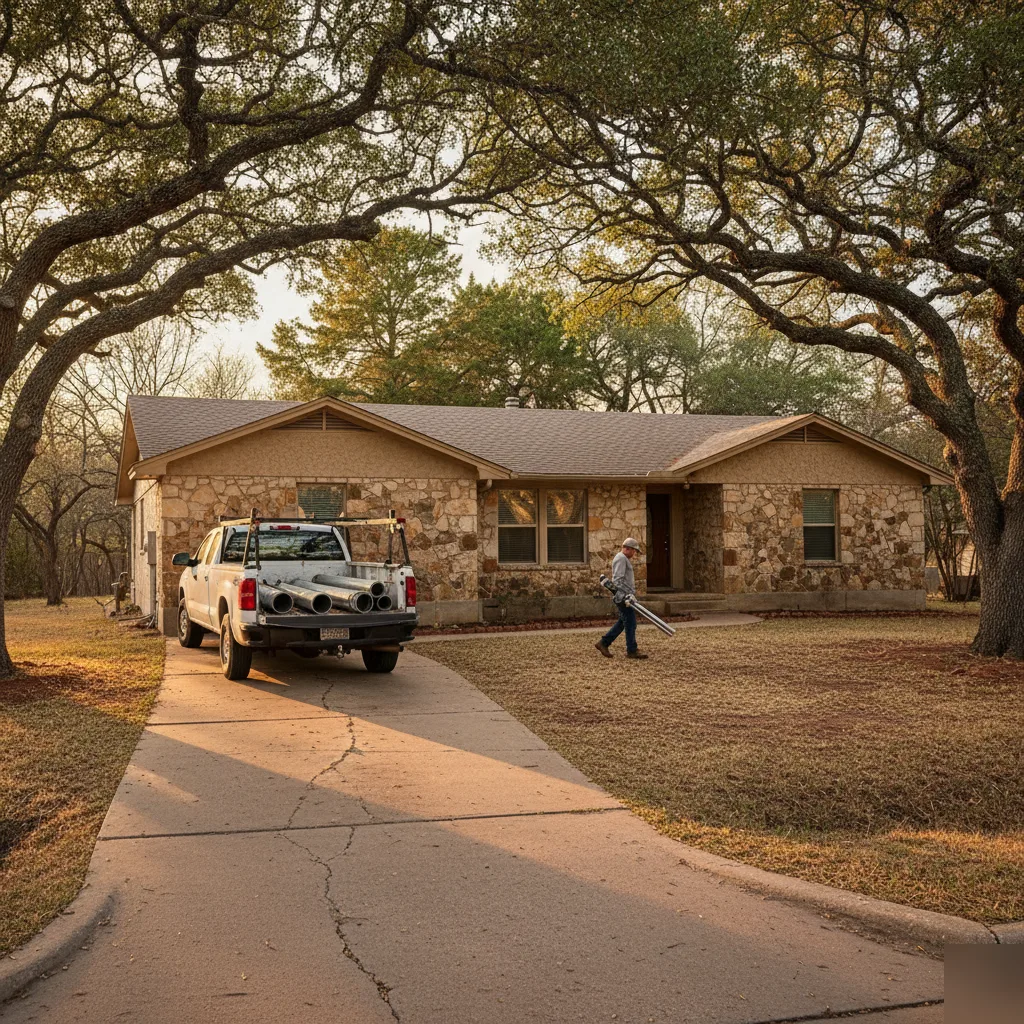
Pressed concrete pilings are one of the most widely used and time-tested foundation repair methods in Central Texas — and for good reason. They are specifically engineered for the Blackland Prairie clay that underlies the Austin metro, and they have been successfully stabilizing Texas slab foundations for decades.
What Makes Pressed Concrete Pilings Work in Austin
Unlike methods designed for different soil types, pressed concrete pilings work with the unique behavior of Texas clay. Cylindrical concrete sections are hydraulically pressed into the soil beneath the foundation, using the weight of the structure itself as resistance. Pressing continues until refusal — the point at which the pilings can no longer be driven, indicating they've reached stable soil or the load-bearing capacity of the clay column beneath.
In Austin's Blackland Prairie zone, this method takes advantage of the density and load capacity of the deep clay formation while also being cost-effective compared to deep steel pier systems. For many Austin homeowners dealing with standard slab settlement, pressed concrete pilings deliver excellent long-term results at a lower overall project cost.
Pressed Concrete Pilings vs. Steel Piers
Pressed concrete pilings and steel push piers are both effective — they serve different situations. Pressed concrete pilings are generally recommended for moderate settlement in deep, stable clay. Steel push piers are driven deeper and are recommended where the clay is more problematic or where bedrock anchoring is preferred. Bats Foundation Repair will assess your specific soil conditions and recommend the right system during your free estimate.
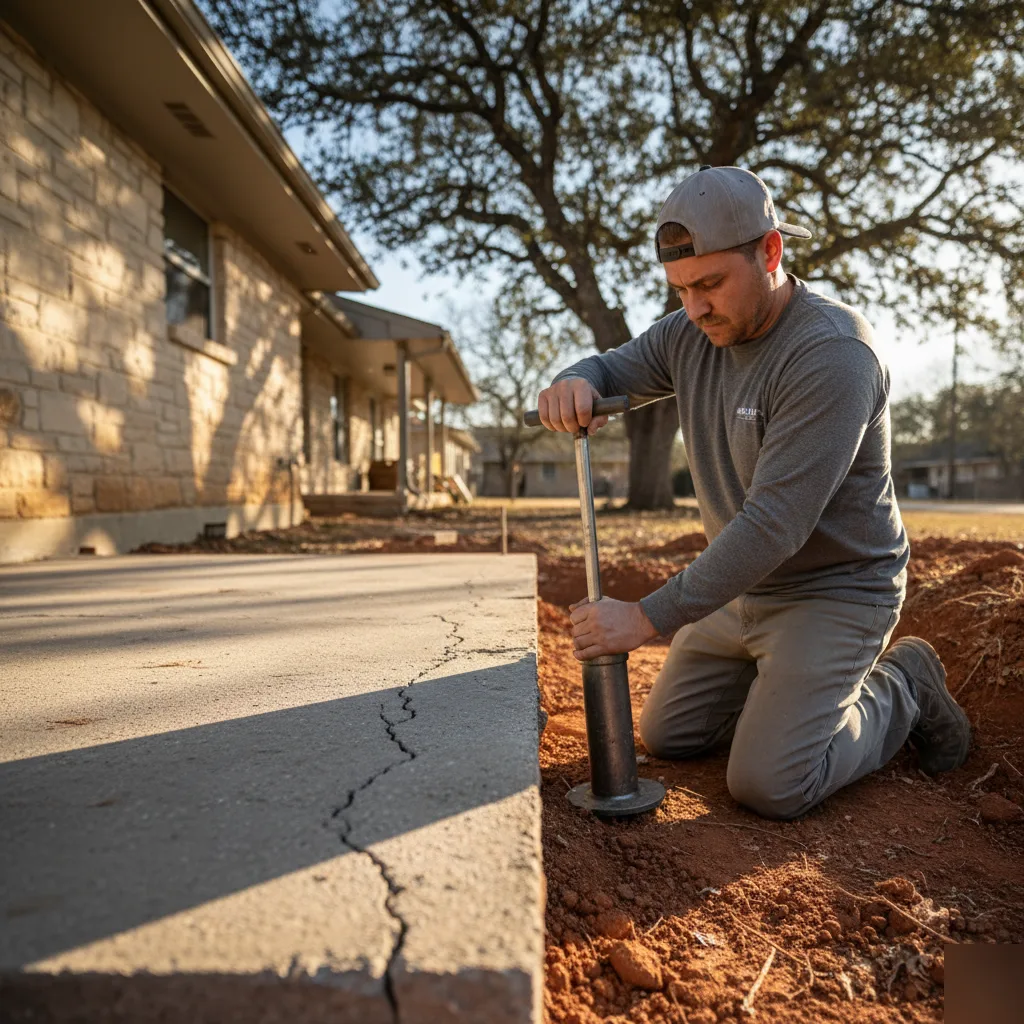
Concrete Slab Foundation Repair in Austin, TX
The concrete slab is the most common foundation type across Austin and the Central Texas region. It sits directly on the clay soil, which means every shrink-swell cycle the Blackland Prairie goes through, your slab feels it. Over time, differential movement — where different sections of the slab shift by different amounts — causes cracking, heaving, and settlement that can affect the entire structure above.
What Concrete Slab Foundation Repair Includes
Concrete slab foundation repair is not a single procedure — it's a diagnosis-driven process. Bats Foundation Repair begins every job with a thorough evaluation of the slab's current position, the degree of differential movement, soil conditions around the perimeter, and the symptoms visible inside and outside the home. From there, the repair plan is built around what the specific slab actually needs.
Repair methods may include pressed concrete piling installation, steel push pier installation, polyurethane foam injection to fill voids beneath the slab, or a combination of approaches depending on what the assessment reveals. Every repair is designed to address the cause of the movement, not just the surface symptoms.
Austin-Specific Slab Challenges
East Austin and Pflugerville sit on the deepest Blackland Prairie clay — slabs here experience the full force of seasonal shrink-swell
West Austin slabs on Edwards Plateau geology face faster void formation due to shallow soil depth over limestone
Transitional neighborhoods like Barton Hills and South Lamar can have wildly variable soil conditions across a single lot
Older slabs in Hyde Park, Crestview, and Brentwood have been through 50–80 years of clay cycles — cumulative damage is the primary concern here
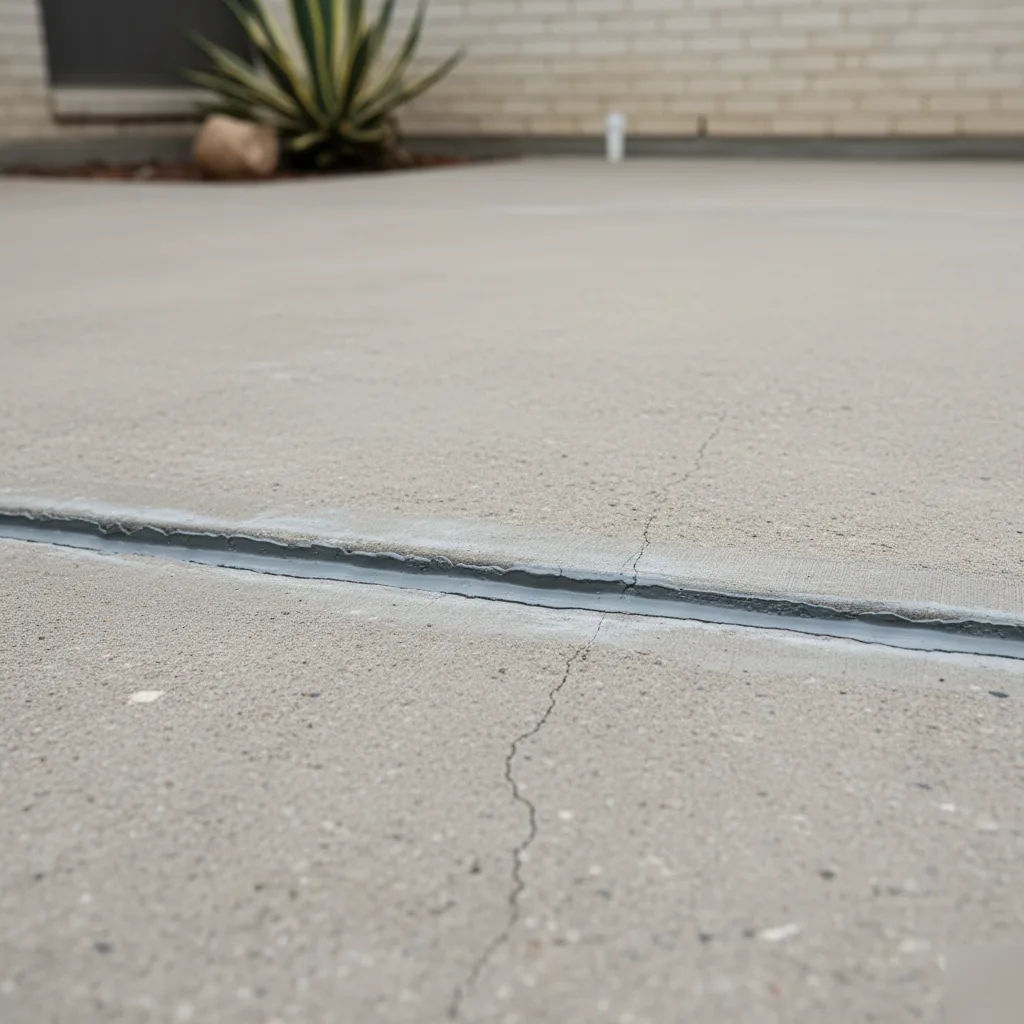
Concrete Slab Repair in Austin, TX
Not every slab problem is a foundation problem. Sometimes the slab itself — garage floors, interior slabs, patios, walkways, and pool decks — has cracked, chipped, settled unevenly, or deteriorated in ways that don't signal structural failure but still need professional attention. That's concrete slab repair: targeted, surface-to-mid-depth work that restores the integrity and appearance of damaged concrete without requiring full foundation intervention.
Common Concrete Slab Repair Scenarios in Austin
Garage floors that have cracked or sunk due to clay movement beneath the slab
Interior floor slabs showing visible cracks along seam lines or expansion joints
Patio slabs that have lifted, settled, or separated from the home's foundation
Pool deck concrete that has cracked or become uneven around the pool perimeter
Walkway slabs that have shifted, creating tripping hazards
Commercial concrete floor slabs showing wear, cracking, or settlement in high-traffic areas
The Austin Climate Factor
Austin's heat and drought cycles take a particular toll on concrete flatwork. During the dry season, the clay beneath slabs shrinks and pulls away, leaving sections of the concrete unsupported. When those unsupported sections are loaded — by foot traffic, vehicles, or equipment — they crack or drop. Bats Foundation Repair addresses both the surface damage and the void conditions beneath the slab that allowed the damage to happen.
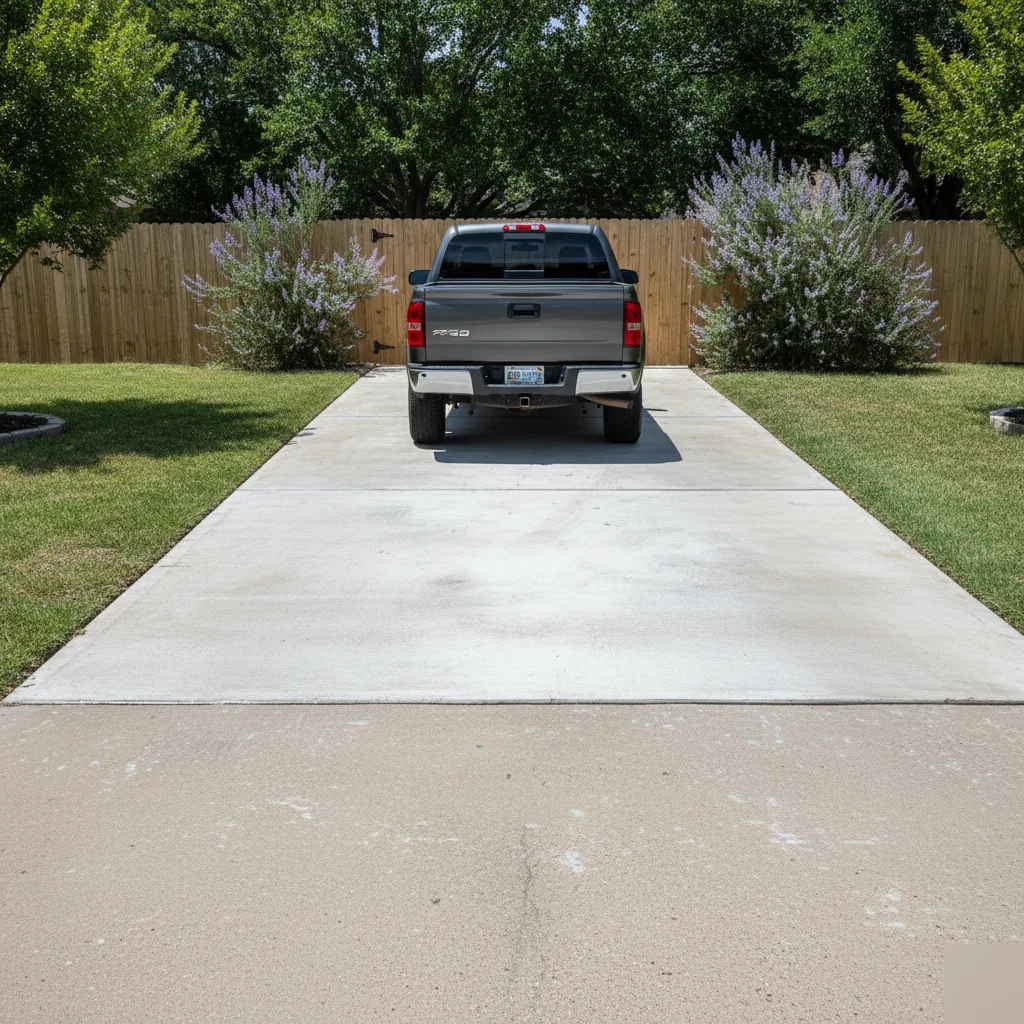
Driveway Repair in Austin, TX
A cracked or sunken Driveway Repair is one of the most visible signs that Central Texas clay is doing what it does. Austin driveways take a beating from the same Blackland Prairie shrink-swell cycle that damages foundations — but because driveways lack the reinforcement and thickness of structural slabs, they often show the damage first. Bats Foundation Repair restores settled, cracked, and uneven concrete driveways across the Austin metro.
Why Austin Driveways Crack and Sink
Most Austin driveways are four to six inches of concrete poured directly over clay. During dry seasons, the clay beneath contracts and pulls away from the concrete, leaving sections of the driveway unsupported. Vehicle weight on unsupported concrete causes cracking, sinking, and panel separation. When rains return, the clay may push sections back up unevenly — creating lips, gaps, and tripping hazards that compound over time.
How We Repair Austin Driveways
Polyurethane foam injection to fill voids beneath sunken panels and lift them back to grade without full replacement
Panel replacement for sections beyond repair
In many cases, driveway lifting with polyurethane foam injection is completed in a single day and the driveway can be driven on within hours — far faster and more affordable than full concrete replacement.
Get a Free Estimate for Any Concrete Slab Service in Austin
From deep pier installation to polyurethane foam injection, Bats Foundation Repair provides concrete slab services for Austin homeowners. With years of combined experience working in Central Texas clay soil, we know what your slab is up against — and we know how to fix it.
Call today for a free, no-pressure estimate. We serve Austin, Pflugerville, Round Rock, Cedar Park, and the surrounding Central Texas area.