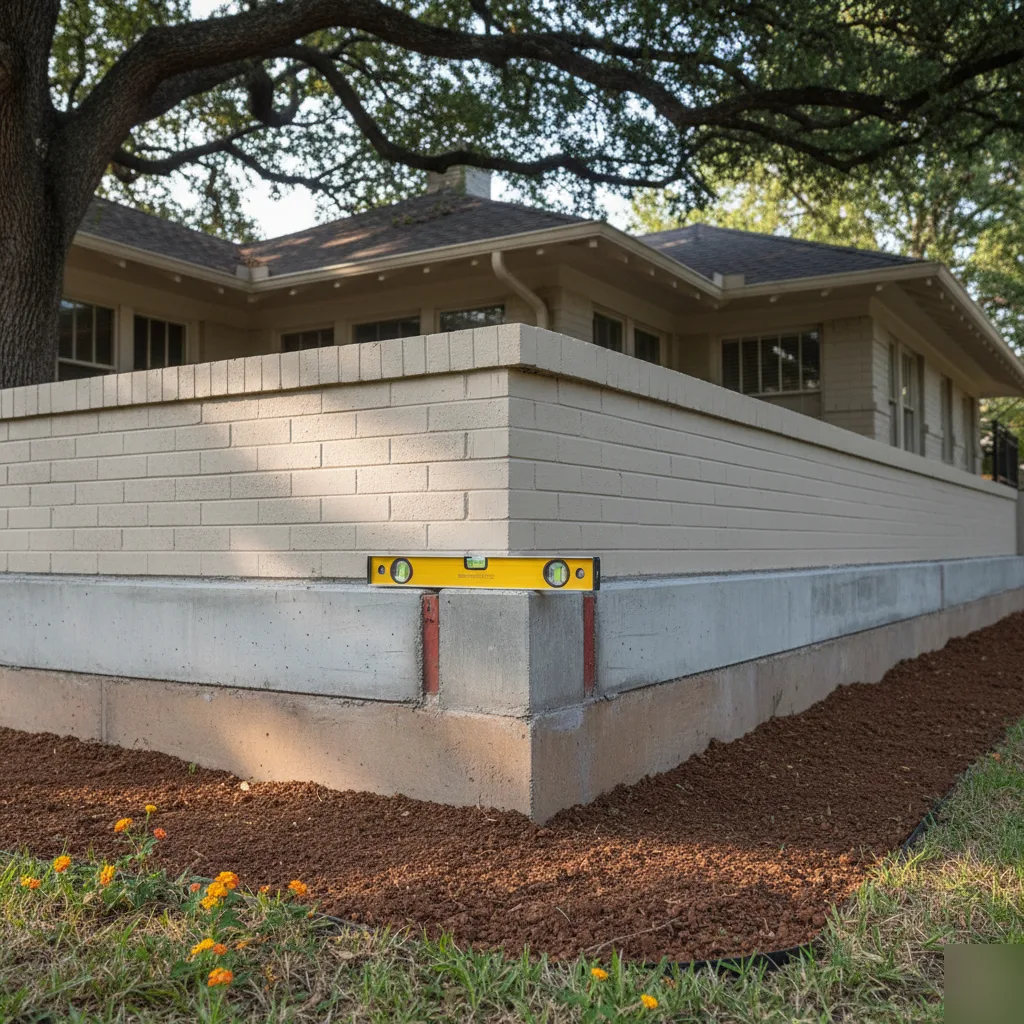

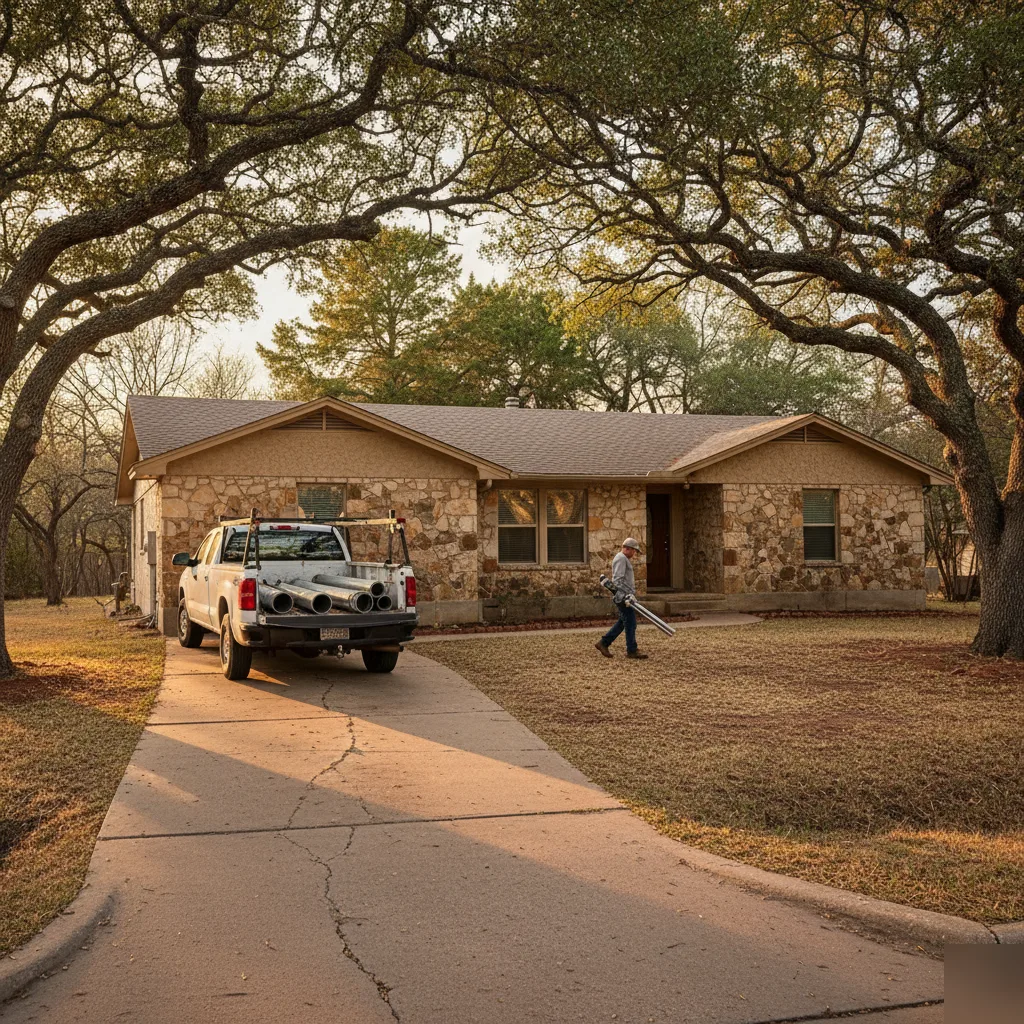
Pressed Steel Pilings · Austin, TX

Pressed Steel Pilings in Austin

Pressed steel pilings in Austin restore stability to shifting homes. Expert installation, lasting results. Call Bats Foundation Repair to schedule today.

Warning signs

Signs Your Foundation Needs Pressed Steel Pilings Now

You might notice it on a Tuesday morning. A door that closed fine last week suddenly sticks at the top. Or maybe you spot a crack running diagonal from the corner of a window frame. These aren't random quirks of an older home. They're your foundation talking to you.

Central Texas clay soil is relentless. It swells when it rains and shrinks during our long dry stretches. That constant push and pull creates movement under your slab, and over time, parts of your foundation settle deeper than others. When that differential settlement gets bad enough, pressed steel pilings are often the right fix, deployed by a professional concrete contractor in Austin, because they reach down past the unstable clay to load-bearing strata that won't shift with the seasons.

Here's what we see homeowners in Austin call about most often:

  • Cracks in drywall or exterior brick, especially diagonal ones near doors and windows
  • Doors or windows that stick, won't latch, or swing open on their own
  • Visible gaps between walls and ceilings or walls and floors
  • Uneven or sloping floors you can feel when you walk across a room
  • Cracks in the concrete slab itself, particularly near the perimeter

By the time someone in the Barton Hills or Crestview area calls us, more than one of these signs is already present. That's normal. Most people don't think "foundation problem" right away, they think the house is just settling. Some settling is expected. But there's a clear line between normal settling and active structural movement.

So how do you know the difference? If a crack keeps growing, that's active. If a door that used to stick now has a visible gap at the frame, that's getting worse. Foundation issues in Austin don't fix themselves. The soil conditions here pretty much guarantee continued movement without intervention.

Don't wait for floors to feel like a funhouse. If you're seeing two or more of those signs, it's worth getting a professional evaluation. We offer free estimates, and sometimes the news is better than people expect. Catching it early means fewer pilings and less disruption to your home.
Piling depth

How Austin's Expansive Clay Soil Affects Piling Depth

Most folks don't think about what's under their yard until their house starts cracking. But the soil beneath Austin homes is the whole reason pressed steel pilings exist here. We're sitting on expansive clay, and that clay has a mind of its own.

Here's what happens. During a dry Austin summer, that clay shrinks and pulls away from your foundation. Then the rains come back, the clay swells, and it pushes up unevenly. This constant cycle creates movement that concrete slab foundations just can't handle on their own. Over in the Barton Hills area, we see homes where the soil has shifted enough to crack brick veneer from the ground floor to the roofline.

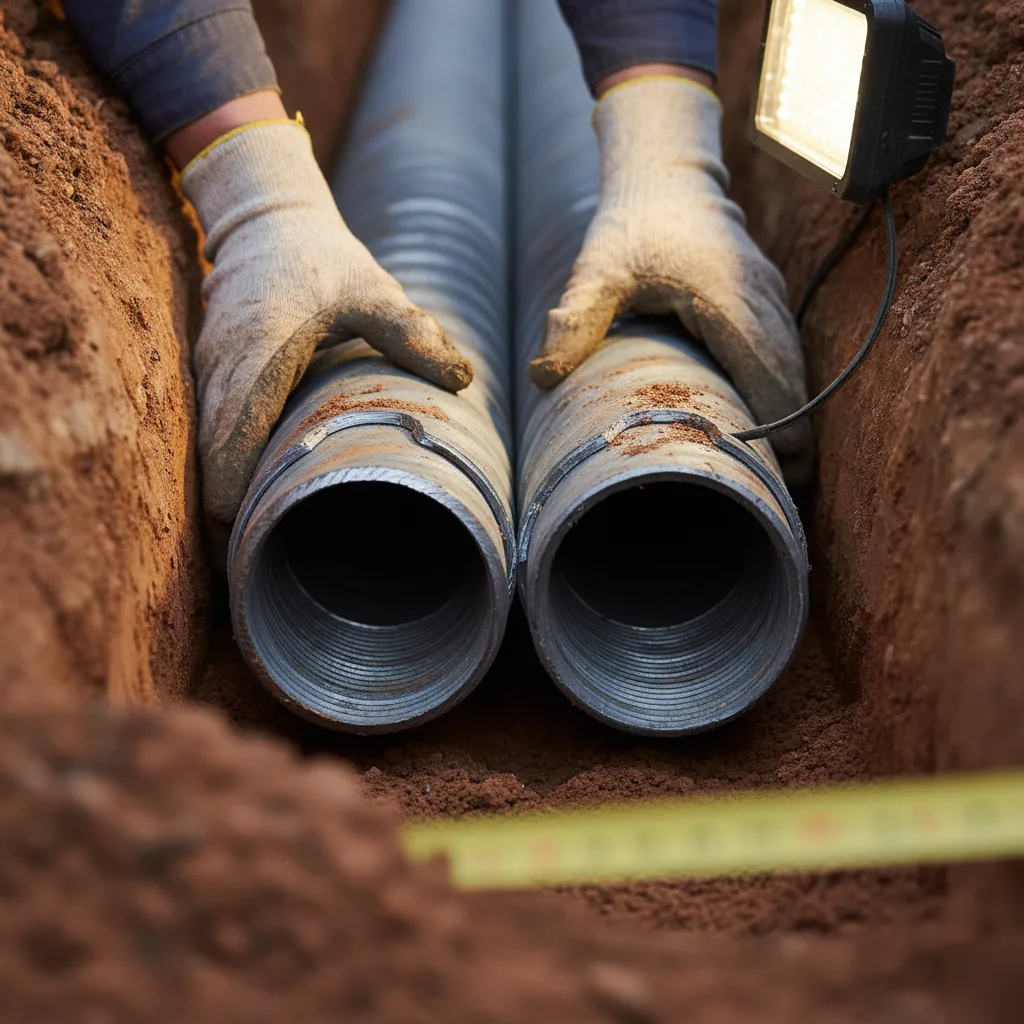
Pressed steel piling sections and coupling threads driven into Austin clay soil

So why does soil type affect how deep we drive pressed steel pilings? Because the piling has to reach past that unstable clay layer. According to the Texas Section of the American Society of Civil Engineers, Central Texas expansive soils can extend many feet below the surface. The active zone, where moisture changes cause the most movement, varies from property to property. We don't guess at it. We measure it.

Steel pilings transfer your home's load down to stable, load-bearing strata well below the problem clay. That's the key difference between a fix that holds and one that doesn't. The piling keeps going until it hits resistance that tells us we've reached solid ground. The depth often surprises homeowners. Understanding the engineering principles behind how piles interact with soil and structure is covered in depth in the Guide to Design of Concrete Piles from the American Concrete Institute, which outlines load transfer mechanics relevant to deep foundation systems.

A few things affect how deep we need to go on any given job in Austin:

  • How thick the active clay zone is at your specific property
  • The moisture content of the soil at the time of installation
  • Your home's weight and how the load distributes across the foundation
  • Proximity to large trees whose roots pull moisture from the ground

Every property is different. A home near Shoal Creek might need pilings driven to a completely different depth than one a few miles east. That's why a proper evaluation matters before any work starts, we never use a one-size-fits-all approach. And that evaluation? It's free. The soil tells us what your home needs if you know how to read it.

Our process

What the Pressed Steel Piling Installation Process Looks Like

Most folks want to know what's actually going to happen at their house. Fair enough. We've done this many times across Austin, and we still walk every customer through it step by step before we start.

Here's how a typical pressed steel piling job goes:

  1. 1
    Excavation around the footing

    We dig small access holes along the foundation perimeter where each piling will go. These are tight, controlled openings. Your landscaping takes minimal impact.

  2. 2
    Bracket placement

    A heavy-duty steel bracket gets mounted directly against the foundation footing. This bracket is what connects your home's weight to the piling below.

  3. 3
    Hydraulic pressing

    Using the weight of your structure as resistance, we press steel pilings one section at a time deep into the ground. Each section locks into the next. They keep going down until they hit stable, load-bearing strata. In areas like South Lamar and Zilker, that depth can vary quite a bit because of how the limestone layers sit.

  4. 4
    Load testing

    Once we reach the target depth and resistance, we verify each piling can support the load. No guesswork here.

  5. 5
    Lifting and stabilizing

    Our hydraulic equipment carefully raises the foundation back toward its original position. We monitor every point to make sure the lift is even and controlled.

  6. 6
    Backfill and cleanup

    We fill the excavation areas, compact the soil, and leave your property clean.

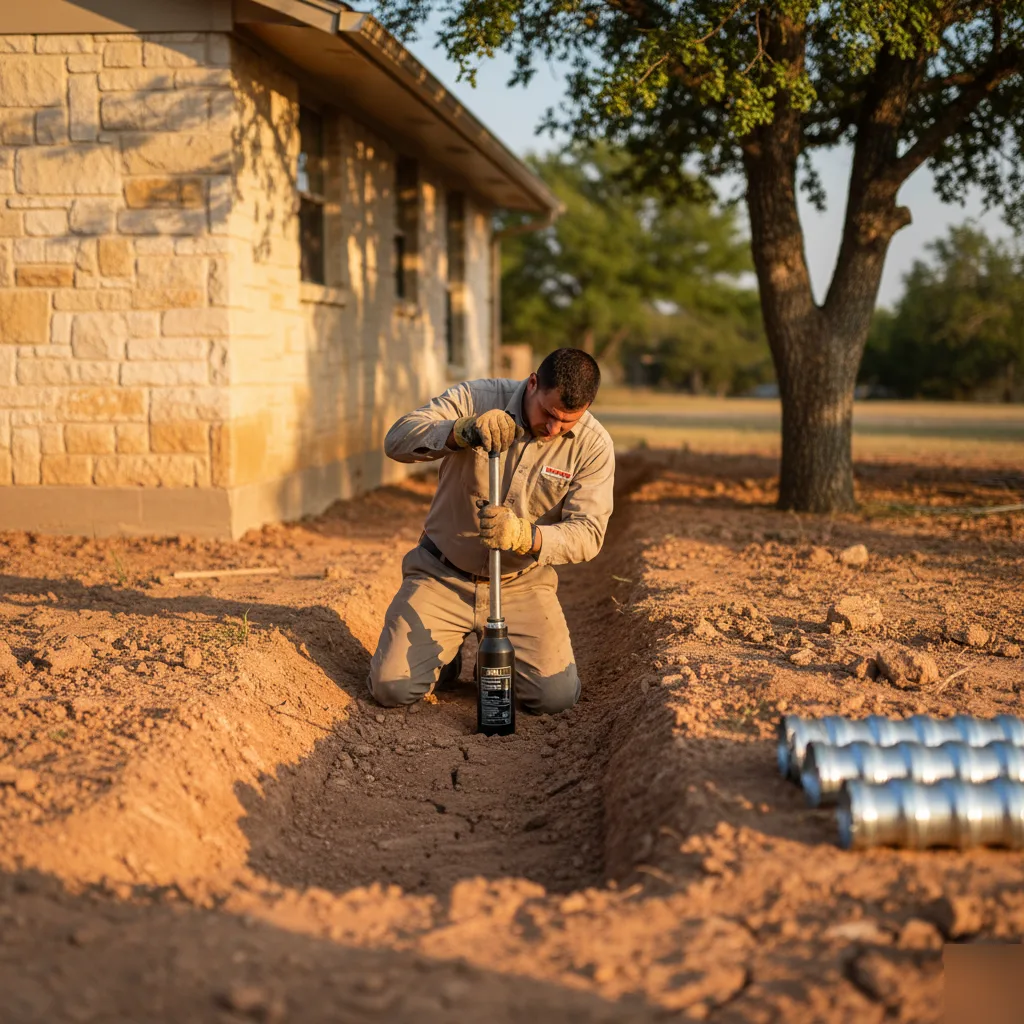
Pressed steel piling pressed into place with a hydraulic jack on an Austin foundation

The whole thing is quieter than most people expect. No jackhammers. No massive equipment tearing up your yard. We've had customers in Austin tell us they didn't realize we'd started until they walked outside.

Exterior pilings don't require us to move anything inside your home. But if pilings need to go under interior sections of a slab foundation, tunneling lets us reach those spots without ripping up your floors. That matters a lot when you've got tile or hardwood you want to keep.

Every job is different, the number of pilings, the depth, the layout. That's why we always start with a free estimate so you know exactly what your project involves before anything moves forward.

Pier count & placement

How Pier Count and Placement Are Determined

Every foundation is different. The number of pressed steel pilings your home needs depends on what's actually happening underneath it, not some formula we pull out of thin air.

We start with a detailed elevation survey of your slab. This tells us exactly where the low spots are and how much movement has occurred. A home in the Barton Hills area sitting on shallow limestone might only need six to eight piers along one wall. A larger home in East Austin built on deep expansive clay could need twenty or more around the full perimeter. The soil dictates the plan, we just read what it's telling us.

What Goes Into the Engineering

Our structural engineering team looks at several factors before placing a single pier:

  • The location and severity of settlement across the foundation
  • Load-bearing points like corners, interior walls, and where beams tie in
  • Soil conditions at different depths beneath the structure
  • How the home's weight distributes across the slab

The heaviest settlement tends to show up on the side of the house facing the most sun exposure. That's where Austin's clay dries out fastest and shrinks the most, so that side usually gets tighter pier spacing.

Not sure why your neighbor's job used fewer piers than your estimate calls for? That's actually pretty common to wonder about. But pier count isn't something you want to cut corners on. Each pressed steel piling carries a specific load. Remove one from the plan and you're asking the remaining piers to hold more than they should.

We also factor in future stability. If a section of your foundation hasn't settled yet but the soil profile suggests it will, we'll often recommend piers there too. It's more cost-effective to install them while the crew and equipment are already on site. Skipping that step means potentially calling us back in a few years for the same house. We'd rather do it right the first time, and most homeowners in Austin feel the same way once they see the full picture.

After the repair

Post-Installation Care for Homes in Central Texas

Once the pressed steel pilings are in place, the real work shifts to you. Not heavy lifting. Just smart habits that protect what we just fixed.

The biggest thing we tell homeowners in Austin: watch your watering. Central Texas clay soil expands when it's wet and shrinks when it's dry. That cycle is what caused your foundation trouble in the first place. After installation, you want to keep moisture levels around your home as consistent as possible. A soaker hose placed 12 to 18 inches from the foundation can make a real difference during July and August when the ground cracks open. We see this every week during drought stretches out near Circle C and Buda-adjacent neighborhoods.

Here's what to stay on top of in the months after your pressed steel pilings go in:

  • Keep gutters clean and downspouts directed at least four feet away from the slab
  • Trim tree roots that grow toward the foundation, especially live oaks and pecans
  • Check for new cracks in drywall or brick mortar every few months
  • Make sure plumbing under the slab isn't leaking, since hidden leaks erode soil fast

Not sure if a new crack means something? Small hairline cracks in drywall can appear as the house settles into its corrected position. Most of the time it's cosmetic. But if a crack grows wider than a quarter inch or doors start sticking again, give us a call so we can check it out.

We also recommend a follow-up inspection about a year after the job. Our licensed team comes back, checks elevation readings, and makes sure everything is holding where it should be. Austin's soil doesn't stop moving just because we stabilized your foundation. The pressed steel pilings do their job by transferring your home's load to stable strata deep underground, but the surface soil around your property still reacts to rain and heat.

Think of post-installation care like oil changes for your car. The repair is done right, you just don't want to ignore maintenance and end up back where you started.

Frequently asked questions

Pressed steel pilings in Austin, answered

How long does a pressed steel piling installation take from start to finish?

Most pressed steel piling jobs in Austin take one to three days, depending on how many pilings your foundation needs. A smaller home with localized settling might wrap up in a single day. Larger jobs with more access points take longer. We work around your schedule as much as possible, and you can stay in your home during the process. There's no heavy demolition involved, just controlled excavation around the perimeter.

Will my landscaping or yard get torn up during the installation?

The impact on your yard is minimal. We dig small, targeted access holes along the foundation perimeter — not wide trenches. Most homeowners in Austin are surprised by how little disruption there is. After the pilings are set and the foundation is stabilized, we backfill and compact those areas. Established plants close to the foundation may need to be temporarily moved, but we take care to protect what's there.

Does Austin's clay soil affect how well pressed steel pilings hold over time?

Yes, and it's actually why pressed steel pilings work so well here. Austin's expansive clay shifts constantly with moisture changes, but the pilings drive past that active zone down to stable, load-bearing strata that don't move with the seasons. Once your home's load transfers to that stable layer, the clay above it can swell and shrink all it wants without pulling your foundation along with it. That's the fix that actually holds.

What should I expect when the crew arrives for a foundation evaluation?

When we arrive, we walk the interior and exterior of your home to document what we're seeing. We look at crack patterns, check doors and windows for binding, and measure floor elevation across different areas. Outside, we inspect the foundation perimeter and note any soil separation or brick cracking. The evaluation is free, and at the end of it you'll have a clear picture of what's happening and what your home actually needs — no pressure, just information.

Can large trees near my foundation affect how deep the pilings need to go?

Absolutely, and this comes up often in older Austin neighborhoods with mature live oaks and cedar elms. Tree roots pull significant moisture from the surrounding soil, which accelerates the shrink-swell cycle right next to your foundation. That can deepen the active clay zone on one side of your home. We factor tree proximity into our evaluation because it directly affects how deep each piling needs to go to reach stable ground.

Is pressed steel piling the right fix if only one part of my foundation has settled?

Yes — localized settlement is actually one of the most common scenarios we see in Austin. You don't need pilings under the entire perimeter if only one corner or section has dropped. We place pilings exactly where the foundation has lost support, then lift that section back toward its original position. Addressing it while it's still localized means fewer pilings, less work, and less disruption to your home overall.

Don't wait for floors to feel like a funhouse

If you're seeing two or more of those signs, it's worth getting a professional evaluation. Call Bats Foundation Repair to schedule today.