
What Foundation Block Wall Installation Actually Involves
Most folks picture a simple stack of blocks. It's way more than that. Foundation block wall installation is a structural process that supports your home or building from the ground up, and every step matters, including specialized work like brick wall repair in Austin.
We start below grade. That means digging down to the footing, the concrete base that sits underneath everything. In Austin, our Central Texas clay soil expands and contracts with moisture changes, so the footing has to be sized right and poured on stable ground. Skip that part, you'll have problems within a year or two.
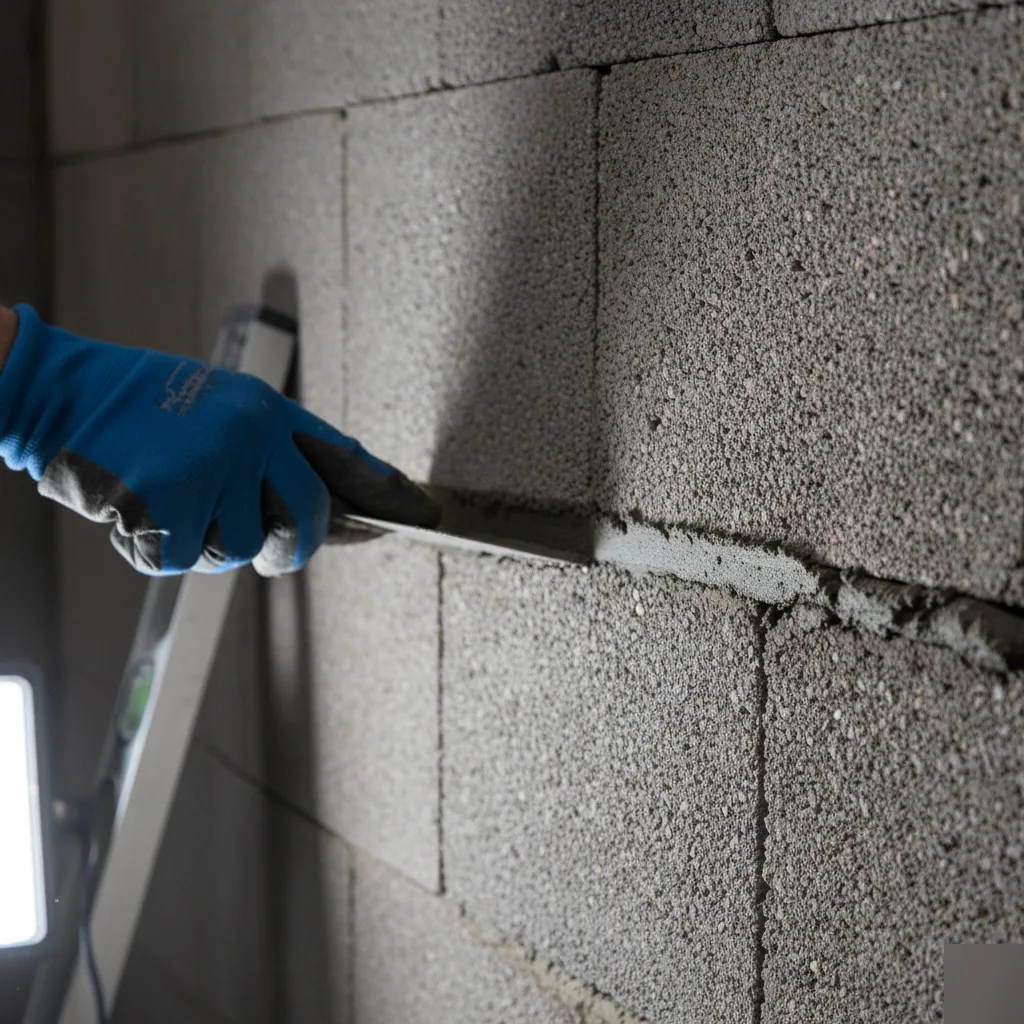
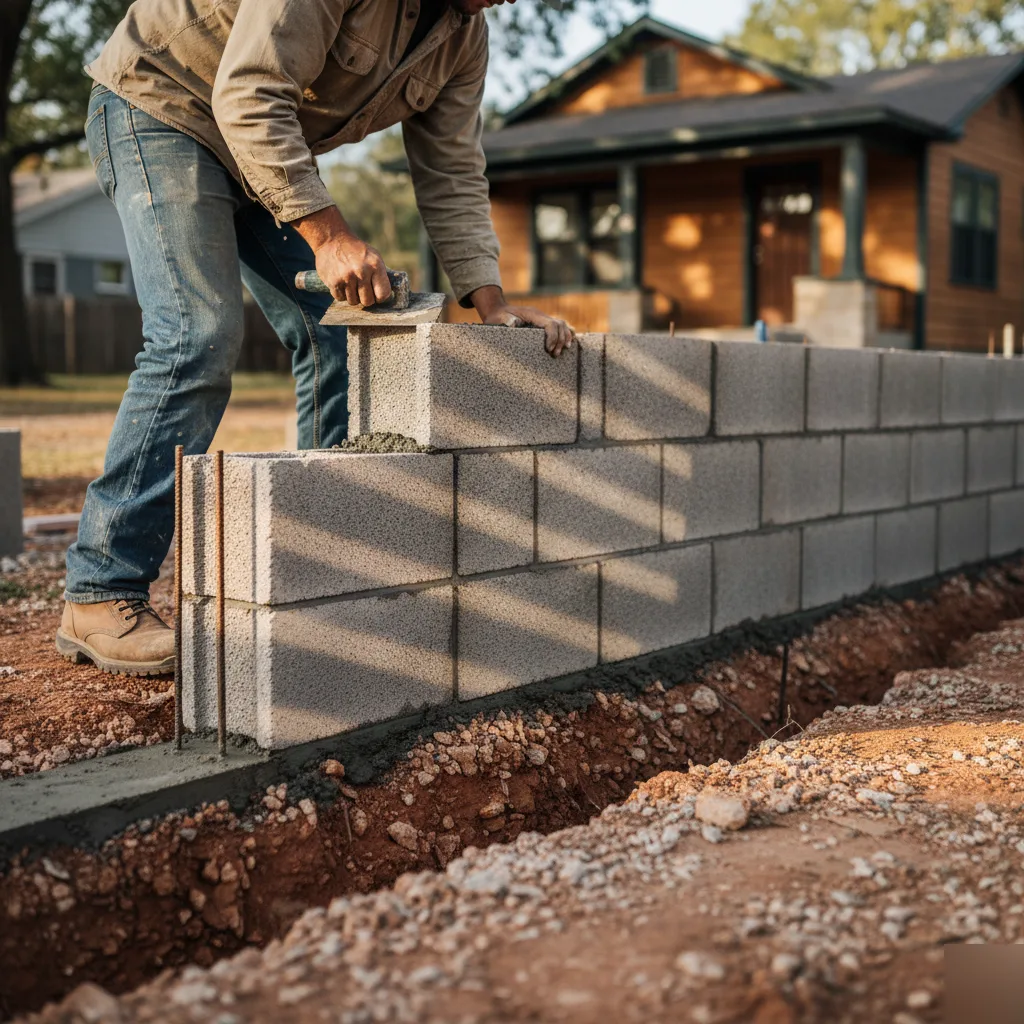
Once the footing is set and cured, we lay concrete masonry units row by row. Each course gets checked for level and plumb. We fill the hollow cores with grout and place steel rebar vertically through the cells to tie the wall back to the footing. Horizontal reinforcement goes in every few courses too. That steel is what gives the wall its real strength against lateral soil pressure.
Why the Details Matter in This Soil
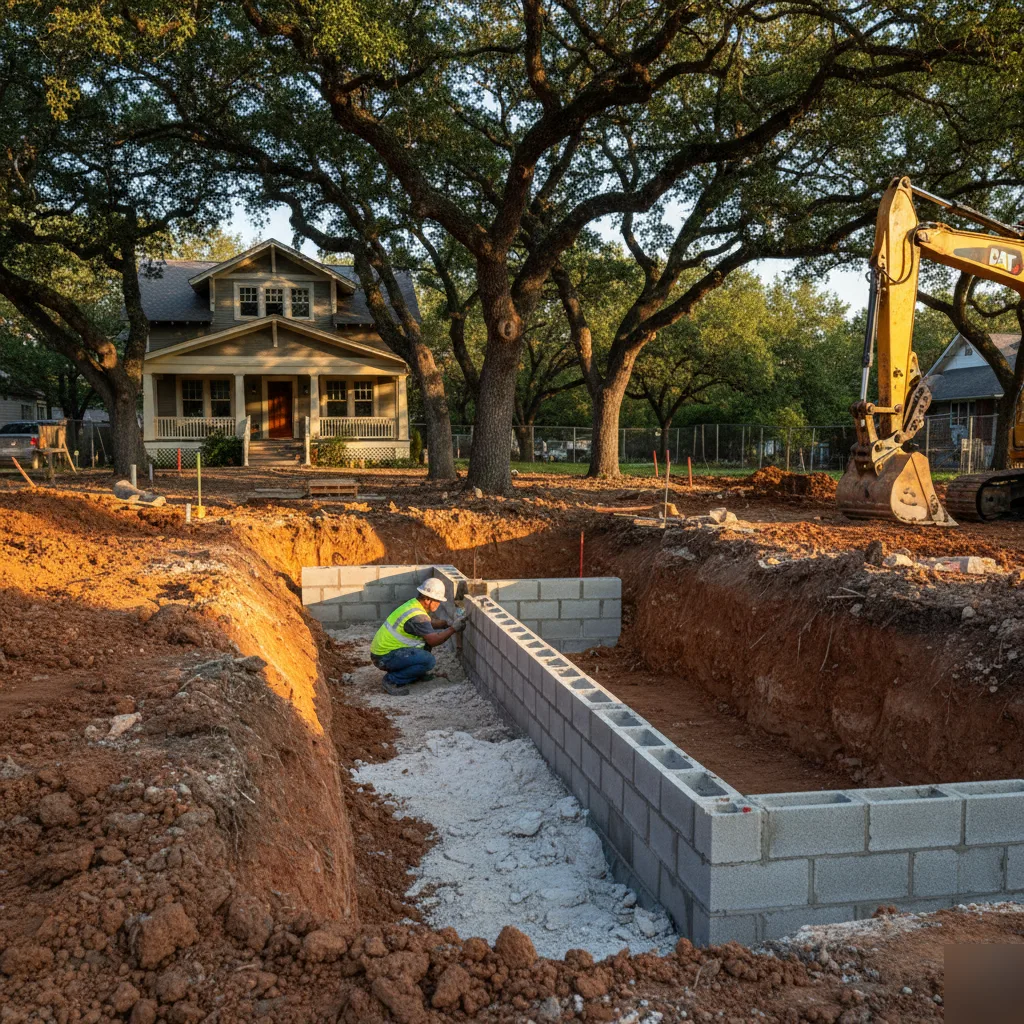
Homes in the Windsor Park area and across East Austin sit on some of the most reactive clay we see anywhere. The soil pushes hard against below-grade walls when it swells after rain. Without proper reinforcement and drainage planning, a block wall can bow or crack in just a few seasons. We see this weekly on older builds that cut corners.
Here's what the process looks like from start to finish:
- 1
Excavate to the required depth and prepare a level base for the footing.
- 2
Pour and cure the reinforced concrete footing.
- 3
Lay block courses with mortar joints, checking alignment at every row.
- 4
Set vertical rebar and fill cores with grout as we build up.
- 5
Apply waterproofing to the exterior face before backfilling.
- 6
Backfill carefully and compact in lifts to avoid uneven pressure on the new wall.
That waterproofing step isn't optional in Austin. Moisture management protects the block from absorbing water that would weaken mortar joints over time. Proper backfill technique keeps the soil from loading one spot harder than another.
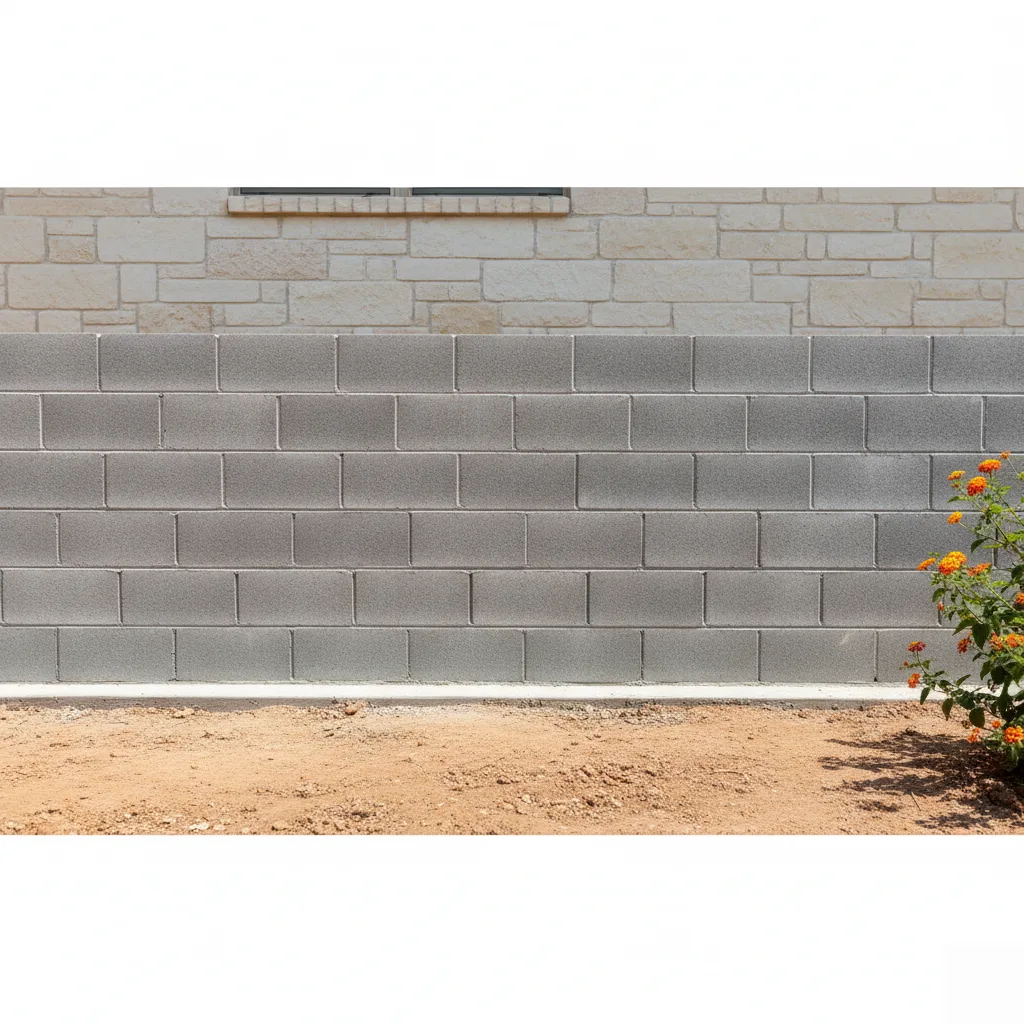
The finished wall becomes a permanent part of your foundation system. It carries the weight of your structure down to the footing and resists the soil forces trying to push inward. Done right, it's solid for decades.