
Crawl Space Support Posts · Austin, TX

Crawl Space Support Posts in Austin

Crawl Space Support Posts in Austin failing under your floors? Bats Foundation Repair diagnoses and replaces damaged posts. Call to book your inspection.

What they do

What Crawl Space Support Posts Actually Do

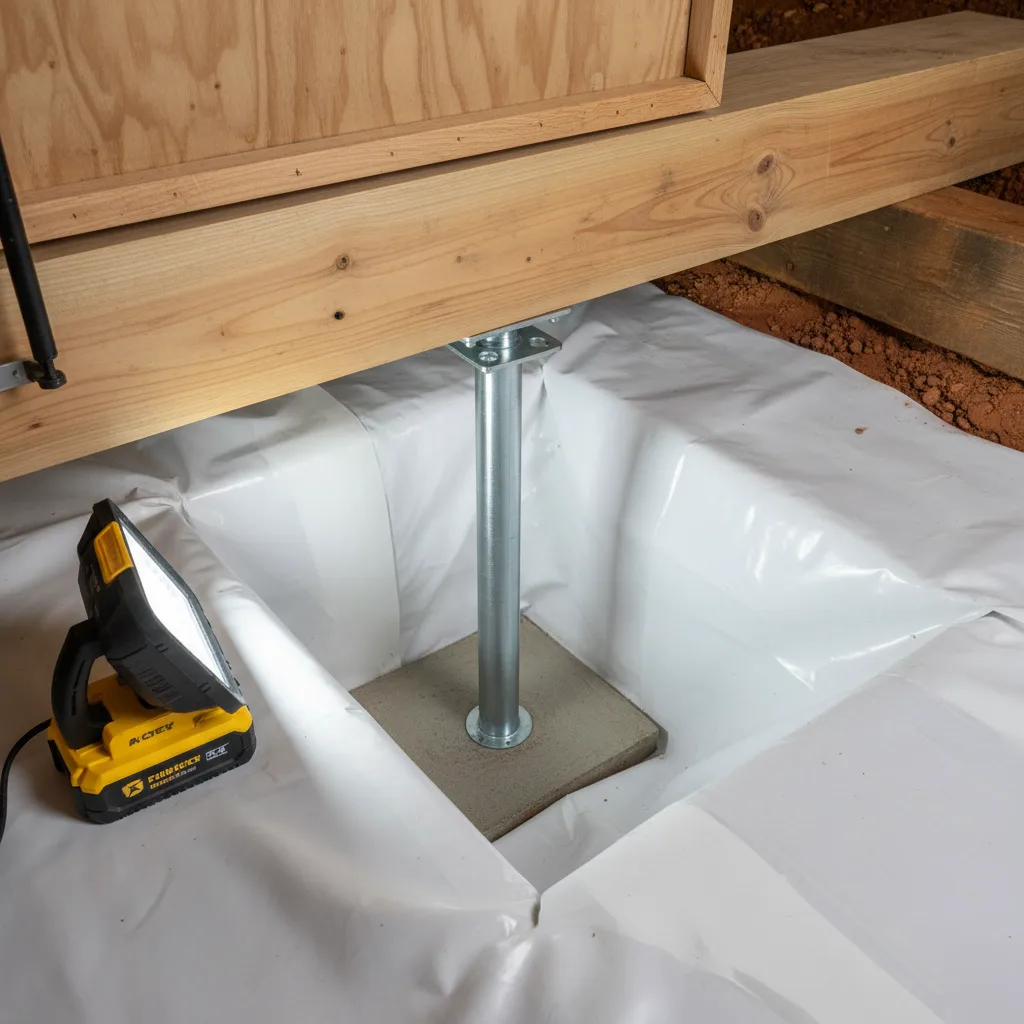
Your pier and beam home sits on a crawl space. That crawl space has beams running under your floor, and those beams need something holding them up. That's the job of crawl space support posts.

Over time, the original wooden posts or concrete blocks under an Austin home can shift, rot, or sink into the soil. A good masonry contractor Austin TX can also help. Central Texas clay is notorious for expanding and contracting with moisture changes. When that happens, the posts lose contact with the beams above them. Or they tilt. Or they just give out. We see this every week in older neighborhoods like Crestview and Brentwood where pier and b are common.

So what do new support posts actually do? They transfer the weight of your home from the floor beams down to a stable bearing point in the soil. Think of them as vertical columns that keep everything level and tight. Without them, your beams sag. Your floors dip. Doors stick. Cracks show up in walls. The whole structure starts telling you something's wrong.

Here's what proper crawl space support posts handle:

  • Replacing old wooden posts that have rotted or been damaged by moisture
  • Adding new posts where spans between existing supports are too wide
  • Stabilizing beams that have started to sag or deflect under load
  • Correcting uneven floors caused by settled or shifted supports

A lot of folks call us because they feel a soft spot in the hallway or notice their living room floor slopes toward one corner. It's a support post issue. The floor isn't failing, the thing holding it up is.

Crawl space support posts don't just fix a symptom. They restore the load path your home was designed to have. Every beam needs support at the right intervals, that's basic structural engineering. When a post fails or was never installed where it should've been, the beam flexes beyond what it can handle. New posts put that load right back where it belongs. It's a straightforward fix with a real impact on how your home feels underfoot and how long your foundation stays sound in Austin's demanding soil conditions.
Warning signs

Warning Signs Your Support Posts Are Failing

Bouncy floors are the number one thing people call us about. You're walking through the hallway and the floor gives a little under each step. Maybe dishes rattle in the cabinet when someone crosses the kitchen. That's not normal, it's your crawl space support posts telling you something's wrong.

We see this every week in older Austin homes, especially around the Bouldin Creek and Zilker neighborhoods where pier and beam construction goes back decades. The original wood posts dry out, split, or just sink into soft soil over time. Central Texas clay makes it worse because the ground swells and shrinks with every wet-dry cycle we get.

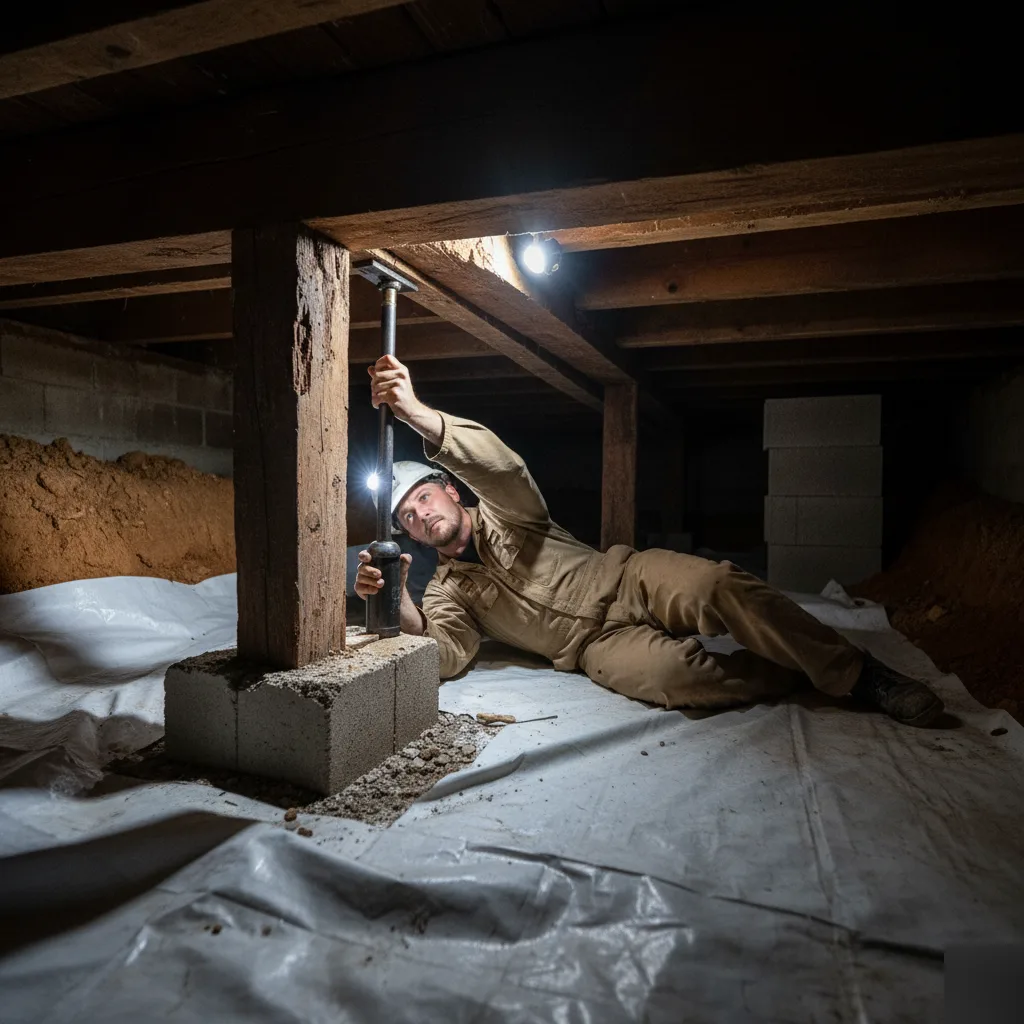
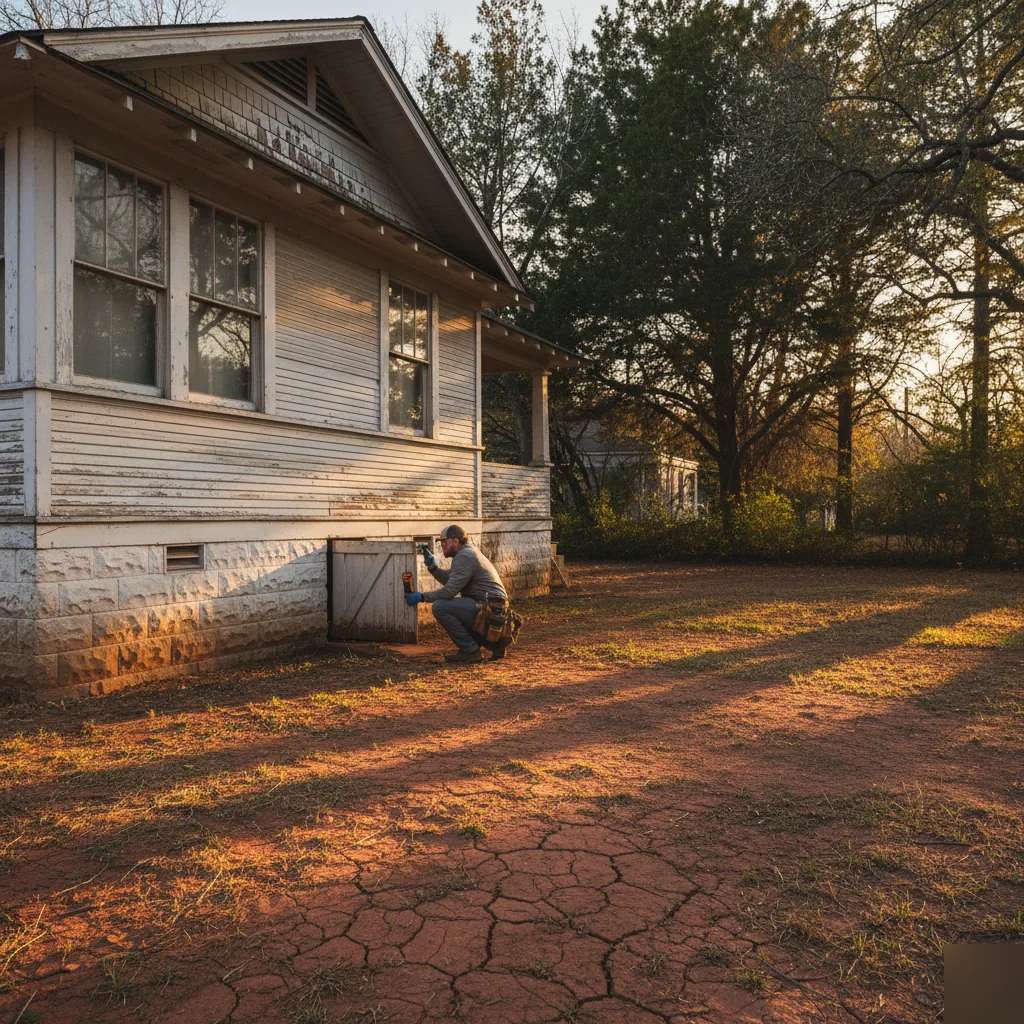
Crawl space inspection beneath a pier and beam home in Austin, Texas

What to Look For

Some signs are obvious. Others take a closer look. Here's what typically sends homeowners to the phone:

  • Floors that feel soft, saggy, or uneven when you walk across them
  • Visible gaps between the floor and baseboards or walls
  • Interior doors that stick, drag, or won't latch properly
  • Cracking in drywall near door frames or where walls meet ceilings
  • A musty smell coming up from below the house

Not sure if what you're seeing is a real problem? That's pretty common. A lot of folks live with a slightly bouncy floor for years before realizing the posts underneath have shifted or rotted. By that point, the beams they support may have started to sag too.

One failing post puts extra load on the posts around it. What starts as a single weak point can spread across the whole crawl space. When we crawl under a house in Austin and find one bad post, there are usually two or three more right next to it that aren't far behind.

Wood rot from moisture is a big driver. So is soil settlement beneath the post's footing pad. According to the International Association of Certified Home Inspectors, inadequate support in crawl spaces is one of the most common structural defects found during home inspections. If you're noticing any of these signs, getting a professional under the house sooner rather than later saves you money and stress down the road.

The root cause

Why Austin's Soil and Climate Accelerate Post Failure

Central Texas clay soil is the single biggest reason crawl space support posts fail faster here than in most parts of the country. That dark, sticky soil you see after a rain? It's expansive clay. It swells when it's wet and shrinks when it dries. In Austin, we cycle between those two extremes constantly.

That seasonal push and pull does real damage under your house.

When the ground swells, it pushes upward against your posts and footings. When it dries out during a long July stretch, it contracts and pulls away. Over years, this movement loosens the connection between the post and the footing pad. Posts start to shift, tilt, or sink unevenly. We see this pattern in older pier and beam homes across the East Austin area all the time, some posts sitting a full inch off their original position.

According to the Natural Resources Conservation Service, the Blackland Prairie and Houston Black clay soils common in the Austin metro have a shrink-swell potential classified as "high" to "very high." That's not a minor concern. It means the ground under your crawl space is actively moving with every weather shift.

Here's what makes it worse in our area specifically:

  • Long summer droughts pull moisture from the soil fast, creating voids under footings
  • Flash flooding in fall and spring saturates the ground rapidly, causing sudden heave
  • Mature tree roots near older homes in neighborhoods like Crestview compete for soil moisture, drying it unevenly
  • Poor drainage around pier and beam foundations traps water against footings for weeks

Most homeowners don't think about what's happening under their floor until something feels off. A door that won't latch right. A soft spot near the hallway. Floors that slope toward one side of the room. By that point, the posts have usually been losing contact with stable soil for a while.

Austin's climate keeps the soil in constant motion. That's why regular inspections matter here more than in places with stable ground. Catching a shifted post early is always easier than fixing the beam damage that comes after.

Shim or replace

Shimming vs. Full Post Replacement: How Professionals Decide

Here's a question we get almost every time we're under a pier and beam home in Austin. "Can you just shim it, or does the whole post need to come out?" Honest answer? It depends on what we find down there.

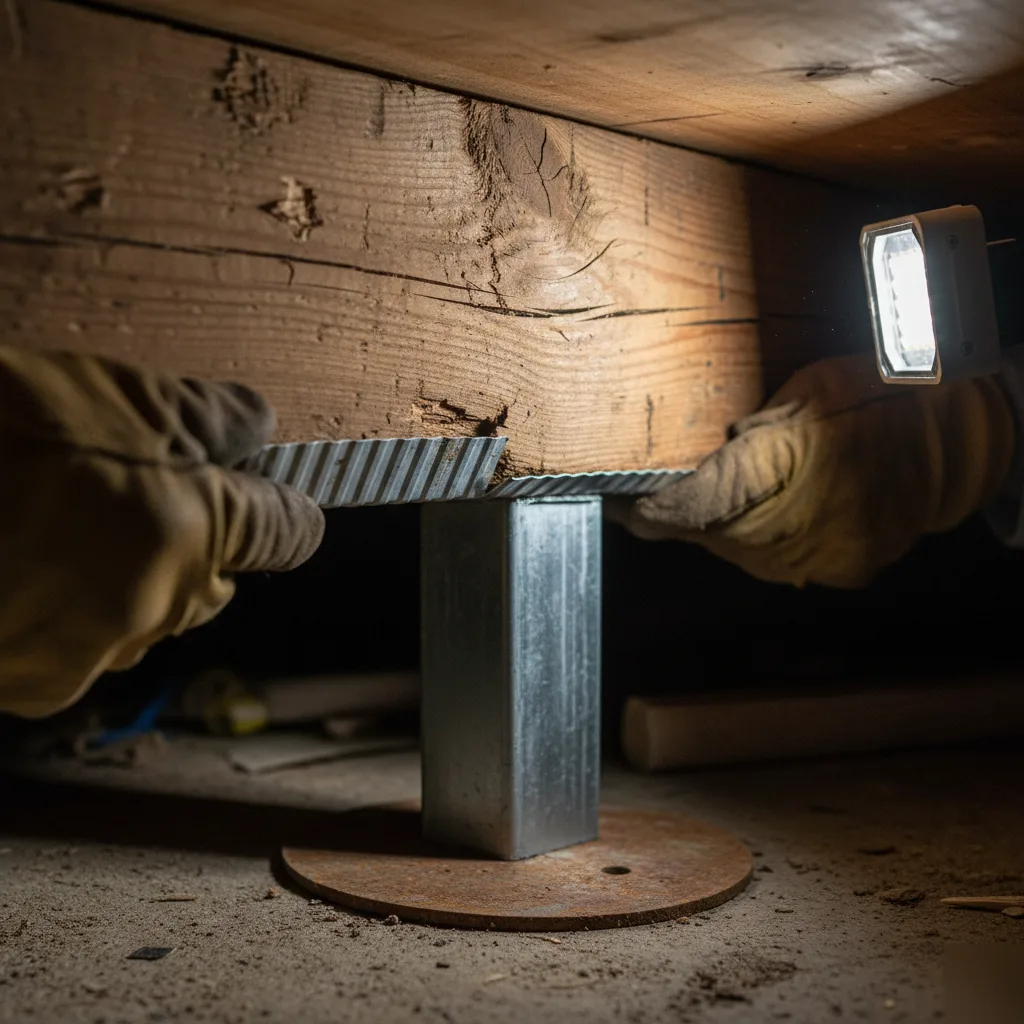
Shimming is exactly what it sounds like. We add material between the existing post and the beam to close a gap and restore level contact. It works well when the post itself is still solid, the footing underneath hasn't shifted, and the gap is small. Maybe the wood dried out a little. Maybe there's been minor settling over the years. A proper shim corrects that without tearing anything out.

But shimming has limits. We see this constantly in older homes around the Zilker and Bouldin Creek neighborhoods. A post looks fine from a distance, then you get close and the base is rotting or the footing has cracked. Shimming a damaged post is like putting a bandage on a broken bone, it might hold for a while, but the problem isn't going away.

Shim installation on a steel support post cap in an Austin crawl space

When Full Replacement Is the Right Call

Our crew recommends full post replacement when we find any of these conditions:

  • Visible rot, splitting, or insect damage in the wood post
  • A footing that's cracked, tilted, or sinking into soft soil
  • The post has shifted laterally and no longer sits centered under the beam
  • Previous repairs used makeshift materials like stacked bricks or cinder blocks

If someone stacked random materials under a beam years ago, we pull it all out and install a proper post with an adequate footing. Central Texas clay soil moves too much to trust a hack job.

So how do we actually decide? We check three things: the post condition, the footing condition, and how much movement has occurred. If two of those three show problems, replacement wins every time. If only the gap needs attention on an otherwise sound post, shimming saves you time and gets the floor level again fast. Not sure which situation you're dealing with? Give us a call and we'll take a look.

Our Process

What the Support Post Repair Process Looks Like

Folks always want to know what's actually going to happen under their house. Fair enough. Nobody likes surprises when it comes to structural work. Here's how we handle crawl space support posts from start to finish.

  1. 1
    Crawl space inspection

    We get under your home and check every existing post, beam, and joist. We're looking at wood condition, soil contact, post alignment, and how much settlement has happened. In Austin's clay soil, we see posts that have sunk two or three inches more often than you'd think.

  2. 2
    Measurement and layout

    We map out exactly where new support posts need to go. Sometimes the original builder spaced them too far apart, sometimes they used undersized materials. Either way, we figure out the right load path before anything gets moved.

  3. 3
    Soil prep and footing placement

    Each new post sits on a proper concrete footing. We excavate down to stable ground and pour a pad that spreads the load out. This is the step most DIY attempts skip, and it's why those fixes fail within a year or two.

  4. 4
    Post installation and shimming

    We set each post plumb and shim it tight against the beam above. Our team uses steel or treated lumber depending on the situation. Every post gets checked with a level.

  5. 5
    Final leveling check

    Once all posts are in, we verify floor levels throughout the house and adjust as needed to bring things back where they should be.

The whole process typically takes a day for most Austin homes, sometimes two if the crawl space is tight or there's significant moisture damage. We've done this work in tight spaces under older homes near Crestview where the clearance is barely 18 inches. Not fun, but we get it done right.

We also clean up after ourselves. No scrap lumber left behind, no trash in your crawl space. You shouldn't have to crawl under your own house to pick up after your contractor.

Want to know what's going on under your floors? Give us a call and we'll take a look.

Frequently asked questions

Crawl space support posts in Austin, answered

How do I know if my crawl space support posts are the problem and not something else?

Bouncy or soft floors are the clearest sign your support posts are failing, not the floors themselves. If you feel give underfoot when you walk across a room, or dishes rattle when someone crosses the kitchen, the posts underneath have likely shifted or rotted. Sticking doors and drywall cracks near door frames point the same direction. In Austin's older pier and beam homes, one bad post usually means two or three nearby are close behind. Getting someone under the house early stops the problem from spreading.

Does Austin's clay soil really make support post problems worse than in other cities?

Yes, Central Texas clay is one of the main reasons support posts fail faster here than in most places. The soil swells when wet and shrinks during dry stretches, and Austin cycles between both extremes every year. That constant movement loosens the connection between posts and their footing pads. Long summer droughts pull moisture out fast. Flash flooding in fall and spring saturates the ground suddenly. Over years, posts tilt, sink, or shift off their original position. This pattern shows up constantly in East Austin and other older neighborhoods with pier and beam homes.

What actually happens when a technician comes out to inspect my crawl space?

The technician will physically crawl under your home and inspect each support post and the beams above them. They check for rot, tilting, gaps between posts and beams, and signs of soil settlement under the footing pads. They also look at moisture levels and drainage conditions. You get a clear picture of what's failing, what's borderline, and what's still solid. Most inspections in Austin take an hour or two depending on the size of the crawl space and how accessible it is.

Can I wait on fixing a failing support post, or does it get worse quickly?

Waiting usually makes it worse. One failing post shifts extra load onto the posts around it. What starts as a single soft spot can spread across the crawl space over a season or two. Austin's wet-dry soil cycles keep working against you the whole time. Beams that are already sagging flex more with each load cycle, which can lead to more repairs down the road. If you're noticing soft floors or sticking doors in your home, getting a professional under the house sooner saves real money compared to addressing it after more posts give out.

Are crawl space support post repairs common in Austin neighborhoods like Crestview or Bouldin Creek?

Very common. Pier and beam construction is widespread in older Austin neighborhoods like Crestview, Brentwood, Bouldin Creek, and Zilker. Many of those homes have original wooden posts that are decades old. Wood dries out, splits, and rots over time, especially with Austin's humidity swings and the moisture that collects under houses after heavy rain. Mature tree roots near older homes also dry out the soil unevenly, which speeds up post settlement. It's one of the most routine structural repairs we do on Austin's west and central side.

How long does a crawl space support post repair typically take to complete?

Most support post repairs in Austin are finished in one day. Replacing a handful of posts under a standard pier and beam home usually takes a crew four to six hours. Larger jobs with more posts or difficult access can run into a second day. Once the new posts are set and the beams are back at the right height, your floors feel the difference right away. There's no curing time or waiting period, you can walk normally through your home the same evening the work is done.

The floor isn't failing — the thing holding it up is

One failing post puts extra load on the ones around it. Catching a shifted post early is always easier than fixing the beam damage that follows. Book your inspection today.