

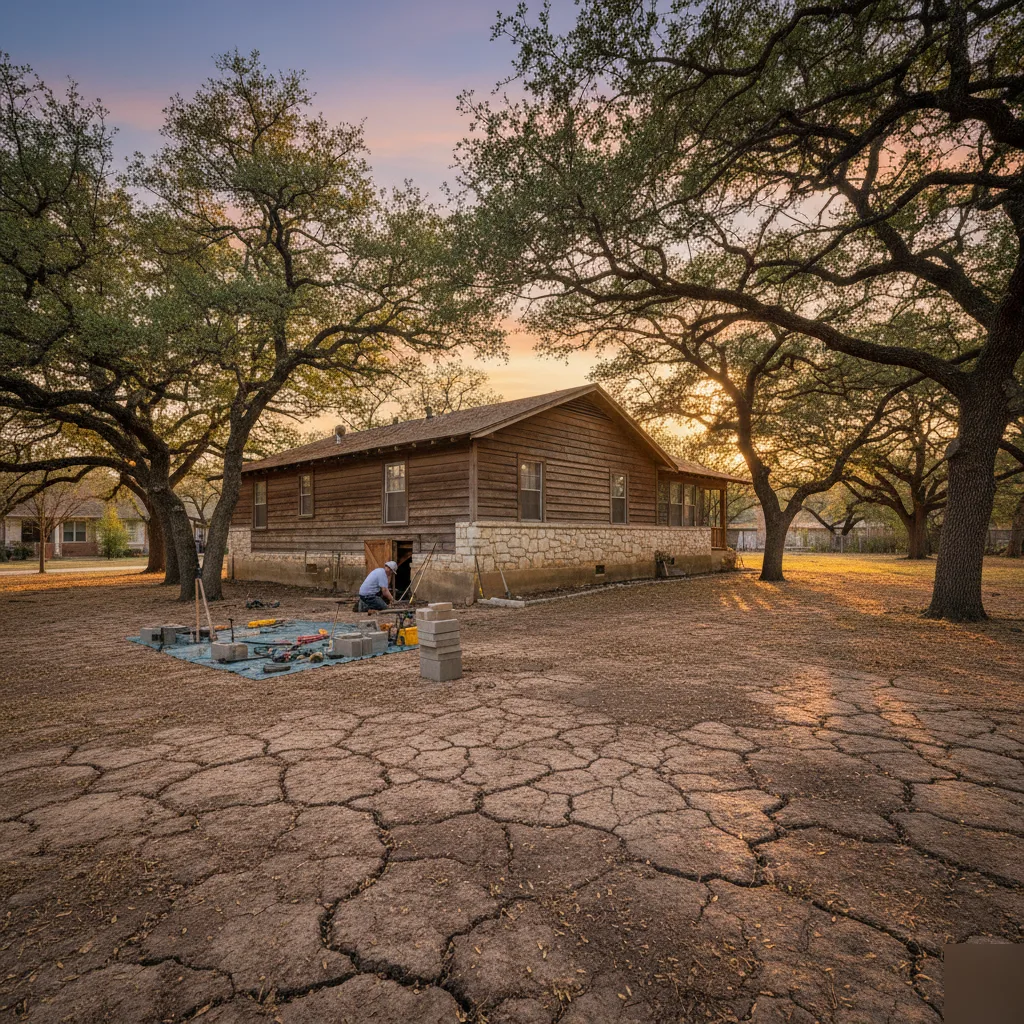
Block and Base Foundation Repair · Austin, TX

Block and Base Foundation Repair in Austin

Block and base foundation repair in Austin done right. Bats Foundation Repair diagnoses shifting piers and sagging floors. Call to schedule your inspection.

What's involved

What Block and Base Foundation Repair Actually Involves

Block and base foundation repair is a targeted structural repair process specific to pier and beam homes. Rather than a large-scale excavation project, it focuses on restoring the support system that sits beneath your living space. We serve as your trusted affordable masonry contractor in Austin TX for all foundation needs.

A pier and beam foundation relies on concrete piers driven into the ground, with beams spanning across them. Concrete blocks and base pads rest on top of those piers to carry the load of your home. When those blocks shift, crack, or settle unevenly, you start noticing sloping floors, sticking doors, and gaps along your baseboards.

In Central Texas, this settling happens regularly. Our expansive clay soil swells during wet seasons and shrinks during dry ones, and that constant movement gradually pushes blocks out of alignment. Older neighborhoods across Austin see this pattern repeatedly, and it's one of the most common calls we receive.
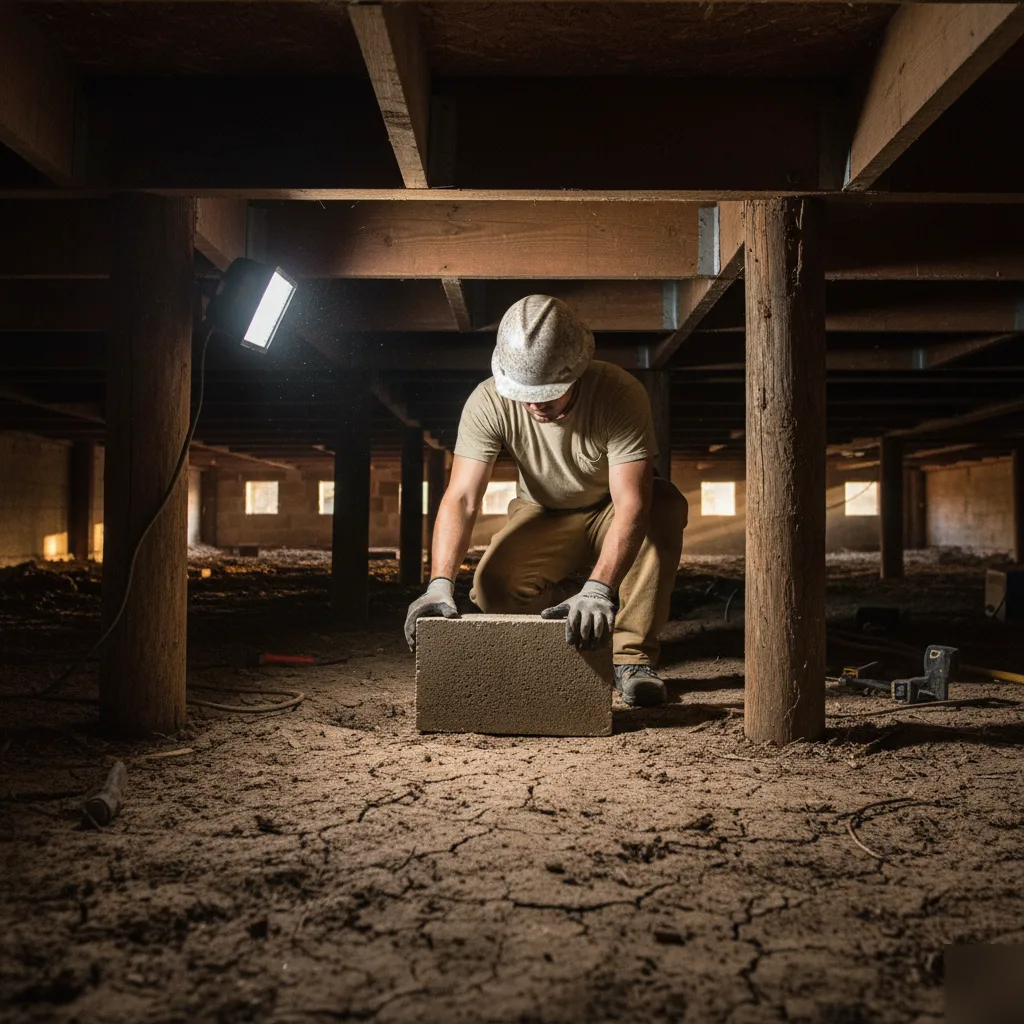
Technician performing block and base foundation repair in an Austin crawl space

When our team arrives, we work directly in the crawl space beneath your home. Our comprehensive repair plan typically includes these steps:

  1. 1

    We inspect every pier, block, and beam connection for damage, displacement, or deterioration.

  2. 2

    Shifted or damaged blocks are replaced with properly sized concrete blocks and new base pads.

  3. 3

    Each support point is shimmed and leveled to restore the correct load distribution.

  4. 4

    Beams are evaluated for rot or cracking, since a compromised beam undermines any block repair.

  5. 5

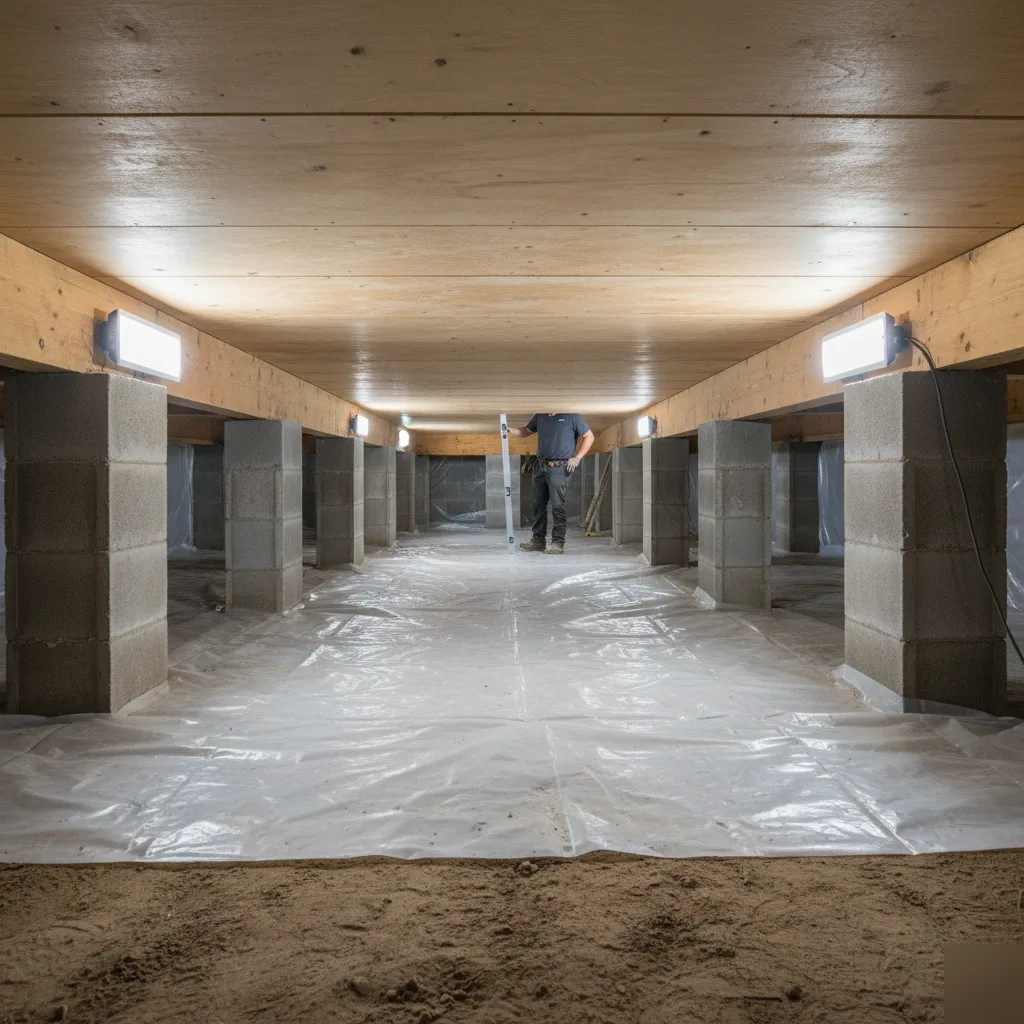
    Final measurements confirm the structure is level across all support points.

Because pier and beam homes have that accessible crawl space, we can reach problem areas directly without disturbing your yard or cutting through concrete. The work is precise, hands-on, and focused entirely on returning your home's structural integrity to where it should be.
Warning signs

Signs Your Block and Base System Is Failing Under Your Home

You notice a door that won't latch anymore. Or maybe the floors feel uneven when you walk from the kitchen to the hallway. These are the kinds of things Austin homeowners call us about every week.

Block and base systems sit under pier and beam homes, supporting the structure through a crawl space. When those blocks shift or settle, you'll feel it inside the house long before you see anything underneath. The tricky part is knowing what's normal settling and what's a real problem. Here's what to watch for:

  • Doors or windows that stick, drag, or won't close flush
  • Visible gaps between walls and the ceiling or floor
  • Cracks running along interior drywall, especially near door frames
  • Bouncy or sagging floors in specific areas of the home
  • A musty smell from the crawl space that wasn't there before

That last one catches people off guard. A musty crawl space can mean moisture is pooling around your blocks, softening the soil that holds them in place. Central Texas clay does this constantly. It swells when it rains, shrinks during a dry stretch. Over in East Austin, we see older pier and beam homes where the original cedar posts and concrete blocks have been fighting that clay for decades.

Sometimes the homeowner noticed something months ago but figured it was just the house "settling." And sure, some movement is normal. But when you can roll a marble across your living room floor and it picks up speed, that's not settling anymore.

One thing we tell people: get under the house if you can. Look at the blocks. Are they still sitting square on their pads? Do you see any leaning or crumbling? If a block has tilted even slightly, the beam above it isn't getting full support. That load has to go somewhere. It usually transfers to the nearest blocks and overloads them too.

Don't wait until a crack runs the full length of your wall. The earlier you catch block and base failure, the simpler the fix tends to be.

The root cause

Why Austin's Soil Makes Block and Base Systems Especially Vulnerable

Central Texas clay is in a constant state of motion. It swells when the rains come and contracts during dry spells, and that relentless cycle puts serious stress on every foundation system in the region.

Block and base systems feel that stress differently than a concrete slab does. A pier and beam home transfers its structural load through concrete piers or stacked blocks down into the soil. When that soil shifts seasonally, those blocks can tilt, settle unevenly, or lose contact with the beam they're supposed to be supporting.

We see the results of this every week in older Austin neighborhoods like Crestview, Brentwood, and Hyde Park. Many homes built in the 1940s and 1950s were set on stacked block supports that simply weren't designed to handle the kind of soil movement Central Texas delivers year after year.

Several factors make Austin's clay especially hard on these systems:

  • The Blackland Prairie and Taylor Clay formations expand and contract with seasonal moisture changes, creating repeated cycles of heave and settlement
  • Drought conditions pull moisture from the soil rapidly, causing blocks to drop and beams to sag under the home's weight
  • Heavy rainfall saturates the ground quickly, pushing blocks sideways or causing them to lean out of position
  • Live oaks and pecan trees draw moisture unevenly from the soil, creating dry pockets right alongside saturated areas

Texas A&M AgriLife Extension research shows that expansive clay soils cause more property damage in Texas each year than floods, hurricanes, and tornadoes combined. That finding makes a lot more sense once you've spent time under a few hundred Austin homes and seen the damage firsthand.

When blocks shift and shims rot or fall out, the beams above them start to bow. You may notice floors sloping toward one corner of a room, doors that no longer latch properly, or a hallway floor that feels soft underfoot. These aren't isolated issues — they're signs that your block and base system is responding to what the soil beneath your home is doing.

The open crawl space that defines pier and beam construction also allows ground moisture to work against wooden shims and beams over time. It's rarely just one problem. It's a combination of soil movement, moisture exposure, and aging materials all working against the same system.

Our Process

How the Block and Base Repair Process Works Step by Step

We've done this hundreds of times across Austin. Every job is a little different, but the core process stays the same. Here's what happens once we show up to your property.

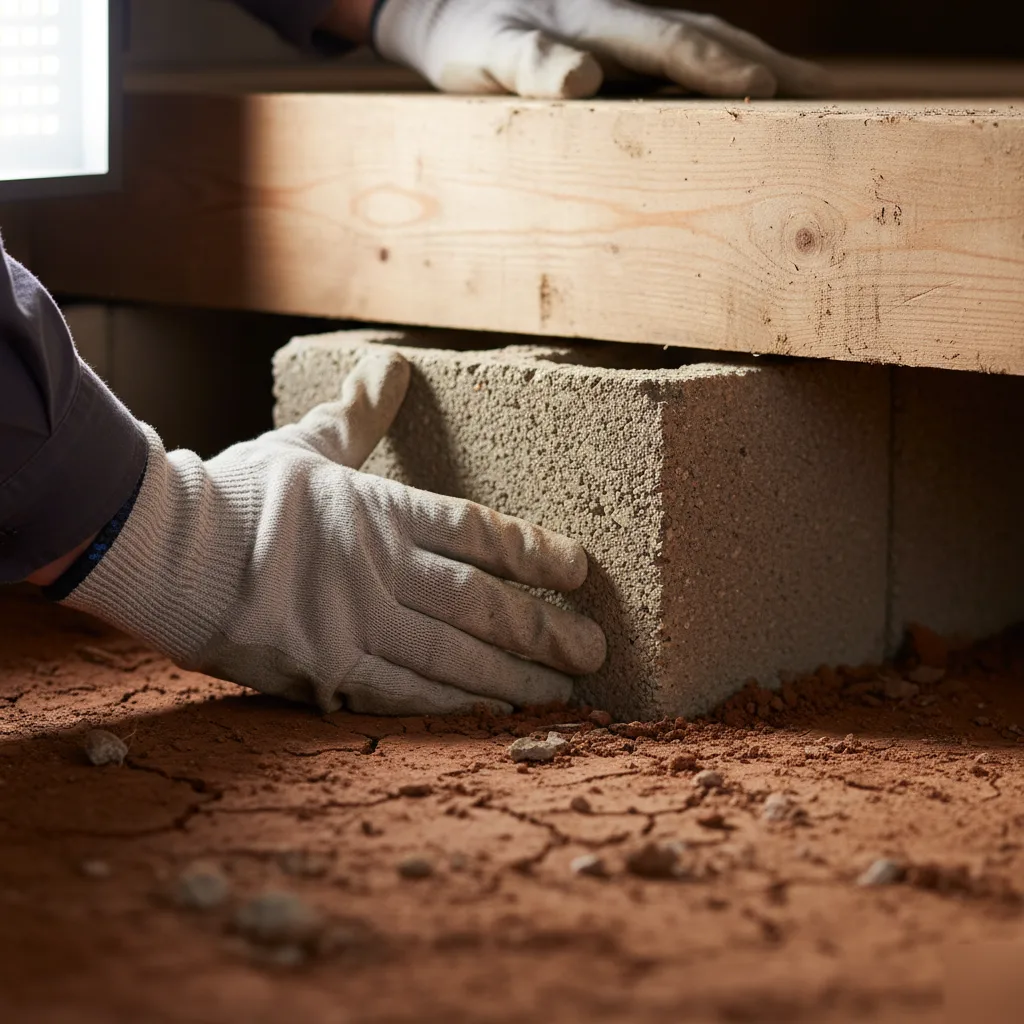
Concrete block placement during pier and beam foundation repair in Austin
  1. 1
    Inspect the crawl space

    We get under your home and look at every pier, beam, and block. We check for cracked blocks, shifted bases, rotted wood, and any spots where the structure has lost contact with its support. We also check moisture levels down there because Central Texas humidity can do real damage over time.

  2. 2
    Map out the problem areas

    Not every pier needs work. We mark the ones that do and note exactly what each one needs. Some blocks just need resetting. Others are cracked through and need full replacement. We document everything so you can see what we see.

  3. 3
    Stabilize and level

    We use hydraulic jacks to carefully lift the beams back to the right position. This is the part where your stuck doors and sloped floors start to make sense. The house moves back toward level. We go slow here. Rushing can crack drywall or stress plumbing.

  4. 4
    Replace or reset blocks and shims

    Once the beam is where it needs to be, we swap out damaged blocks with new ones. We set proper shims between the block stack and the beam to get a tight, solid connection. No wobble. No gaps.

  5. 5
    Final check

    We go back through every pier we touched and verify the levels. Then we crawl the rest of the space one more time to make sure nothing shifted during the lift.

The whole process is straightforward, but it takes patience. Homes over in the Crestview neighborhood sit on some of the most reactive clay soil in Austin, so we need to account for how that soil behaves seasonally before we lock everything in place.

In most cases, we can finish the job without touching your floors or landscaping. Your crawl space gives us all the access we need. And if we spot rotted beams or joists while we're under there, we'll let you know right away so nothing gets missed.

After the repair

Moisture Control After Repair Prevents the Problem From Coming Back

The repair itself is only half the job. If you don't manage moisture around your pier and beam foundation after we finish, you'll be calling somebody again in a few years. Central Texas clay expands when it's wet and shrinks when it's dry. That cycle never stops in Austin. It just changes speed with the seasons.

Block and base foundations sit on that same clay. So once we've leveled your home and replaced damaged blocks or shimmed your piers, the next step is keeping moisture levels as steady as possible underneath your crawl space. Not too wet. Not too dry. Consistent.

What Actually Helps

We've seen plenty of homes over in the Crestview area where gutters dump water right next to the foundation. That's one of the fastest ways to cause new settlement. A few changes make a real difference:

  • Extend downspouts at least four feet away from your foundation perimeter
  • Grade the soil so it slopes away from the house on all sides
  • Use a soaker hose during dry spells to keep the soil from pulling away from your foundation
  • Check your crawl space vents to make sure air can move freely underneath

That soaker hose tip surprises people. But during an Austin summer with no rain for weeks, the clay contracts so fast it can pull support right out from under your blocks. A slow drip around the perimeter keeps things stable. The homeowners who skip this step are the ones who see new cracks show up the following year.

We also offer waterproofing services for situations where standing water collects in the crawl space. Standing water rots wooden beams, corrodes metal hardware, and invites mold. None of that is something you want under your house.

Think of moisture control as protecting your investment. You've already done the hard part by getting the foundation repaired. Now you just need to keep the soil around it from going through wild swings. Most of these steps cost almost nothing. A few minutes with a garden hose every week during dry months goes a long way. Want us to walk through your property and point out trouble spots? Give us a call.

Frequently asked questions

Block and base foundation repair in Austin, answered

How long does block and base foundation repair usually take?

Most block and base repairs in Austin take one to two days to complete. The crawl space access makes the job faster than slab work — no cutting concrete or heavy equipment. A crew can inspect, replace shifted blocks, and re-level the support points in a single visit for smaller jobs. Larger homes or those with widespread block failure across multiple piers may need a second day to finish shimming and confirm final measurements across all support points.

Will I need to leave my home during the repair?

You do not need to leave your home during block and base repair. The crew works entirely in the crawl space beneath your house. You'll hear some noise — movement under the floor, occasional tapping — but your daily routine stays normal. We do ask that you keep pets away from the crawl space access point while the crew is working. Most Austin homeowners go about their day without any disruption at all.

Why do older Austin homes seem to have more block and base problems?

Older Austin homes — especially those built before 1960 in neighborhoods like Hyde Park, Travis Heights, and East Austin — used stacked concrete blocks and cedar posts that weren't designed for decades of Central Texas clay movement. The soil expands and contracts with every wet and dry cycle. Over time, those original blocks tilt, crumble, or lose contact with the beams above them. Newer materials hold up better, but the soil pressure is the same for every pier and beam home in Austin.

Can I check the block and base system myself before calling?

Yes, and it's worth doing if you can safely access your crawl space. Look at each block and see if it's sitting square on its pad. A block that has tilted even slightly is no longer giving the beam full support. Also check for crumbling edges, moisture pooling around the base pads, or shims that have fallen out. If anything looks off, or if you're seeing bouncy floors and sticking doors inside, call for a professional inspection rather than waiting.

Does Austin's drought affect block and base foundations differently than heavy rain does?

Both conditions cause problems, but in different ways. During drought, Austin's clay soil dries out and shrinks fast. That pulls support away from the blocks, and beams can sag or drop. Heavy rain saturates the ground quickly, which can push blocks sideways or cause them to lean. The back-and-forth between wet and dry seasons is what does the most damage over time. Homes near large live oaks or pecans face extra stress because tree roots pull moisture unevenly from the soil right around your piers.

What happens if I ignore a tilted block or sagging floor?

Ignoring a tilted block usually makes the repair bigger and more involved. When one block loses contact with the beam, the load shifts to the blocks on either side and overloads them too. What starts as one or two problem points can spread across several piers. Inside the home, you'll see cracks widen, floors sag further, and doors stop closing altogether. Catching block and base failure early — when you first notice bouncy floors or a sticking door — keeps the repair focused and straightforward.

Catch block and base failure early and the fix stays simple

When one block loses contact with the beam, the load spreads and the repair grows. Don't wait for a crack to run the full wall — schedule your inspection today.