
Pressed Concrete Pilings · San Antonio, TX

Pressed Concrete Pilings in San Antonio

Pressed concrete pilings in San Antonio stop foundation movement at the source. Bats Foundation Repair diagnoses, installs, and verifies. Call to book.

Why foundations shift

Why San Antonio Foundations Shift and Settle

If you've lived in San Antonio for any length of time, you already know the soil here has a mind of its own. But if you're new to the area, this is something you need to understand fast. Bexar County sits on heavy clay soil that swells when it gets wet and shrinks when it dries out. That constant push and pull puts real stress on your foundation.

This knowledge is key for anyone seeking affordable concrete slab services in San Antonio TX. A homeowner over near Alamo Heights calls because their interior doors won't latch anymore. Someone in the Southside notices a crack running along their brick mortar joints. It's the same thing. The clay underneath the slab expanded during spring rains, then contracted hard during a dry July. That cycle moves your foundation in ways it was never built to handle.

Here's what makes San Antonio's soil conditions especially tough on homes:

  • Expansive clay can swell up to 10% or more when saturated, creating upward pressure on your slab
  • Long summer droughts cause the same soil to shrink and pull away from the foundation's edges
  • Poor drainage around the home speeds up erosion under one side of the slab
  • Mature tree roots draw moisture unevenly from the soil, creating dry pockets

Settlement doesn't happen overnight. It's gradual. You might notice a small crack one month, then a sticking window the next. That's why catching it early matters. Our team at Bats Foundation Repair has years of combined experience reading San Antonio soil and knowing exactly what it does to homes in this region.
Warning signs

Signs Your Slab Needs Pressed Concrete Pilings Now

Most folks don't wake up thinking about their foundation. Something catches your eye first. A crack running along the drywall near a door frame. A gap between the wall and ceiling that wasn't there last year. Doors that stick or won't latch right.

It happens constantly across San Antonio. A homeowner notices one small thing, ignores it for a few months, then calls us when three more problems show up. The Bexar County clay soil underneath your slab doesn't sit still. It swells when it rains and shrinks during our dry summers. That constant push and pull moves your foundation, sometimes just a fraction of an inch, and a fraction of an inch is all it takes.

Here are the most common signs we look for during an inspection:

  • Cracks in exterior brick or mortar joints, especially stair-step patterns
  • Interior drywall cracks near windows and door corners
  • Floors that feel uneven or slope in one direction
  • Doors and windows that suddenly won't open or close smoothly
  • Gaps forming where walls meet the floor or ceiling

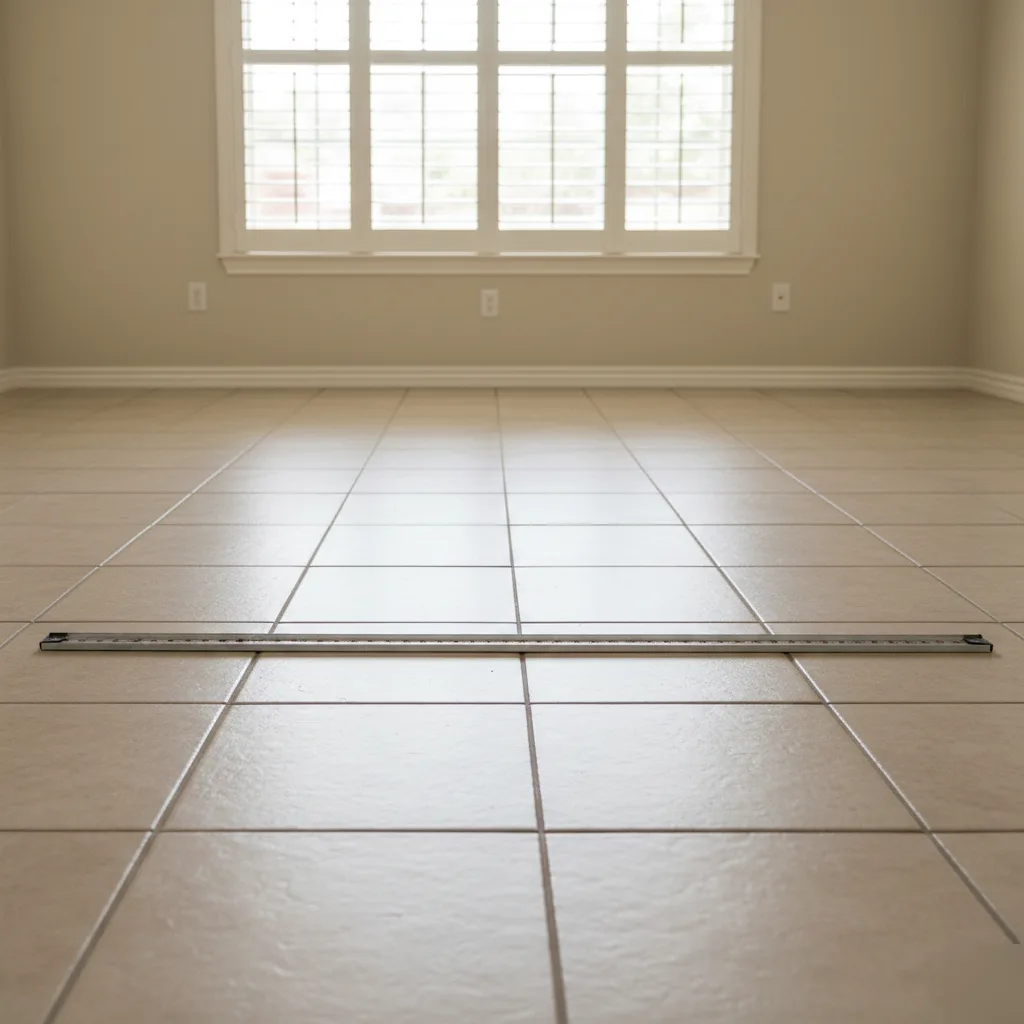
Not sure if what you're seeing is serious? That's actually pretty common. Some cracks are cosmetic. Others point to real movement underneath. The difference matters, and it's hard to tell from the surface alone. Our team uses a floor elevation survey to measure exactly what's happening across the entire slab. No guessing.

One thing we tell homeowners in neighborhoods like Alamo Ranch and Stone Oak is this: it helps to look before the problem gets obvious. By the time you see a crack wide enough to fit a dime, the foundation has usually shifted more than most people realize. With years of combined experience, our crew at Bats Foundation Repair can usually spot the difference between normal settling and active foundation movement within the first visit.

Our process

How Pressed Concrete Pilings Are Installed Step by Step

People ask us about this all the time. They want to know what's actually happening under their house. Fair enough. Here's how our crew handles a pressed concrete piling job from start to finish on a typical San Antonio home.

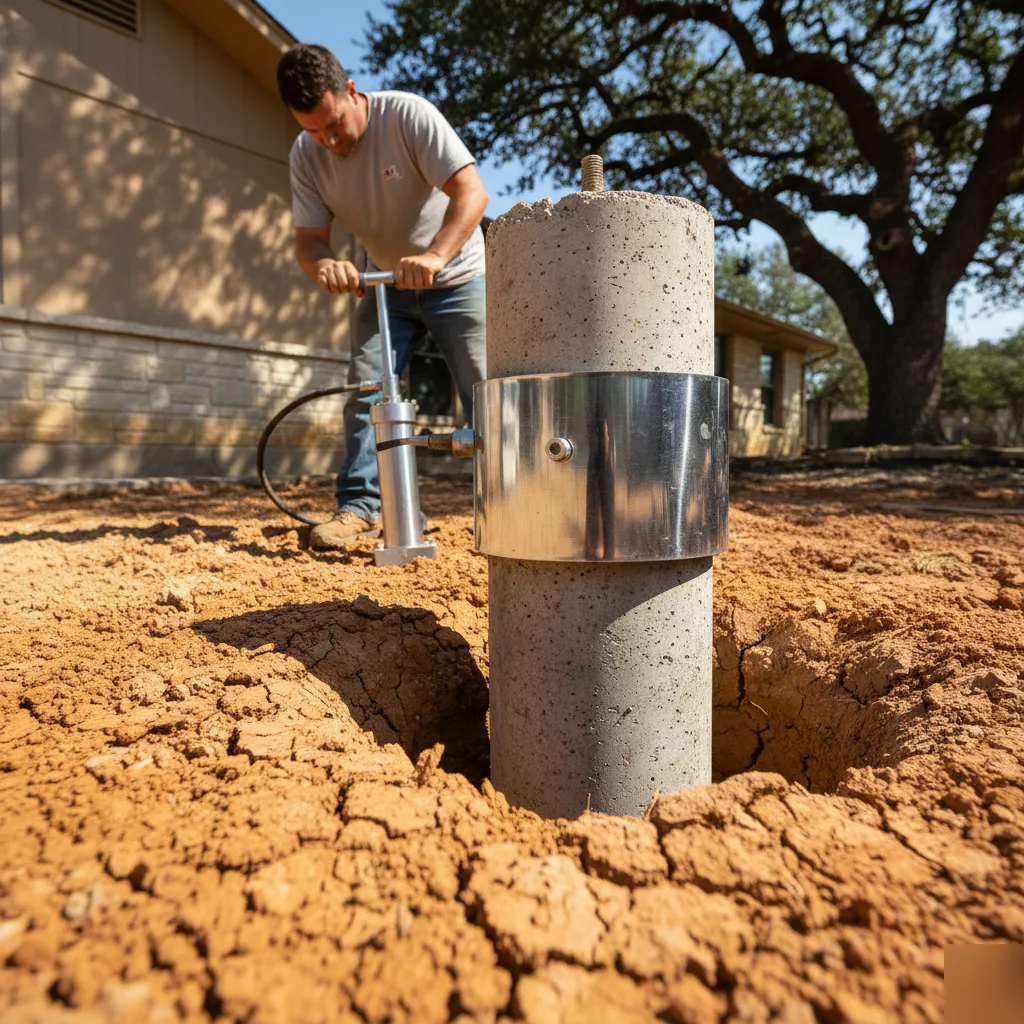
Pressed concrete piling being installed through clay soil in San Antonio
  1. 1
    Excavate access points

    We dig small holes along the foundation's edge at each piling location. Most spots are about two feet wide. Just enough room to work, not enough to tear up your whole yard.

  2. 2
    Position the hydraulic press

    A hydraulic ram gets set against the foundation's footing. This is the muscle behind the whole operation. It uses the weight of your house as resistance to push the pilings down.

  3. 3
    Drive concrete cylinders into the ground

    Pre-cast concrete cylinders go in one at a time. The ram pushes each one straight down until it hits stable soil or bedrock. In neighborhoods like Alamo Ranch, we sometimes push through eight feet of Bexar County clay before we hit solid bearing.

  4. 4
    Reach load-bearing depth

    We don't stop at a set depth. We stop when the pressure gauge tells us the piling can't go any further. That reading means we've hit material strong enough to hold your home steady.

  5. 5
    Lift, stabilize, and backfill

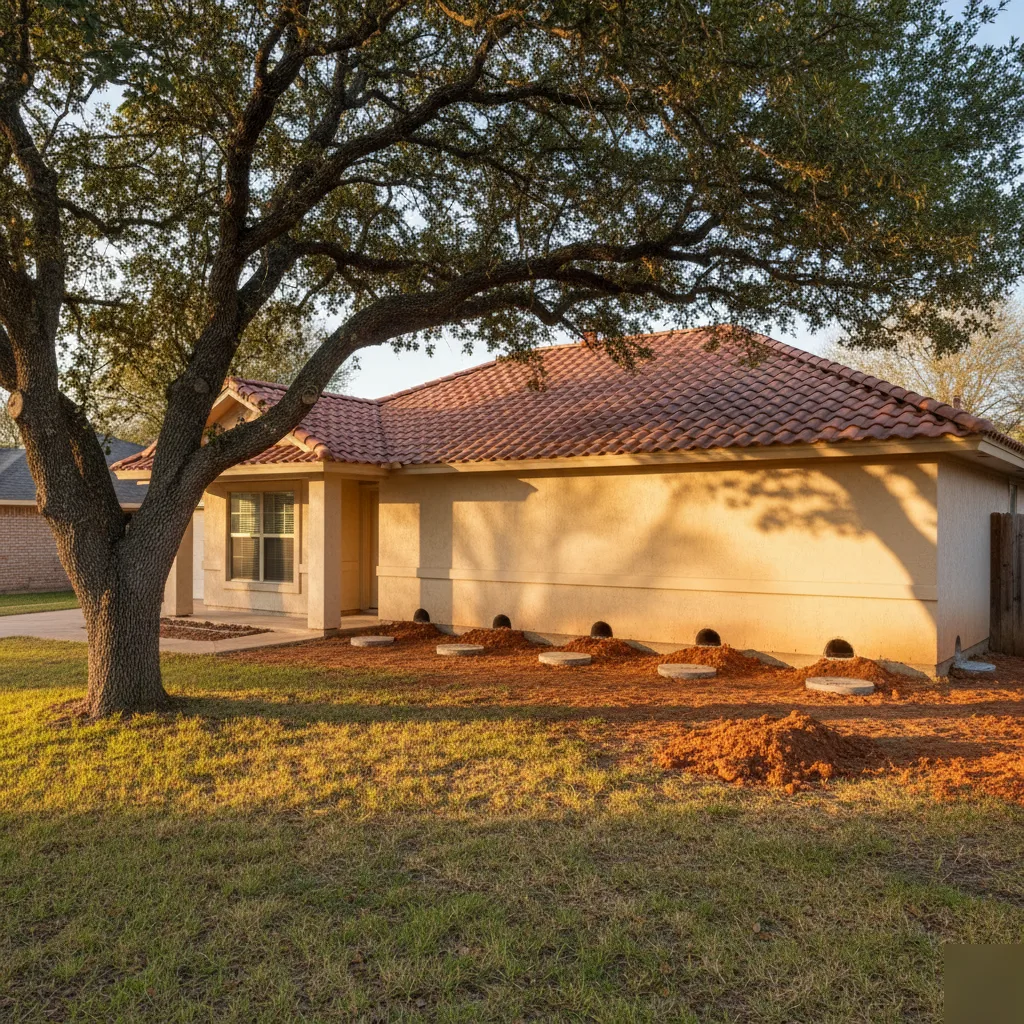
    Once all pilings are in place, we use the hydraulic system to carefully raise the foundation back toward its original position. Every excavation point gets filled back in and packed tight so your landscaping isn't left a mess.

The whole process usually takes one to two days for a standard home. You can stay in the house while we work. No need to pack bags or board the dog. There's no heavy machinery tearing across your property. The equipment is compact. Our crews at Bats Foundation Repair bring years of combined experience running these installs, so the work moves fast and clean.

One thing worth knowing about how we build these piers: Bats' base pier is a hybrid system — roughly ten feet of driven steel topped with pressed concrete cylinders — and that's what we use on most jobs. Concrete-only pressed pilings are a site-dependent option we recommend where the soil profile and load conditions suit them. During your assessment we'll tell you which system fits your foundation.

Interior vs. exterior

Interior vs. Exterior Pilings: Why Perimeter-Only Jobs Fall Short

Here's something we run into constantly in San Antonio. A homeowner calls us out, we take a look, and we find out another company already installed pilings around the outside of the house. Only the perimeter. The floors are still uneven. Doors still stick. The problem never actually got fixed.

Perimeter pilings lift the edges of your slab. That's it. But most concrete slab foundations in Bexar County sit on expansive clay soil that moves underneath the entire footprint of the house, not just the edges. The interior of your slab can settle independently from the perimeter. When that happens, you get a slab that's basically sagging in the middle like a hammock.

This shows up a lot in neighborhoods like Alamo Ranch and the older parts of the West Side. The signs are hard to miss:

  • Cracks running through tile or concrete in the center of a room
  • Floors that slope toward the middle of the house
  • Interior doors that won't latch even after perimeter work was done
  • Gaps between baseboards and flooring away from exterior walls

Interior pressed concrete pilings solve this. We install them through small access points in the slab itself, driving pilings down to stable soil beneath the interior sections of your foundation. A proper repair needs both interior and exterior pilings working together. One without the other leaves part of the problem in place. A half-fixed foundation isn't really fixed at all.

Not sure if your home needs interior pilings? Our team at Bats Foundation Repair evaluates the full slab during every inspection. With years of combined experience, we can tell you exactly where the movement is and where pilings need to go. We don't skip the middle of your house just because it's easier to work the edges.

After installation

What to Expect After Installation: The 30–90 Day Settling Period

So the crew's packed up and your pressed concrete pilings are in the ground. Now what? This is the part most folks don't hear about until they're standing in their living room wondering if that tiny crack is normal. It is. Almost always.

The first 30 days after installation are when your San Antonio home starts adjusting to its new support system. Your foundation has been lifted and stabilized, but the structure above it needs time to settle into its corrected position. Think of it like braces on teeth. The correction happened, the response takes a little longer.

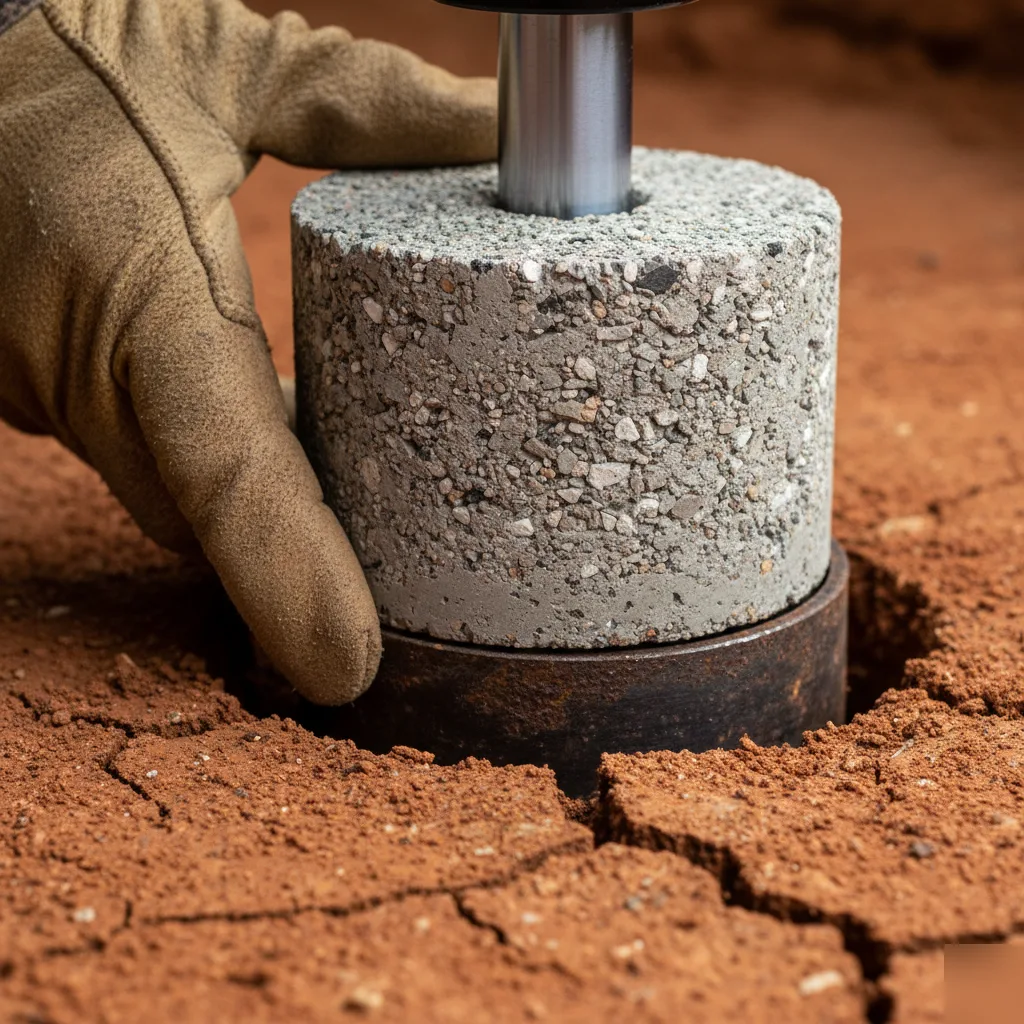
Pressed concrete piling cylinder with steel collar detail in San Antonio

We tell every homeowner the same thing before we leave a job site. Here's what's normal during the settling period:

  • Hairline cracks appearing in drywall or existing cracks shifting slightly
  • Doors and windows that stick or feel different than before
  • Small popping or creaking sounds as framing adjusts
  • Minor cosmetic cracks in brick veneer or stucco

These signs resolve on their own within 60 to 90 days. The Bexar County clay soil around your pilings is also finding its new equilibrium, especially after a heavy rain cycle. Our follow-up visits to neighborhoods like Alamo Ranch and Stone Oak confirm this pattern time and again.

Here's what's not normal. New cracks that keep growing wider. Doors that get worse instead of better. Floors that feel like they're dropping again. If you see any of that, call us right away. We recommend waiting at least 90 days before doing any cosmetic repairs like repainting walls or patching drywall cracks. With years of combined experience, our team at Bats Foundation Repair knows the difference between normal settling and a real problem. We don't just install pilings and disappear. Not sure if what you're seeing is normal? Give us a call.

Frequently asked questions

Pressed concrete pilings in San Antonio, answered

How long does a pressed concrete piling installation take in San Antonio?

Most standard San Antonio homes are done in one to two days. You don't need to leave your house during the work. The equipment is compact, so there's no heavy machinery rolling across your yard. In areas with deep Bexar County clay — like parts of Alamo Ranch — crews sometimes need extra time to push through the soil before hitting stable bearing. But the process itself is straightforward, and cleanup happens the same day.

Will pressed concrete pilings work in San Antonio's expansive clay soil?

Yes, pressed concrete pilings are well-suited for San Antonio's heavy clay conditions. The hydraulic press uses your home's own weight to drive each cylinder down until it reaches stable soil or bedrock. That means the piling stops at the right depth — not a preset number. Bexar County clay can swell more than 10% when wet, so reaching that stable layer is what keeps your foundation from moving again after the repair.

How do I know if my foundation needs pilings or just minor repairs?

A floor elevation survey is the clearest way to know. It measures the actual movement across your entire slab — not just what you can see on the surface. Stair-step cracks in brick, doors that won't latch, or gaps between walls and ceilings are all signs worth checking. Some cracks are cosmetic. Others mean the slab is actively shifting. You can't tell the difference just by looking. An inspection gives you a real answer instead of a guess.

What happens if I wait to fix my foundation in San Antonio?

The longer you wait, the more pilings you'll likely need. San Antonio's clay soil doesn't pause — it keeps swelling and shrinking with every rain and dry stretch. A small shift becomes a bigger one over time. Homeowners in neighborhoods like Stone Oak and Alamo Heights sometimes call after ignoring a single sticking door for a year, only to find the slab has moved significantly in multiple spots. Early action almost always means a smaller job and less disruption.

Can I stay home while pressed concrete pilings are being installed?

Yes, you can stay in your home the entire time. There's no need to relocate, board pets, or clear out. The work happens along the exterior perimeter of your foundation. You'll hear the hydraulic press working, but the crew isn't inside your living space. Excavation points are small — about two feet wide — so your yard isn't torn apart. Most San Antonio homeowners go about their normal day while the installation is underway.

How do I know when the pilings have reached a stable depth under my San Antonio home?

The hydraulic press has a pressure gauge that tells the crew exactly when to stop. When the gauge shows the piling can't go any further, that means it's hit soil or bedrock strong enough to support your home. There's no guessing involved. In some parts of San Antonio, that depth is eight feet. In others, it's more. The soil decides — the gauge confirms it. That's what makes the process reliable in Bexar County's unpredictable ground conditions.

Want the whole slab properly assessed?

We evaluate the full slab — interior and perimeter — and install support only where it's actually needed. Call to book your inspection.