

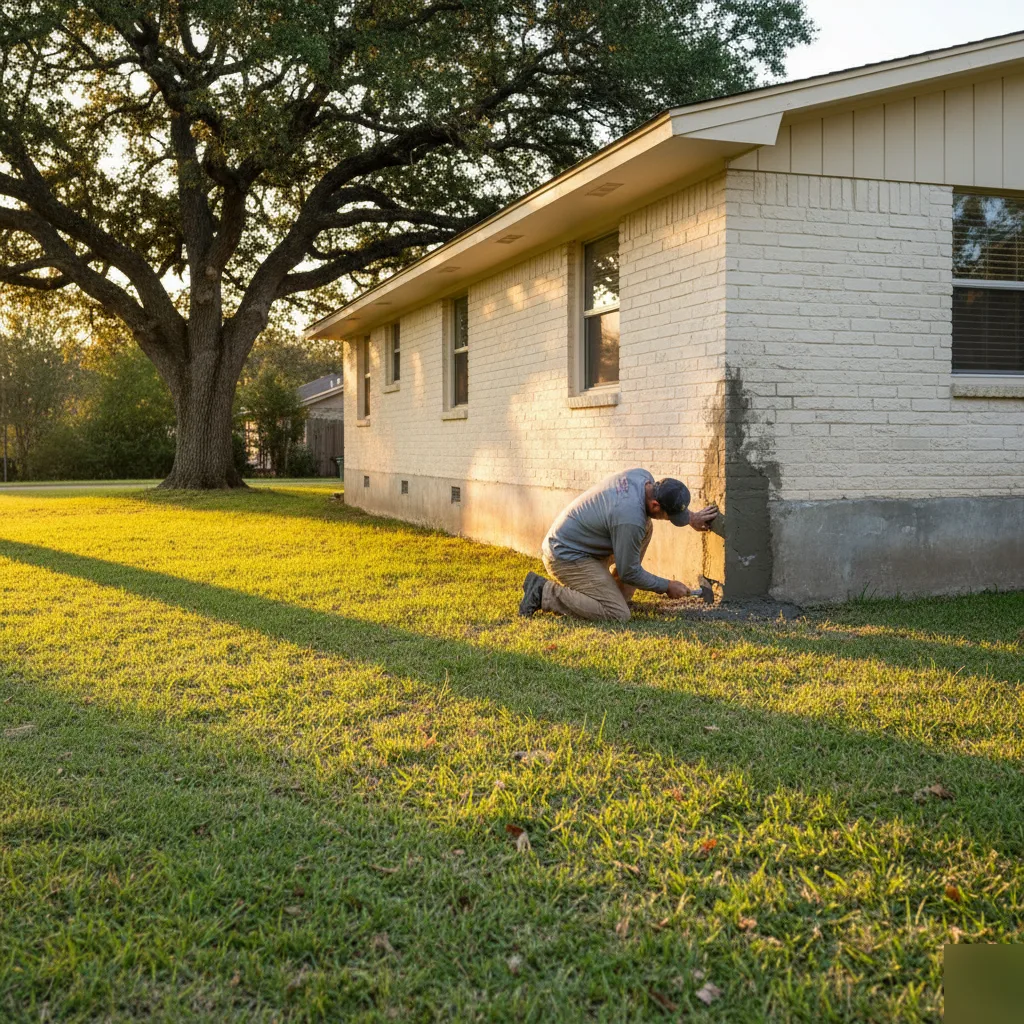
Concrete Slab Repair · Austin, TX

Concrete Slab Repair in Austin

Concrete slab repair in Austin done right. Bats Foundation Repair diagnoses cracks, settles slabs, and restores stability. Get a free assessment today.

Reading the cracks

How to Tell If Your Concrete Slab Crack Is Serious

Not every crack in your slab is cause for alarm. Some are the result of normal concrete curing or minor shrinkage, and they stay that way for years without changing. The ones that deserve attention are the cracks that are actively telling you something about what's happening beneath your foundation.

When homeowners in Central Texas call us about a crack, the first thing we want to know is whether it's growing. A hairline crack that hasn't moved in years is a very different situation from one that's widening, shifting, or developing a noticeable vertical offset between the two sides. This is often the first step in determining the need for concrete slab crack repair.
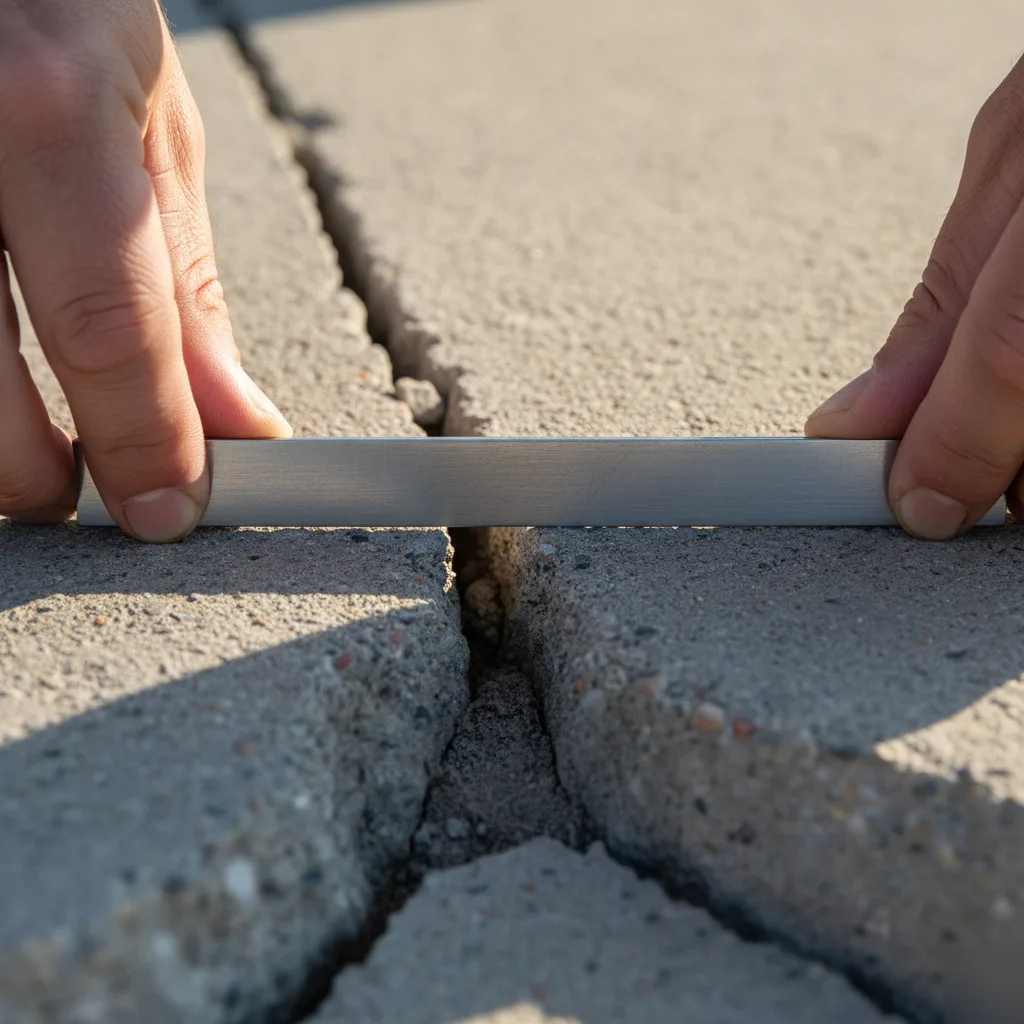
Measuring the width of a concrete slab crack with a gauge during an Austin repair

Warning Signs That Warrant a Professional Evaluation

Some cracks fall clearly into the "monitor it" category. Others point to settling that won't resolve on its own and will only get worse without a proper structural repair.

Here are the red flags we look for during a foundation inspection:

  • Cracks wider than a quarter inch, particularly where one side sits higher than the other
  • Diagonal cracks running from the corners of doors or windows
  • New cracks appearing at the same time doors begin sticking or floors start feeling uneven
  • Slab cracks that align with cracks in your exterior brick or interior drywall

That last point is one of the most telling signs we see. When crack patterns match both inside and outside the home, the slab and the structure above it are responding to the same underlying soil movement. Central Texas clay expands and contracts significantly with moisture changes, and that cycle puts real stress on your foundation over time.

Most homeowners notice something small first — a door that suddenly sticks, a gap forming between the baseboard and the floor — and then spot the crack. That sequence matters to us because it suggests the slab isn't just cracked, it's actively shifting. A free estimate from our team can give you a clear picture of what's happening and what a comprehensive repair plan would look like.
The root cause

Why Austin Slabs Crack More Than Most Cities

The honest answer comes down to the soil. Austin sits on expansive clay that swells when saturated and contracts sharply during dry spells, and Central Texas has some of the most reactive clay in the entire country.

The American Society of Civil Engineers has found that expansive soils cause more financial damage to U.S. structures each year than floods, hurricanes, and earthquakes combined. Your slab sits in the middle of that push-and-pull cycle every single season.

During the long dry stretches of July and August, the ground pulls away from your foundation. Then a heavy rain moves through, the clay expands rapidly, and the pressure shifts again. Homes throughout Central Texas — particularly in areas like South Manchaca and near Slaughter Lane — sit on especially heavy clay deposits where that movement can be dramatic.

The soil alone doesn't tell the whole story, though. Several factors tend to stack up against Austin slabs at once:

  • Prolonged heat and drought cycles that draw moisture unevenly from the soil around your foundation
  • Mature tree roots that pull water from beneath one side of a slab, causing lopsided settling
  • Poor drainage or missing gutters that allow water to pool against a specific section of the foundation
  • Older construction from Austin's building booms that wasn't always engineered to handle this level of soil reactivity

In most cases we evaluate, it's a combination of these factors working together over time. A homeowner notices a sticking door and assumes it's the frame. When we assess the slab, we often find settlement that's been quietly building for years.

Slabs don't fail all at once. They shift incrementally each season, and the early signs — hairline cracks, slightly uneven floors — are easy to miss. By the time a visible gap appears in floor tile or a crack runs up a drywall seam, the foundation has already moved enough to warrant a comprehensive repair plan.

Slab types

Slab Types Matter: Conventional vs. Post-Tension Repair

Not all slabs are built the same, and that matters a lot when it comes to concrete slab repair.

Austin has two main slab types. Conventional slabs use rebar for reinforcement. Post-tension slabs use high-strength steel cables that are pulled tight after the concrete cures. Most homes built in Austin after the mid-1990s sit on post-tension slabs, especially in neighborhoods like Circle C Ranch and Avery Ranch. Older homes closer to central Austin tend to have conventional rebar slabs. Each type needs a different repair approach, and mixing them up can cause real problems.

Why It Changes the Repair Plan

With a conventional slab, we can core through the concrete to install slab piers or pressed concrete pilings without much worry. The rebar grid is predictable. Post-tension slabs have those tensioned cables running through them, sometimes in both directions. Cut one of those cables by accident and you've got a serious safety hazard, plus a very expensive fix on top of whatever brought us out in the first place.

We see contractors make this mistake more than you'd think.

Before we drill or core into any slab in Austin, we identify the slab type. We look at construction records when they're available and use ground-penetrating methods to locate cables. For a deeper look at how different foundation conditions affect repair decisions, the Foundation Repair and Remediation Options resource from GeoEngineer.org outlines how soil and structural variables shape the right remediation approach. Here's what changes based on slab type:

  • Post-tension slabs often require tunneling underneath to place piers without cutting cables from above
  • Conventional slabs allow direct access through the slab surface for pier installation
  • Post-tension repairs typically need a licensed structural engineer's input before work begins
  • Crack patterns differ between the two, so the diagnosis itself changes

Most homeowners don't know which type they have. That's completely normal. It's our job to figure it out before any tools hit concrete. We check every time because the stakes are too high to guess.

If you've noticed cracks or uneven floors, don't worry about knowing your slab type before you call. We'll handle that part during the free estimate. What matters is that whoever does your concrete slab repair actually checks first, because the wrong approach on a post-tension slab can turn a routine job into a structural emergency.

Our Process

What Concrete Slab Repair Actually Involves

Most folks call us after they've noticed something off. A door that won't latch. A crack running across the living room floor. Maybe the tile in the kitchen popped loose for no clear reason. These are signs your slab has moved, and concrete slab repair is how we fix it.

So what does the work actually look like? It depends on what's going on underneath your home. Austin's expansive clay soil swells when it's wet and shrinks when it's dry. That constant push and pull is what causes slabs to settle unevenly over time. We see this every week, especially in neighborhoods like South Manchaca and East Riverside where the soil conditions really put slabs through it.

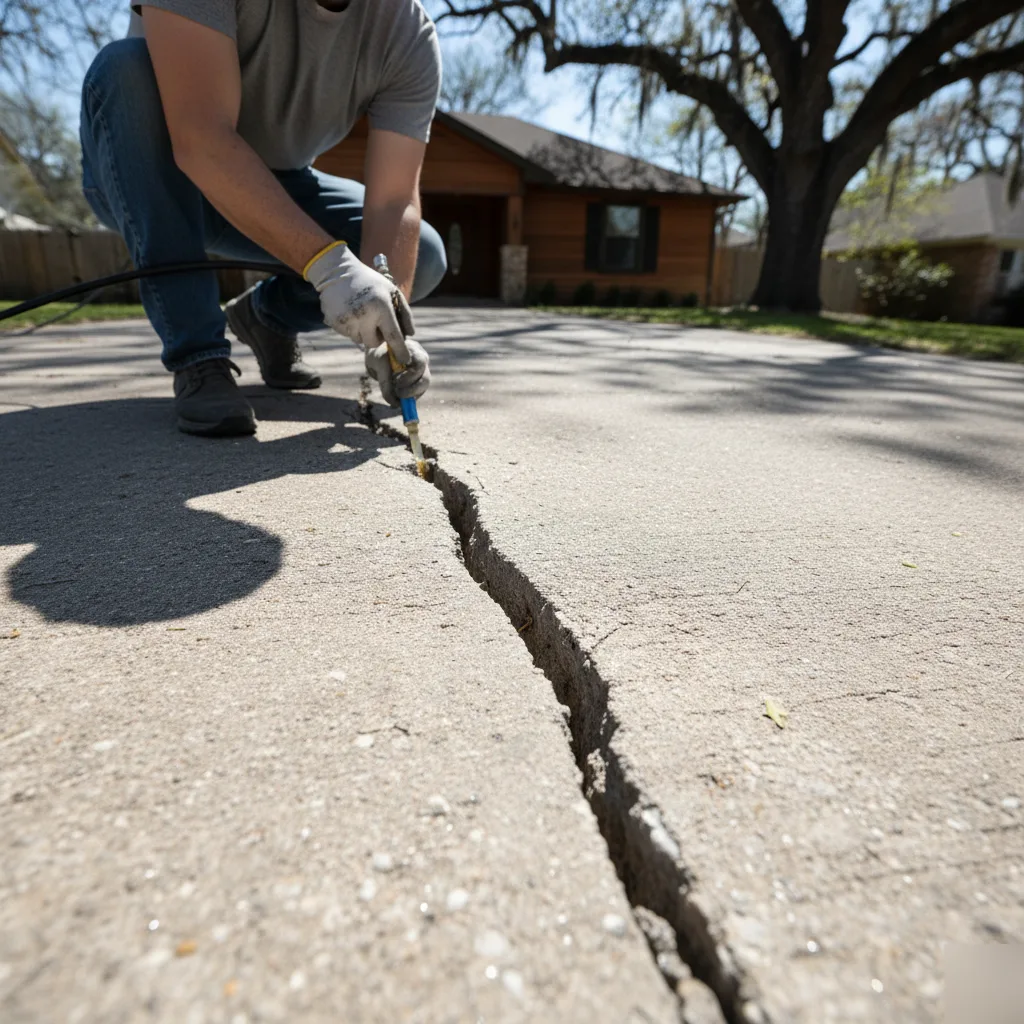
Crack injection sealing a concrete slab on an Austin driveway

The repair process typically follows a clear sequence:

  1. 1

    We inspect the slab and measure elevation points across the foundation to map exactly where settlement has occurred.

  2. 2

    Our team identifies the right fix. That could be pressed concrete pilings, steel push piers, or polyurethane foam injection depending on the problem.

  3. 3

    We excavate or drill at specific points along the slab's perimeter or, when needed, use tunneling to reach interior sections without tearing up your floors.

  4. 4

    Piers or pilings get installed to stabilize the slab and, in most cases, lift it back toward its original position.

  5. 5

    We verify the results with elevation readings and clean up the site.

Not every job needs piers. Sometimes a slab has settled because voids formed underneath it. Polyurethane foam injection fills those voids and lifts the concrete back into place. It's a different tool for a different problem.

The work itself is less disruptive than most people expect. You don't have to move out. Most exterior pier work wraps up faster than you'd think, we just need access around the foundation's edge. According to the Foundation Repair Association, early intervention on slab issues typically prevents more costly structural damage down the road.

The real goal is simple: stop the movement, stabilize the slab, and give your home a solid base again.

Preventing repeats

Preventing Repeat Slab Damage in Austin's Climate

Fixing a slab once is one thing. Watching it crack again six months later is the part we want to help you avoid.

Austin's climate is tough on concrete. We get long stretches of dry heat that shrink the clay soil under your home, then a heavy rain rolls through and that same soil swells back up fast. This constant push and pull is what causes most slab movement in Central Texas. According to the American Society of Civil Engineers, expansive soils cause more financial damage to structures annually than floods, hurricanes, and earthquakes combined. That tells you everything about what Austin's clay does to foundations over time.

So what can you actually do about it? Quite a bit.

Moisture Management Around Your Slab

Keeping moisture levels consistent around your foundation matters more than most people realize. Here's what we tell every customer after we finish a concrete slab repair:

  • Run a soaker hose around your foundation during dry spells to keep the soil from shrinking away
  • Make sure gutters and downspouts direct water at least three feet from the slab edge
  • Grade the soil around your home so water flows away, not toward your foundation
  • Keep large trees trimmed back or consider root barriers near the slab, especially in neighborhoods like South Manchaca where mature oaks sit close to homes

None of this is complicated. But skipping it is how people end up calling us twice.

Seasonal Checks That Save You Money

Walk your property twice a year, once in late summer after the worst heat, once after spring rains. Look for new cracks in the slab, gaps between the foundation and exterior walls, doors that suddenly stick. These are early signs that soil movement is affecting your concrete again.

If you catch something early, the fix is almost always smaller. We see this pattern constantly in Austin. A homeowner notices a hairline crack, waits a year, then calls us when the crack has spread across half the garage floor. Early action keeps a minor repair from turning into a major project. You've already invested in getting your slab right. A little prevention keeps it that way.

Frequently asked questions

Concrete slab repair in Austin, answered

How do I know if my slab crack is serious or just cosmetic?

A crack is serious when it's actively changing, not just sitting there. If one side of the crack sits higher than the other, or the crack is wider than a quarter inch, that's a sign your slab is shifting. Watch for cracks that line up with sticking doors, uneven floors, or matching cracks in your drywall. In Austin, the clay soil expands and contracts every season, so cracks that grow over time are telling you something real is happening underneath.

Does Austin's soil really make slab problems worse?

Yes, and it's not close. Austin sits on some of the most reactive expansive clay in the country. That clay swells when it rains and shrinks during dry stretches. Your slab goes through that cycle every single year. Areas like South Manchaca and near Slaughter Lane see especially dramatic soil movement. Most homeowners don't notice damage until a door sticks or floor tile cracks, but the slab has usually been shifting for years before that point.

How do I find out if my home has a post-tension slab?

Most Austin homes built after the mid-1990s have post-tension slabs. Neighborhoods like Circle C Ranch and Avery Ranch are good examples. Older homes closer to central Austin typically have conventional rebar slabs. You can check your original construction records, or a professional can identify the slab type before any drilling begins. This matters a lot because cutting a post-tension cable by accident creates a serious safety hazard and a much bigger repair job.

What should I do before a slab repair crew arrives at my home?

Clear the area around any visible cracks so the crew can get a good look right away. If you've noticed other signs like sticking doors, gaps near baseboards, or cracks in the drywall, write them down or take photos before the visit. That information helps pinpoint where the slab has moved. In Austin, it also helps to know roughly when you first noticed the problem, since seasonal timing gives clues about soil moisture and what triggered the shift.

How long does concrete slab repair typically take?

Most residential slab repairs in Austin take one to two days on-site, depending on how many piers are needed and whether the crew is working through the slab or tunneling underneath. Post-tension slabs often require tunneling, which adds time. You'll usually be able to stay in your home during the work. After the repair, there's a short settling period before any cosmetic fixes like patching cracks or re-leveling flooring make sense.

Catch it early, keep the repair small

A hairline crack you address now rarely becomes a major project later. Get a free assessment and a clear picture of what's happening under your slab.