
Concrete Slab Repair · Pflugerville, TX

Concrete Slab Repair in Pflugerville

Concrete slab repair in Pflugerville done right — cracks diagnosed, stabilized, and sealed by local experts. Get a free assessment and book today.

Warning signs

Warning Signs Your Concrete Slab Needs Professional Attention

Most people don't wake up one morning and decide to check their slab. Something usually catches your eye first. Perhaps a crack you swore wasn't there last month. Or a door that used to close just fine but now drags against the frame. We get calls like this every week from homeowners in Pflugerville.

Here's what to watch for:

  • Cracks across your garage floor or interior slab, especially those wider than a quarter inch
  • Doors and windows that stick, jam, or won't latch properly
  • Visible gaps between your walls and ceiling, or walls and floor
  • Uneven or sloping floors you notice when walking through a room
  • Cracked drywall near door frames and window corners

Not every crack signals a major issue. Small hairline cracks from normal concrete curing are common. But when cracks grow, shift direction, or appear in clusters, that's your slab indicating movement underneath.

The Blackland Prairie clay beneath your home has likely been through another shrink-swell cycle. This soil dries out in summer and pulls away from the slab. Then spring rains arrive and it pushes back up. Over time, this creates voids and uneven pressure that your concrete can't handle alone.

Homes in neighborhoods like Windermere and Heatherwilde often show these signs earlier than newer construction. Their foundations have endured decades of this cycle, and the damage accumulates quietly. You might not notice anything for years until one season pushes things past a breaking point.

So what should you do when you spot these signs? Don't panic. But don't ignore them. A free estimate provides a clear picture of what's happening. We'll tell you if the issue is cosmetic or if your slab needs real attention. And if you're planning to sell your home, catching this early saves you from unwelcome surprises during a buyer's inspection.
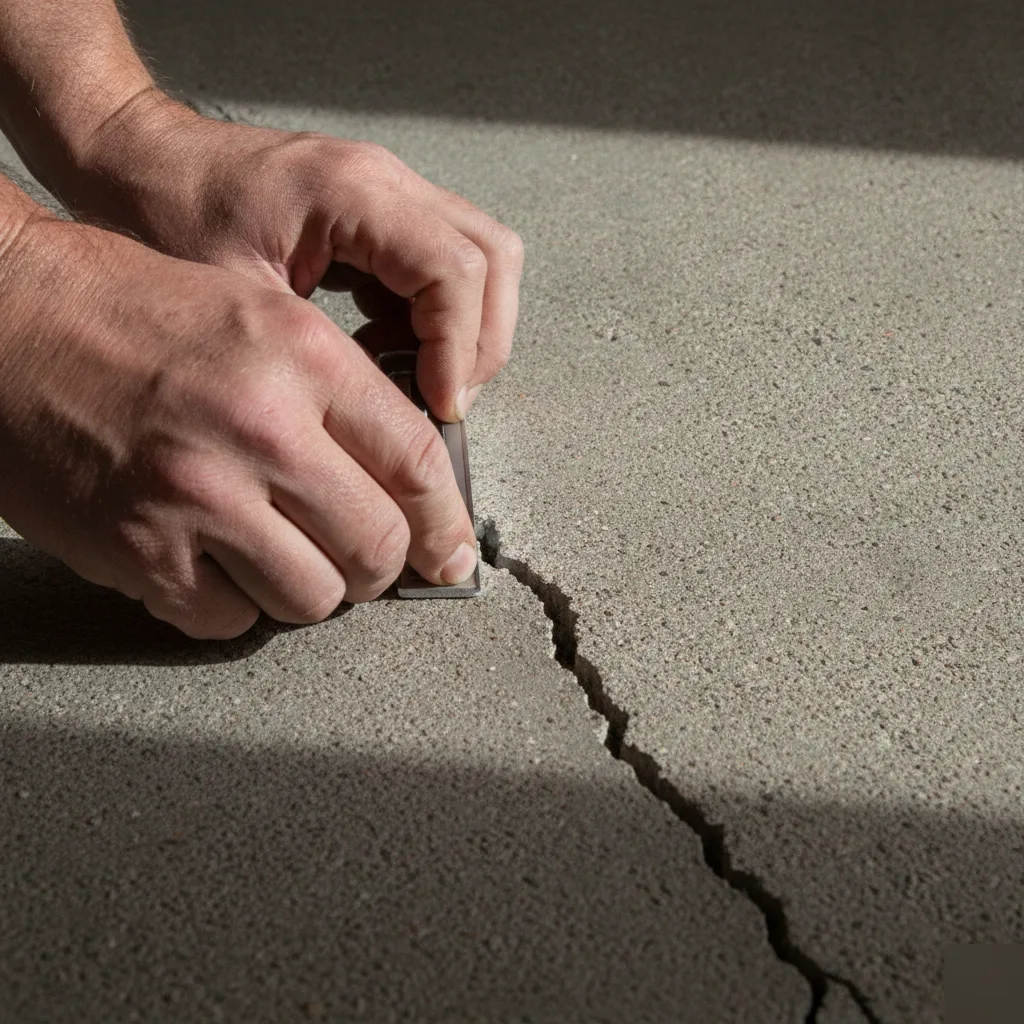
Close-up of a crack measurement gauge on a concrete slab in Pflugerville
The root cause

What Causes Concrete Slabs to Crack in Central Texas

The ground under your Pflugerville home works against your slab every day. Most folks don't realize this until they spot a crack across the garage floor or notice a patio pulling away from the house.

It starts with the soil. Central Texas sits on Blackland Prairie clay. According to the USDA Natural Resources Conservation Service, this is one of the most expansive soil formations in North America. The clay here contains a mineral called montmorillonite. It swells when it gets wet. It shrinks when it dries out. That volume can change by up to 15% between seasons. Your slab isn't sitting on a stable base. It rests on soil that moves constantly.

We see the most significant damage after a long, dry summer followed by heavy spring rain. Here's what occurs underneath your concrete:

  • Dry months pull moisture from the clay, creating voids and gaps beneath the slab.
  • Rain rehydrates the soil and pushes upward with forces that can reach 5,500 pounds per square foot.
  • Tree roots near the foundation draw moisture unevenly, causing one section to settle faster than another.
  • Poor drainage around the home allows water to pool and saturate soil on just one side.

That shrink-swell cycle repeats year after year. The damage accumulates.

Homeowners calling us from the Windermere or Heatherwilde area often have a slab that's been through 25 or 30 years of this cycle. Those neighborhoods were built in the late '80s and '90s. The concrete itself might be sound, but the ground underneath has shifted so many times that cracks become inevitable.

It's not always dramatic. Sometimes you just notice a door that won't latch properly. Or a hairline crack in the living room floor that wasn't there last year. Those small signs point to real movement below the surface. The clay doesn't care how new or old your home is. It moves on its own schedule, and your slab must deal with whatever that schedule brings.

Repair methods

Concrete Slab Repair Methods Explained in Plain Language

Not every slab problem requires the same repair. We tell Pflugerville homeowners this often because there's much confusion about what repair involves. So let's clarify.

The method we use depends on what's happening underneath your slab. A crack across your garage floor is a different issue than a section of your living room that has dropped two inches. We determine the cause first, then match the right solution.

The Most Common Approaches We Use

Here's what concrete slab repair typically involves for homes in our area:

  • Slab pier installation: Steel or pressed concrete pilings are driven through the slab down to stable soil or bedrock. This lifts the settled section back toward its original position and stabilizes it there.
  • Polyurethane foam injection: A lightweight, expanding foam is pumped beneath the slab to fill voids left by shrinking clay. It cures quickly, usually within minutes, and won't wash away.
  • Concrete crack repair and resurfacing: Surface-level damage that hasn't caused structural shifting can sometimes be sealed and resurfaced without deeper intervention.
  • Pressed steel pilings: For heavier loads or deeper stable soil layers, steel pilings provide the reach and strength that concrete pilings can't always match.
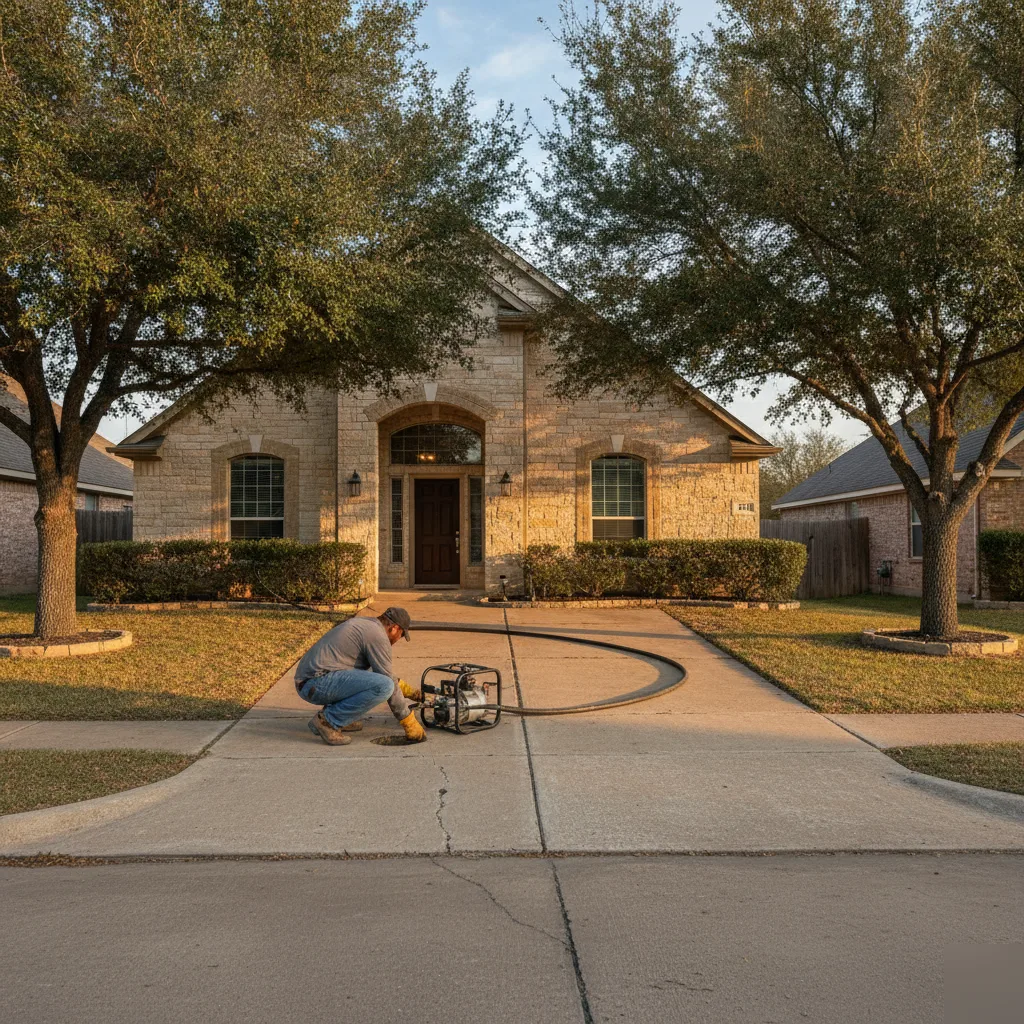
Mudjacking a concrete slab driveway during repair in Pflugerville, Texas

Homes in Windermere and other older Pflugerville neighborhoods often need pier work. The Blackland Prairie clay beneath these subdivisions has been swelling and shrinking for decades, creating voids that foam alone won't always solve.

Sometimes foam injection is the right approach. A homeowner last month had a sunken slab near her back patio. There was no deep settlement, just a void from a dry summer. Foam filled it in about an hour.

Industry guidance on building practices for trouble-free concrete slabs reinforces that proper subgrade preparation and drainage are critical factors in long-term slab performance — something we account for in every repair we plan.

As Blackland Prairie clay foundation experts, Bats Foundation Repair has over 40 years of combined experience choosing the right method for the right problem. We don't recommend the most expensive option by default. We look at your slab, check the soil conditions, measure the movement, and then recommend what actually fits. Every estimate is free — you'll know exactly what we suggest and why before any work starts.

The process

What to Expect During a Concrete Slab Repair Job

Most folks in Pflugerville have never watched a concrete slab repair up close. That's understandable. Knowing the steps takes the mystery out of it and helps you plan your day around the work.

Here's how a typical job proceeds from start to finish:

  1. 1
    Site prep and access

    Our crew marks the affected area and clears anything nearby. This includes furniture, planters, or stored items. If the repair is on a driveway or garage slab, we'll let you know where to park beforehand.

  2. 2
    Identify the repair method

    Not every slab problem gets the same fix. A settled section might need slab pier installation to stabilize it from below. Voids underneath the concrete often call for polyurethane foam injection to fill the gap and lift the slab back to grade. Surface cracking is a different issue; we handle that with concrete crack repair techniques that seal and reinforce.

  3. 3
    Execute the repair

    For pier work, we drill small access points through the slab and drive piers to load-bearing soil. For foam injection, we pump expanding material through penny-sized holes. In either case, the footprint stays small. We've done this on homes in Windermere where driveways sit inches from landscaping beds, with no major disruption.

  4. 4
    Level and verify

    We use laser levels and elevation readings to confirm the slab is back where it should be. If something is off by even a fraction, we adjust before packing up.

  5. 5
    Clean up and walk-through

    We patch all access points, clean the work area, and walk you through exactly what was done.

Most concrete slab repair jobs in Pflugerville finish in a single day. Larger projects might extend into two days. But you won't live in a construction zone for a week.

We see homeowners prepare for the worst, then appear surprised when the crew loads up by afternoon. That's standard for us. With over 40 years of combined experience on Central Texas slabs, Bats Foundation Repair arrives with a plan and executes it.

You can walk on repaired areas almost immediately. There are no long cure times or need to rope off half your house.

Prevention

How to Slow Down Future Slab Damage in Pflugerville

You've invested in fixing your slab. Now the goal is to keep it stable for years to come. The good news? A few simple habits make a big difference. They don't cost much and don't take much time.

The biggest factor is moisture. Blackland Prairie clay swells when it's wet and shrinks when it's dry. That cycle caused the damage in the first place. You can't stop rain or drought in Pflugerville, but you can control how water behaves around your home.

Here's what we tell every homeowner after a concrete slab repair job:

  • Water your foundation during dry months. A soaker hose placed 12 to 18 inches from the slab keeps clay from pulling away. Run it 15 to 20 minutes a day during summer.
  • Fix your gutters and downspouts. Water dumping right next to the slab saturates one spot and leaves the rest dry. Extend downspouts at least four feet from the house.
  • Watch your grading. Soil around the foundation should slope away, not toward it. We often see flat or negative grading on older homes in Windermere and Springbrook.
  • Keep large trees in check. Big root systems pull moisture from the soil unevenly. You don't have to remove them. Just be aware of their impact underground.
  • Check plumbing for leaks. A slow leak under the slab creates a soft spot. If your water bill spikes for no clear reason, that's a red flag worth investigating.

The homeowners who call us back years later often skipped the watering routine. It sounds too simple to matter, but consistent soil moisture is the single best thing you can do.

If you ever notice a new crack or a door that starts sticking again, don't wait. Small shifts are easier to address early. Bats Foundation Repair offers free estimates, so there's no risk in having us take a look. We are locally owned with over 40 years of combined experience right here in Central Texas. We would rather check on your slab and find nothing than have you ignore a warning sign that gets worse over the next season.

Frequently asked questions

Concrete slab repair in Pflugerville, answered

How do I know if my slab cracks in Pflugerville need professional repair or are just cosmetic?

Hairline cracks from normal concrete curing are usually cosmetic. But cracks wider than a quarter inch, cracks that run in clusters, or cracks paired with sticking doors and sloping floors point to real movement below. Pflugerville's Blackland Prairie clay shrinks and swells with every season. That soil movement is what separates a surface crack from a structural one. If you're seeing both cracks and other symptoms at the same time, get a professional set of eyes on it before the next rain cycle.

What happens during a concrete slab repair estimate at my Pflugerville home?

A technician walks your property and looks at the full picture — not just the visible cracks. We check your floors for slope, inspect door frames and window corners for separation, and look at drainage around the foundation. We're trying to understand what the soil underneath has been doing. You'll get a clear explanation of what's causing the damage and which repair method fits your situation. No guesswork, no pressure — just a straight answer about what your slab actually needs.

Does Pflugerville's clay soil make slab problems worse than in other parts of Texas?

Yes, and it's one of the most common things we explain to homeowners here. The Blackland Prairie clay under Pflugerville contains montmorillonite, a mineral that swells when wet and shrinks when dry. That volume can shift up to 15% between seasons. After a dry Central Texas summer followed by heavy spring rain, that soil pushes up with enormous force. Homes in older neighborhoods like Windermere and Heatherwilde have been through 25 to 30 years of this cycle, which is why slab issues tend to show up there sooner.

Can polyurethane foam injection fix my sunken slab, or will I need piers?

It depends on what caused the sinking. Foam injection works well when the slab has dropped because of a void left by dry, shrinking clay — no deep settlement involved. It fills the gap fast, usually within an hour, and holds up well. But if your slab has actually shifted downward over time due to ongoing soil movement, piers are the better fix. They reach stable soil or bedrock and keep the slab from moving again. We determine which approach fits after we understand what's happening beneath your specific slab.

How long does concrete slab repair typically take to complete?

Most repairs are finished in a single day. Foam injection jobs can wrap up in an hour or two. Pier installation takes longer depending on how many piers your slab needs and how deep we have to go to reach stable soil. You can usually walk on the repaired area the same day. We'll tell you upfront what the timeline looks like for your specific job so you can plan around it without any surprises.

Notice a new crack or sticking door? Don't wait

Small shifts are easier to address early. Our free estimate is no risk — we'd rather check your slab and find nothing than have you ignore a warning sign that gets worse next season. Call Bats Foundation Repair.