
How Clay Soil Drives Foundation Failure in Local Homes
Most homeowners don't think much about the soil beneath their house. Yet, that soil is the primary reason we're frequently installing pressed concrete pilings in Pflugerville.
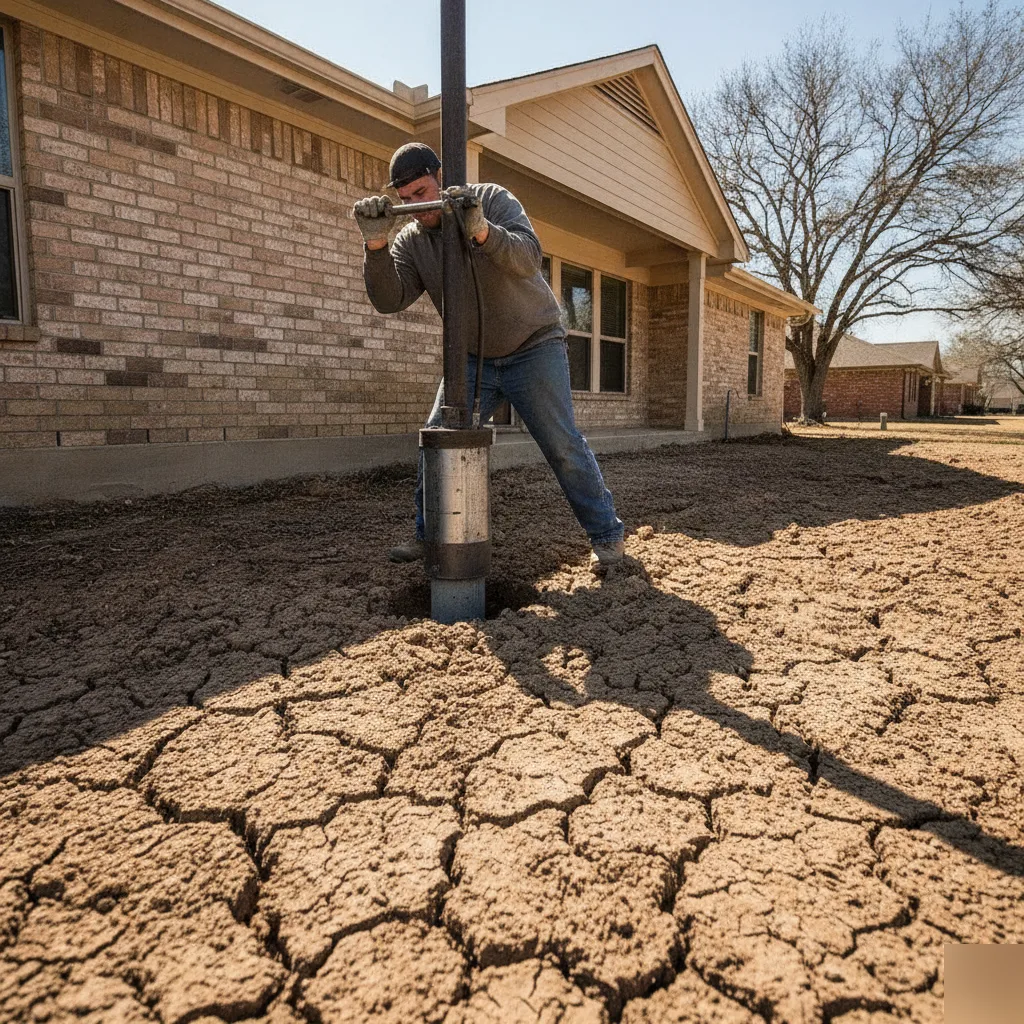
The soil here is Blackland Prairie clay. Specifically, it's a type called Vertisol, which is rich in a mineral known as montmorillonite. This mineral behaves like a sponge. When spring rains arrive, the clay swells dramatically and pushes against your slab with real force. Then summer arrives. The clay dries out, shrinks, and pulls away from your foundation. This creates voids underneath the slab. In these spots, your foundation lacks proper support.
This cycle repeats every year.
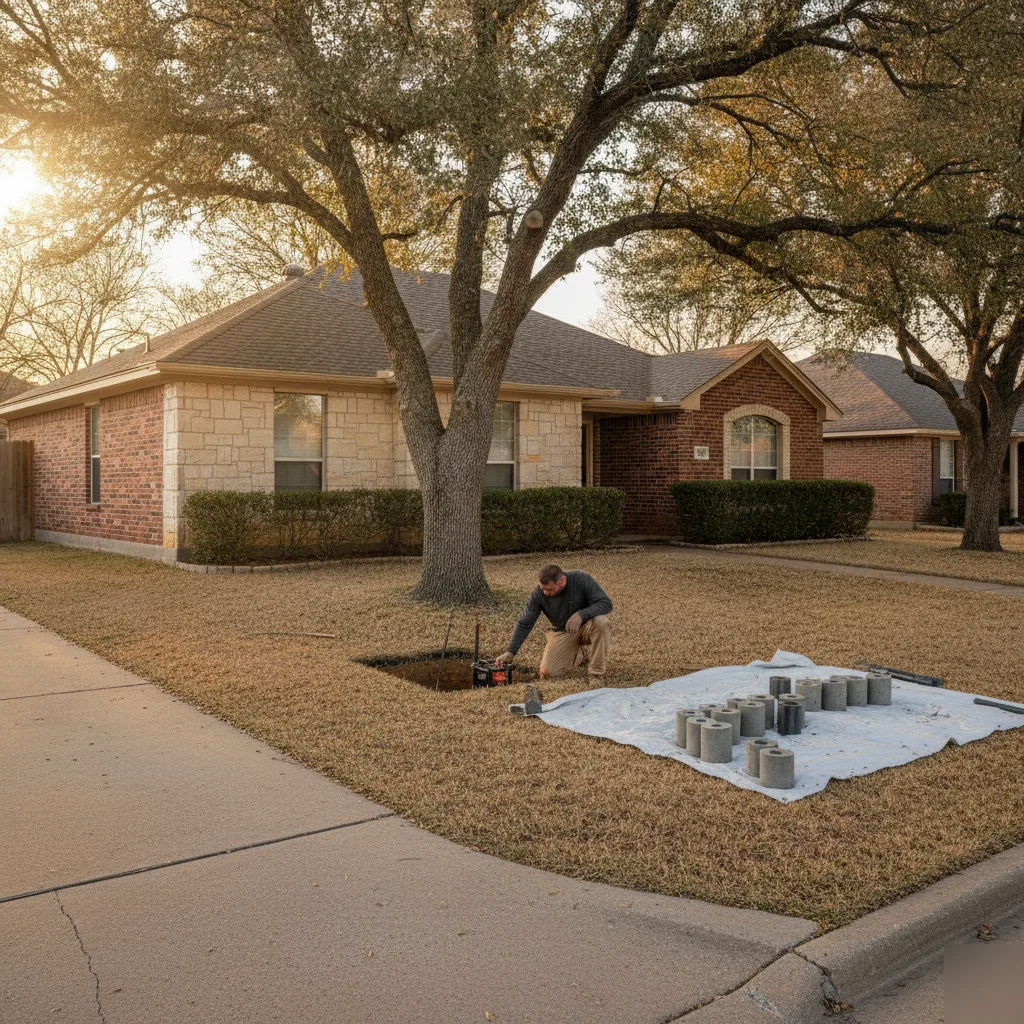
We see this pattern constantly in older Pflugerville neighborhoods like Windermere and Springbrook. Homes built in the late '80s and '90s have endured decades of this shrink-swell cycle. The damage accumulates slowly. One year, you might notice a hairline crack in the drywall. The next, a door begins sticking. By the third year, the floors may feel uneven in the kitchen. These are consistent signs of clay soil movement affecting the slab.
Here's what the shrink-swell cycle does to a foundation over time:
- Voids are created beneath the slab. This causes sections to sink unevenly.
- Lateral pressure is generated against perimeter beams during wet seasons.
- Repeated micro-movements occur. These movements crack interior and exterior walls.
- Plumbing lines running through or under the slab can shift.
The clay volume can change by up to 15% between wet and dry states. This significant fluctuation occurs directly beneath your home. If you've noticed gaps between your walls and ceiling, or your garage door isn't sitting flush, the soil is sending a clear message. This is not a cosmetic issue. It's your foundation reacting to unstable ground. The solution becomes clearer once you understand the cause.