

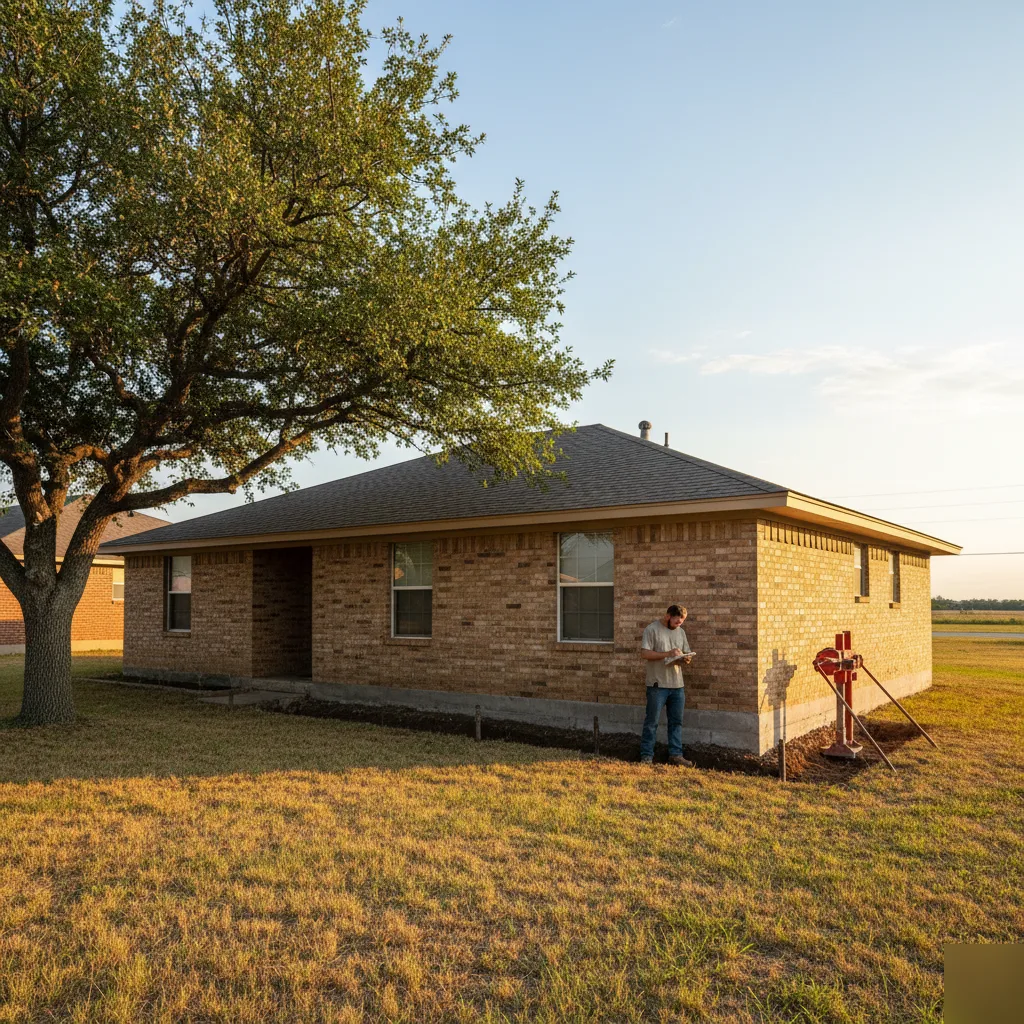
Hybrid Steel Pier System · Pflugerville, TX

Hybrid Steel Pier Foundation Repairin Pflugerville

Bats Foundation Repair's Hybrid Steel Pier System combines the initial penetration of an all-steel pier with the strength and value of high-pressure-tested concrete.

The first 10 feet of the pier is constructed from 2⅞-inch steel, giving the system a relatively small profile through the upper soils where movement is typically most active. After the initial steel section is installed, we transition to 6-inch high-pressure-tested concrete cylinders and continue driving the pier until it reaches refusal or bedrock, whichever comes first.

The result is a deep-driven foundation repair system that provides many of the advantages of steel without requiring the entire pier to be constructed from steel.
The system

What Is a Hybrid Steel Pier?

A hybrid steel pier combines two different foundation pier materials into one continuous support system. With the Bats system, the first 10 feet is essentially an all-steel pier.

The first 10 feet of the pier is constructed from 2⅞-inch steel, giving the system a relatively small profile through the upper soils where movement is typically most active. After the initial steel section is installed, we transition to 6-inch high-pressure-tested concrete cylinders and continue driving the pier until it reaches refusal or bedrock, whichever comes first.

We use:

  • 2⅞-inch steel for the initial 10 feet
  • Steel installed directly beneath the grade beam
  • 6-inch high-pressure-tested concrete cylinders after the steel section
  • Hydraulic installation using the weight of the structure
  • Installation until refusal or bedrock is reached
  • Concentric placement beneath the structural load

The purpose is straightforward: use the smaller-diameter steel where its ability to penetrate the upper soils provides the most benefit, then use high-strength concrete to continue the pier deeper. The result is a deep-driven foundation repair system that provides many of the advantages of steel without requiring the entire pier to be constructed from steel.
The key detail

Why Start With 10 Feet of Steel?

This is the most important feature of our hybrid system.

The upper soils in Central Texas are generally the soils most affected by seasonal moisture changes. Our 2⅞-inch steel section has a much smaller diameter than the 6-inch concrete cylinders used later in the pier. That smaller profile allows us to drive the first 10 feet with relatively little surface area interacting with the surrounding soil.

In many of the Central Texas areas where we work, 10 feet of initial steel generally takes the pier through or beyond much of the active soil zone before we transition to concrete. So instead of beginning the pier with a larger concrete cylinder in the upper active soils, the Bats Hybrid Steel Pier starts with a smaller-diameter steel support column and transitions only after that initial depth has been reached.

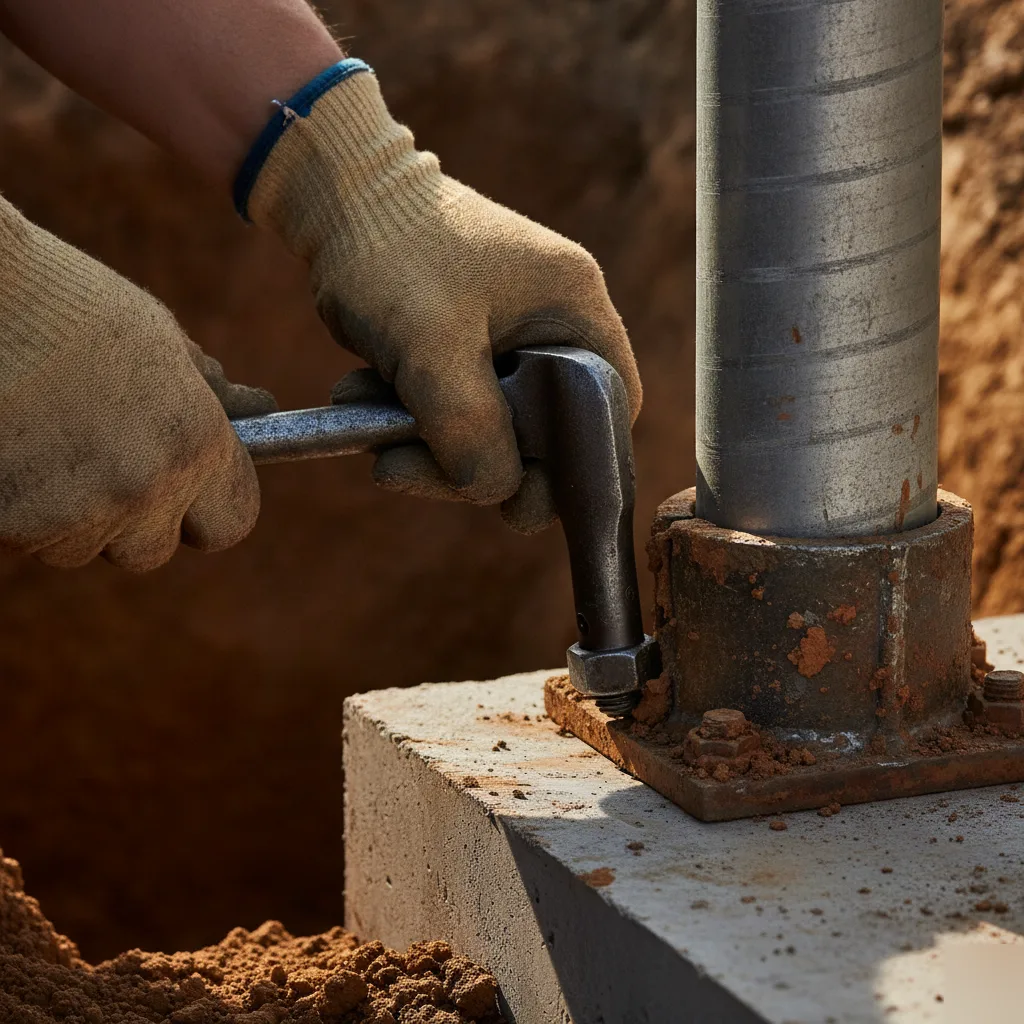
2⅞-inch steel section driven through the active upper clay soils beneath a Pflugerville foundation

Actual soil conditions vary, which is why the pier doesn't stop at 10 feet. The steel portion stops at 10 feet. The pier does not.

Below the steel

What Happens After the First 10 Feet?

Once the initial steel section has been installed, we transition to 6-inch high-pressure-tested concrete cylinders. The concrete cylinders are hydraulically pressed one at a time below the steel section. Additional cylinders are added until the pier reaches refusal or bedrock, whichever comes first.

This means a hybrid pier might ultimately extend considerably deeper than 10 feet. The finished support column consists of:

  1. 1
    Foundation

    The grade beam carrying the structural load.

  2. 2
    Pier head and support assembly

    Concrete cylinder and steel shims securing the adjusted elevation.

  3. 3
    6-inch high-pressure-tested concrete cylinders

    Driven one at a time to extend the pier below the steel section.

  4. 4
    10 feet of 2⅞-inch steel

    Installed first, so it remains at the deepest end of the pier.

  5. 5
    Refusal or bedrock

    Whichever the pier reaches first.

The steel remains at the deepest end of the pier because it is installed first.

The reasoning

Why Combine Steel and Concrete?

An all-steel pier is an excellent foundation repair system, but constructing the entire driven support column from steel is more expensive. Our hybrid system puts steel where we believe it provides the most value: through the first 10 feet of penetration.

After that, high-pressure-tested concrete cylinders allow us to continue driving the pier deeper without the cost of adding steel for every additional foot. That gives homeowners a system with:

  • 10 feet of initial steel — The first 10 feet uses the same small-diameter steel concept as an all-steel pier.
  • Penetration through the upper soils — The 2⅞-inch steel profile helps the pier move through the upper active soils before transitioning to the larger concrete components.
  • High-strength concrete below — After the steel section is installed, 6-inch high-pressure-tested concrete cylinders continue the support column deeper.
  • No predetermined total depth — The hybrid pier doesn't stop because the steel portion reaches 10 feet. Concrete cylinders continue to be installed until refusal or bedrock is reached.
  • Better value — Because the entire pier need not be constructed of steel, our Hybrid Steel Pier System costs less than our All-Steel Pier while still incorporating a substantial initial steel section.
Our process

How Our Hybrid Steel Pier Is Installed

  1. 1
    Access the foundation

    Our crew excavates beneath the grade beam at each proposed pier location so the pier can be positioned concentrically beneath the foundation.

  2. 2
    Install the steel portion

    A hydraulic ram uses the structure's weight as resistance. The 2⅞-inch steel sections are installed beneath the foundation until approximately 10 feet of steel has been driven. At this point, the lower portion of the finished hybrid pier is essentially the same type of steel support column used in an all-steel installation.

  3. 3
    Transition to concrete

    Once the 10-foot steel section is complete, we transition to 6-inch high-pressure-tested concrete cylinders. Each cylinder is hydraulically pressed into place, pushing the previously installed steel section deeper beneath the foundation.

  4. 4
    Continue to refusal or bedrock

    Concrete cylinders are added until the pier reaches refusal or bedrock, whichever comes first. With our hydraulic equipment, refusal is generally reached at approximately 10,000 psi of hydraulic system pressure. If bedrock is encountered first, the pier terminates at the rock. The final depth varies depending on the conditions beneath each pier location.

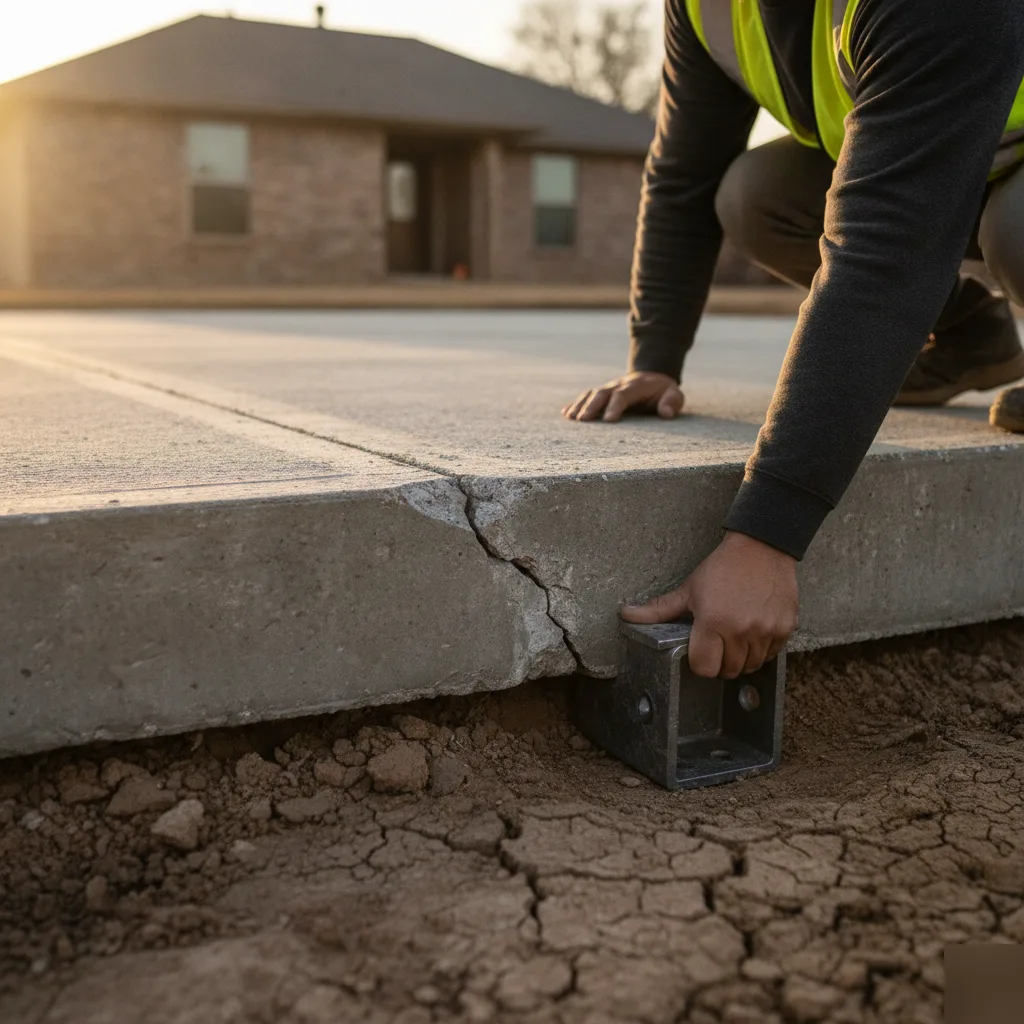
Hybrid steel pier being driven concentrically beneath a slab grade beam in Pflugerville
Installation depth

How Deep Does a Hybrid Steel Pier Go?

There is no predetermined total depth. The steel portion is approximately 10 feet, but the complete pier continues deeper with high-pressure-tested concrete cylinders. Depending on the location, the finished pier may extend only a short distance beyond the steel transition or considerably deeper.

Because Bats has installed piers throughout Central Texas, we can often review depth records from nearby projects to gauge the conditions we may encounter in a particular neighborhood. Those records provide useful context, but they aren't a guarantee. Actual conditions can vary even between pier locations on the same property.

Installation continues until each pier reaches the required supporting condition.

Load path

Concentric Hybrid Pier Installation

Like our All-Steel Pier System, our Hybrid Steel Pier is installed concentrically beneath the grade beam. The support column sits directly beneath the structural load instead of supporting the foundation from an offset position.

This creates a direct load path from the foundation through the pier and into the supporting material below. Both Bats-driven pier systems use this same concentric installation approach.

The lift

Adjusting and Securing the Foundation

Once the hybrid piers have been installed, multiple jacks are positioned throughout the repair area. Our crews make coordinated adjustments across several pier locations while monitoring elevations and the structure's response.

We don't promise to force every home perfectly level. We lift to the limits of the structure and make as much improvement as the existing home will reasonably allow.

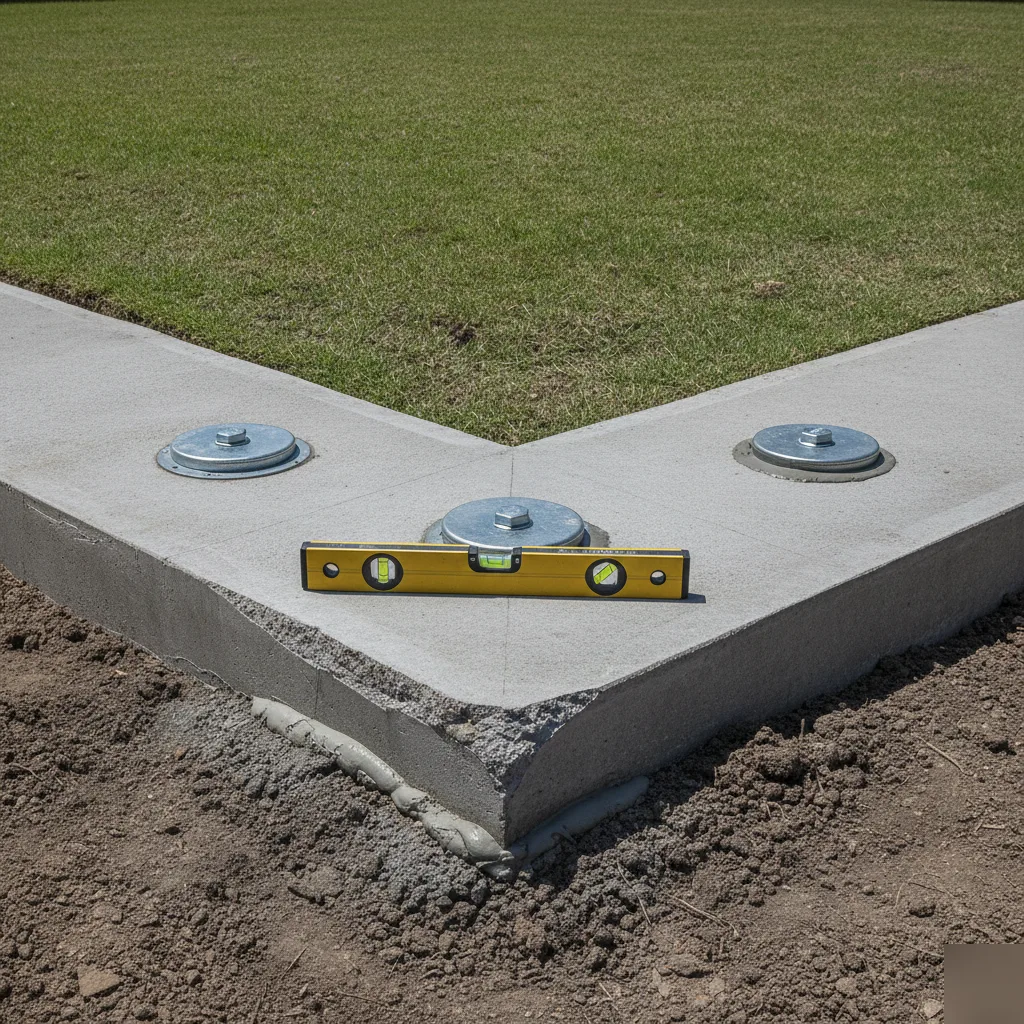
Once the adjustment is complete, steel shims are installed at the pier head to maintain the new elevation. The lifting jack is removed, a concrete cylinder is installed at the top of the pier assembly, and additional steel shims are fitted to permanently secure the foundation.

Comparing systems

Hybrid Steel or All-Steel?

Both are deep-driven foundation repair systems, and both are installed concentrically beneath the foundation. The primary difference is what happens after the first 10 feet.

Hybrid Steel Pier

The first 10 feet is steel. After that, the system transitions to 6-inch high-pressure-tested concrete cylinders and continues until refusal or bedrock. Because the entire pier isn't constructed from steel, it offers a lower-cost option.

All-Steel Pier

Steel continues throughout the entire driven depth of the pier until refusal or bedrock is reached. That makes our All-Steel Pier the premium option and increases cost with greater installation depth.

Neither system is automatically right for every homeowner. If both are appropriate for your foundation, we'll explain the differences in construction, pricing, and warranty and let you decide which system makes the most sense. Learn more about our All-Steel Pier System.

A common question

Is a Hybrid Pier a Concrete Pier?

No. Although high-pressure-tested concrete cylinders make up part of the completed support column, the first 10 feet of the Bats Hybrid Steel Pier is steel.

That initial steel section is an important distinction between our hybrid system and traditional pressed concrete piling, which begins with concrete at the top of the soil profile. The hybrid system is specifically designed to take advantage of the smaller steel profile during the initial installation, then transition to concrete at greater depth.

Why Not Just Use Concrete From the Beginning?

Traditional pressed concrete systems use larger-diameter cylinders from the start of the installation. In Central Texas soils, trying to push a 6-inch concrete cylinder through the upper 10 feet can create substantial resistance before the pier has moved beyond the more active soil zone.

Our Hybrid Steel Pier takes a different approach. By starting with 2⅞-inch steel for the first 10 feet, the pier has a much smaller profile through the upper soils, allowing it to penetrate deeper before transitioning to the larger 6-inch high-pressure-tested concrete cylinders. Once the initial steel section is installed, we use concrete to extend the pier deeper until refusal or bedrock is reached.

This is the primary advantage of the hybrid design: use smaller-diameter steel to reach the upper active soils, then transition to high-strength concrete for the remaining depth without incurring the cost of an all-steel pier.

Interior repairs

Interior Hybrid Piers

Hybrid piers can also be installed beneath interior grade beams when structural support is required and access is practical. Before opening a finished slab, we use Ground Penetrating Radar, or GPR, to help identify:

  • Interior grade beams
  • Post-tension cables
  • Reinforcing steel
  • Other embedded components
  • Appropriate pier access locations

When a driven pier can reasonably be installed, we generally prefer a structural pier for significant interior foundation movement. If access, occupancy, or disruption makes an interior pier impractical, polyurethane foam injection may sometimes be considered as a less invasive alternative. Learn more about polyurethane foam injection.

Every project includes

A Complete Foundation Repair Process

Most residential Bats slab foundation repairs take approximately one to three days, depending on the number of piers, interior access, installation depths, and overall complexity of the project. Every Bats foundation repair project also includes:

Licensed Engineer Review

Every project receives independent review by a licensed professional engineer, with engineering documentation provided after completion.

Post-Repair Hydrostatic Testing

We require a hydrostatic plumbing test after the foundation repair is completed. Bats does not employ plumbers or sell plumbing repairs. We intentionally keep plumbing testing separate so the homeowner receives an independent evaluation from a licensed plumbing professional and Bats has no financial incentive tied to the result.

Final Elevations

We take final elevations after the foundation has been adjusted and secured to document the completed repair.

Learn more about our slab foundation repair process.

Warranty

Lifetime Transferable Warranty

Our Hybrid Steel Pier System includes a transferable lifetime warranty. For the first 10 years, covered adjustments are performed with no adjustment charge. Complete warranty terms and requirements are provided before the project begins.

The short version

Why Choose the Bats Hybrid Steel Pier?

The Bats Hybrid Steel Pier is designed to balance the performance advantages of steel with the value of high-strength concrete. You get:

  • 10 feet of initial 2⅞-inch steel
  • A smaller steel profile through the upper soils
  • 6-inch high-pressure-tested concrete cylinders after the transition
  • Installation to refusal or bedrock
  • Concentric support beneath the grade beam
  • A lower cost than our All-Steel Pier System
  • Licensed engineer review on every project
  • A transferable lifetime warranty
  • No adjustment charges for covered adjustments during the first 10 years

It's not a shortened steel pier and it's not a traditional concrete piling. It's a combination of both materials designed around where each one provides the most value.

Frequently asked questions

Hybrid steel piers in Pflugerville, answered

Is a hybrid pier a concrete pier?

No. Although high-pressure-tested concrete cylinders make up part of the completed support column, the first 10 feet of the Bats Hybrid Steel Pier is steel. That initial steel section is an important distinction between our hybrid system and traditional pressed concrete piling, which begins with concrete at the top of the soil profile.

Why not just use concrete from the beginning?

Traditional pressed concrete systems use larger-diameter cylinders from the start of the installation. In Central Texas soils, trying to push a 6-inch concrete cylinder through the upper 10 feet can create substantial resistance before the pier has moved beyond the more active soil zone. Starting with 2⅞-inch steel gives the pier a much smaller profile through those upper soils, allowing it to penetrate deeper before transitioning to concrete.

Does the hybrid pier stop at 10 feet?

No. The steel portion stops at 10 feet — the pier does not. Once the initial steel section is installed, 6-inch high-pressure-tested concrete cylinders are hydraulically pressed one at a time below it, and cylinders continue to be added until the pier reaches refusal or bedrock, whichever comes first.

How deep does a hybrid steel pier go?

There is no predetermined total depth. Because Bats has installed piers throughout Central Texas, we can often review depth records from nearby projects to gauge the conditions we may encounter in a particular neighborhood. Those records provide useful context, but they aren't a guarantee — conditions can vary even between pier locations on the same property.

Should I choose the Hybrid Steel Pier or the All-Steel Pier?

That depends on the home, project conditions, budget, and homeowner preference. Both are long-term driven pier systems installed concentrically beneath the grade beam. The Hybrid Steel Pier is our more cost-effective option; the All-Steel Pier is our premium option. If both are appropriate, we'll explain the differences in construction, pricing, and warranty and let you decide.

What does the hybrid pier warranty cover?

Our Hybrid Steel Pier System includes a transferable lifetime warranty. For the first 10 years, covered adjustments are performed with no adjustment charge. Complete warranty terms and requirements are provided in writing before the project begins.

Is a Hybrid Steel Pier Right for Your Home?

For many Central Texas slab foundations, our Hybrid Steel Pier provides an excellent combination of steel penetration, deep structural support, and cost. We'll evaluate the home, take elevations, identify the areas that actually need support, and explain which of our Hybrid Steel or All-Steel Pier Systems makes more sense for your project. If both are appropriate, we'll explain the differences and let you decide.