

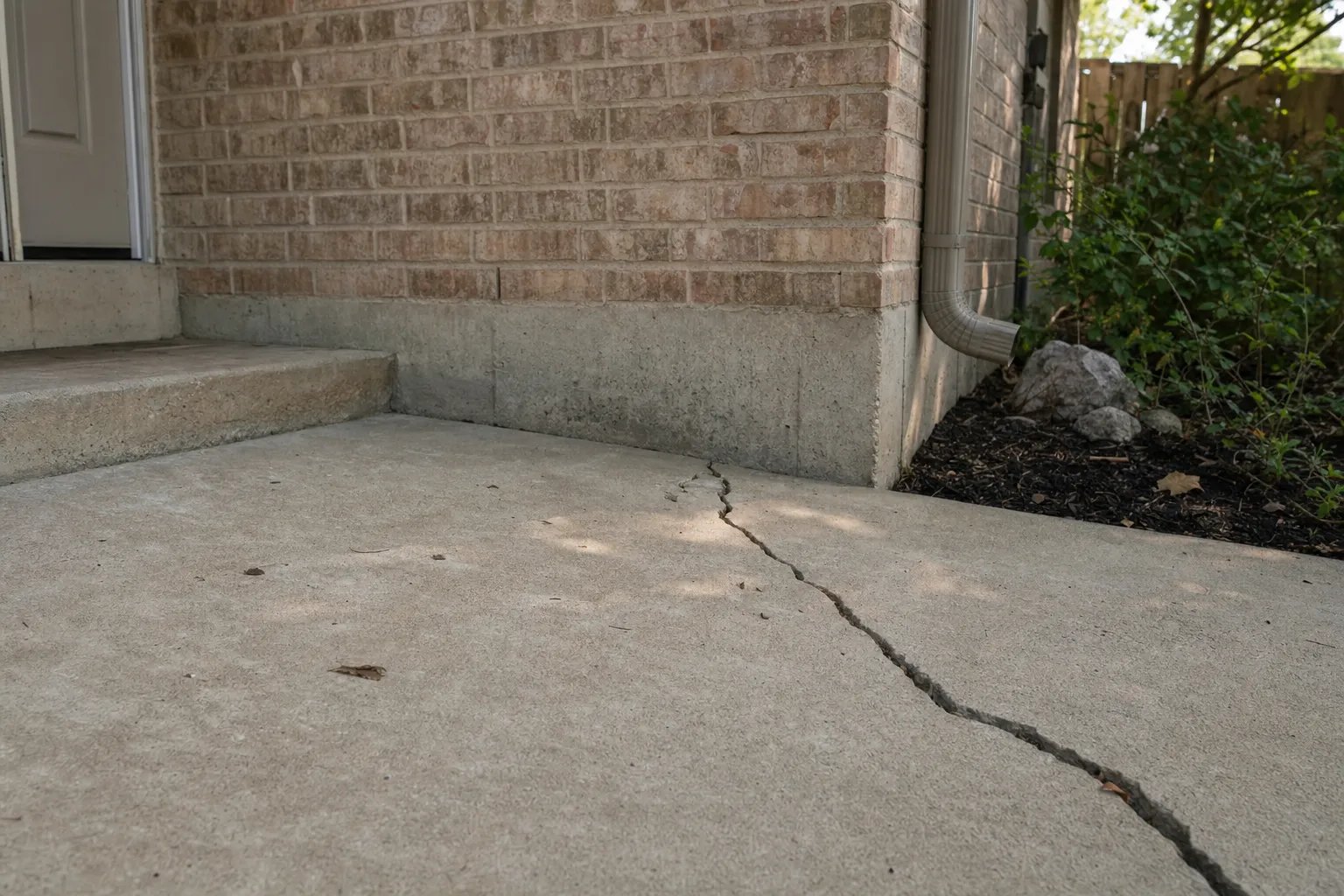
Yes, Pflugerville's clay soil does make slab problems worse than in many other parts of Texas. The ground beneath most Pflugerville homes is Blackland Prairie clay, a Vertisol-series soil rich in montmorillonite, a mineral that swells when wet and shrinks when dry. This creates significant cyclical pressure on any concrete slab above it. Unlike the sandy loam soils common in East Texas or the caliche and arid soils of West Texas, this clay responds dramatically to Central Texas drought-and-rain patterns. Every dry summer followed by heavy spring rain puts the soil through another expansion-contraction cycle, stressing the slab from below. Over years and decades, that repeated movement is the primary driver of cracked, uneven, and settled slabs in the Pflugerville area.
What makes Pflugerville's soil different from soil in other Texas cities?
Pflugerville sits on Blackland Prairie clay, one of the most expansive soil types in the United States. That sets it apart from the caliche-and-limestone terrain of West Texas and the well-draining sandy soils across much of East Texas.
Blackland Prairie clay belongs to the Vertisol soil order. Geologists named this order for its tendency to invert itself as it swells, cracks, and shifts with moisture changes. That self-inverting behavior creates non-stop pressure on any structure sitting on top. It's about as unforgiving a base as you can build on.
How three Texas regions compare on slab risk:
| Region | Dominant Soil Type | Drainage Rate | Relative Slab Risk |
|---|---|---|---|
| Central Texas (Pflugerville, Austin) | Blackland Prairie clay (Vertisol) | Slow | High |
| East Texas (Nacogdoches, Lufkin) | Sandy loam / loamy sand | Fast | Low to moderate |
| West Texas (El Paso, Amarillo) | Caliche, loamy sand, arid soils | Moderate to fast | Low |
Cities like El Paso and Amarillo have drier, more stable soil profiles. Volume change in those soils is minor compared to what Central Texas clay does across a single wet season. East Texas cities sit on sandy or loamy soils that drain quickly after rain, reducing the swell-shrink cycle significantly.
The Austin metro corridor, including Pflugerville, is one of a small number of Texas regions where Vertisol clay generates persistent, year-round foundation stress. Homeowners in Pflugerville aren't dealing with an occasional bad year. They're dealing with a soil type that is structurally aggressive by nature. That's just the reality of building here.
What is montmorillonite and why does it matter for concrete slabs?
Montmorillonite is a clay mineral that absorbs water directly into its crystal structure, swelling to several times its dry volume. That expansion is the primary reason Pflugerville slabs move.
Unlike sand or gravel, montmorillonite-rich clay doesn't allow water to pass through quickly. The clay holds moisture, then releases it slowly as conditions dry out. This creates prolonged pressure events rather than brief, minor shifts.
When moisture leaves the soil during a dry Central Texas summer, the clay shrinks and the ground beneath a slab can drop, opening voids. Those voids leave sections of the slab unsupported. An unsupported slab can crack under the weight of the structure above it. That's the leak nobody notices until the ceiling below it sags, so to speak.
When heavy rain follows a drought, the clay swells and pushes upward with significant force against any concrete above it. Geotechnical studies of Blackland Prairie soils document substantial volume changes between their wettest and driest states, enough to apply measurable physical force repeatedly to the underside of a slab. Montmorillonite is common in both the Austin Clay and Houston Black soil series that cover much of Central Texas.
How does montmorillonite behave differently from other clay minerals?
Kaolinite is another clay mineral, found widely across East Texas. Kaolinite absorbs very little water into its crystal structure. A soil rich in kaolinite swells only slightly when wet and shrinks only slightly when dry. The slab risk in kaolinite-dominant soils is much lower than in montmorillonite-dominant soils. This difference in mineral chemistry is a large part of why East Texas homeowners see far fewer slab problems than homeowners in Pflugerville. Same state, very different soil, very different outcomes.
How much does Pflugerville clay actually move between seasons?
Expansive Blackland Prairie clay can undergo significant volume changes between its wettest and driest states, enough to visibly lift or drop a slab over a period of months. Volume shifts in Central Texas clay soils are well-documented in geotechnical literature and are one reason Texas engineers design foundations differently than engineers in other states.
Vertical soil movement beneath a slab perimeter can translate into measurable out-of-level conditions inside the home. When one edge of the slab drops or rises more than the other, floors develop a slope, doors rack in their frames, and interior finishes crack along the lines of stress.
Seasonal drought years intensify this movement. Prolonged dry periods pull moisture from the clay well below the normal active zone depth, making the next rain event cause a sharper and faster rebound. The soil doesn't return to exactly the same position each cycle. Each cycle shifts the slab a little further from its original position. That's the part worth understanding: this isn't a single event you recover from. It's cumulative.
Rapid suburban development in the early 2000s and again post-2015 placed many Pflugerville slab homes on minimally prepared clay pads. Minimal site preparation is a known risk factor for early foundation movement. The soil beneath those homes wasn't given time to reach a stable moisture equilibrium before construction began.
Which Pflugerville neighborhoods see the most slab movement?
Older Pflugerville neighborhoods tend to accumulate more visible slab damage simply because their foundations have gone through more seasonal cycles. More cycles mean more cumulative movement.
Established neighborhoods built 25 or more years ago have had decades of wet-dry cycling beneath their slabs. That accumulated stress shows up as diagonal drywall cracks, sticking doors, and brick veneer separation that homeowners in newer subdivisions haven't yet experienced.
The median Pflugerville home in ZIP 78660 was built around 2007, placing a large cohort of homes at roughly 17 to 19 years old in 2026. Homes of this age are entering the window where post-tension slab foundations commonly show first signs of differential settlement as the surrounding clay begins to dry-shrink beneath the perimeter.
Large trees common in established Pflugerville neighborhoods, particularly live oaks and cedar elms, pull significant moisture from the soil during drought. Root-driven soil drying creates localized dry zones beneath nearby slab edges, accelerating perimeter settlement in ways that a homeowner might not connect to the tree standing nearby. We see this regularly, and it's almost always a surprise when we explain it.
Does new construction in Pflugerville avoid clay soil problems?
No. Newer slabs sit on the same Blackland Prairie clay and face the same seasonal forces as older homes. The advantage newer construction may have is a longer time before the first visible symptom appears. The disadvantage is that rapid construction schedules sometimes allow less time for soil preparation and post-tension cable tensioning before the home is occupied. Early movement in a new home isn't a sign of a defective slab. It's often a sign that the underlying clay is doing exactly what Blackland Prairie clay does.
What warning signs does clay-driven slab movement leave inside a home?
Clay-driven slab movement tends to produce specific, recognizable symptoms inside the home that differ from ordinary house settling. The pattern of damage often tells an experienced inspector which zone of the slab moved and in which direction.
The most common warning signs are diagonal drywall cracks at door and window corners, which follow the shear stress lines as the frame distorts beneath an uneven slab. Doors and windows that suddenly stick or stop latching mean the frame has racked slightly as the slab shifted, pulling the rough opening out of square. On the exterior, brick veneer stair-step cracking appears as mortar joints crack along their weakest path when the slab edge drops or rises unevenly. Inside, visible gaps between baseboards and flooring show up when opposite slab zones move at different rates and pull wall finishes away from floor finishes. Floor slope visible to the eye or measured with a level indicates differential settlement between slab zones.
These symptoms rarely appear all at once. Most homeowners notice one or two first, often after a particularly dry summer. Sound familiar? Catching the pattern early limits how far the movement progresses before a professional assessment can identify the cause.
How does Central Texas drought make clay soil slab problems worse?
Prolonged drought is the single biggest accelerant of clay-driven slab movement in the Pflugerville area. Drought removes moisture from the soil faster than the slab can adjust to the change beneath it.
During extended dry periods, the clay beneath the slab perimeter dries and contracts. The interior clay, protected by the slab above it, retains moisture longer because the slab blocks direct evaporation. This difference in shrinkage rate causes the slab edge to drop relative to the center, a pattern called differential settlement. The classic symptom is doors sticking along the outer walls while interior doors work fine. If that's what you're seeing right now, the soil beneath your perimeter is almost certainly the reason.
When heavy rainfall follows a drought, the perimeter clay absorbs water rapidly and pushes back upward. The rebound is sometimes faster than the original settlement, creating a brief period of slab heave before the soil stabilizes. In some cases, the perimeter overshoots its original elevation before settling back.
Central Texas sits in a climate zone prone to La Niña drought cycles, which means the drought-and-rebound pattern repeats on a multi-year basis, not just in occasional bad years. Summer months from June through September historically produce the sharpest soil shrinkage in Pflugerville as temperatures peak and rainfall drops. Inquiry volume for foundation problems in the area consistently rises during and after those months. We aren't surprised by that timing anymore.
For homeowners who have started noticing drought-related symptoms, sticking doors after a dry summer, new diagonal wall cracks appearing in September, understanding how clay soil movement affects your specific slab and what repair options address it is a practical first step through concrete slab repair in Pflugerville during drought damage assessment.
Can homeowners slow down clay soil damage to their slab?
Homeowners can't change the soil beneath their slab, but they can take practical steps to reduce the severity of moisture swings that drive movement. Consistent soil moisture is the goal. Not eliminating moisture, but keeping large swings from happening.
Running soaker hoses around the foundation perimeter during dry months is the most direct tool available. The goal isn't to saturate the soil but to slow the rate of moisture loss before the perimeter clay dries out too rapidly. Gutters and downspouts matter more than most homeowners expect. A clogged gutter dumps concentrated water against the slab perimeter during rain, then that zone dries out faster than the rest, so extending downspouts several feet from the foundation reduces that localized saturation cycle. For homes with large live oaks or cedar elms growing close to the slab, trimming back those trees can reduce the rate of localized drying beneath nearby slab edges during drought without eliminating the risk entirely. Plumbing leaks are worth fixing quickly too, because a slow leak under or near the slab saturates a concentrated zone of clay, pushing up one section while surrounding soil stays dry.
Does concrete sealing help protect slabs from clay soil movement?
Sealing exposed perimeter concrete and flatwork limits water intrusion at the surface. A penetrating sealer applied to a driveway, patio, or exposed foundation perimeter concrete can slow the rate at which surface water enters the concrete itself. What sealing doesn't do is address sub-slab soil moisture. The clay beneath the slab responds to moisture coming from below, from the sides, and from deep seasonal water table changes, none of which a surface sealer affects. Sealing is a maintenance step that protects the concrete itself, not a solution for soil-driven movement. It's worth doing, but don't let anyone sell it to you as a fix for what's happening below grade.
The Bottom Line
Pflugerville's Blackland Prairie clay creates more severe and more frequent slab stress than most other soil types in Texas. Montmorillonite-rich clay undergoes large volume changes with every wet-dry cycle, and Central Texas drought patterns ensure those cycles are both intense and recurring. Early symptoms like sticking doors, diagonal wall cracks, and brick stair-step cracking are the soil's way of signaling that the cycle is affecting the slab. Catching movement early limits repair scope and cost. For homeowners who want to understand how clay soil movement has affected their specific slab, a free, no-pressure assessment is a practical starting point through concrete slab repair services in Pflugerville.