

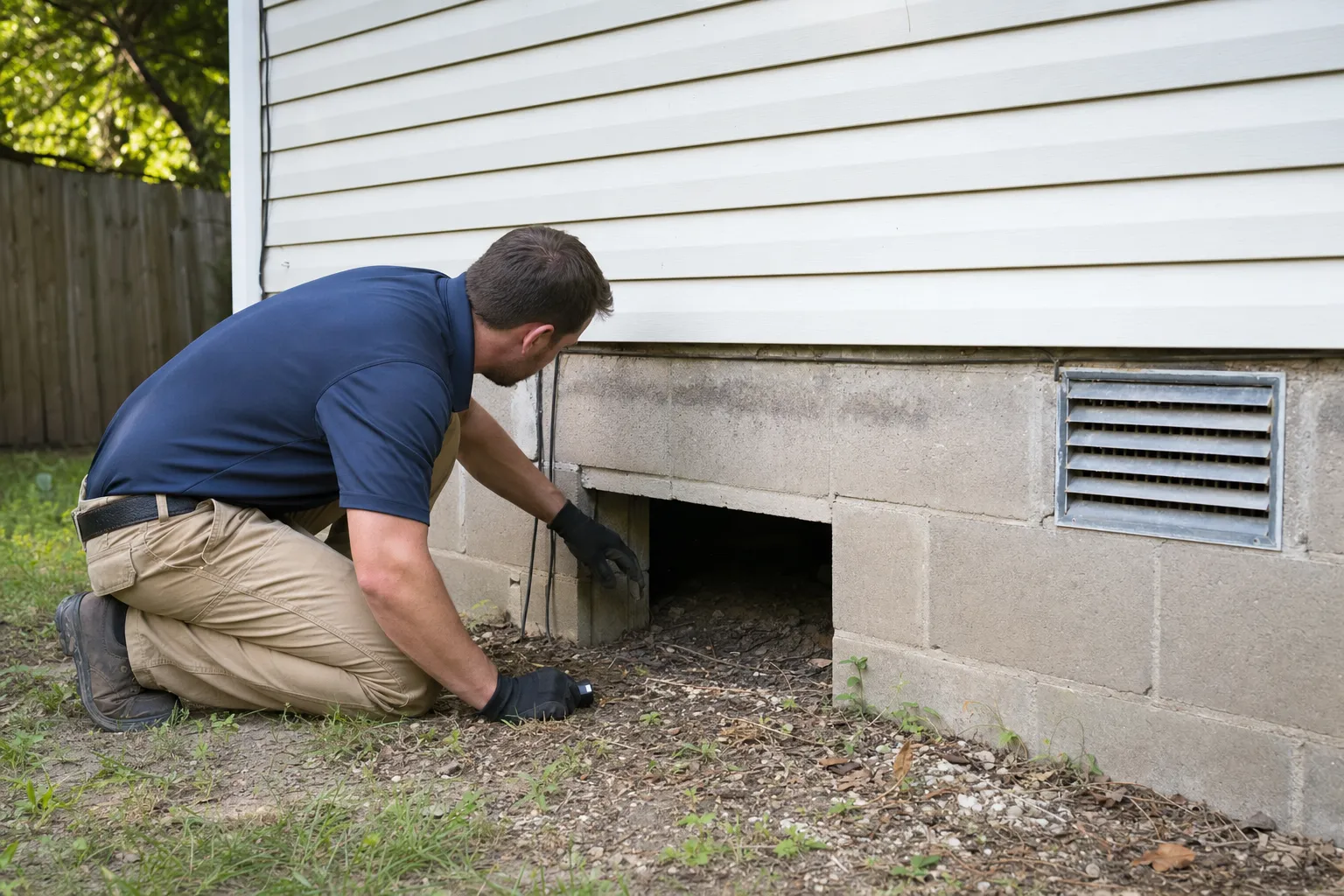
Most block and base foundation repair jobs take one to two days to complete. Crawl space access is the main reason block and base repair moves faster than slab foundation work — our crew reaches every support point directly without cutting concrete or operating heavy equipment. A smaller home with limited block damage is often finished in a single crew visit: we inspect each support point, replace shifted blocks, and re-level all support before leaving. Larger homes, or those where block failure has spread across many support points, typically need a second day to finish shimming and confirm that final measurements are consistent across the full floor area. The number of affected support points, the size of the crawl space, and current crawl space conditions are the three things that shape a final timeline most directly.
What is a block and base foundation system?
A block and base foundation uses stacked masonry or wood blocks placed on concrete pads to support the floor framing above a crawl space. The home sits elevated above grade on individual support points rather than resting on a continuous poured slab. This design was common in homes built before the 1970s across Central Texas, including many older Austin neighborhoods.
Over time, blocks can shift, sink, or deteriorate as the soil beneath them moves. Expansive Blackland Prairie clay swells when wet and shrinks when dry. That cycle puts constant pressure on the base pads and the blocks resting on them — and how much damage has accumulated by the time we arrive directly shapes how long the repair takes. We see that pattern play out differently every year depending on how wet or dry the season has been.
How is block and base different from pier and beam?
Block and base is a type of pier and beam construction. The difference is in the support element used. A pier and beam home may use poured concrete piers, steel posts, or wood posts. A block and base home specifically uses stacked masonry or wood blocks set on concrete base pads. Both systems share a crawl space beneath the floor framing, which is why repair methods and timelines are similar for both.
How long does block and base foundation repair usually take for a small home?
A smaller home with damage limited to a few shifted or failing support blocks can typically be repaired in one day. Our crew moves efficiently from point to point under the floor, replacing damaged blocks and shimming each support location before moving to the next. No concrete cutting and no heavy lifting equipment are needed. That keeps the schedule tight and leaves the yard undisturbed from start to finish.
Final measurements are taken at all repaired points before we leave to confirm the floor framing is level.
Here are the five steps our crew typically completes during a one-day block and base repair:
Enter the crawl space and inspect every support block and base pad, checking for shifting, cracking, rot, and moisture damage.
Map all out-of-level points, recording measurements at multiple floor locations to guide shimming decisions.
Remove damaged or shifted blocks, clearing each failing support point before installing replacements.
Install replacement supports and shim to level, setting new blocks or support material and adjusting shims until each point meets the target elevation.
Take final measurements across all repaired locations, confirming consistent level readings before the crew exits the crawl space.
What makes a block and base repair job take two days instead of one?
Larger homes or those with block failure spread across many support points often need a second day. When damage is widespread, we work through more locations — and each one requires removal, replacement, and individual leveling checks before moving on. Large floor plans with many interior support points simply require more physical time in the crawl space. That's not a sign anything is going wrong; it's just what thorough work looks like.
On heavily affected homes, a second day lets us make fine adjustments to shimming and take final sign-off measurements after the initial re-leveling work is complete. We'd rather take that extra time than close out a job before readings are fully confirmed across the whole floor.
Does crawl space condition affect repair time?
Yes. Crawl space conditions directly affect how quickly our crew can move. Low clearance makes physical movement slower. Debris on the crawl space floor creates obstacles between support points. Wet clay after heavy rain makes the ground inside the crawl space soft and harder to work on safely.
Let us know about moisture conditions before a repair visit. If we know what we're walking into, we can advise on whether to proceed or wait a short time for the crawl space to dry out. A faster, cleaner repair is usually worth the short delay — and honestly, rushing it when the ground is saturated doesn't help anyone.
Why does crawl space access make block and base repairs faster than slab work?
Crawl space access lets our crew reach every support point directly without cutting or breaking through a concrete slab. That's where most of the time difference between block and base repair and slab foundation work comes from.
Slab foundation repair often requires sawcutting through interior floors, tunneling beneath the concrete, or operating hydraulic pier-driving equipment. Those steps add significant time to a job. Block and base work uses hand tools and manual shimming. We move from point to point under the floor without disturbing anything above. No concrete disposal, no floor restoration, and no curing time are required after block and base repair.
Block and base repairSlab pier repairCrew enters through crawl space access hatchCrew may sawcut floor or access from exteriorHand tools and shimming at each support pointHydraulic equipment drives piers to depthNo concrete removal or restorationCut sections patched and allowed to cureFinal measurements taken same dayFinal measurements after curing periodTypical timeline: 1–2 daysTypical timeline: varies by pier count and site conditions
What happens during a block and base foundation inspection before repair begins?
Before any repair work starts, a foundation specialist crawls the full underside of the home to assess every support block and base pad. The inspector checks for shifted blocks, cracked or crumbling base pads, wood rot in beams resting on blocks, and signs of moisture damage throughout the crawl space.
Measurements are taken at multiple floor points above to map where the structure has dropped or tilted out of level. Those measurements guide exactly how much correction each support point needs. The inspection also identifies whether block and base repair alone is enough or whether beam or post replacement is also required. When beam work is needed alongside block replacement, total repair time increases — and knowing that before the crew arrives allows for accurate scheduling rather than surprises mid-job.
We walk through the findings with you before anything is recommended. That no-pressure step lets you understand exactly what was found, what needs repair, and why before you make any decision.
Can a free inspection tell me how long my repair will take?
A thorough inspection gives the most reliable pre-repair timeline estimate available. Once the inspector has mapped every out-of-level support point and assessed crawl space conditions, the crew size and time needed become much clearer than any general estimate. Free foundation assessments include a full crawl space walkthrough and a face-to-face review of findings with you. If you want to understand the full process and what block and base repair involves from inspection through completion, the block and base foundation repair in Austin service page covers the repair process in detail.
How does Central Texas soil affect how long block and base repairs take?
Expansive Blackland Prairie clay swells when wet and shrinks when dry, and that cycle directly affects how severely blocks shift and how much correction work is needed at repair time.
Homes on heavily shrunken clay may have more support points out of level, which increases the number of shims and adjustments our crew must make. Severe drought years accelerate clay shrinkage well below normal depth. When that happens, perimeter blocks drop faster than interior ones, creating more widespread and uneven damage across the floor plan. A home that might have needed a shorter repair in a mild year may need a full second day after a particularly dry summer. Wet crawl space conditions after heavy rain create the opposite problem — clay that has just absorbed significant rainfall becomes soft and difficult to move through safely, which slows how quickly we can work.
Does drought make block and base damage worse?
Drought years do make block and base damage worse in Central Texas. When clay soils dry out deeply, base pads lose the uniform support beneath them. Blocks that were stable shift as the soil beneath the pads contracts unevenly. The more severe and prolonged the drought, the more support points are likely to be affected by the time a homeowner schedules an inspection. A foundation specialist with experience in Central Texas soils can anticipate drought-related patterns during the inspection and give a more accurate time estimate before work begins.
What signs tell you that block and base repair should not wait?
Doors or windows that stick suddenly, diagonal cracks at wall corners, sloping floors, or visible gaps between walls and ceilings are signs that block or base damage is progressing and should be inspected soon. Block and base systems can fail gradually over months or sharply after a dry season.
Waiting usually means more blocks are affected by the time repair happens. A job that starts as a one-day repair can become a two-day job if additional support points fail in the interval between when problems first appear and when we arrive. Visible sagging or springiness in the floor above a crawl space is a more serious sign — that's load-bearing blocks that have failed. Wood rot in beams resting on shifted blocks can spread if moisture is also present, so early repair limits how much structural wood needs replacement alongside the blocks.
We'd rather you call before it gets to that point. None of these symptoms require emergency action in most cases, but getting an inspection scheduled promptly after noticing them keeps small jobs from becoming larger ones. Watch for:
Floors that feel springy or soft in specific rooms
Interior doors that drag, stick, or no longer latch without force
Diagonal cracks at the corners of windows or doorframes
Visible gaps opening between wall surfaces and ceiling lines
Sagging or visible unevenness in the floor when viewed from one end of a room
Block and base foundation repairs in Central Texas typically take one to two days. The crawl space access and hand-tool process keep timelines short compared to slab pier work, and the size of the home and how widely block damage has spread are the two biggest factors that push a job from one day to two. Call us to schedule a free, no-pressure foundation assessment — we'll walk the crawl space, map every problem point, and give you a clear picture of what your home needs before any work is recommended.