

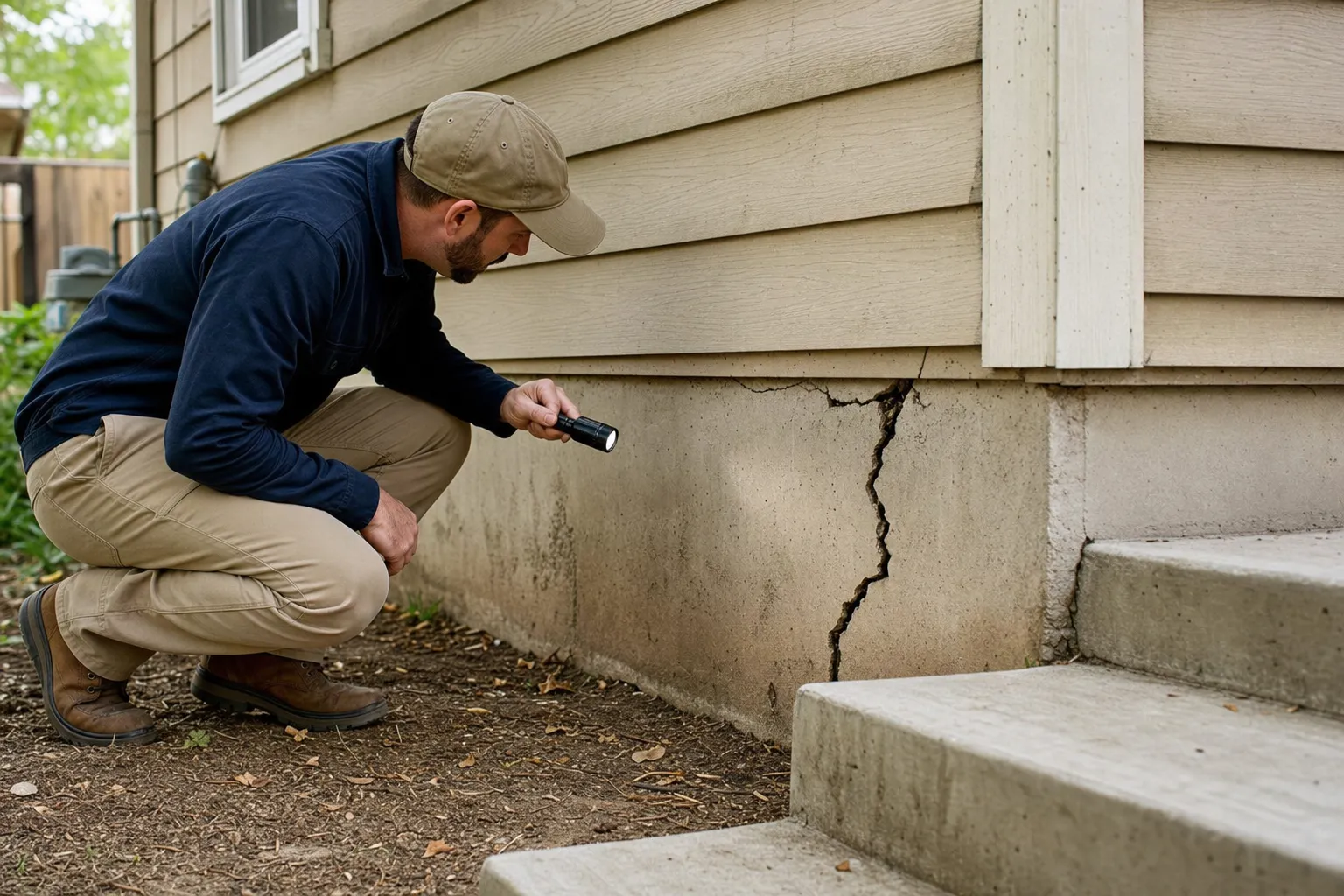
Why do so many Austin homes need concrete underpinning compared to other cities? The short answer is geology — Austin sits on expansive Blackland Prairie clay that swells when wet and shrinks hard when dry. That cycle of swelling and shrinking repeats every season, pushing and pulling foundations unevenly over time. Most U.S. cities sit on more stable soil types — sandy loam, glacial till, or decomposed granite — that move far less with moisture changes. Austin's clay is classified as a Vertisol, one of the most reactive soil series in North America, making foundation movement here far more common than in cities like Denver, Phoenix, or Portland. Neighborhoods built on deep clay deposits, including parts of South Lamar, Bouldin Creek, and expanding suburbs like Pflugerville, experience this stress repeatedly across a home's lifetime.
What makes Austin's soil so different from other cities?
Austin sits on Blackland Prairie clay, a Vertisol soil series, that ranks among the most expansive and reactive soils found anywhere in the United States. Vertisols absorb water rapidly, swell in volume by 30 percent or more when saturated, then crack and shrink as they dry out. Most other major U.S. cities simply don't experience that cycle at this intensity.
Cities like Denver sit on a mix of alluvial and clay soils. Some Front Range and eastern metro areas do have expansive clays, but none comparable to the continuous deep Vertisol deposits of the Blackland Prairie corridor. Portland and Seattle rest on glacial deposits. Phoenix sits on desert caliche. Those soil environments, taken as a whole, produce far less cyclical foundation stress than Central Texas clay at its most reactive. Austin-area clay can swell by 30 percent or more when saturated, then contract sharply during dry stretches. That back-and-forth is what causes uneven foundation movement over time — and honestly, once you've seen what a bad drought year does to the clay out here, the numbers start to feel very real.
The Blackland Prairie belt runs through Central Texas, covering Austin, Round Rock, Pflugerville, and extending toward San Antonio. This is a regional problem, not a city-block quirk.
What is Blackland Prairie clay and where does it run?
Blackland Prairie clay is a dark, sticky Vertisol that formed from the weathering of chalky limestone parent material. Vertisols are named for their tendency to self-churn — as clay swells and shrinks, it literally turns over in place. The Blackland Prairie belt stretches roughly from the Dallas-Fort Worth area southward through Waco, Temple, Austin, and into San Antonio. That corridor places a very large portion of the Texas population on some of the most reactive soil in North America.
How does soil type affect whether a foundation needs underpinning?
When soil beneath a slab moves significantly with moisture, swelling and shrinking by meaningful amounts, the slab can't stay flat. Piers driven to stable ground below the active clay layer are the standard solution because stable soil doesn't move with rain or drought.
| City | Primary Soil Type | Relative Expansion Risk |
|---|---|---|
| Austin, TX | Blackland Prairie Vertisol clay | Very High |
| Houston, TX | Gulf Coast clay / gumbo | High |
| Denver, CO | Mixed alluvial and clay soils | Low–Moderate |
| Portland, OR | Glacial till and silt | Low |
| Phoenix, AZ | Desert caliche and sandy soils | Low |
How does wet-dry cycling damage a concrete slab foundation over time?
Every time Austin clay gets wet, it expands and pushes up against the underside of a slab. Every time it dries out, it pulls away and leaves voids. That repeated stress fractures and tilts foundations over years.
The perimeter of a slab sits at the edge of the soil where moisture changes fastest. Perimeter edges tend to drop first during drought, producing the classic sloping-floor symptom homeowners notice. Interior portions of the slab sit over deeper, slower-drying soil, so interior sections often stay higher than the perimeter. That height difference between the perimeter and the interior is called differential settlement. It's the main mechanical driver of sticking doors and diagonal drywall cracks. Not cosmetic — it signals that different parts of the slab have moved to different elevations.
Prolonged drought cycles driven by La Niña weather patterns hit Central Texas hard. The severe 2022 drought is a recent example of just how deeply those cycles can dry out clay soils — well below the depth that normal seasonal drying reaches. Large trees near foundations, Austin's live oaks and cedar elms in particular, pull soil moisture through their root systems, creating localized dry zones that accelerate shrinkage directly beneath or beside a slab. We see this pattern constantly in older in-town neighborhoods with mature tree canopies. Over many years, repeated cycles compound. Each drought-and-expansion event leaves the soil slightly less able to rebound fully, so cumulative settlement tends to worsen as a home ages.
Why do sticking doors and diagonal cracks appear when soil dries out?
When the perimeter of a slab drops relative to the interior, the entire frame of the house racks slightly out of square. Door and window openings are the first places that racking shows up because the frames are rigid rectangles. A frame that's no longer square binds against the door or window it holds.
Diagonal drywall cracks at 45-degree angles from the corners of openings follow the path of tension as the wall stretches unevenly. The corner is the weakest point and cracks first. This symptom is specific to differential settlement and is different from the fine hairline cracks that appear as new drywall mud dries.
Which Austin neighborhoods sit on the most reactive soil?
Neighborhoods built on deep, uninterrupted clay deposits, including South Lamar, Bouldin Creek, Travis Heights, and expanding suburban areas like Pflugerville, tend to see more frequent and more severe foundation movement than parts of Austin that sit on shallow clay over limestone bedrock. Where limestone bedrock is close to the surface, piers can reach stable rock relatively easily. In deep-clay areas, piers must be driven much further to reach ground unaffected by seasonal moisture change.
Pflugerville and other fast-growing eastern suburbs sit squarely on Blackland Prairie Vertisol clay with fewer outcrops of stabilizing bedrock. Homes built quickly on minimally prepared clay pads — a pattern common during the rapid suburban buildout of the early-to-mid 2000s in Pflugerville and adjacent communities — carry higher early-movement risk as the surrounding clay consolidates and dries beneath post-tension slabs. Homeowners in these neighborhoods often turn to concrete underpinning in Austin to reach stable ground below the active clay layer, decoupling the slab from seasonal soil movement.
Does limestone bedrock under Austin protect some homes but not others?
Yes, and the variation can be dramatic even within a single block. West Austin and the Hill Country fringe have thin clay over limestone that's relatively close to grade. East Austin and the suburban eastern corridor sit on much deeper clay deposits where bedrock may be dozens of feet down. The depth to stable ground is a key variable in every pier installation.
Here are five neighborhood and corridor types with a brief note on soil conditions for each:
- South Lamar / Bouldin Creek — Deep Vertisol clay with few bedrock outcrops; high-movement risk throughout.
- Travis Heights / East Austin — Similar deep clay; mature trees add root-driven moisture depletion near foundations.
- Hyde Park / Tarrytown / Allandale — Older in-town neighborhoods with mature live oak and cedar elm canopies; localized dry zones are common beside and beneath slabs.
- Pflugerville / Hutto / Round Rock eastern corridor — Blackland Prairie clay with minimal stabilizing bedrock; large inventory of post-tension slabs from the early-to-mid 2000s buildout now entering the 15-to-20-year movement window.
- West Austin / Westlake Hills fringe — Shallower clay over limestone; bedrock is reachable at shorter pier depth, which changes both cost and method.
What is concrete underpinning and how does it stabilize a reactive-clay foundation?
Concrete underpinning means installing reinforced concrete piers beneath an existing foundation, driving them down through the reactive upper clay until they reach stable ground that seasonal moisture changes can't affect. The piers transfer the weight of the structure from unstable upper soil to the deeper, stable zone, so the slab above stops moving with the clay and holds level.
Pressed concrete pilings used in Central Texas are hydraulically pressed cylindrical sections, engineered specifically for the load and soil conditions found in expansive Vertisol clay. Each section is pressed until the system reaches refusal — the point at which the soil resistance stops the piling from advancing further, indicating that stable ground has been reached. Once piers are in place, the foundation is decoupled from the surface clay's wet-dry cycle. Rain events and summer droughts no longer cause the same differential movement at the locations where piers have been installed.
The process typically involves pressing piers at multiple points around the perimeter of a slab, then lifting the foundation back toward level before the piers are locked in place. Engineer-reviewed repair plans confirm that the number, spacing, and depth of piers match actual soil conditions and load requirements for the specific structure.
How deep do concrete piers need to go in Austin clay to reach stable ground?
Depth to stable ground varies by location across the Austin MSA. In deep-clay eastern suburbs like Pflugerville, piers may need to travel considerably further than in areas where limestone bedrock is near the surface. Driving to refusal — pressing until the pier won't advance further under hydraulic load — is how crews confirm that stable ground has been reached rather than relying on a predetermined depth target. Actual depth is determined by soil resistance in the field, not by a standard number applied across all jobs. That part isn't guesswork; the soil tells you when you're there.
How do Austin's drought cycles make foundation problems worse than in wetter cities?
In cities with consistent annual rainfall, clay soils rarely reach the extreme dry state that triggers severe shrinkage. Austin's prolonged summer droughts and periodic La Niña cycles push clay well below normal moisture content, causing foundation perimeters to drop faster and further than in wetter regions.
Cities in the Pacific Northwest, Great Lakes region, or Southeast receive more evenly distributed rainfall year-round. That distribution keeps clay soils at a more stable moisture level even when reactive clay is present. The soil never fully dries out the way Central Texas clay does in a bad drought year — and the severe 2022 La Niña drought showed just how extreme that can get, driving soil moisture depletion well below normal seasonal depth across the region. Austin's climate pattern, wet springs followed by hot, dry summers stretching into fall, puts reactive clay under sustained stress every single year. Urban heat island effects in denser neighborhoods raise surface temperatures further, accelerating soil moisture loss around foundations through summer months.
Severe drought years dry out clay soils well below the depth that normal seasonal drying reaches. The active moving soil zone deepens, affecting a larger volume beneath the foundation than it does in a typical year. The combination of reactive soil type and a drought-prone climate is what makes Austin genuinely unusual. Many cities have one factor. Rarely both at this intensity.
Here is how the annual cycle typically plays out beneath an Austin slab:
- Late winter / early spring rains — Clay absorbs moisture and swells, pushing upward against the slab perimeter.
- Late spring swell peak — Soil reaches maximum volume; upward pressure is highest; interior and perimeter may be temporarily closer to level.
- Summer drought onset — Heat and low rainfall pull moisture out of the clay rapidly; perimeter soil shrinks and the slab edge begins to drop.
- Late summer / fall contraction — Clay reaches minimum moisture content; perimeter drop is at its largest; sticking doors and diagonal cracks are most noticeable to homeowners.
What are the warning signs that Austin clay has already moved your foundation?
The most common signs that Austin's expansive clay has shifted a foundation include doors and windows that stick or no longer close flush, diagonal cracks at the corners of door and window frames, stair-step cracking in brick veneer, and floors that feel noticeably sloped underfoot.
Diagonal drywall cracks, especially at 45-degree angles from the corners of openings, are a tell-tale sign of differential settlement rather than ordinary shrinkage cracking. Stair-step cracking in brick or mortar joints follows the mortar lines at an angle and typically signals that one section of foundation has moved relative to an adjacent section. Gaps opening between interior trim and walls, or between the wall and ceiling, can indicate that one side of the structure has settled while the other has stayed put. None of those are finish problems — they're geometry problems, and they don't fix themselves between seasons.
These symptoms tend to worsen after a dry summer and temporarily improve after a wet season. That seasonal pattern is a reliable indicator that soil moisture change is the driver, rather than a structural defect in the concrete itself.
Is a sticking door always a foundation problem in Austin?
Not always. Wood doors expand naturally with humidity in spring and contract in dry fall air. That's normal seasonal movement. The difference is pattern: a door that sticks only in summer and swings freely in winter is likely responding to wood expansion, not foundation shift. A door that sticks in the same corner year-round, gets progressively worse over multiple years, and is accompanied by a diagonal crack above the frame is a more serious signal. Multiple symptoms appearing together is what distinguishes foundation movement from ordinary wood expansion. One symptom alone — maybe. Two or three together, you shouldn't wait.
Here are five warning signs to watch for:
- Sticking or binding doors and windows — Frames have racked slightly out of square as the slab moved unevenly beneath the wall above.
- Diagonal drywall cracks at 45 degrees — Tension cracks radiating from the corners of openings; a direct result of differential settlement pulling the wall frame out of square.
- Stair-step brick veneer cracks — Mortar joints crack in a stair-step pattern when one foundation section drops relative to an adjacent section.
- Gaps between trim, walls, or ceiling — Visible separation at joints that were previously tight; indicates vertical or horizontal movement in the structure.
- Sloping or bouncy floors — A floor that feels noticeably out of level underfoot, or that has soft spots, signals that the slab or substructure beneath has shifted.
When should an Austin homeowner call for a foundation inspection instead of waiting?
An Austin homeowner should schedule a foundation inspection as soon as two or more warning signs appear together. Sticking doors, new diagonal cracks, or a visibly sloping floor aren't problems that resolve on their own once the underlying clay movement has caused structural shift.
Waiting through additional seasonal cycles lets further differential settlement pile up. What starts as a minor perimeter drop can widen into a larger elevation difference between perimeter and interior over subsequent dry years. Every dry summer can push it further — and we'd rather you call before it gets to that point. Catching it early almost always means a more straightforward repair.
Homes in Pflugerville and other eastern Austin suburbs built in the early-to-mid 2000s are now entering the age window, roughly 15 to 20 years, when post-tension slabs commonly show first signs of differential settlement. The median home in Pflugerville's 78660 ZIP code was built in 2007, placing a large share of the local housing stock squarely in that window as of 2026.
A free, no-pressure foundation assessment lets a trained inspector walk through findings with you before any repair is recommended. You get a clear picture of what's happening structurally without any obligation to proceed. Unpermitted foundation work can create title and resale complications in Travis County, so having repair work permitted and documented protects your investment.
The inspection is the right starting point regardless of whether the eventual solution turns out to be underpinning, pier installation, or another method. No repair plan should be made without first assessing actual soil and structural conditions on site.
Austin clay and your foundation: what to do next
Austin's Blackland Prairie clay, combined with its drought-prone climate, creates foundation stress conditions that most U.S. cities simply don't experience. Concrete underpinning exists specifically to address that problem, moving the load-bearing point of a slab below the zone where reactive clay can affect it. If two or more warning signs are present in your home, scheduling a free assessment before another dry season passes is a sound first step. Call us and we'll walk the property with you, go over what we're seeing, and give you a straight answer on what needs to happen — no pressure, no obligation.