

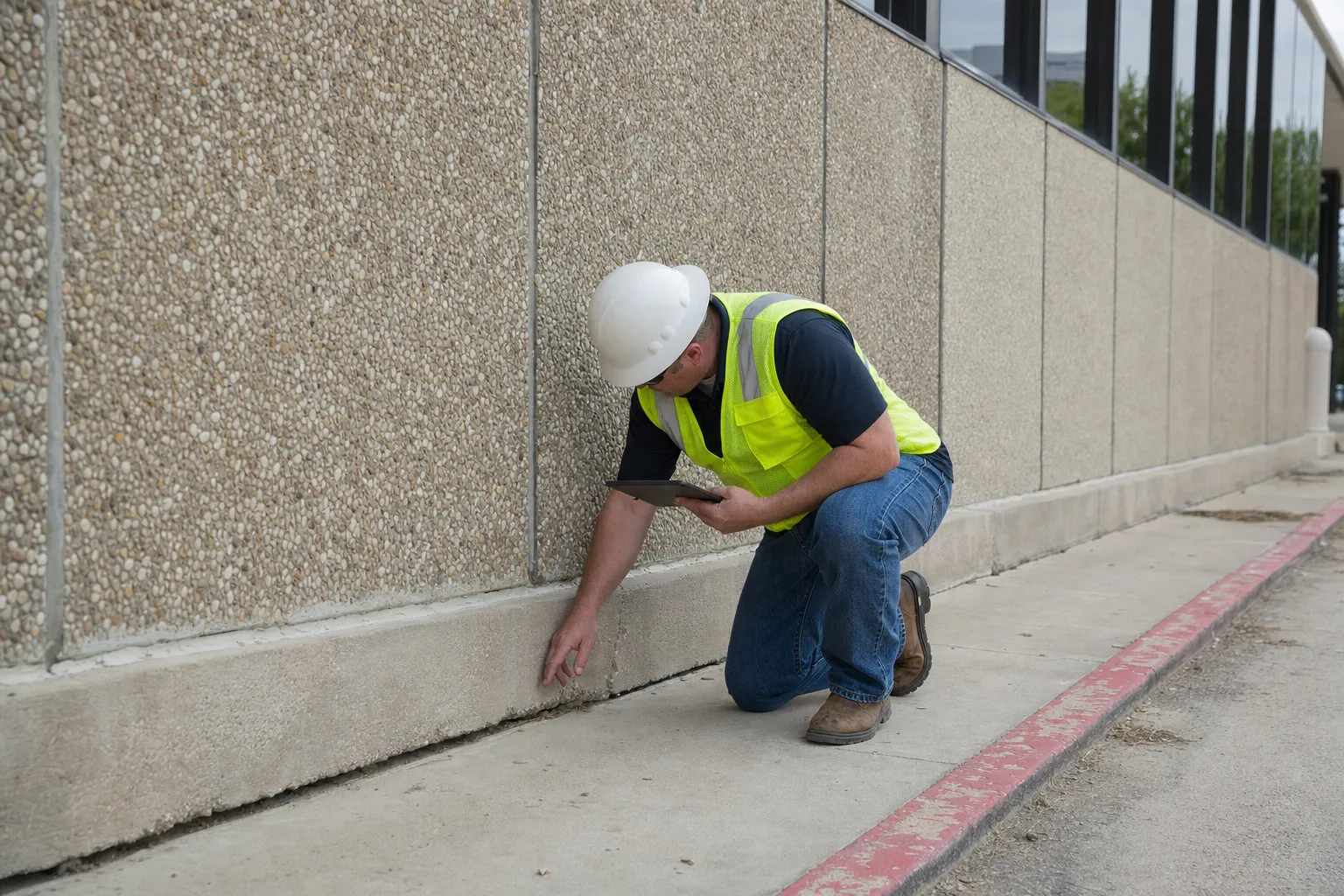
Most commercial foundation repairs in Austin take two to five days, depending on building size, soil conditions, and repair method. A smaller retail or office space with fewer pier locations typically wraps up in two days. A larger warehouse or multi-unit property with more pier points can take four to five days, or be phased across zones to keep part of the building operational during repair. Repair methods also affect the schedule: pressed steel pilings and pressed concrete pilings are driven section by section to refusal, which is methodical by design. Polyurethane foam injection allows same-day use after completion. We establish a clear timeline before any work starts, based on an engineer-reviewed repair plan and a no-pressure on-site assessment, so you can plan your business operations around it — not find out the week of.
What factors decide how long commercial foundation repair takes?
Timeline depends on four main factors: building footprint size, number of pier locations, repair method chosen, and site access conditions.
Building footprint size shapes pier count more directly than raw square footage. A 2,000 sq ft retail strip unit needs far fewer pier points than a 30,000 sq ft warehouse, and crew days scale accordingly. Repair method matters just as much. Pressed steel pilings and pressed concrete pilings require driving each section to refusal — thorough and methodical — while polyurethane foam injection cures the same day it's applied.
Site access introduces scheduling steps that can't always be anticipated from a distance. Underground utilities, slab obstructions, or occupied interiors that require tunneling all add coordination before and during the job. Austin and Pflugerville also sit on expansive Blackland Prairie clay (Vertisol series), and when that clay is severely dried from drought, crews must drive pilings deeper to reach stable soil. That adds time at each pier point regardless of how many piers the plan calls for.
Does the repair method change the timeline?
| Repair Method | Typical Duration per Pier Point | Same-Day Use After Completion? |
|---|---|---|
| Pressed steel pilings | Section-by-section to refusal; methodical pace | No — lifting and curing require time |
| Pressed concrete pilings | Hydraulically pressed to refusal; similar pace | No — sequenced lifting required |
| Polyurethane foam injection | Fast application per zone | Yes — area is usable immediately |
The method that fits your building depends on soil depth, load requirements, and what the engineer-reviewed plan specifies. Not on which option is fastest.
How long does steel pier installation take on a commercial building?
On a mid-size commercial building, steel pier installation using pressed steel pilings or hybrid steel piers typically takes two to three crew days.
Our hybrid steel pier system uses a two-stage design. A steel shaft is advanced through the active upper soils, then high-pressure-tested concrete cylinders are driven to refusal beneath the zone of seasonal movement. That process can't be rushed without compromising depth accuracy.
What does "driven to refusal" mean and why does it affect timeline?
"Driven to refusal" means the piling is advanced until the soil or bedrock below resists further penetration, confirming the pier has reached stable ground unaffected by seasonal clay movement. Each pier point must be individually advanced section by section until that resistance is confirmed.
Shortcuts here undermine long-term stability. A pier stopped short of refusal may perform well through one wet season and then shift during the next drought cycle. A 10-pier job and a 30-pier job on buildings of similar size can differ by a full crew day or more. That's why engineer-reviewed repair plans determine pier spacing before any crew mobilizes — that pre-work is what allows accurate timeline estimates rather than guesses.
How does building size affect the commercial foundation repair schedule?
Larger buildings require more pier locations, more crew movement, and more lifting cycles. Each of those adds measurable time to the schedule.
| Building Type | Typical Pier Count Range | Estimated Crew Days |
|---|---|---|
| Small retail or office (under 5,000 sq ft) | Low pier count, simple access | ~2 days |
| Mid-size commercial (5,000–20,000 sq ft) | Moderate pier count | 2–4 days |
| Large warehouse or multi-unit (20,000+ sq ft) | High pier count or phased zones | 4–5 days or multiple mobilizations |
Small retail or office spaces under 5,000 sq ft are often completable in two days when pier count is low and site access is straightforward. Mid-size commercial properties in the 5,000–20,000 sq ft range typically fall in the two-to-four day window, depending on pier spacing and whether interior tunneling is needed.
Large warehouses or multi-unit properties may require four to five crew days, or be scheduled in phases across multiple mobilizations if the building needs to stay partially operational. Some commercial clients in Austin choose to repair one wing or zone at a time to keep the rest of the building running. This extends total calendar days but reduces daily disruption to staff, tenants, and customers — and honestly, for the right property, it's the smarter call.
When interior pier points can't be reached from outside the building perimeter, tunneling beneath the slab is required. Tunneling is a planned step, not a surprise addition, and it has to be accounted for in the schedule from the start.
Can commercial foundation repair be scheduled around business hours?
In most cases, repair work can be scheduled to minimize disruption to daily business operations, including early-morning starts or phased zone work.
Pier work installed from outside the building perimeter using pressed steel pilings or pressed concrete pilings often causes less operational disruption than interior work and can frequently proceed without requiring full interior access. The specifics depend on the approved repair plan for your building.
Does foundation repair require the building to close?
Full closure is rarely required. Partial access restrictions are more common and are mapped out before work begins. When interior access points or tunneling are needed, a section of the interior must be cleared. Coordinating that clearance with a business's off-hours or low-traffic days is standard planning practice.
A pre-job site walkthrough with the property manager or owner identifies which areas need to be cleared and on which specific days. Any scheduling preferences — after-hours or weekend work, for example — should be raised during the initial assessment so they can be built into the plan, not tacked on once the crew is already on-site.
What happens before work starts that affects the overall timeline?
The pre-repair phase — including a free foundation assessment, engineer-reviewed plan, and permit coordination — typically adds days to the total calendar timeline. Those steps are what make the crew-day estimate accurate.
Here is the order those steps follow on every commercial project:
- Free foundation assessment — An inspector visits the property, walks through the findings with the owner or property manager, and documents what is observed. This is a no-pressure step, not a sales visit. No recommendation is made until the findings are reviewed.
- Engineer-reviewed repair plan — Pier spacing, depth targets, and lift sequencing are reviewed against current industry standards before any crew mobilizes. This review is what makes the timeline estimate reliable rather than approximate.
- Permitting — The City of Pflugerville and Travis County require permits for structural foundation repair in most cases. Unpermitted work can create title and resale complications, so this step isn't optional on permitted scopes of work.
- Utility locates — Underground utility marking is coordinated ahead of the scheduled start date and doesn't typically add crew days once the job begins.
- Crew mobilization — Once permitting and locates are confirmed, the crew mobilizes to the site with equipment and materials sized to the approved plan.
For a full overview of what this process looks like from assessment to completion, the commercial foundation repair in Austin page covers scope, methods, and what to expect at each stage.
How do Austin's clay soils affect commercial foundation repair timing?
Austin and the greater Central Texas metro sit on expansive Blackland Prairie clay, a Vertisol-series soil that swells when wet and shrinks when dry. That cycle directly influences how deep piers must be driven and how carefully lifting must be paced on any commercial job.
Does drought affect how long commercial foundation repair takes?
Yes. During severe drought cycles, clay soils dry well below their normal seasonal depth. Crews must drive pressed steel pilings or pressed concrete pilings further to reach stable soil that's unaffected by surface moisture swings. That added depth translates to more sections per pier point and more time per location.
Lifting pace matters just as much as drive depth. When clay beneath a large commercial slab is highly desiccated, the lift has to be done gradually to avoid creating uneven stress across the slab. Experienced crews account for soil conditions in the schedule and lift sequencing rather than discovering them after the fact — and we'd rather have that conversation upfront during the assessment than mid-job.
Pflugerville's rapid new construction in the early 2000s and again post-2015 placed many commercial slabs on minimally prepared clay pads. Buildings in those zones often show more widespread settlement, which typically means higher pier counts and longer crew timelines. Summer months from June through September see peak soil shrinkage across Central Texas — that's also when inquiry volume spikes. Soil moisture conditions at the time of repair are a real variable worth discussing during your initial assessment, so the timeline and lift plan reflect actual site conditions.
How do you know when a commercial foundation problem needs urgent attention?
Certain symptoms signal that a commercial foundation issue is progressing faster than normal and should be assessed promptly rather than held for a routine inspection cycle.
Rapid symptom progression is the clearest indicator. Sticking or racking door frames, diagonal drywall cracks at window and door corners, and visible floor slope that appeared or worsened within a single season all warrant prompt assessment. These are signs that differential settlement is active, not stable. Brick veneer stair-step cracking on commercial exteriors is a common visible indicator as well. The pattern of the cracking shows which side of the building is dropping and at roughly what rate.
A floor that slopes measurably toward an exit, or cracking that has reached structural columns or load-bearing walls, moves from a maintenance issue into something that warrants prompt professional evaluation. A free foundation assessment, with a no-pressure findings walkthrough, is the right first step before any repair timeline or scope can be estimated.
What to do next
Most commercial foundation repairs in Austin take two to five crew days. The exact timeline depends on building size, pier count, repair method, and site access. Pre-repair steps — the assessment, the engineer-reviewed plan, permitting, and utility locates — add calendar days, but they're what make that crew-day estimate accurate and reliable. We'd rather take the time to get the plan right than mobilize fast and find surprises on-site.
Austin's expansive clay soils and drought cycles are a real local variable. An honest timeline accounts for soil depth and lift pacing, not just pier count.
To get a clear timeline specific to your building, schedule a free, no-pressure foundation assessment. An inspector will walk the property with you, document the findings, and walk you through what the repair plan and schedule would look like — before any commitment is made.