

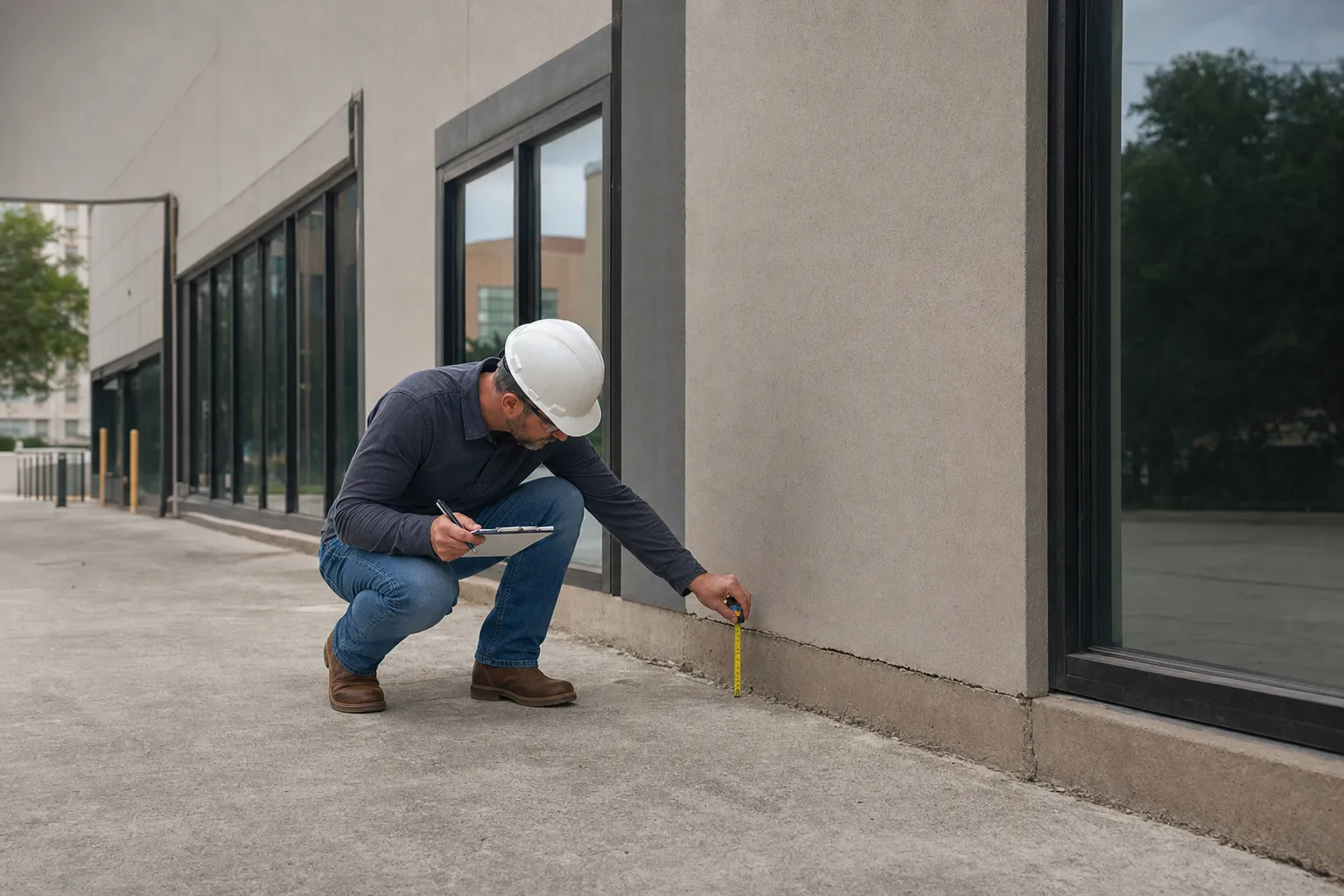
Yes — commercial foundation repairs in San Antonio require permits or engineering reports in nearly every case, and most projects require both. The City of San Antonio, which has adopted the International Building Code for commercial structures, treats foundation work on commercial buildings as a structural alteration — a classification that in most cases triggers a building permit requirement and engineer-stamped repair drawings before work begins. A licensed structural engineer assesses the specific site, identifies the cause of foundation movement, and produces a report that drives the repair design. This report also supports insurance documentation and protects the property owner legally. Residential repairs follow different rules and sometimes skip these steps, but commercial jobs cannot. Skipping the engineering report or permit can expose owners to serious complications including fines, insurance issues, and title problems.
What counts as a commercial foundation repair in San Antonio?
A commercial foundation repair is any structural intervention on a building used for business, multi-family housing, or mixed-use purposes — not a single-family home. The category covers everything from a retail strip center with a settling slab to a warehouse where pressed concrete pilings need replacement beneath a heavily loaded floor.
Scope matters when classifying the work. Cosmetic crack patching on a parking curb sits in a different category than installing hybrid steel piers beneath a restaurant or office building. San Antonio's Development Services Department classifies repair work by occupancy type and scope, so contractors should confirm that classification before starting any job.
Multi-family structures create a common point of confusion — and we see owners get this wrong more than almost anything else. A duplex, triplex, or apartment complex may look like a house but can fall under commercial building codes depending on occupancy classification, configuration, and the applicable local code adoption. That determination should be confirmed with the city or a licensed contractor before assuming residential rules apply.
Does occupancy type change the permit requirement?
Yes. Occupancy type is the clearest dividing line. Buildings governed by the International Building Code (IBC), which covers most commercial and multi-family occupancies, almost always require permits for foundation work. Projects under the International Residential Code — which generally applies to detached single-family homes and some two-family dwellings — follow a different, less document-intensive track and may involve different permit requirements depending on scope and local rules.
Confirming which code applies to a specific property is the first step before asking whether a permit or engineering report is needed. A licensed contractor familiar with San Antonio's Development Services process can make that determination quickly.
Why does San Antonio require permits for commercial foundation work?
San Antonio requires permits because structural foundation work affects public safety. A failed commercial foundation can injure employees, tenants, or visitors, and the City of San Antonio Development Services Department enforces the International Building Code for commercial structures. Foundation repairs fall squarely under structural alterations.
The permit process creates an official inspection record showing the work met code at the time of completion. That record carries real weight when disputes arise — and in our experience, disputes do arise, usually at the moment you least want them to. Four situations in particular show why.
First, liability. A permit and inspection record show the owner followed required procedures. Without that record, liability can shift toward the owner in any dispute involving structural performance. Second, insurance. Carriers may use permit records to verify that structural work was reviewed and inspected, and unpermitted repairs can give insurers grounds to scrutinize or deny claims tied to foundation failure. Third, financing. Commercial lenders often want documented proof that structural repairs met code, so a permit file satisfies that requirement during refinancing. Fourth, resale. When a future buyer, title company, or their attorneys review permit history during due diligence, permitted repairs support the sale while unpermitted work can raise red flags that delay or affect the deal entirely.
Without a permit, the city can issue stop-work orders, require demolition of completed work, or impose fines. That's not a theoretical risk — it's what happens.
What does a structural engineering report include for commercial foundation repairs?
A structural engineering report documents the site-specific soil conditions, foundation type, extent of damage, and the engineer's recommended repair method. It's not a generic template — it reflects what the engineer found at that specific address.
Engineers typically begin with a visual inspection of the structure, reviewing crack patterns, floor slope readings, door and window performance, and any visible distress in the foundation perimeter. When available, they review as-built drawings from original construction. On larger or more complex jobs, they may order soil borings or request a geotechnical investigation.
The report identifies the cause of movement, not just its symptoms. In San Antonio and the broader Central Texas region, expansive clay soils are the most common driver — and you'd be surprised how often a repair plan misses that entirely because nobody dug into the cause first. Poor drainage, erosion, overloading, and plumbing leaks are other causes the engineer rules in or out. Addressing the root cause is what separates a lasting repair from a repeated problem.
The design section specifies pier type, depth, spacing, and load requirements tailored to that structure. For a commercial building, that might mean concrete underpinning at engineered depths or a hybrid steel pier system driven to refusal beneath the active soil zone.
Is a geotechnical report the same as a structural engineering report?
No. These are two related but separate documents. A geotechnical report analyzes the soil: boring logs, soil classification, moisture content, and bearing capacity at depth. A structural engineering report uses that soil data — along with building loads and observed damage — to design the actual repair system. Some commercial projects require both; others rely on existing geotechnical data if the site has been previously tested. The structural engineer determines which additional studies are needed.
Once complete and engineer-stamped, the structural engineering report supports the permit application, satisfies insurer documentation requirements, and provides a defensible record if the repair method is ever challenged.
How does commercial foundation repair permitting differ from residential permitting?
Commercial foundation repairs almost always require a permit and engineer-stamped drawings. Residential repairs in San Antonio may follow a different, less document-intensive process depending on scope, occupancy type, and the applicable code. We hear from commercial property investors all the time who expect the process to mirror what they went through on a home repair — those are two very different jobs.
Commercial jobs are governed by the IBC rather than the IRC. The IBC sets stricter documentation and inspection thresholds. A commercial permit application typically requires engineer-stamped repair drawings, a site plan, and proof of contractor licensing. The residential process generally asks for less, though owners should always confirm current local requirements with the city before assuming no permit is needed.
The differences between these two processes are covered in more detail on our commercial foundation repair in San Antonio page, which walks through common questions commercial property owners raise before starting a project.
This distinction matters most to property managers and commercial investors who oversee both residential and commercial assets. The permit and engineering requirements aren't interchangeable — and finding that out during a refinance or a sale is a hard way to learn it.
What happens if you skip the engineering report or permit on a commercial job?
Skipping the engineering report or permit on a commercial foundation repair can trigger stop-work orders, fines, and forced removal of the completed repair. The consequences reach further than most owners expect at the time the decision is made.
The City of San Antonio can halt work mid-project and issue monetary penalties once an inspector identifies unpermitted structural activity on a commercial property. Carriers may scrutinize or deny a foundation-related claim if unpermitted structural work is discovered during the claims process, even if the unpermitted repair happened years before the claim. Title companies may flag unpermitted structural work during commercial real estate transactions, delaying closing or affecting the sale price. Tenants or employees injured because of a foundation defect may have stronger legal standing against an owner who bypassed required inspections, since the absence of a permit removes a documented layer of due diligence. And lenders refinancing a commercial property may require proof that structural repairs were permitted and inspected — without that documentation, loan approval can stall until the issue is resolved, which may mean opening the work up again for retroactive inspection.
Each of these outcomes carries a cost that exceeds the permit fee and engineering report many times over. We'd rather you hear that now than find it out mid-transaction.
Who is responsible for pulling the permit — the owner or the contractor?
In San Antonio, the licensed contractor typically pulls the building permit on behalf of the property owner, though the owner is ultimately responsible for ensuring that permit exists before work begins. Responsibility for the permit doesn't disappear just because the contractor handles the paperwork.
A qualified commercial foundation contractor treats permit application as a necessary step in the project timeline — not an afterthought. If a contractor asks the property owner to pull their own permit on a commercial structural job, that warrants careful scrutiny. Structural foundation work on a commercial building requires the involvement of a properly licensed party.
What licenses should a commercial foundation contractor hold in Texas?
In Texas, commercial contractor licensing requirements are primarily enforced at the local municipality level rather than through a single statewide general contractor license. Contractors should carry general liability insurance and workers' compensation coverage, and should be prepared to demonstrate compliance with local licensing rules enforced by the City of San Antonio or applicable jurisdiction. Engineer-reviewed repair plans are a standard minimum expectation on any commercial project. Property owners should request proof of licensing and insurance before signing any contract for commercial foundation work — every time, without exception.
After the job closes, owners should request a copy of the issued permit and keep it with property records permanently. That document becomes part of the building's history and will be requested during future sales, refinancing, or insurance reviews.
How should a commercial property owner prepare before the engineering report?
Before the structural engineer arrives, the property owner should gather original building plans, any previous inspection reports, and a written record of observed symptoms. Having this material ready shortens the engineer's review time and produces a more accurate report.
Document visible signs before the visit. Sticking doors, diagonal cracks at window corners, floor slope, and separation at expansion joints are all meaningful data points. Photograph each symptom and note the approximate date it first appeared. That timeline helps the engineer distinguish active movement from old, stable damage — and how the engineer reads that distinction shapes how the repair gets designed.
Notify tenants in affected areas so the engineer has full access to all spaces. Mechanical rooms, utility corridors, storage areas — all of these provide clues about where foundation movement is occurring and how far it extends. Disclose any known drainage problems, past plumbing leaks, or soil disturbance near the foundation perimeter. These details directly affect the engineer's diagnosis of the cause. Withholding them doesn't help the process and can result in a repair plan that misses the underlying driver.
Ask the engineer to confirm whether the written report will be in a format accepted by the City of San Antonio permit office. Not all engineering reports are formatted for permit submission, and learning that after the report is drafted adds delay.
A free, no-pressure foundation assessment from a qualified contractor whose repair plans are engineer-reviewed can help frame the scope and severity before the formal engineering engagement begins. That initial walkthrough often clarifies which spaces to prioritize and what documentation to have ready.
Next step for commercial property owners in San Antonio
Commercial foundation repairs in San Antonio require both a structural engineering report and a city permit in most cases. This is a regulatory requirement, and no amount of contractor confidence makes it optional.
Bypassing either requirement creates real exposure — legal, insurance, and resale problems that don't show up the day the repair is done. They show up during the next transaction or claim, when fixing the gap costs far more than doing it right the first time.
The practical first step is scheduling a no-pressure foundation assessment with a contractor whose repair plans are engineer-reviewed. That conversation clarifies the scope, identifies what the engineer will need, and gives you a clear picture before committing to a formal engineering engagement. A documented, permitted repair protects the building and the asset value of the property — and it gives future tenants, lenders, and buyers a straightforward answer when they ask exactly the questions this article covers.