
Crawl Space Support Posts · Pflugerville, TX

Crawl Space Support Posts in PflugervilleFix Sagging Floors the Right Way

Bouncy floors, gaps where the baseboard meets the floor, and doors that stick often mean support posts under a pier and beam home have shifted or rotted. None of this means panic. It means it's time to look under the house.

Warning signs

Signs Your Floor Is Telling You Something Is Wrong

Bouncy floors, gaps where the baseboard meets the floor, and doors that stick often mean support posts under a pier and beam home have shifted or rotted. These are signs to address before they worsen.

How do you know it's a crawl space issue and not just an old house settling? Walk slowly across the living room. If you feel any bounce or give near the middle of the room, that usually means a post has lost contact with the beam above it, or it's sitting on a footing that has shifted.

If you suspect structural masonry work or pier settlement, working with an experienced local masonry contractor can help keep your foundation intact.

Doors and windows tell a story too. A door that used to close fine but now sticks, or a window that won't slide shut, indicates movement. It's not always dramatic, sometimes it's a quarter inch.

  • Sloping or bouncy floors, especially near the center of the home or over a room addition
  • Visible gaps between the floor and baseboard trim
  • Cracks in interior sheetrock near doorways or ceiling corners
  • Doors or windows that stick, drag, or won't latch
  • A musty smell or standing water when you look under the house

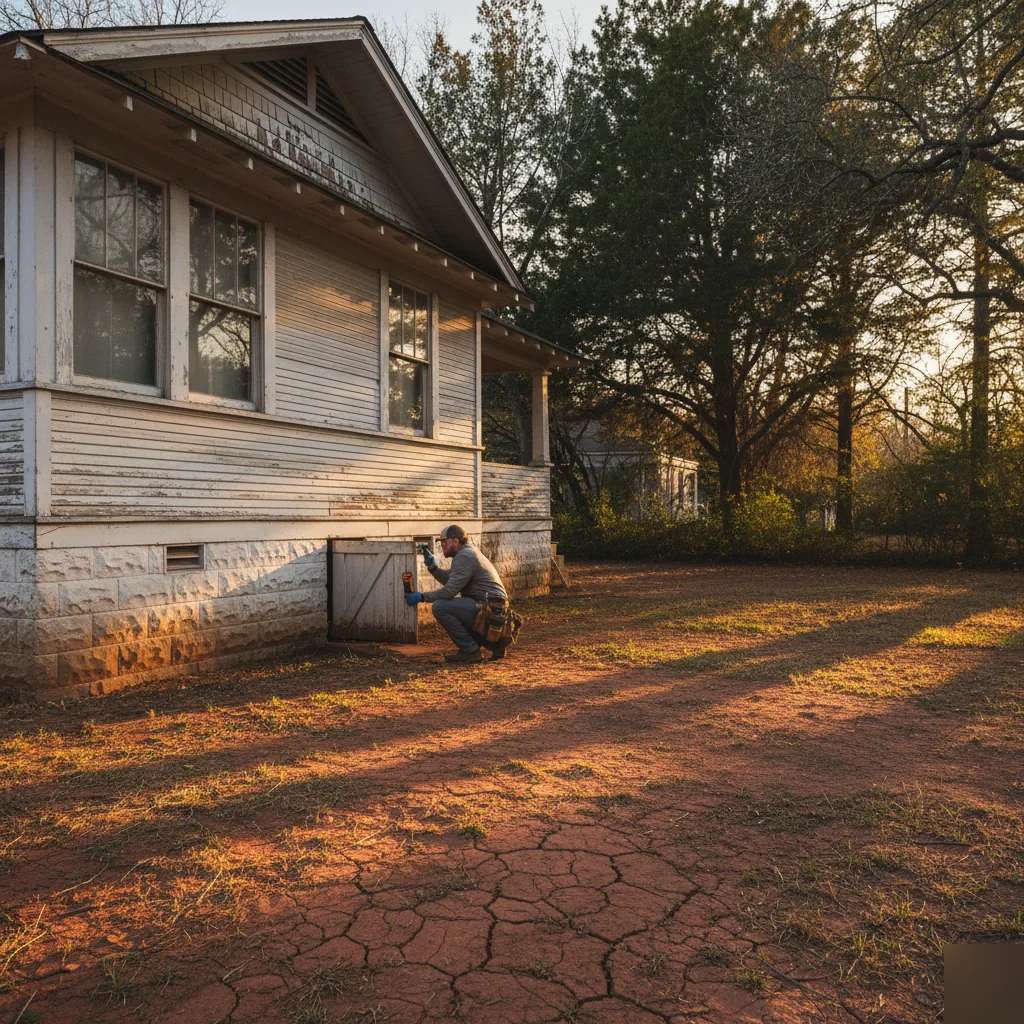
We see this often around Pflugerville, especially in older pier and beam homes near the original town center where wood posts and shims have been in place for decades. Central Texas clay soil expands when wet and shrinks during drought. That constant movement is hard on wood posts sitting on small footings. Most of the time it's a post that's rotted at the base, or one that never had a proper footing.

None of this means panic. It means it's time to look under the house.
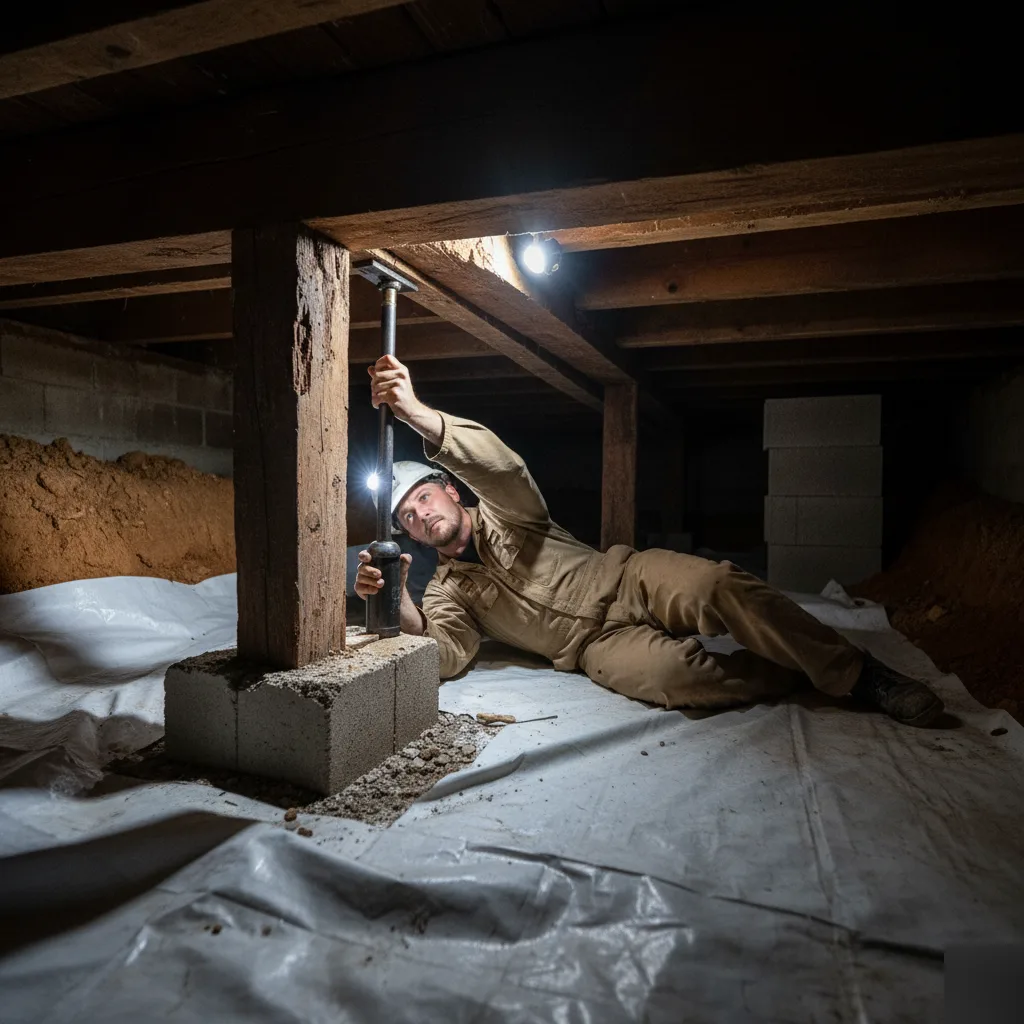
Technician repairing a crawl space support post beneath a pier and beam home
Temporary vs permanent

Jack Posts Versus Permanent Support Post Installation

We often see a homeowner pick up an adjustable jack post from a hardware store, set it under a sagging beam, and think the problem is solved. It's not. Jack posts sit on a small base plate, usually resting on dirt or a thin paver. In Pflugerville's clay soil, that base plate sinks over time. A post that was holding your floor level in June can be a half-inch low by winter.

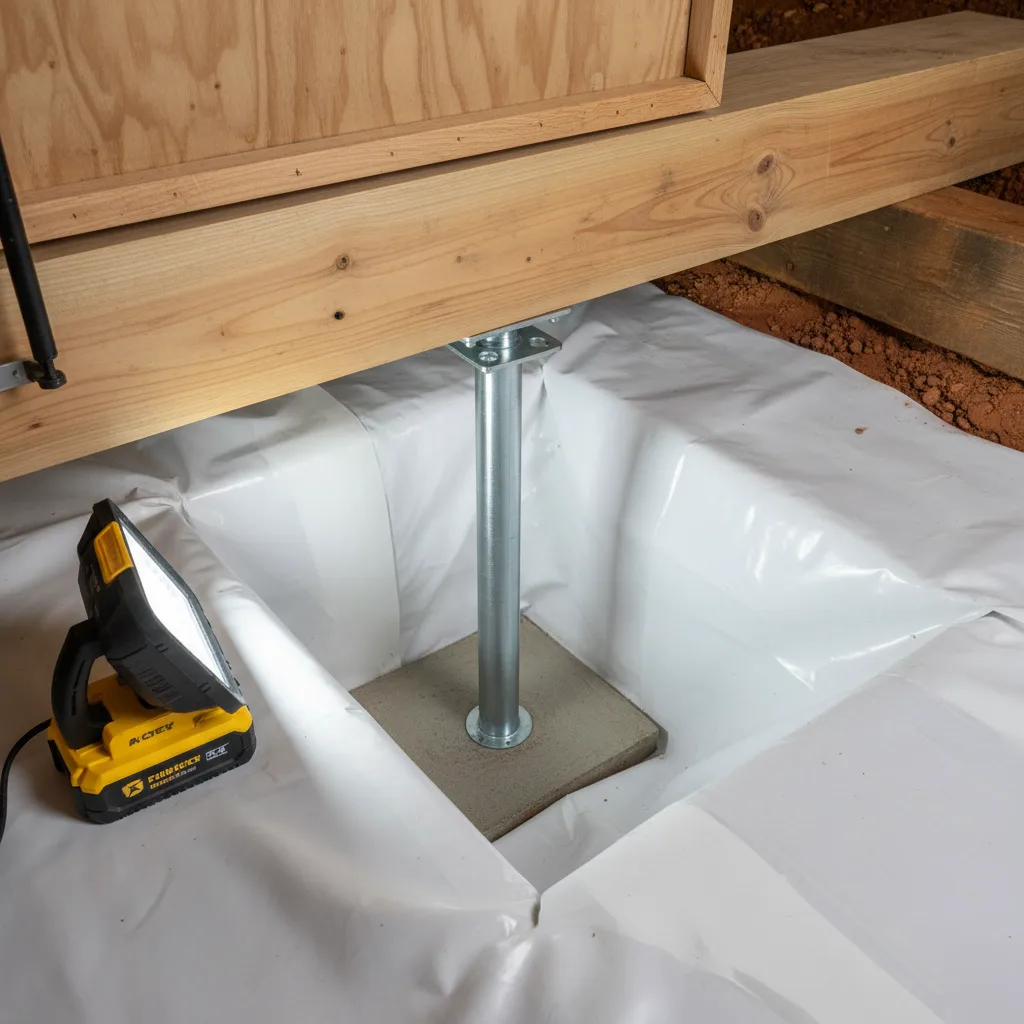
Permanent crawl space support posts work differently. We set them on a poured concrete footing that goes below the frost and moisture swing zone. The post has something stable to push against. The post itself is rated to carry the load year-round.

  • Jack posts rest on soil or a thin pad, permanent posts sit on a poured footing
  • Jack posts need rechecking and reshimming, permanent posts are set once and hold
  • Jack posts are a stopgap for a specific spot, permanent posts are sized to the actual load
  • Jack posts can tip or lean if bumped, permanent posts are anchored top and bottom

We're not knocking jack posts entirely. They have a place, mostly as a short-term brace while you're waiting on a real repair. But we've been called to homes where a jack post had been the 'fix' for three or four years. The beam above it had bowed even more because the post never stopped the settling. It just slowed it down.

If your floor sags in the same spot every season, that's a foundation problem asking for a permanent answer.

Before you worry

When a Sagging Floor Does Not Mean You Need New Posts

Not every sagging floor means your posts are failing. We get this call a lot. Somebody feels a soft spot near the kitchen, or a floor that bounces a little when walking across it. They immediately think the crawl space needs all new support.

Sometimes that is true. Many times it is not.

A bouncy floor can come from an undersized joist, a beam that was never sized right for the span, or subflooring that has weakened from moisture. None of that gets fixed by adding posts. If the wood itself is the problem, more support under a weak beam just holds up a weak beam. That is why we look at the whole picture before recommending anything. We check joist condition, beam size, and post spacing together, not just eyeballing the posts themselves.

Here is another one we see often around Pflugerville. A homeowner in an older pier and beam home near the Old Town area notices a dip in the floor after a wet spring. Often it is a moisture issue in the crawl space, not a post problem at all. Central Texas clay soil swells when it gets saturated, and that can shift a floor's feel without a single post failing.

How do you tell the difference? If the sag is isolated to one small area and the wood underneath still feels solid, you're probably dealing with a moisture or framing issue, not a support problem. If posts are leaning, sitting on cracked pads, or you can see visible gaps where they no longer touch the beam, that is a different story. Not sure which one you're looking at? That's one of the most common questions we answer during a crawl space inspection.

The root cause

Why Central Texas Clay Soil Keeps Support Posts Moving

Pflugerville soil does not sit still. Most of the ground under pier and beam homes in this area is expansive clay. It swells when it rains and shrinks during a dry Texas summer. That constant push and pull is why crawl space support posts sink, tilt, or lose contact with the beam above them.

A post resting on a paver or a chunk of concrete has nothing holding it steady when the soil underneath shifts. We see this often in homes built decades ago, with posts set straight on grade, no real footing, no way to handle Central Texas soil movement.

Drought years make it worse. When the clay dries out and pulls away from a post base, the post loses support and the beam above it starts to sag. Then the rain returns, the clay swells, and the post gets pushed sideways or tilted. Often it's the same pattern: dry season damage that shows up once the wet season hits.

Poor drainage around the foundation speeds this up. Downspouts dumping water right next to the crawl space, low spots that pond after a storm, gutters that overflow - all of it feeds extra moisture straight to the soil holding up your posts.

This is why a repair plan has to start with what's happening below the post, not just replacing the wood you can see. Our team looks at the soil, the drainage, and the load path before deciding if a post needs a proper footing, a shim, or a different kind of support.

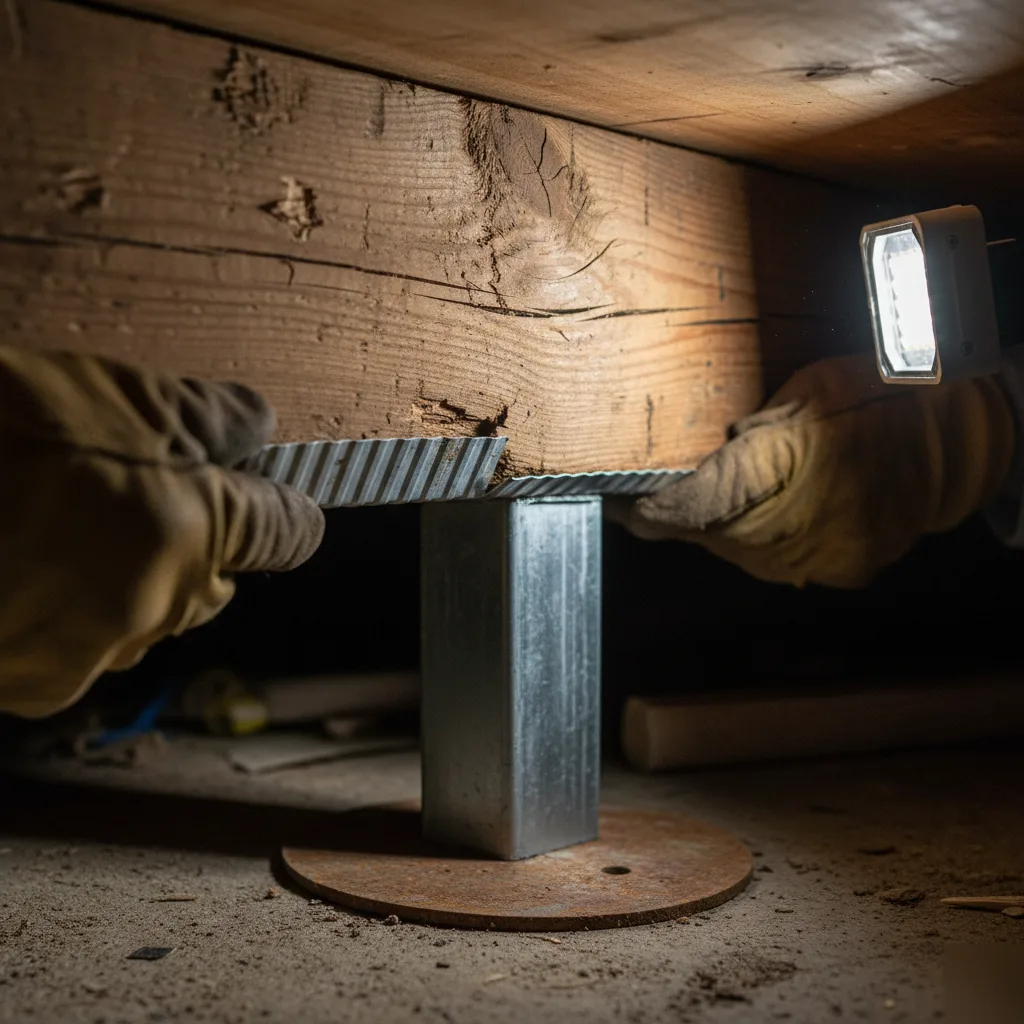
Shim installation on a steel post cap beneath a floor beam
The process

How the Inspection and Installation Process Works

What happens once you call us out? It's not complicated, but it takes a trained eye. Many older pier and beam homes around Pflugerville were built with wood posts sitting directly on soil or undersized concrete pads. Over time those posts sink, rot, or were not sized right.

  1. 1

    We go under the house and check every post, beam, and pier for sagging, rot, or gaps where a post has pulled away from the beam.

  2. 2

    We measure floor elevations from inside the house to see how much the structure has dropped in each area.

  3. 3

    We check the soil and drainage conditions under the crawl space. Standing water or loose fill soil is often why posts failed.

  4. 4

    We map out where new steel or concrete support posts need to go, based on the load points and the beam layout.

  5. 5

    We set new posts and pads or footings at each spot, sized to carry the load properly.

  6. 6

    We lift the affected framing as much as the structure will reasonably allow, checking as we go to avoid overcorrection.

  7. 7

    We double check everything is snug and stable before we close things back up.

That last step matters more than people think. We've seen homes where the old posts were not even touching the beam anymore, just wedged in there. Once we get proper posts in with correct footings, the sagging stops and doors that were sticking start working right again.

We'll also flag if we see moisture or drainage issues while we're under there. Central Texas clay soil moves a lot between our dry summers and heavy spring rains. That movement often caused the original posts to fail.

Frequently asked questions

Crawl space support posts in Pflugerville, answered

How do I know if my sagging floor needs a support post repair?

Walk slowly across your living room and feel for bounce near the center of the room. That usually means a post has lost contact with the beam above it. Look for gaps between the floor and baseboard, sticking doors, or cracks near doorways. If the sag is only in one small spot and the wood feels solid, it might be a moisture issue instead. A crawl space inspection can tell you which one you have.

What's the difference between a jack post and a permanent support post?

Jack posts sit on soil or a thin pad and can sink over time, especially in Pflugerville's clay soil. Permanent support posts sit on a poured concrete footing below the moisture swing zone, so they have something stable to push against. A jack post that held your floor level in June can be a half-inch low by winter. Jack posts work fine as a short-term brace, but they aren't a lasting fix for a settling foundation.

Why do support posts keep moving in Pflugerville homes?

Central Texas clay soil swells when it rains and shrinks during dry summers, and that constant movement pushes and pulls on posts sitting without a proper footing. This is common in older pier and beam homes near the original Pflugerville town center, where wood posts were set straight on grade decades ago. Drought years dry out the clay and pull it away from the post base, then rain swells it back and shifts the post sideways.

Does a bouncy floor always mean I need new crawl space posts?

No, not always. A bouncy floor can come from an undersized joist, a beam that was never sized right, or weakened subflooring from moisture, none of which get fixed by adding posts. We check joist condition, beam size, and post spacing together before recommending anything. If posts are leaning or sitting on cracked pads with visible gaps at the beam, that's usually a real support issue worth fixing.

What happens when you come out to inspect a crawl space in Pflugerville?

We look at the whole picture under your house, not just the posts. That means checking joist condition, beam size, post spacing, and signs of moisture or standing water. We walk the crawl space to spot leaning posts, cracked pads, or gaps where a post no longer touches the beam. This tells us whether you're dealing with a post problem, a framing issue, or a drainage problem before we recommend any repair.

Can poor drainage around my house make crawl space post problems worse?

Yes, downspouts dumping water next to the crawl space, low spots that pond after storms, and overflowing gutters all speed up soil movement around your posts. That extra moisture makes Central Texas clay soil swell more and push against post footings. Fixing drainage around your foundation helps protect a post repair long term, since standing water under the house is a common cause of repeat sagging even after posts are replaced.

Floor sags in the same spot every season?

That's a foundation problem asking for a permanent answer. We check joist condition, beam size, and post spacing together, then set posts on proper footings sized to carry the load. Call Bats Foundation Repair for a free crawl space inspection.