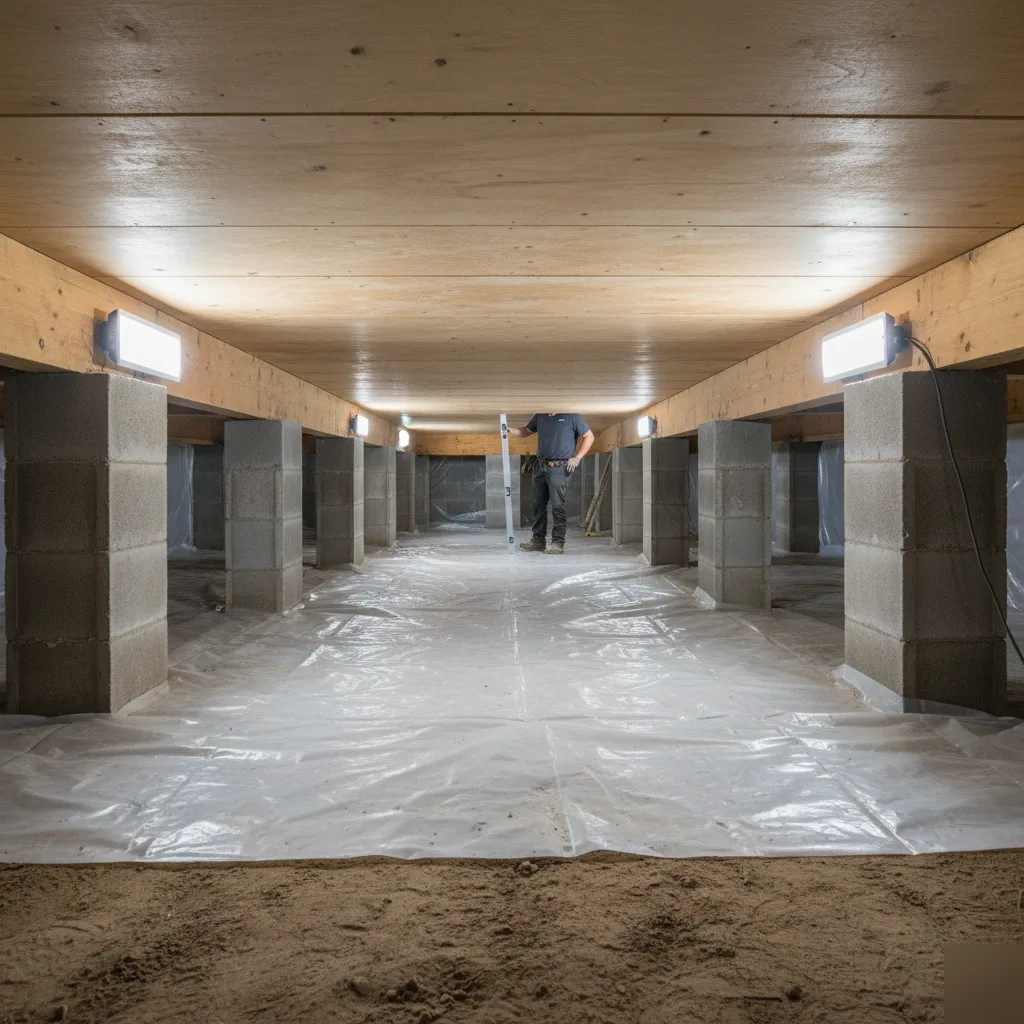

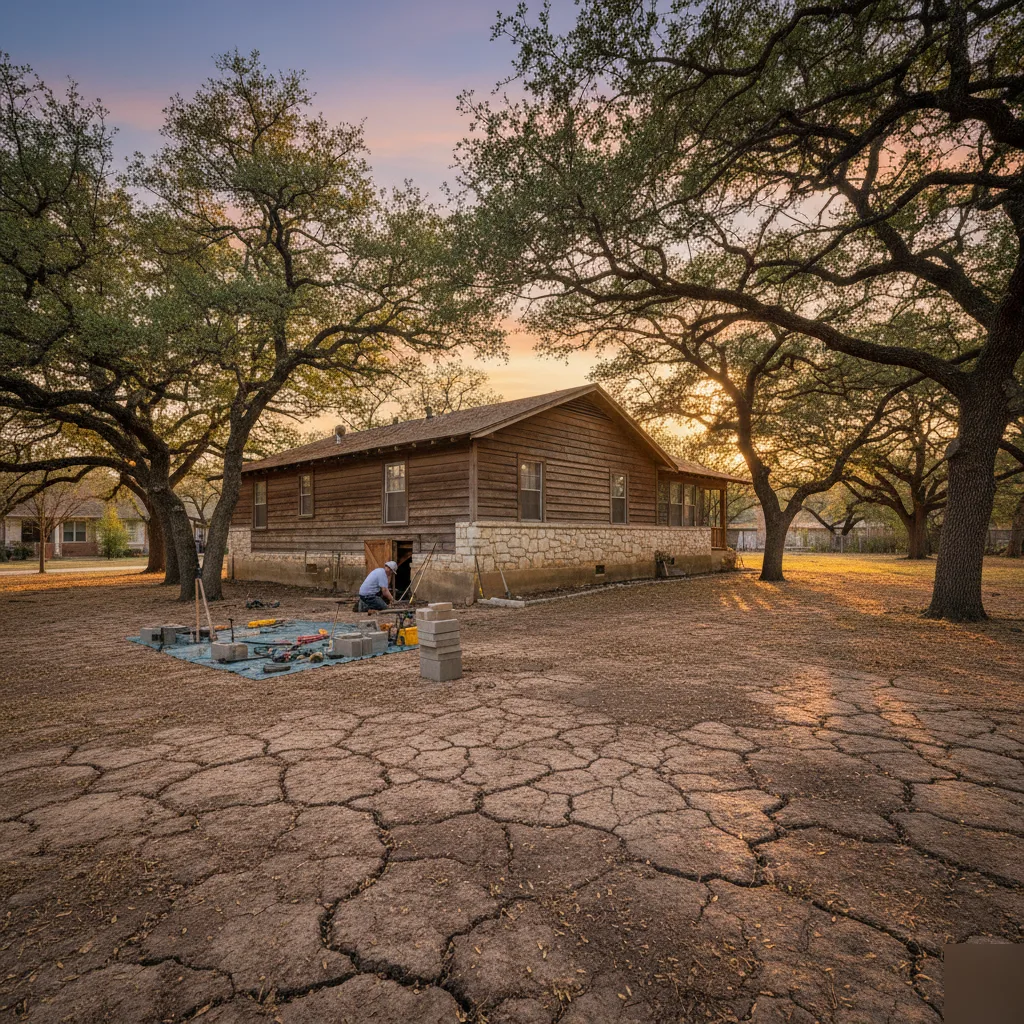
Block and Base Foundation Repair · Pflugerville, TX

Block and Base Foundation Repair in PflugervilleFix Sinking Piers Before They Spread

Sagging floors, sticking doors, and gaps around baseboards usually mean the concrete blocks under your pier and beam home have shifted or sunk. These signs show up slow, then all at once, and they rarely fix themselves.

Warning signs

Signs Your Block and Base Piers Are Failing

Sagging floors, sticking doors, and gaps around baseboards usually mean the concrete blocks under your pier and beam home have shifted or sunk. These signs show up slow, then all at once, and they rarely fix themselves. Consulting an expert masonry contractor can help address these structural issues early.

Block and base piers sit on the surface. They're not driven deep like steel piers, so when the soil underneath moves, the blocks move with it. That's the tradeoff. Most of the time, when we get called out for a pier and beam home, the homeowner noticed something small first. A door that used to close fine. A floor that feels a little bouncy near the kitchen.

  • Floors that slope or feel spongy when you walk across a room
  • Doors and windows that stick or won't latch like they used to
  • Visible gaps between the wall and the baseboard, especially in corners
  • Cracks in interior sheetrock near door frames or ceiling corners
  • Blocks you can see under the house that look tilted, cracked, or crumbling
  • Wood beams that look damp, soft, or shifted off the block entirely

Crawl under most Pflugerville pier and beam homes and you'll find a mix of original blocks and old repairs stacked over the years. Some of those older setups just weren't built to handle the clay soil movement we get through hot Central Texas summers followed by heavy fall rain. The blocks weren't stacked wrong, the ground just moved more than they could handle.

Not every crack means trouble. Hairline cracks that don't grow are common in any home. But a crack that's widening, or a floor that's noticeably lower than it was last year, that's worth a look before it gets worse.
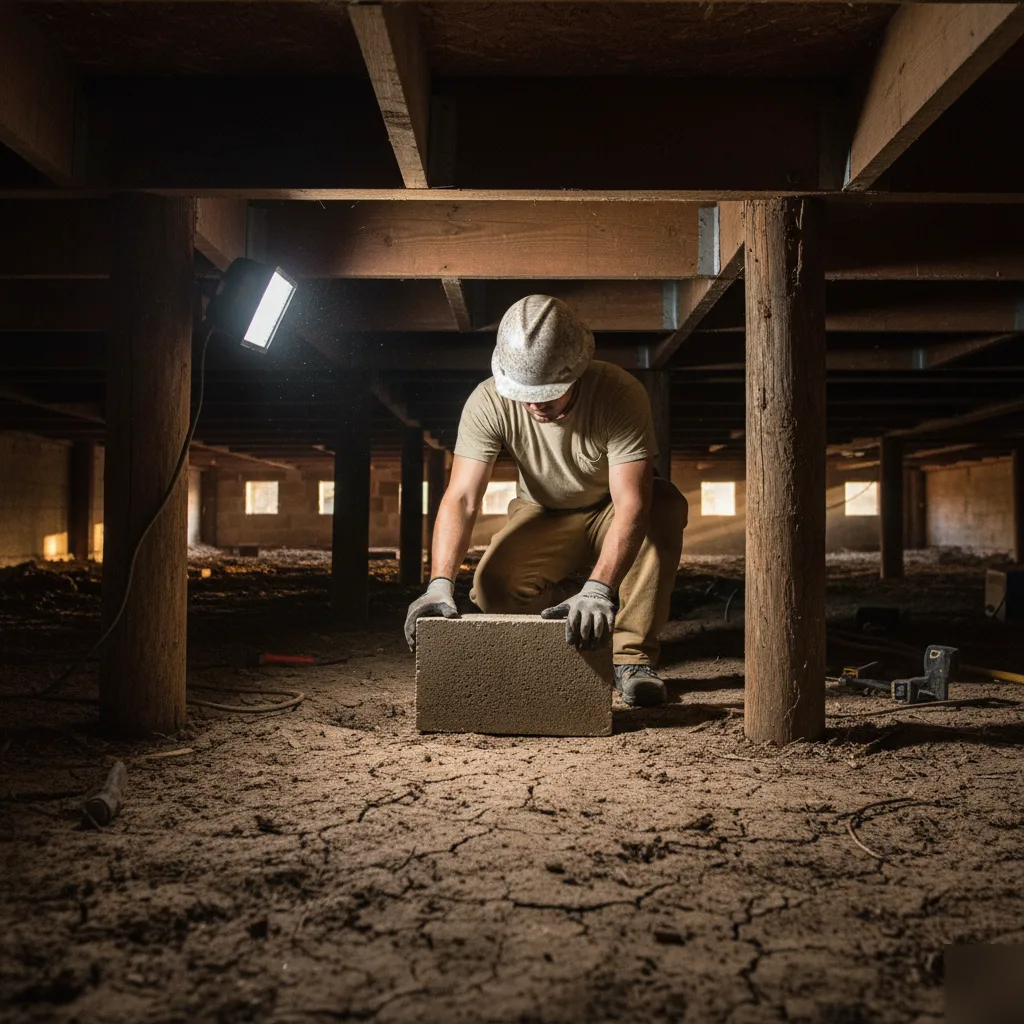
Technician checking block and base piers inside a crawl space
The root cause

Why Central Texas Clay Soil Stresses Pier-and-Beam Homes

Here's the thing about Pflugerville soil, it doesn't sit still. Most of the ground under older homes here is expansive clay, and that clay swells when it's wet and shrinks hard when it's dry. Under a pier-and-beam house, that movement happens unevenly. One corner of the crawl space might sit on soil that's holding moisture, while thirty feet away the ground has pulled back from a dry summer. The blocks and piers under your home don't move together. They move separately, at their own pace, based on whatever the soil under each one is doing.

We see this every single week.

Pflugerville sits on soil that shifts more than folks expect, especially after the kind of dry stretch Central Texas gets most summers followed by heavy fall rain. That swing pulls moisture out of the clay fast, then floods it back in. Concrete blocks stacked without a footing can tilt or sink when that happens. Wood posts can rot at the base if drainage runs the wrong direction under the house. And once one pier settles even an inch, the framing above it has to compensate, which is usually when you start noticing the sticky door or the crack over the window.

Most of the time, it's not the whole house failing. It's a handful of support points that lost their footing to soil movement, and the rest of the structure is just reacting to it.

Not sure if what you're seeing is soil-related or something else? That's a fair question, and it's pretty common. Drainage, plumbing leaks, and original construction shortcuts can all mimic the same symptoms. That's exactly why a real inspection matters more than guessing from the symptoms alone.

Before you worry

When a Crack Is Cosmetic, Not a Foundation Emergency

Not every crack means trouble. Most of the time, a hairline crack in drywall or a small gap along a baseboard is just the house settling the way houses do. Wood shrinks. Paint flexes. Central Texas homes move a little every season as the clay soil underneath swells and dries out.

So how do you tell the difference? Cosmetic cracks are usually thin, straight, and stay the same size year after year. They show up in drywall corners, above doorways, or where two materials meet. They don't grow. They don't come with sticking doors or sloped floors. That's a normal house doing normal house things.

  • Hairline cracks under 1/16 inch in interior drywall, especially near corners or ceiling seams
  • Small gaps in caulk lines around windows or trim that don't reappear after you fill them
  • Thin vertical cracks in a garage floor slab with no step or offset
  • Minor stucco cracks that follow paint lines and stay hairline thin

Now, the ones that worry us are different. Stair-step cracks in brick or block, cracks wider than a quarter inch, cracks that run diagonally from a window or door corner, these tell a different story. And if a crack is growing month to month, that's not cosmetic anymore, that's your foundation talking to you.

Look, we'd rather tell you a crack is nothing than talk you into work you don't need. If you're not sure, snap a photo, mark the ends with a pencil, and check it again in a few weeks. If it hasn't moved, you probably caught yourself some peace of mind for free.

The process

What Happens During a Block and Base Repair

So what does the actual work look like? Most pier and beam homes in Pflugerville sit on a mix of concrete blocks and wood posts that were set decades ago, before anyone thought much about expansive clay. Over time those blocks tilt, sink, or just crack under the load. Our crew starts by getting under the house and checking every pier point, not just the ones near the visible problem.

  1. 1

    We crawl the space and mark every block, post, and beam that's out of level, using a laser or manual level to get exact readings.

  2. 2

    We identify which points need a full pier replacement versus a simple reshim or pad repair.

  3. 3

    Where soil has washed out or settled deep, we install new support, sometimes a concrete pad and block, sometimes a deeper pier system, depending on what the soil under that spot can hold.

  4. 4

    We lift each point slowly, checking the house's reaction as we go. Old framing can only take so much movement before something else cracks.

  5. 5

    We reset beams and joists on solid new supports, replacing any wood that's rotted or termite damaged along the way.

  6. 6

    We do a final level check across the whole crawl space before closing it out.

Most of the time, the low spot you noticed in the kitchen isn't the only one down there. We see this every single week, one soft floor leads to two or three more support points that need attention once we're under the house.

Most jobs run one to a few days depending on how many points need work and how easy the crawl space is to access. Tight spaces under additions or old porches take longer. Your yard and flower beds stay mostly untouched since this work happens from underneath, not through your foundation walls.

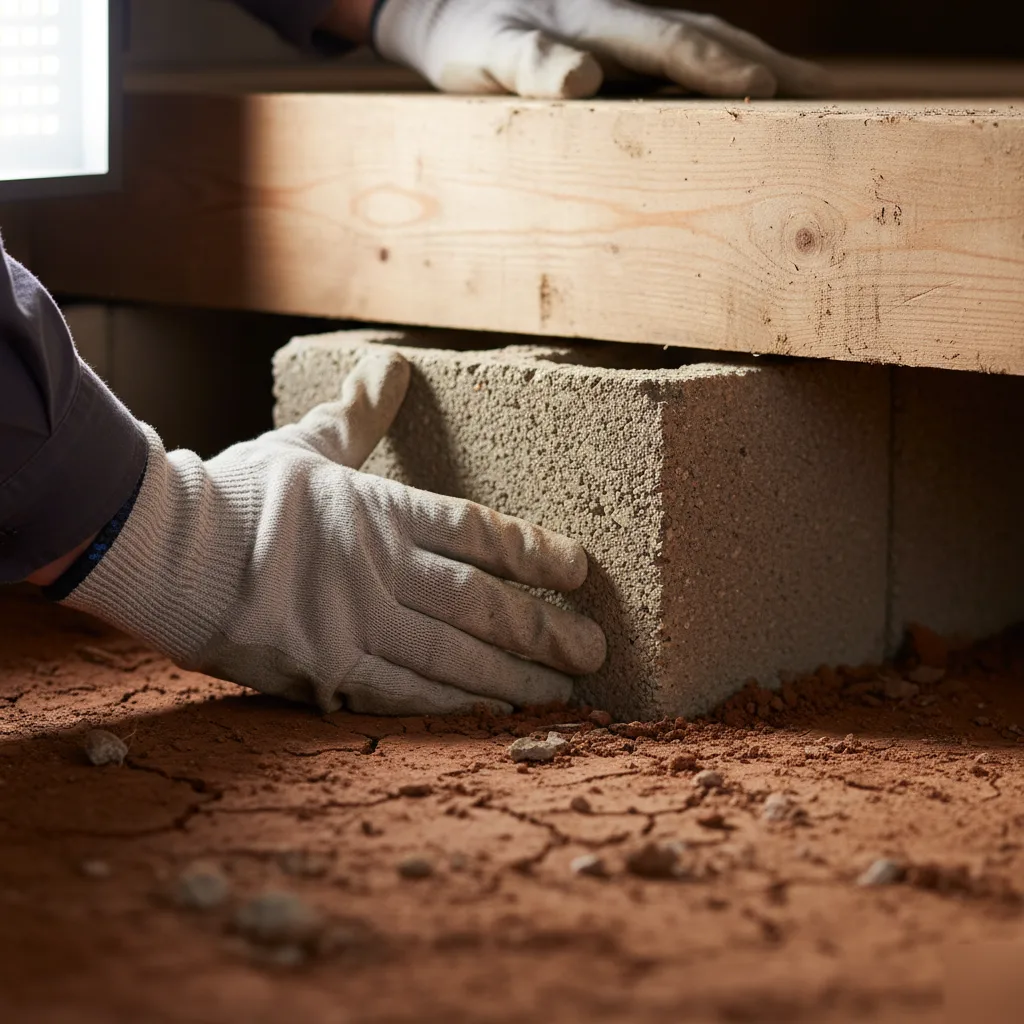
Concrete block being placed under a beam during block and base foundation repair
Pricing

How Foundation Repair Pricing Works and What Drives Cost

Here's the honest answer: no two block and base repairs cost the same. Most of the time, the price comes down to how many pier and base support points a home needs. A small settled corner might need a handful. A home with wider settlement, maybe under a whole wing, needs a lot more.

So what moves the number up or down? A few things, mostly tied to what's happening under the house and how hard it is to get to.

  • Number of piers or blocks needed to stabilize the settled area
  • Crawl space height and access, tight spaces take more labor time
  • Depth needed to reach stable soil beneath the home
  • Whether joists or beams also need repair or replacement
  • Site conditions like slope, plumbing lines, or landscaping in the way

Homes on pier and beam foundations built decades ago often have low crawl spaces. That alone can change labor time more than the repair itself does. And access matters just as much as depth - a crew that has to crawl on their stomachs works slower than one standing in a tall crawl space.

Before you hire anyone, ask what's included in the number they give you. Does it cover base preparation, shimming, and a walk-through after the work's done? Does the quote change if they find more damage once they're under the house? A clear answer to those questions tells you a lot about who you're hiring.

We don't quote a price over the phone, and we won't pretend we can. Every home settles differently, so every plan looks a little different too. What we can tell you is this: get eyes under the house before you get a number in your hand.

Frequently asked questions

Block and base repair in Pflugerville, answered

How do I know if my Pflugerville home needs block and base foundation repair?

You'll usually notice sloping floors, sticking doors, or gaps forming around your baseboards first. These signs show up slowly, then seem to appear all at once. Pflugerville pier and beam homes often sit on decades-old concrete blocks that weren't built for our clay soil. If a crack keeps growing or a floor feels lower than last year, it's worth having someone crawl under the house and check every pier point before the problem spreads.

Can I tell the difference between a cosmetic crack and a real foundation problem myself?

Yes, in many cases you can. Cosmetic cracks are usually thin, straight, and stay the same size over time, often near drywall corners or above doorways. Cracks that worry us run diagonally, step through brick or block, or grow wider than a quarter inch. Mark the ends with a pencil and check back in a few weeks. If it hasn't moved, you likely don't have an active foundation issue.

Why does Pflugerville clay soil cause so much foundation movement?

Pflugerville sits on expansive clay that swells when wet and shrinks hard during dry stretches. That uneven movement means one corner of your crawl space can be settling while another thirty feet away is pulling back from dry soil. Concrete blocks without a proper footing tilt or sink under that pressure. It's rarely the whole house failing at once, just a few support points losing their footing to soil movement.

What happens when a crew comes out to look at my block and base piers?

The crew crawls the entire space and checks every pier point, not just the spot where you noticed a problem. They use a laser or manual level to mark exact readings on every block, post, and beam that's out of level. From there, they decide which points need a full pier replacement and which just need a reshim or pad repair. This full check matters because one sunken pier often affects framing elsewhere.

Could my sticking doors or sloped floors be caused by something other than the foundation?

Yes, drainage issues, plumbing leaks, and old construction shortcuts can all cause the same symptoms as foundation settling. That's a fair question, and one we hear a lot. Guessing from symptoms alone can send you chasing the wrong fix. A real inspection under the house, checking blocks, posts, and beams directly, tells you whether soil movement is really behind what you're seeing.

Do wood posts under my pier and beam home rot, or is it just the concrete blocks that fail?

Both can fail, and they often fail for different reasons. Concrete blocks stacked without a footing tend to tilt or sink as clay soil shifts underneath them. Wood posts, on the other hand, can rot at the base when drainage runs the wrong direction under the house. If you spot damp or soft wood on a post, or blocks that look cracked or crumbling, either one is worth having checked before it spreads to the framing above.

Get eyes under the house before you get a number

We don't quote a price over the phone, and we won't pretend we can. Every home settles differently, so every plan looks a little different too. Call Bats Foundation Repair for a free crawl space inspection.