
House Raising & Lifting · Austin, TX

House Raising & Lifting in Austin

Need house raising or lifting in Austin? Bats Foundation Repair diagnoses, plans, and lifts homes safely. Trusted local experts. Call to schedule your assessment.

Bats Foundation Repair is the trusted foundation and structural construction company Austin TX for residential homes in Central Texas.

Signs you need a raise

Signs Your Home Needs a Full Structural Raise

Most folks don't wake up one morning and think, "I need my house raised." Something specific pushes them to call. We hear the same stories every week from homeowners across Austin, and the signs are pretty hard to miss once you know what to look for.

The biggest one? Repeated flooding. If your home sits in a low-lying area near Onion Creek or Shoal Creek and you've dealt with water damage more than once, house raising / lifting might be the real fix. Sandbags and sump pumps only go so far. Raising the structure to a safer elevation solves the root problem instead of treating symptoms over and over.

But flooding isn't the only reason. Here are the signs we see most often when a home actually needs to be raised rather than just leveled or repaired:

  • Your home sits below the current base flood elevation set by your local floodplain maps
  • You've noticed the crawl space stays wet or standing water collects under the structure regularly
  • Foundation damage keeps coming back after previous repairs because the home's elevation is the core issue
  • You're planning a major renovation and your permit requires bringing the structure up to current code height
  • Soil erosion around the foundation has exposed footings or piers that should be underground

In most cases, the homeowner has already tried a smaller fix first. They've had piers installed. They've waterproofed. They've regraded the yard. And the problems keep returning. That's the pattern that tells us the structure itself needs to come up.

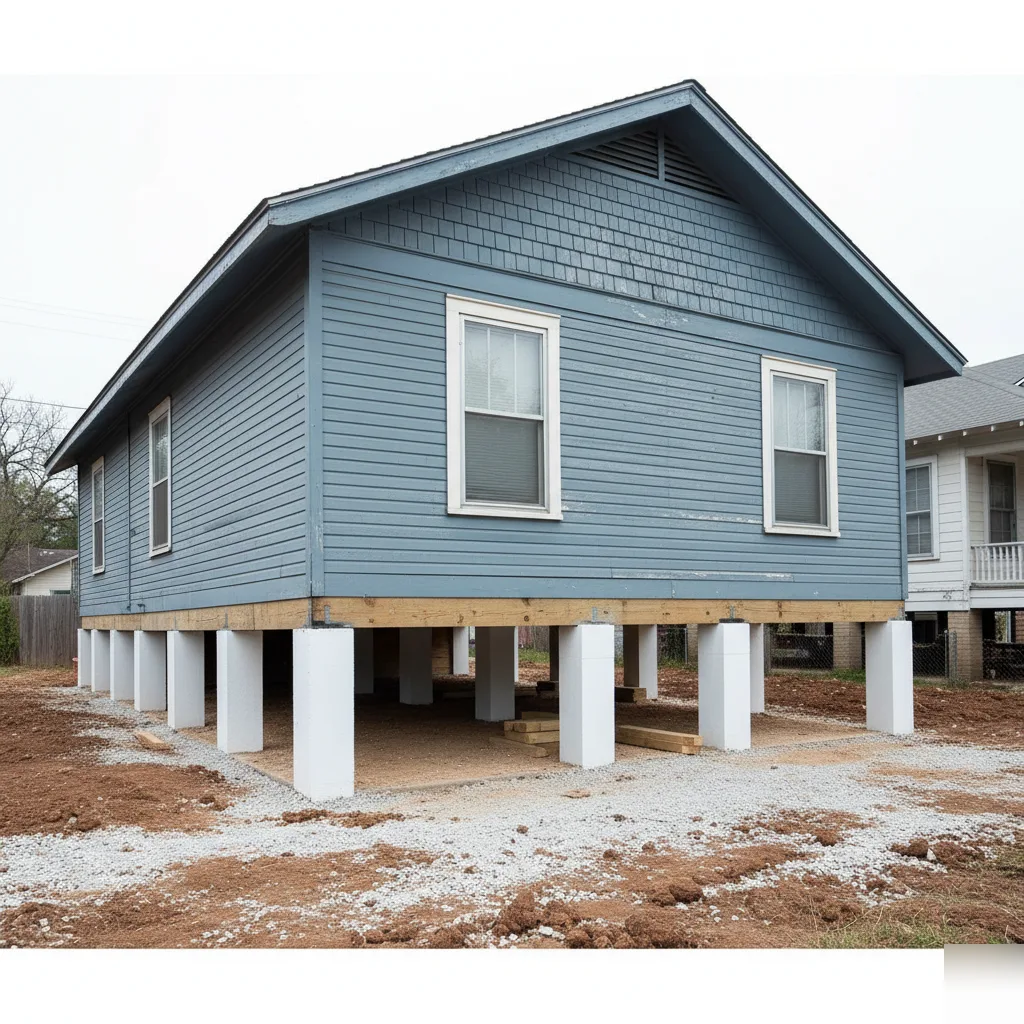
There's another scenario we run into a lot in Austin. Older pier and beam homes in neighborhoods like Bouldin Creek sometimes sit too close to grade. The crawl space is barely accessible, wood members stay damp, and rot starts creeping in. Raising the home creates the clearance needed to protect those beams and joists long term.

Not sure if what you're seeing points to a raise or something else? That's actually pretty common. A structural evaluation can sort it out fast. The key is catching these signs early before water damage or settling compounds the problem.

How it works

How House Raising Works on Pier and Beam Homes

Most of the house raising / lifting jobs we do in Austin involve pier and beam foundations. That's not a coincidence. Pier and beam homes already sit above the ground on a system of supports, so they're built in a way that makes lifting possible without tearing everything apart.

Here's the thing most folks don't realize. Your pier and beam home has a crawl space underneath it. That crawl space gives our crew direct access to the structural beams and joists that hold your floor system up. We don't have to cut through concrete or tunnel under a slab. We go right in.

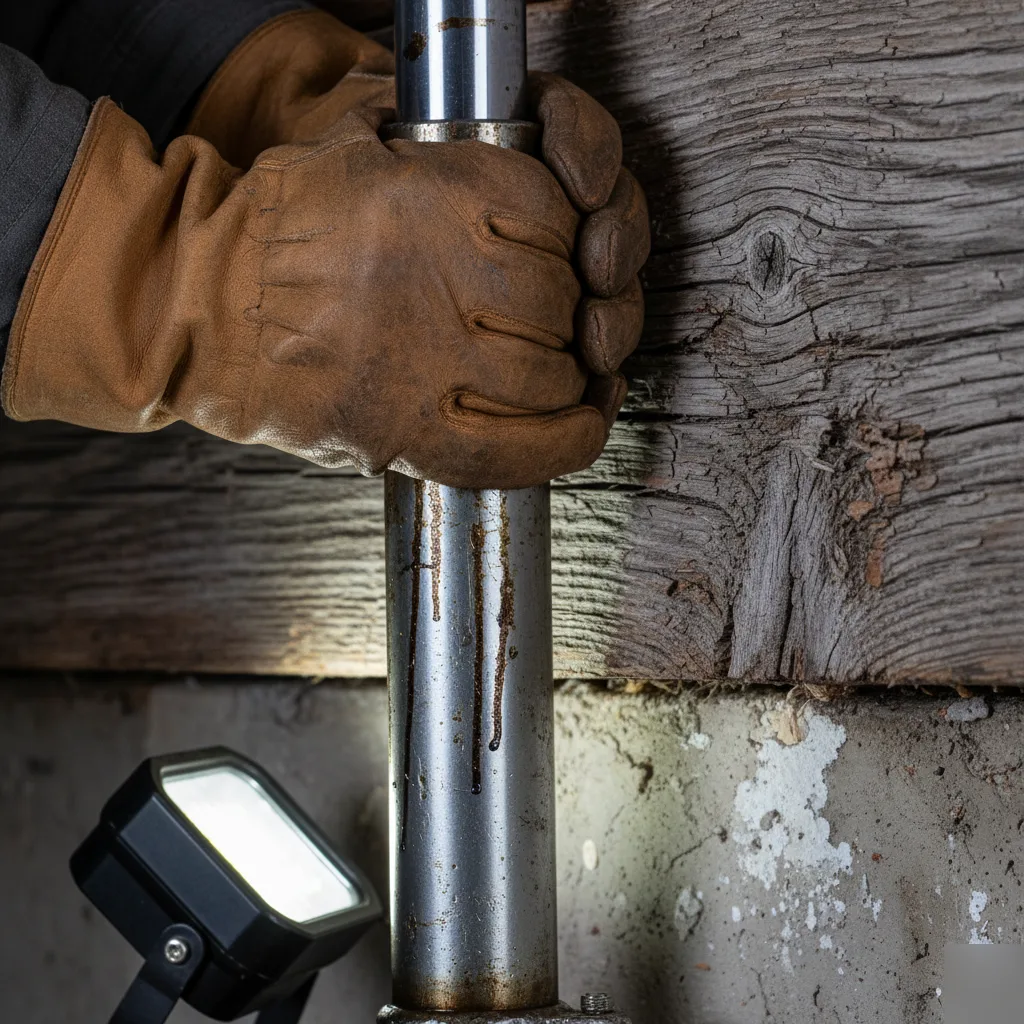
Hydraulic jack lifting at the sill plate of a pier and beam home in Austin

The process follows a clear sequence:

  1. 1

    We inspect the crawl space to map out every pier, beam, and support post. We're looking at wood condition, soil movement, and how far things have shifted.

  2. 2

    Hydraulic jacks get placed at key points along the beams. We lift slowly, sometimes just fractions of an inch at a time, to avoid cracking walls or stressing the frame.

  3. 3

    Once the structure reaches the target elevation, we install new support posts, replace damaged beams, or add crawl space support posts where the old ones failed.

  4. 4

    We verify the elevation across the entire footprint before locking everything in place.

Older homes in neighborhoods like Bouldin Creek and Travis Heights tend to need this work more than newer builds. Decades of Central Texas clay expanding and contracting will shift piers and rot wooden supports.

And here's something people ask about a lot. House raising on a pier and beam home isn't the same as house leveling. Leveling corrects uneven settling, bringing your floors back to flat. Raising physically lifts the entire structure higher. Sometimes you need both. Sometimes just one. A proper inspection tells us exactly which approach fits your situation.

But the real advantage of pier and beam? Your home was designed to be accessed from below. That makes the whole process faster and less disruptive than most people expect.

Flood zone compliance

Flood Zone Compliance and the Elevation Certificate

Here's something we deal with on almost every house raising job in Austin. The elevation certificate. It's a document that proves your home meets or exceeds the required flood elevation for your zone. Without it, you can't close out permits, you can't get affordable flood insurance, and in some cases you can't sell your home.

FEMA flood maps determine which properties fall inside a Special Flood Hazard Area. Austin has plenty of them, especially near Onion Creek, Shoal Creek, and areas around the Barton Creek watershed. If your home sits in one of these zones, your insurance premiums are tied directly to how high your lowest livable floor sits relative to the base flood elevation. Every inch matters. Literally.

What the Certificate Actually Shows

An elevation certificate isn't something we issue ourselves. A licensed surveyor or engineer prepares it after house raising / lifting is complete. The document records several key data points:

  • The elevation of your lowest floor compared to the base flood elevation
  • Whether your structure has a basement or enclosure below the raised level
  • The flood zone designation for your specific property
  • The building's exact location using GPS coordinates

We coordinate with the surveyor so the certificate reflects the new elevation accurately. One wrong measurement can delay your permit closeout or inflate your insurance rate. We've seen it happen, and it's not a fun phone call to make.

What most folks don't realize: raising your home even two feet above the flood threshold can cut your annual flood insurance premium by thousands. Elevating a structure in a high-risk flood zone is one of the most cost-effective mitigation measures a homeowner can take.

Our team handles the permitting side with the City of Austin's Development Services Department — we know what inspectors want to see and the documentation timeline. So you're not stuck chasing paperwork while your house sits on cribbing.

Not sure if your property falls in a flood zone? Give us a call and we'll help you figure it out before you spend a dime.

Permits

Austin Permits and What the City Requires Before Work Starts

Here's something folks don't always think about until we bring it up. House raising / lifting in Austin requires permits. No way around it. The City of Austin's Development Services Department treats structural elevation as a major alteration, so you'll need approvals before a single jack touches your home.

We handle the permit process for our customers because it can get confusing fast. The requirements depend on your property's location, your flood zone designation, and how much you're raising the structure. Homes in FEMA-designated floodplains along Onion Creek or Shoal Creek have extra layers of review. That's not a surprise to us, we work in those areas regularly.

What Austin Typically Requires

Every project is a little different, but here's what you can expect the city to ask for:

  • A structural engineering report showing the planned elevation and load calculations
  • A building permit application with detailed site plans
  • Floodplain development permit if your property sits in a mapped flood zone
  • Utility disconnect and reconnect coordination for gas, water, and electric
  • Inspections at key stages before, during, and after the lift

Homes raised well above the flood threshold can see flood insurance premiums drop significantly. That matters to homeowners in East Austin and other flood-prone neighborhoods.

One thing we see trip people up is the timeline. Permit review in Austin isn't always quick. Some applications move through in a couple of weeks. Others take longer if there's a zoning overlay or historic district review involved. Properties in older parts of town sometimes trigger additional review steps.

We submit permit packages that are complete the first time, which cuts down on back-and-forth with the city. Our team works with licensed structural engineers who know exactly what Austin reviewers want to see. That saves you weeks of delays.

Bottom line: permits aren't optional, and cutting corners on paperwork puts your entire project at risk. We take care of it so you don't have to.

Timing the lift

Timing Your Lift Around Central Texas Soil Conditions

Central Texas clay doesn't care about your schedule. It swells when it's wet and shrinks when it's dry, and that cycle puts real pressure on every decision we make about when to lift a house in Austin.

We get asked all the time: "Is there a best season for house raising / lifting?" It depends on what the soil's doing right now under your property. But there are patterns we've learned to work with after years of doing this in neighborhoods like East Riverside and Windsor Park.

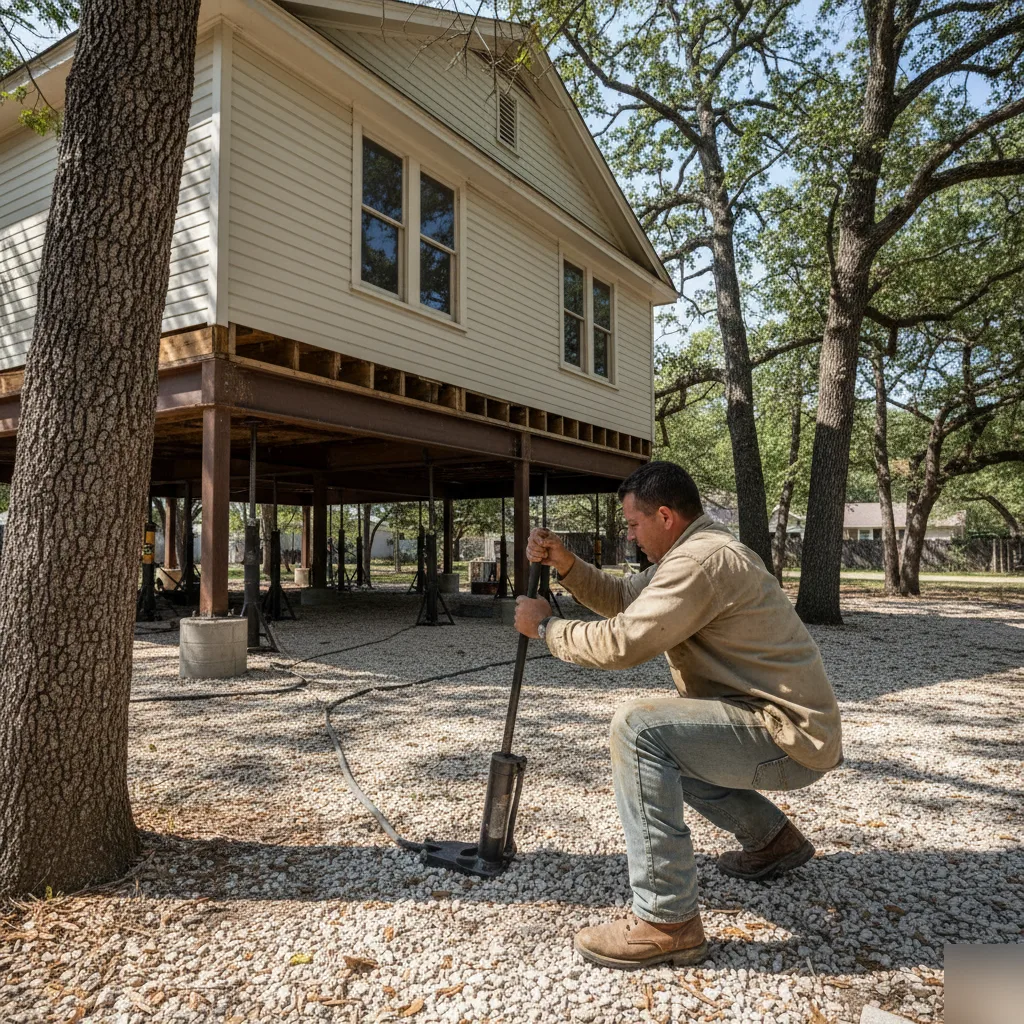
Elevation review of a raised East Austin home shaded by live oaks

What the Soil Does and Why It Matters

Austin sits on expansive clay, the kind that can move inches between a wet spring and a dry August. When we're lifting a structure, we need the ground beneath our equipment to be stable enough to support the load. Too much moisture makes things unpredictable. Extreme drought creates deep cracks that change how weight transfers through the soil.

Here's what we watch for before scheduling a lift:

  • Recent rainfall totals and how saturated the ground is around your foundation
  • Drought conditions that may have caused the soil to pull away from footings
  • Seasonal temperature swings that speed up or slow down soil movement
  • Grading and drainage patterns specific to your lot

Fall and early spring tend to give us the most cooperative conditions in Austin. The soil's had time to settle after summer heat, and moisture levels are usually moderate. That said, we've done lifts in July and January. It just takes more planning.

The biggest factor isn't the calendar. It's what your property looks like right now. A home near Onion Creek with poor drainage after spring rains is a different job than a raised pier and beam house on a well-graded lot in Allandale. We assess the soil conditions on your specific site before we commit to a timeline. That's not us being cautious for the sake of it. It's how you avoid problems mid-lift that cost real money to fix.

So don't wait for perfect weather. Call us for a free estimate and we'll tell you exactly what the ground under your house is doing today.

Frequently asked questions

House raising & lifting in Austin, answered

How do I know if my Austin home needs to be raised or just leveled?

If your floors are uneven, you likely need leveling. If water keeps getting in, you probably need raising. Leveling corrects settling and brings floors back to flat. Raising physically lifts the entire structure to a safer elevation. Homes near Onion Creek or Shoal Creek that have flooded more than once are strong candidates for a full raise. A structural evaluation will tell you exactly which approach fits your situation — and it saves you from paying for the wrong fix.

What is an elevation certificate and do I need one after house raising in Austin?

Yes, you will need an elevation certificate after house raising in Austin. It is a document prepared by a licensed surveyor that proves your home meets the required flood elevation for your zone. Without it, you cannot close out your permits or qualify for affordable flood insurance. Austin has many Special Flood Hazard Areas near Onion Creek, Shoal Creek, and the Barton Creek watershed. Getting this document right matters — even one wrong measurement can delay your permit or raise your insurance rate.

How long does the house raising process take from start to finish?

Most pier and beam house raising jobs in Austin take one to several days for the actual lift, depending on the size of the home and how much structural work is needed. After the lift, permit inspections and the elevation certificate survey add more time before everything is officially closed out. Homes with significant beam rot or damaged piers — common in older neighborhoods like Bouldin Creek and Travis Heights — may need additional repair work that extends the timeline. Plan for the full process to take a few weeks from start to permit closeout.

Can I stay in my home while it is being raised?

In most cases, you will need to stay elsewhere during the active lifting phase. Utilities are typically disconnected temporarily, and the structure is not stable enough for occupancy while jacks are in place. Once the home is set at the new elevation and supports are secured, you can usually return fairly quickly. Your crew will give you a clear timeline before work begins so you can make arrangements. Most Austin homeowners find the disruption is shorter than they expected.

Will raising my home actually lower my flood insurance premium in Austin?

Yes, raising your home above the base flood elevation can significantly reduce your flood insurance costs. FEMA ties premiums directly to how high your lowest livable floor sits relative to the base flood elevation — every inch counts. For homes in high-risk Austin flood zones, even a two-foot raise can cut annual premiums by thousands of dollars. The elevation certificate your surveyor prepares after the lift is what your insurance company uses to recalculate your rate, so accuracy on that document is critical.

Why do older pier and beam homes in Austin need raising more often than newer builds?

Older pier and beam homes were often built closer to grade than current code requires. Decades of Central Texas clay soil expanding and contracting shifts piers and keeps crawl spaces damp. That moisture leads to wood rot in beams and joists over time. Neighborhoods like Bouldin Creek have many homes built this way. Raising the structure creates proper crawl space clearance, protects the wood framing from ongoing moisture damage, and brings the home in line with current elevation requirements — all at once.

Not sure if a raise is what your home needs?

Call us for a free estimate and we'll tell you what the ground under your house is doing today — and whether raising is the right fix.