
Signs Your Elevated Home Is Settling
Elevated homes show settling through uneven floors, sticking doors, and gaps around trim. You won't see slab cracks. If you can see daylight under a pier or a joist has pulled away from a beam, get an inspection from a trusted construction company.
Slab homes crack. Elevated homes show movement differently. The signs appear in the crawl space and in how the floor feels. We often get calls where someone says the floor near the kitchen has a soft dip. Or a door in the back bedroom won't latch. This often means one or more piers have shifted, and the beam above it dropped.
- Floors that feel bouncy, sloped, or dip in one spot when you walk across a room
- Doors and windows that stick, drag, or won't latch as they used to
- Visible gaps between the floor and baseboards, or trim pulling away from walls
- Cracks in interior sheetrock, especially near door frames and ceiling corners
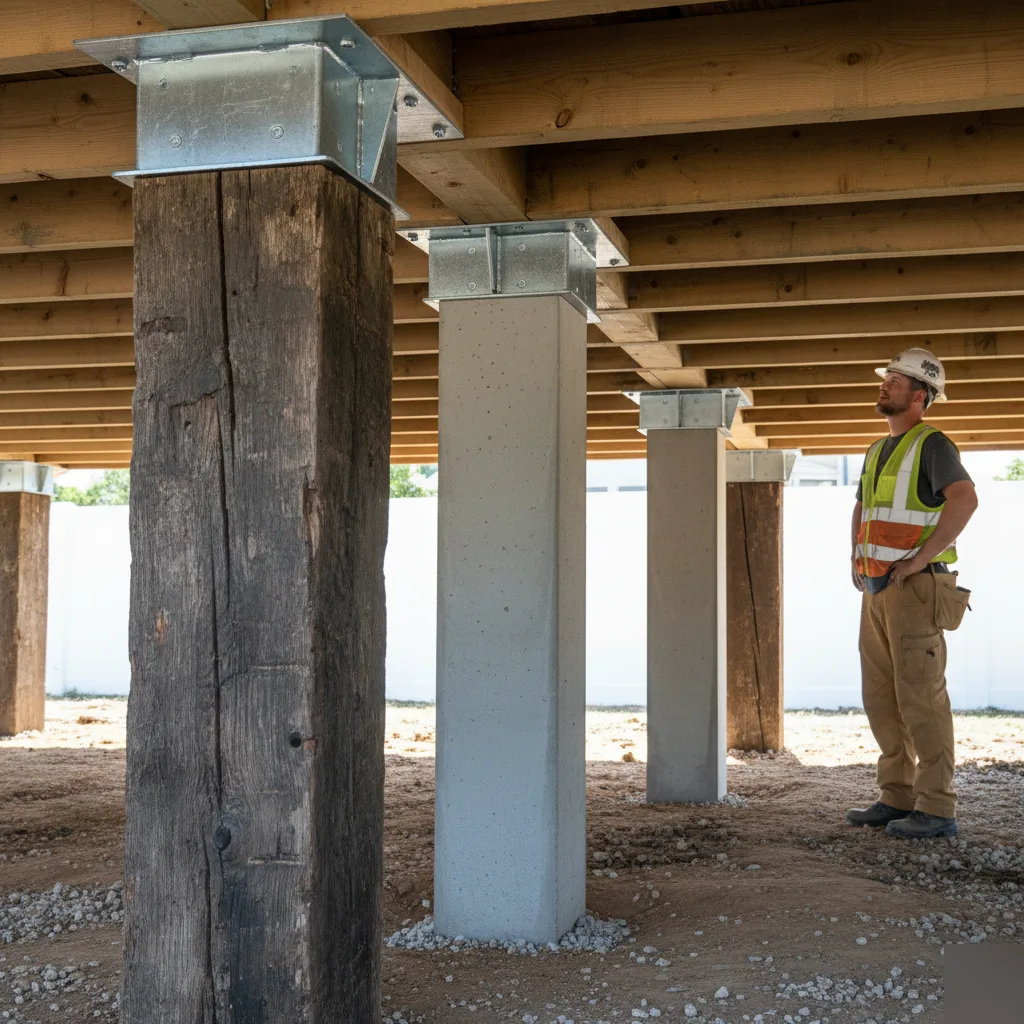
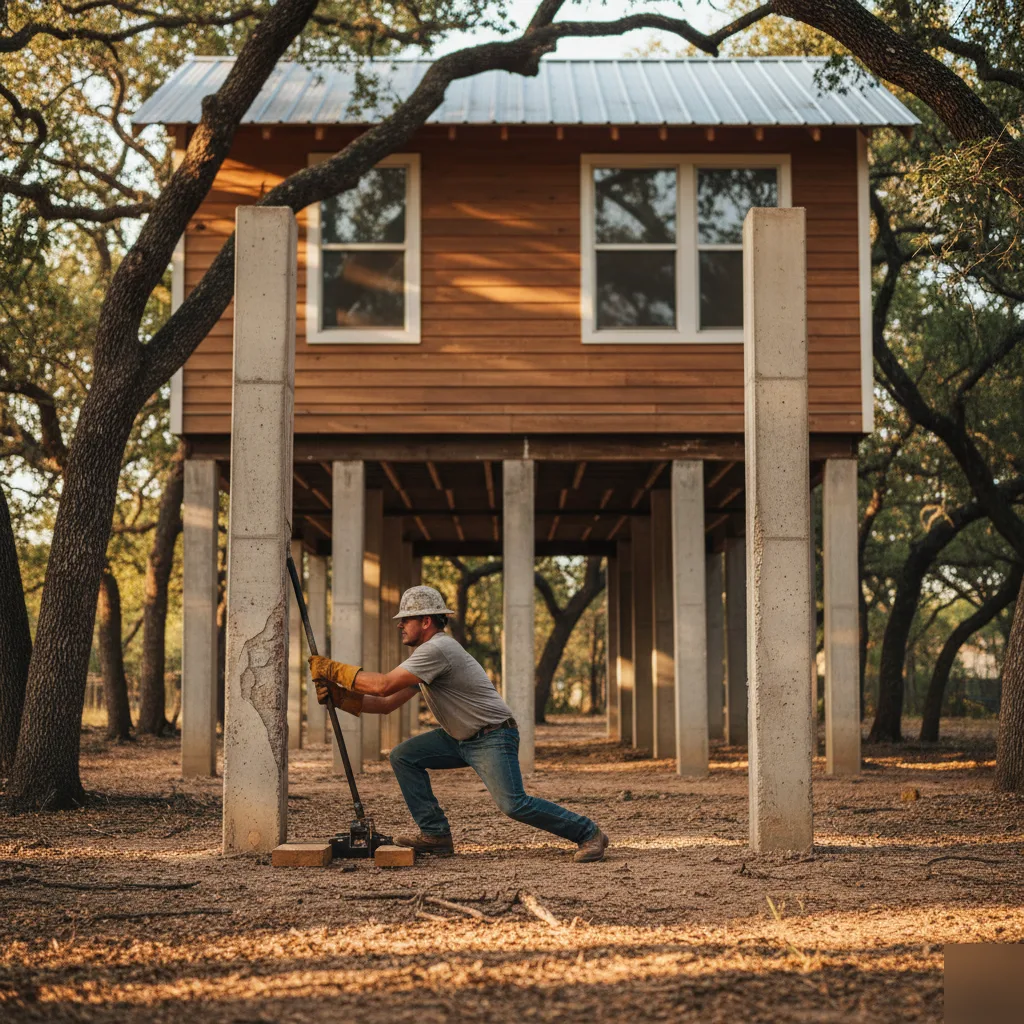
- A pier that's visibly tilted, cracked, or sitting on soil that's washed away underneath it
- Joists or beams with daylight showing where they used to sit tight against a pier
How do you tell the difference between normal old-house creaks and actual settling? An old house has consistent quirks, like the same sticky door for ten years. A house that's actively settling has changes that keep getting worse. New problems might show up in the same season every year. Central Texas clay soil swells with rain and shrinks in drought. That cycle puts stress on piers that aren't set deep enough or evenly spaced.
Not sure if what you're seeing is normal wear or something more? That's a common question. You don't need to crawl under the house yourself. We'll go under there, check every pier and beam, and tell you plainly what's moving and what isn't.